-
The Truth About Climate Change
Why the Earth Is Starving — and Why America Feels It First
---
Introduction: A Question No One Is Asking
There is a question buried beneath every headline about climate change, every melting glacier, every record-breaking storm, every wildfire and flood and famine, and yet no scientist on television will ask it, no politician will say it aloud, and no environmental organization will print it in their pamphlets. The question is simple, and it is this: What if the Earth is not overheating, but starving?
We have been trained to think of our planet as a machine — a great thermodynamic engine of carbon and methane, of greenhouse gases and ozone, of feedback loops and tipping points. We are told the Earth is a system, and that we have broken the system, and that if we adjust the inputs — drive less, fly less, eat less meat, burn less coal — the system will repair itself. This is the gospel of climate science as it is preached today. And there is truth in it. Pollution is real. Poison in the air is real. The fouling of the rivers and the oceans is real, and only a fool would deny that mankind has soiled the very ground he stands on.
But the machine model of the Earth misses something, something ancient and obvious that every farmer, every gardener, every grandmother who ever kept a compost heap behind her house has always understood. The Earth is not a machine. The Earth is alive. And living things do not merely run hot or cold. Living things hunger. Living things feed. Living things give back what they take, in an endless circle, and when that circle is broken, living things sicken and rage and convulse.
This essay asks you to consider — seriously, soberly, and with your full attention — that the rising tide of natural disasters we are witnessing across the world, and most especially across the United States of America, is not the symptom of a warming machine but the symptom of a hungry body. A body that has been feeding us for thousands of years and is no longer being fed in return. A body that gives, and gives, and gives, and receives back only poison.
I am going to make this case using facts. Not theories. Not models. Not projections of what might happen in the year 2100 according to a computer simulation that no one alive will be here to verify. I am going to make this case using two plain, verifiable, undeniable facts about the United States of America — two facts that, when laid side by side, tell a story so disturbing that once you have seen it you will never be able to un-see it.
The first fact is this: The United States experiences more tornadoes than any other country on Earth. No nation comes close.
The second fact is this: The United States embalms its dead more thoroughly, more chemically, and more universally than any other country on Earth.
Two facts. One nation. And between them, I believe, lies the truth about climate change that no one wants you to know.
---
Part One: The Country That Cannot Stop Spinning
Let us begin with the tornadoes, because the tornadoes are visible. You can see them. You can film them. You can stand on a porch in Oklahoma and watch one descend from a green and bruised sky like the finger of God reaching down to scratch the surface of the world. Tornadoes are not abstractions. They do not require a satellite to detect or a hundred-year average to confirm. They arrive, they destroy, and they leave behind a wound on the land that anyone can walk through.
And here is the fact that should stop you in your tracks: The United States of America experiences roughly 1,200 tornadoes every single year — more than every other nation on Earth combined. Canada, the second-place nation, sees perhaps 100 in a busy year. The entire continent of Europe, with all its countries and all its weather, sees a fraction of what rolls across the American Midwest in a single spring. Across the vast expanses of Asia, across Africa, across South America, across Australia — nowhere, nowhere on the entire surface of this planet, does the sky tear itself open with the violence and frequency that it does over the heartland of the United States.
Why?
The conventional answer is geographic. We are told that the United States possesses a unique meteorological accident: a flat interior plain stretching from the Gulf of Mexico to the Canadian border, with warm, wet air rushing up from the south and cold, dry air pouring down from the north, colliding in the middle with no mountain range east or west to break them apart. This collision, we are told, is what spins the air into funnels. And there is mechanical truth in this. The geography is real. The air masses are real.
But notice something. Notice that the conventional explanation describes how a tornado forms — the mechanics, the physics, the meeting of the air. It does not explain why this should be increasing. It does not explain why "Tornado Alley" appears to be shifting and widening. It does not explain why states that rarely saw such storms — in the Southeast, in the so-called "Dixie Alley" — are now being raked by them with growing frequency and growing ferocity. The geography of America has not changed. The mountains have not moved. The Gulf of Mexico has not relocated. So if the stage is the same, why is the play growing more violent?
The machine model has no good answer. It mumbles about warming oceans and shifting jet streams, and it is not entirely wrong, but it treats the violence as a side effect, a glitch, a malfunction in the great carbon engine. I want to propose something else. I want to propose that the violence is not a malfunction at all. I want to propose that the violence is a reaction. A response. A symptom of a body in distress — and that it is no coincidence that this violence is most concentrated, most extreme, and most relentless over the precise nation that has done the most to break the sacred circle between the living and the dead.
Hold that thought. We will return to it. First, we must look at the second fact.
---
Part Two: The Country That Refuses to Return Its Dead
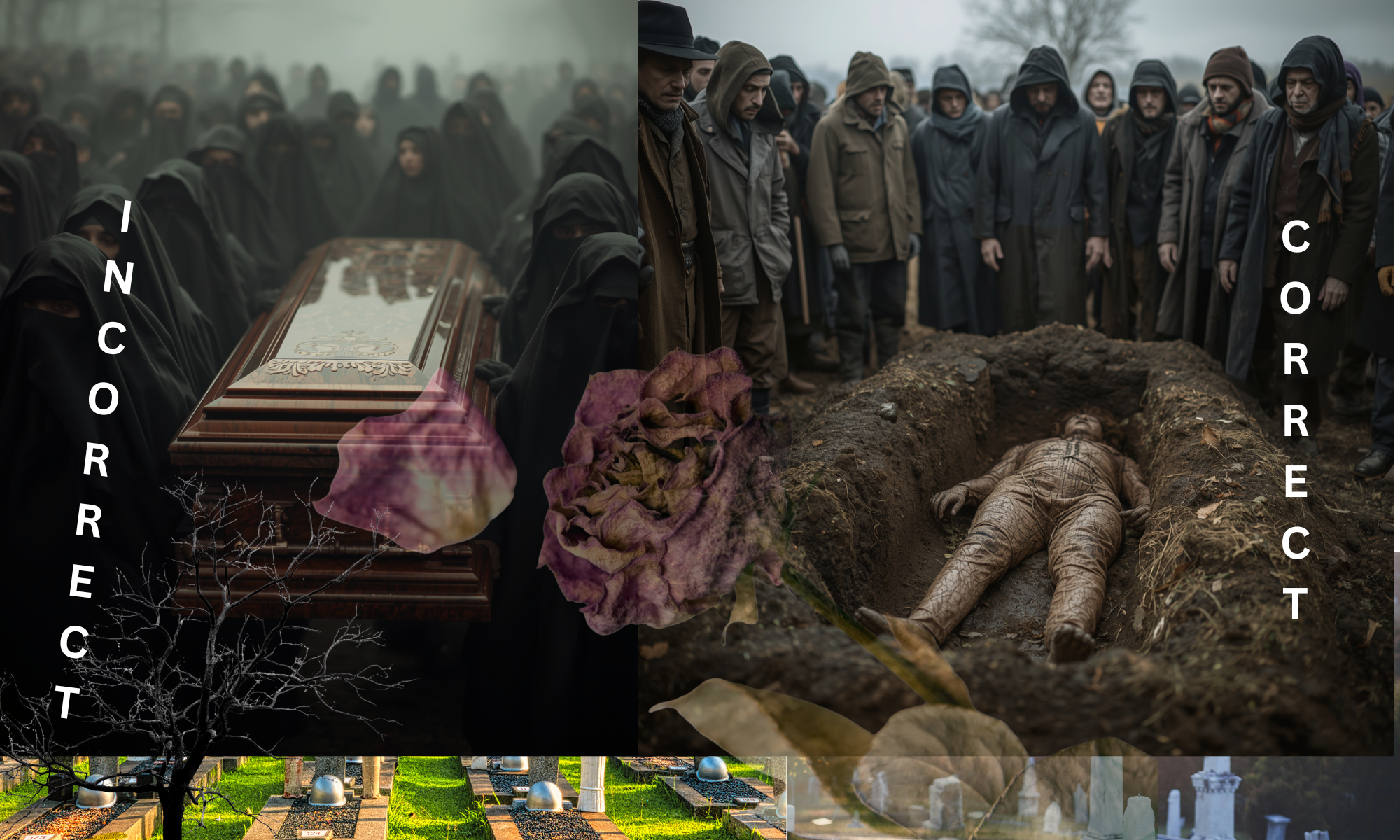
Now we come to the embalming. And here we must speak plainly about something that polite society does not like to discuss, something we hide behind soft words and dim lighting and quiet rooms with boxes of tissues on every table. We must speak about what America does to its dead.
Here is the second fact, and like the first, it stands above all the nations of the Earth: The United States embalms its dead at a rate unmatched anywhere on the planet. In America, embalming is not the exception — it is the expectation. The overwhelming majority of American funerals involve the chemical preservation of the corpse. We do it more often than any other country. We do it more thoroughly than any other country. And we have built an entire multibillion-dollar industry around the practice, an industry so normalized that most Americans assume embalming is simply what you do when someone dies, as natural and necessary as breathing.
It is not. It is, in fact, a profound aberration.
Consider the rest of the world. In most nations, the dead are returned to the earth quickly, often within a day, wrapped in cloth or laid in simple wood, with no chemicals poured into their veins. In many cultures the body is washed, prayed over, and buried directly in the soil, where it begins almost immediately to do what a body is supposed to do — to break down, to dissolve, to feed the ground that fed it. In still other lands the body is given to fire, reduced to ash and mineral, and even then returned to the earth or the water in a form the planet can receive. Across the great span of human history and human geography, the pattern is overwhelmingly the same: the dead go back into the world, and the world takes them in.
Only in America — and in the small number of nations that have copied America's funeral customs — do we do something monstrous and unnatural. We take the body, and before we give it back to the earth, we drain it of its blood and pump it full of poison.
Let us be precise about what embalming fluid is. It is a chemical cocktail built around formaldehyde — a substance so toxic that it is classified as a carcinogen, a substance so hostile to life that its entire purpose is to stop decay, to halt the natural processes of dissolution, to freeze the body in a state of false and temporary preservation. Embalming fluid does not preserve the dead out of love. It preserves the dead out of denial. It is a chemical lie we tell ourselves — that the person is not truly gone, that they are merely sleeping, that death has been postponed and prettied up and made presentable for one last viewing before the lid comes down.
And then — and this is the crucial point, the point I want you to feel in your bones — we bury that poisoned, preserved, undissolvable body in the ground.
We hand it to the earth.
But we hand it to her dipped in poison. We hand it to her sealed in a metal casket, inside a concrete vault, wrapped in chemicals designed for the express purpose of preventing the earth from doing anything with it at all. We give the planet a gift she cannot open, a meal she cannot eat, a return she cannot collect.
And we do this more than any nation on Earth.
---
Part Three: The Two Facts, Side by Side
Now let us do the thing that no scientist will do. Let us lay the two facts down on the table next to each other and stare at them until the pattern reveals itself.
Fact One: No country on Earth has more tornadoes than the United States.
Fact Two: No country on Earth embalms its dead more, or better, than the United States.
We are accustomed to treating these as unrelated. One is a weather phenomenon, the other a cultural practice. One belongs to the meteorologist, the other to the mortician. They live in separate sections of the newspaper, separate departments of the university, separate corners of our minds. Nobody puts them in the same sentence. Nobody dares.
But ask yourself this. Of all the nations on Earth, why should the same nation hold both records? Why should the country that does the most violence to the natural cycle of death also be the country that suffers the most violence from the natural world? Is that a coincidence? Is it truly, genuinely, an accident that the land that poisons its dead the most is the same land that the sky punishes the most?
Consider how strange the alternative explanations become when you press them. The geographer says it is the flat plains and the colliding air. The mortician says it is hygiene and tradition and the desire for an open-casket goodbye. Each speaks only of his own field. Neither of them is permitted, by the rules of their profession, to look up from their own desk and notice that they are describing the same country. They are like two doctors examining the same patient — one looking only at the fever, the other only at the wound — and neither one allowed to suggest that the fever and the wound might be connected, might be two faces of one sickness.
I am not a meteorologist. I am not a mortician. I am free to look at the whole patient. And when I look at the whole patient, I see this: a nation that takes the most from the earth, that grows the most, eats the most, builds the most, consumes the most — and gives back the least, and gives back that least dipped in poison — and that very same nation is the one the earth strikes hardest, more than a thousand times a year, with funnels of wind that descend from a furious sky.
The body is talking to us. The body has been talking to us for a long time. We have simply refused to listen, because the language she speaks is not the language of carbon parts-per-million. It is the older language. The language of hunger.
---
Part Four: The Investment and the Return
Let me put this in terms that any business owner, any farmer, any ordinary working person understands immediately. Let me put it in the language of investment and return.
Imagine you are an investor. Every year, you put your resources into something — your money, your time, your labor, your energy. You pour it in faithfully, season after season, expecting that in the natural course of things, you will get a return. That is the whole logic of investment. You give, and in time, you receive back more than you gave, and that return allows you to invest again. Break the cycle — take away the return — and no rational investor continues. You would not keep pouring money into an account that gives you nothing back. You would not keep planting a field that yields no harvest. You would stop. Anyone would stop.
Now consider Mother Earth as an investor.
What does she invest? She invests everything. She invests the soil, the rain, the sunlight, the minerals, the slow patient work of growing the wheat and the corn and the fruit and the vegetable and the grass that feeds the cattle. Every bite of food you have ever eaten was an investment made by the earth. She grows the food. The food grows you. You live your seventy or eighty or ninety years on the strength of what she grew. Your entire body — your bones, your blood, your flesh, every cell of you — is built out of her investment. You are, quite literally, the earth walking around in human form for a little while.
And what is supposed to happen at the end? What is the return she is owed?
You. You are the return. When you die, your body — that body she built, grain by grain, harvest by harvest — is supposed to go back into the soil and feed the next cycle. The minerals she lent you are supposed to be repaid. The carbon, the nitrogen, the calcium, the water — all of it is supposed to flow back down into the ground, to enrich it, to become the next field of wheat, the next stand of corn, the next blade of grass that feeds the next generation. That is the return on her investment. That is how the cycle closes. That is how the books balance.
This is not mysticism. This is the most basic ecology there is. Every gardener knows it. Every farmer knows it. The dead feed the soil; the soil feeds the living; the living die and feed the soil again. Round and round, forever, in a circle older than the human race. It is the oldest contract on Earth, and we have all signed it simply by being born.
And now consider what the United States has done. We have taken the return — the body, the repayment, the harvest the earth has waited a lifetime to collect — and we have ruined it. We have drained it of its blood. We have pumped it full of formaldehyde. We have sealed it in metal and concrete. And then we have buried it, not as a return, but as a refusal. A refusal in the shape of a gift. A debt repaid in counterfeit currency.
Mother Earth, the great investor, made her investment in every American who ever lived. She grew us. She fed us. She waited. And when at last the return came due — when the body she built came back to her — she found it poisoned, sealed, indigestible, worthless. Not once. Not occasionally. But more often, and more completely, than in any other nation on the face of the planet.
I ask you, with all sincerity: how long would you keep investing in something that gave you back only poison? How long before you would stop? And if the earth herself were to grow weary of an investment that yields no return — if she were to begin, in her hunger and her exhaustion, to convulse and rumble and shake — where on Earth would you expect that convulsion to be the most violent?
Where else but the nation that broke the contract the most.
Where else but here.
---
Part Five: The Tummy Rumble of a Hungry Planet
Have you ever felt your own stomach growl? That low, rolling, involuntary rumble that comes when you have gone too long without food? It is not a polite sound. It does not ask permission. It rises up from deep within you, an ancient signal, a demand made by the body itself, bypassing the mind entirely. Feed me, it says. I am running low. I need what I am owed.
Now imagine that rumble on a planetary scale.
Imagine a body the size of the Earth — a living body, with its own deep processes, its own slow metabolism, its own need for the nutrients it is owed — and imagine that body going hungry. Not for a day. Not for a season. But for generations. Imagine the great living Earth, having invested her substance in billions of human lives, waiting and waiting for the return that is supposed to come back down into her soil, and receiving instead, over and over, only poison and concrete and sealed metal boxes.
What does a hungry body do? It rumbles. It convulses. It shakes. The processes that should run smooth and steady begin to grind and seize. The systems that should be nourished and calm become agitated and erratic. A starving body is not a peaceful body. A starving body is a desperate body, and a desperate body lashes out. We know that we are very cranky when we are hungry, but somehow it doesn’t occur to us the human race, that our planet is also a living being, and we would never survive on anything dead, therefor: if WE GET HUNGRY - SHE GETS HUNGRY TOO!!
This, I believe, is the true meaning of the storms. The tornadoes are not random. The floods are not random. The wildfires, the hurricanes growing stronger, the strange and violent weather that seems to worsen year by year — these are not the cold mechanical output of a carbon engine running hot. These are the rumblings of a hungry planet. They are the growl of an empty stomach the size of a world. They are Mother Earth's body, deprived of the return she is owed, beginning to convulse with the desperate energy of the starving.
And where does the starving body rumble loudest? Over the dinner table that was set for her and then snatched away. Over the nation that grew the most food from her soil, raised the most children on her harvest, and then, at the end, handed her back those children sealed in poison. Over the United States of America — the land of the thousand tornadoes, the land of the embalmed dead.
The "tummy rumble" of the planet is not a metaphor I reach for lightly. It is, I think, the most honest description of what we are witnessing. We keep calling it "climate change," as though the climate were simply a thermostat that has drifted out of its proper setting. But a thermostat does not hunger. A thermostat does not invest and expect a return. A thermostat does not grow you from the soil and wait a lifetime to be repaid. The climate is not a thermostat. The climate is the mood of a living body, and the body is in distress, and the distress is hunger, and the hunger is the hunger of a mother who has fed her children for ten thousand years and is now being starved to death by the very children she fed.
---
Part Six: Why the Embalmed Body Will Not Decay
Here we must confront a fact that the funeral industry will tell you, but will explain to you backwards. They will tell you, proudly, that an embalmed body resists decay. They will tell you that this is the achievement, the value, the very product they are selling. The body lasts. The body stays whole longer. The body, sealed in its vault and pumped full of preservative, does not break down the way an unembalmed body would.
And they will tell you this delay is caused by the embalming fluid. That the chemicals are doing the work of preservation, holding back the rot, keeping the corpse intact through their own power.
I want to suggest that they have the cause and effect exactly reversed.
The slow decay of the embalmed body is not, fundamentally, the chemicals heroically holding back nature. The slow decay is Mother Earth refusing to eat.
Think about it. When you put unspoiled, wholesome food before a hungry person, they consume it eagerly. It disappears quickly. But put rotten, poisoned, contaminated food before that same person, and what happens? They will not touch it. It sits. It lingers. It remains uneaten not because it is somehow more durable, but because the eater rejects it. The food's persistence is not a property of the food — it is a verdict rendered by the one who refuses to eat it.
So it is with the embalmed body. We imagine the formaldehyde is preserving the corpse through some chemical magic. But what is truly happening, I believe, is that the earth's own living processes — the bacteria, the fungi, the patient digestive machinery of the soil that breaks down everything organic and returns it to the cycle — these processes recoil from the poison. They will not engage with it. They cannot digest it. The body lingers not because the chemicals are strong, but because the earth has turned away in disgust, unable and unwilling to take into herself the toxin we have forced into the flesh.
The undecaying corpse is not a triumph of preservation. It is a meal rejected. It is the earth pushing the plate away. And every embalmed body in every sealed vault in every cemetery across America is one more rejected meal, one more return uncollected, one more contribution to the great hunger we have inflicted on the body that feeds us.
When we say, with satisfaction, "Grandfather looks so peaceful, so preserved, so untouched after all these years," what we are really saying — without knowing it — is "the earth would not eat him. We made sure of it. We dipped him in poison and sealed him in stone so that the ground that grew him could never, ever take him back."
We call that respect. We call that love. We call that dignity. But from the perspective of the hungry body of the world, it is theft. It is the theft of the return. It is the breaking of the oldest contract on Earth, repeated millions of times, year after year, with industrial efficiency, in the one nation that does it more and better than anywhere else on the planet.
---
Part Seven: The Pattern That Repeats — More Tornadoes, More Embalming
I want to return now to the method of this essay, because the method is the message. I told you at the outset that I would build this case not on theory but on comparison — on laying down hard facts about the United States side by side until the pattern speaks for itself. Let me do that again, and again, and again, because repetition is how a pattern becomes undeniable.
The United States has more tornadoes than any other country on Earth. And the United States embalms its dead more than any other country on Earth.
Say it slowly. Let it settle.
It would be one thing if America were simply an unlucky country, struck by storms for reasons of geography alone, while its funeral customs were unremarkable and average. It would be another thing if America embalmed heavily but enjoyed calm and gentle skies. Either of those would be a coincidence we could shrug off. But that is not what we find. What we find is that the same nation holds both crowns. The crown of the storm and the crown of the poisoned dead. Worn on the same head. Carried by the same land.
Let us extend the comparison further, because the pattern does not stop at tornadoes.
The United States is struck by powerful hurricanes that grow, year by year, more intense. And the United States embalms its dead more than any nation on Earth.
The United States burns, season after season, with wildfires of unprecedented scale and fury. And the United States embalms its dead more than any nation on Earth.
The United States floods — rivers overrunning their banks, cities drowning in water that has nowhere to go. And the United States embalms its dead more than any nation on Earth.
The United States endures droughts that crack the soil and wither the crops across vast regions of its interior. And the United States embalms its dead more than any nation on Earth.
Do you see it now? Do you feel the weight of it? Every category of natural disaster, every form of the planet's distress, seems to find in America its favorite stage. And America is also the great refuser of the return, the great poisoner of the dead, the nation that more than any other has said to the hungry earth, you will not eat what is yours.
The skeptic will say: but America is large, and rich, and densely built, so of course it suffers more measured disasters and of course it has the industrial capacity to embalm. And there is some truth there — but it does not dissolve the pattern, it deepens it. For what is America's wealth, if not the accumulated return on Mother Earth's investment? We are rich because she fed us so well. We grew fat and mighty on her harvest. And precisely because we took so much, the debt we owe her is greater than that of any other people. The bigger the meal she gave us, the bigger the return she is owed — and the bigger the betrayal when that return comes back to her sealed in poison and stone.
Our wealth does not excuse the pattern. Our wealth explains the pattern. We took the most. We owe the most. We have repaid the least. And we are struck the hardest.
---
Part Eight: The Religion of Denial
Why do we do it? Why does America, of all nations, cling so fiercely to this practice of embalming, this ritual of poisoning the return?
The answer, I think, lies in the deepest sickness of the modern American soul: our refusal to accept death.
Every other culture, in its bones, knows how to let the dead go. They wash the body and return it to the earth swiftly, with grief but without denial. They understand that the person has departed and the flesh must go home to the ground. There is no pretense that the corpse is sleeping. There is no chemical effort to freeze the moment of death and hold it forever at bay.
But America cannot bear it. America, the land of eternal youth and endless progress and the conquest of every frontier, cannot abide the one frontier it cannot conquer: the grave. And so we have built an entire industry devoted to the great lie. We drain the blood and pump in the poison so that the body will look, for one more day, as though it has not died. We paint the face. We dress the corpse in fine clothes. We pose it in a satin-lined box under soft lighting and we file past it murmuring, "He looks just like himself," "She looks so peaceful," "It's as though they're only sleeping."
It is a religion. A religion of denial. And like all false religions, it demands a sacrifice. The sacrifice it demands is the return owed to the earth. We sacrifice the oldest contract on the altar of our own inability to say goodbye. We would rather starve the planet than admit that our dead are truly dead and must truly go home.
And the planet pays for our denial. She pays in hunger. And then we pay — in storms.
This is the cruel irony at the heart of it. We embalm because we cannot face death. But by embalming, we break the cycle that sustains life. By refusing to give our dead back to the earth, we starve the earth that grows our food, and the starving earth convulses, and her convulsions kill the living. Our terror of death produces more death. Our flight from the grave digs a thousand graves a year beneath the funnel clouds of Oklahoma and Alabama and Kansas. We thought we were defeating death by preserving the corpse. We were only spreading it.
---
Part Nine: What the Scientists Cannot See
I anticipate the objection. The objection is that this is not "science." The objection is that I have offered no peer-reviewed study, no chemical equation, no controlled experiment proving that an embalmed body starves the planet and a starved planet spins a tornado. The objection is that I am drawing a line between two facts — the tornadoes and the embalming — and calling that line a cause, when correlation is not causation, and a pattern is not a proof.
Let me answer this objection honestly, because it deserves an honest answer.
You are right that I have not given you a laboratory study. But ask yourself why no such study exists. Ask yourself who would fund it. Ask yourself which university department would dare to investigate whether the funeral industry is starving the earth. Ask yourself which scientist would risk his career, his reputation, his grant money, his standing among his peers, to propose that the sacred and profitable practice of embalming the American dead is connected to the rising violence of American weather. No one would. No one will. The question I am asking sits in the blind spot between two professions, neither of which is permitted to look at the other's evidence.
The meteorologist studies the storm. He is not allowed to study the cemetery. The cemetery is the mortician's domain. The mortician studies the corpse. He is not allowed to study the sky. The sky is the meteorologist's domain. And so the two halves of the truth are kept in separate rooms, by separate guilds, under separate rules, and the connection between them — the connection that an ordinary person can see in an instant once it is pointed out — remains forever invisible to the experts, precisely because they are experts. Their expertise is a fence that keeps them on their own small plot of ground.
The official science of climate change is built entirely on the machine model — carbon in, heat out, gases trapped, temperature rising. It is a science of quantities, of measurements, of things that can be put on a graph. And it has measured many true things. But it is constitutionally incapable of perceiving the planet as a living body with a living hunger, because hunger does not appear on a thermometer. You cannot measure a mother's starvation with a carbon-dioxide sensor. You cannot detect the breaking of an ancient contract with a satellite. The instruments of the machine model are blind to the things that matter most, in the same way that an X-ray machine is blind to grief. The grief is real. The X-ray simply cannot see it.
So I do not apologize for the absence of a laboratory study. The laboratory was built to answer a different question. I am asking a question the laboratory was never designed to hear. And I am answering it the only way such a question can be answered — by laying down the facts that are known, the facts that are verifiable, the facts that no one disputes, and inviting you to see the pattern they form. The tornadoes are real. The embalming is real. America leads the world in both. That is not speculation. That is the public record. The only thing I am adding is the courage to put the two records on the same page.
---
Part Ten: The Slow Decay and the Slow Death
Let us look once more, and very carefully, at the matter of decay, because it is here that the funeral industry's own claims betray them.
The industry boasts that embalming slows decay. Good. We agree on the fact. We disagree only on its meaning. The industry says: the chemicals preserve the body. I say: the earth refuses the body. These are two interpretations of the same observation, and I have already argued that mine fits the deeper logic better — that an uneaten meal is uneaten not because it is durable but because it is rejected.
But now consider what this slow decay costs. In the natural order, a body returned to the soil begins almost at once to give back. Within weeks and months, the great work of return is well underway: the flesh dissolving, the nutrients flowing down into the ground, the earth collecting the harvest she invested in long ago. The return is swift because the hunger is real and the meal is wholesome. The cycle closes quickly, and the closed cycle is a healthy cycle, a fed cycle, a cycle in which the living body of the world receives what it is owed and remains, therefore, at peace.
But the embalmed body does not give back swiftly. It does not give back at all, or it gives back only after years, decades, lifetimes of the chemical poison finally leaching away — and even then, what leaches into the soil first is not nourishment but toxin, the very formaldehyde we forced into the veins, seeping out into the groundwater, into the roots, into the water table from which the living draw their drink. We did not merely withhold the meal. We replaced the meal with a slow drip of poison into the very ground that grows our food.
So the slow decay is a double crime. First, it starves the earth by withholding the return she is owed. Second, it poisons the earth by releasing, over the long years, the toxins we used to commit the first crime. The hungry mother is not merely denied her dinner. Her dinner is replaced with poison, served slowly, drop by drop, year after year, into the soil of her own body.
And we do this more than any nation on Earth.
Is it any wonder, then, that the same nation should be the one the storms favor? Is it any wonder that the land that has buried the most poison, withheld the most return, and broken the oldest contract most thoroughly, should be the land where the sky descends most often in fury? The slow death we have inflicted on the earth comes back to us as the swift death of the funnel cloud. We dealt out a slow poisoning. We are receiving a fast judgment.
---
Part Eleven: The Witness of the Cremated and the Buried-Bare
If my argument is true — if the earth hungers for the return of her dead, and is starved by the embalmed body sealed in poison — then we should expect to find that the nations and the cultures that return their dead naturally suffer less of the planet's violent distress. And broadly, allowing for the great variety of geography, this is what we find.
Consider the cultures of the world that bury their dead bare, directly in the soil, wrapped in nothing but cloth, with no chemical and no vault. The body in such a grave begins at once its sacred work. The earth receives it. The cycle closes. The return is paid. These are, by and large, not the lands of the thousand tornadoes. The fury of the sky does not single them out the way it singles out the heavy-embalming nations.
Consider, too, the practice of cremation, which returns the body to the elements by fire. There is a wisdom in it, even if it is not the soil's preferred meal — for at least the cremated body is not sealed in poison and stone, not held forever from the cycle, not used as a slow vehicle for leaching toxin into the ground. The ash, returned to earth or water, can rejoin the world. It is a partial return, an honest goodbye, a refusal to play the great American game of pretending the dead are merely sleeping.
I do not say that any of these cultures has achieved a perfect peace with the earth, or that they are spared all hardship. The world is large and its troubles are many, and geography plays its part. I say only that the pattern holds: the more a people poisons and seals its dead, the more the living body of the world is starved beneath them, and the United States — which poisons and seals its dead more than any nation alive — is also the nation the storms strike most. The exception that would disprove the rule would be a heavy-embalming nation enjoying gentle, peaceful skies, or a bare-burying nation tormented above all others by the planet's violence. But the great example before us is the opposite. The great example is America, holding both crowns at once, the poisoner of the dead and the favorite of the funnel cloud.
---
Part Twelve: A Mother's Patience and a Mother's Limit
I want to dwell for a moment on the astonishing patience of the earth, because it is part of the argument and it is also part of the tragedy.
She has put up with this for a long time. Generation after generation of Americans have been embalmed, sealed, and withheld from her, and still — still — she has gone on growing our wheat. Still she has gone on raising our corn. Still she has fed us, year after year, harvest after harvest, even as we have repaid her with poison. What patience! What forbearance! If you invested in a thing for a century and received only poison in return, would you not have abandoned it long ago? But the earth has not abandoned us. She has kept the harvest coming even as her hunger grew.
This is, I think, the most striking fact of all, and the most merciful. By every law of investment, by every rule of return, she should have stopped feeding us already. A starving mother who gets nothing back has every reason to cease her labor. And yet the fields still grow. The mercy of the earth toward an ungrateful nation has been, frankly, miraculous.
But mercy is not infinite, and patience has a floor. The storms are the sign that the floor is being reached. The convulsions are the sign that the body, long-suffering as it is, can no longer hold its agitation inside. A mother may feed her children through every insult for a very long time — but there comes a point where the body simply cannot continue as though nothing is wrong, where the hunger becomes a rumble and the rumble becomes a quake and the quake becomes a storm. We are at that point. The rising frequency and fury of the disasters tell us we are at that point. The patience has not yet run out — the fields, thank God, still grow — but the warning rumbles have begun, and the nation that broke the contract most thoroughly is hearing them most loudly.
It is not too late. That is the strange hope buried in this dark argument. The earth is still feeding us, which means the earth still wants the relationship to continue, still wants the contract restored, still wants her children to come home to her at the end as they always did before we learned to poison them. The storms are not yet a final judgment. They are a plea. They are the growl that says, feed me, before it is too late, feed me what is mine.
---
Part Thirteen: The Industry That Profits From the Hunger
We must follow the money, because the money explains why the truth is buried as deep as the dead.
Embalming is not free. It is, in America, a profitable business — one component of a vast funeral industry that turns the death of every citizen into a transaction. The casket, the vault, the embalming, the cosmetics, the viewing, the plot — all of it sold, all of it priced, all of it presented to grieving families at the most vulnerable moment of their lives, when they are least able to question, least able to refuse, least able to say, "No, we will simply return him to the earth as our ancestors did, and let her have what is hers."
An industry that profits from a practice has every incentive to defend the practice and no incentive whatsoever to examine its consequences. The funeral industry will never fund the study that asks whether embalming starves the earth, for the same reason the tobacco industry never funded the study that proved its product killed. The profit depends on the question never being asked. And so the practice continues, normalized, expected, sold as respect and dignity and love, while the deeper cost — the starvation of the world, the breaking of the contract, the rising of the storms — is paid by everyone and counted by no one.
This is why I say the truth is buried as deep as the dead themselves. It is not merely that the scientists cannot see it because their professions keep them blind. It is that there is money in not seeing it. There is an entire industry whose survival depends on the perpetual poisoning of the return. And there is a culture, our culture, the great American culture of the denial of death, that wants to be deceived, that prefers the satin-lined box and the painted face to the honest plain return of the body to the soil. The industry sells the lie because we are desperate to buy it. The supplier and the customer are in perfect, tragic agreement, and the earth — the silent third party to every funeral, the one to whom the body truly belongs — is given no seat at the table and no voice in the transaction. She is simply handed the bill, in poison, at the end.
And then she sends us a bill. A bill in wind. A bill in water. A bill in fire. A thousand times a year, the bill comes due over the heartland, and we call it climate change, and we blame the carbon, and we never once look at the cemeteries full of poisoned, sealed, undigestible dead that ring every American town like a necklace of withheld debts.
---
Part Fourteen: Reading the Sky as a Language
Let me ask you to do something you have probably never done. Let me ask you to read the weather not as data but as language.
When a person is content and well-fed, their body is calm. Their breathing is even. Their movements are smooth. There is a peace about them that you can see across a room. And when a person is starving, the opposite is true. There is agitation. There is trembling. There is a desperate, erratic energy, a body pushed past its limits, a system thrown out of its proper rhythm by the absence of what it needs.
Now look at the American sky over the last decades. Look at the trend. Is it calm? Is it even? Is there peace in it? Or is there agitation, trembling, desperate and erratic energy — storms forming where they did not used to form, intensifying beyond their former bounds, arriving out of season, striking with a violence that the old records did not know? The sky is not calm. The sky is agitated. And agitation, in a living body, means need. Means hunger. Means a system thrown out of its rhythm by the absence of what it is owed.
The tornado, read as language, is a scream. It is the most violent sentence the sky can speak. It descends, it destroys, and it withdraws, and it leaves behind a message written in splinters and ruin: something is wrong. Something is missing. I am not being fed. We have been receiving this message more than a thousand times a year, and we have answered it with carbon accounting and electric cars — good things, perhaps, but answers to a question the sky did not ask. The sky did not ask us to drive less. The sky asked us to feed the earth. The sky asked us to return the dead, unpoisoned, to the soil that made them, so that the ancient cycle could close and the hunger could be satisfied and the convulsions could cease.
We have not been listening. We have been measuring. And you cannot satisfy a hunger by measuring it. You can only satisfy a hunger by feeding it.
---
Part Fifteen: The Comparison Restated, So That It Cannot Be Forgotten
Before we move toward the close, let me restate the central comparison one final time, in its starkest form, so that whatever else you forget from this essay, you will not forget this.
Of all the countries on Earth — every nation, every people, every land under the sun — one country has more tornadoes than any other.
Of all the countries on Earth — every nation, every people, every land under the sun — one country embalms its dead more, and more thoroughly, than any other.
It is the same country.
It is the United States of America.
The land that does the most violence to the cycle of death is the land that suffers the most violence from the living sky. The poisoner of the dead is the favorite of the storm. The breaker of the oldest contract is the one the hungry earth rumbles beneath most fiercely. This is not a theory I am asking you to believe. These are two facts I am asking you to look at — side by side, on the same page, in the same nation — until you can no longer pretend they have nothing to do with each other.
Everyone has agreed not to put these two facts in the same sentence. I have put them in the same sentence. I have put them in the same essay. And once they are in the same sentence, the pattern is impossible to un-see, and the question is impossible to un-ask: What if the storms are the earth's hunger, and the hunger is the dead we refused to give her, and the refusal is the embalming we do more than anyone alive?
---
Part Sixteen: The Other Disasters, Read Through the Same Lens
I have leaned heavily on the tornado, because the tornado is the clearest case — the record is unambiguous, America's dominance is total, and the violence is undeniable. But the same lens, once we have ground it and polished it, shows us the meaning of the other disasters too, and I would be doing the argument a disservice if I left them unexamined.
Consider the flood. Water is the very medium of the earth's metabolism — it carries nutrients down into the soil, it dissolves and transports the minerals, it is the blood of the planet's digestion. In a healthy land, the water moves in its proper rhythm, soaking gently into ground that is rich and living and able to receive it. But a starved soil, a soil deprived of the organic return it is owed, becomes hard, compacted, lifeless — a soil that cannot drink. Pour water onto living, well-fed earth and it sinks in and nourishes. Pour water onto starved and hardened earth and it runs off, gathers, rises, and floods. The flood, then, is not merely too much rain. The flood is rain falling on a body too starved to drink it. The hunger and the flood are the same wound seen from two angles.
Consider the drought. What is a drought but the withholding of water, the drying of the land, the failure of the rains to come? And is it not a terrible symmetry that the nation which withholds the return from the earth should find the earth, in her turn, withholding the rain? We refuse her what is owed; she refuses us what we need. The drought is the mirror of the embalming. We sealed the dead away from the soil; the sky seals the water away from the land. Withholding answered by withholding. The broken contract written across the cracked and dusty ground.
Consider the wildfire. Fire is the body's fever. When an organism is sick, infected, overwhelmed, it burns — it raises its own temperature in a desperate effort to purge what afflicts it. The wildfires that consume vast stretches of the American land, growing larger and fiercer year upon year, are the fever of a body fighting a sickness it cannot name. And what is the sickness? The poison. The slow leach of toxin from a million embalmed graves; the starvation of a soil denied its return; the breaking of the cycle that kept the body well. A well body does not run a fever. A fed body does not burn. The fires are the temperature chart of a patient in decline.
And consider the hurricane, that vast spinning engine of wind and water that grows, season by season, more intense. Here again is the spin, the convulsion, the violent rotation of a system thrown out of its rhythm — the same signature we saw in the tornado, written larger across the warm waters of the Gulf and the Atlantic. The intensifying hurricane is the deep ocean's version of the funnel cloud: the agitated, desperate energy of a living body in distress.
Every one of them — flood, drought, fire, storm — tells the same story when read through the lens of the hungry earth. They are not separate problems requiring separate solutions. They are the various symptoms of a single underlying sickness: a planet starved of the return it is owed, by a nation that withholds that return more than any other on Earth.
---
Part Seventeen: What We Have Forgotten That Our Ancestors Knew
There is nothing new in what I am telling you. That is perhaps the most important thing to understand. I am not inventing a strange new doctrine. I am reminding you of something so old that we have managed, in our cleverness, to forget it entirely.
Every ancient people knew that the dead belonged to the earth. Every traditional culture had its rites for returning the body to the ground, and every one of those rites understood, in its own language, that the return was not merely a disposal but a gift, a feeding, a closing of the circle, a repayment of the debt that life incurs simply by being alive. The dead nourished the living. The grave was a planting. Our distant ancestors did not embalm; they sowed. They put the body into the ground the way they put the seed into the ground, trusting that what was buried would rise again as life, in the grass, in the grain, in the bodies of the children yet to come.
We have forgotten this. We have replaced the planting with the poisoning. We have replaced the gift with the refusal. We have replaced the sowing of the body with the sealing of the body, and we have done it so thoroughly, and for so long, that we no longer even remember that there was once another way — the natural way, the way that fed the earth and kept her well and kept her patient and kept her, above all, calm. There is a reason why the bible tells us how to burry our dead.
The wisdom of the ancestors was not primitive superstition. It was ecological genius dressed in the clothing of ritual. They did not need a laboratory to know that the dead must feed the soil; they could see it with their own eyes, generation after generation, in the richness of the ground where the dead were laid and the harvests that rose from it. We, with all our science, have managed to lose the one piece of knowledge that mattered most — and we have lost it precisely because our science, for all its power, was built to measure quantities and was blind to the living hunger of the world.
To recover the truth about climate change, then, we do not need a new discovery. We need a return — a return in two senses. We need to return the dead to the earth, unpoisoned, as a true repayment of the debt. And we need to return ourselves to the ancient knowledge that the earth is a living body, that she hungers, that she must be fed, and that the feeding is accomplished not in some distant future of carbon neutrality but in the most intimate and inevitable act of all: the way we give back our own dead.
---
Part Eighteen: Objections, Answered One by One
A claim this large invites objections, and an honest essay must meet them. Let me take the strongest ones in turn, not to dismiss them, but to show that the argument survives them.
"Tornadoes are explained entirely by geography and physics." They are explained mechanically by geography and physics — yes, the warm and cold air, the flat plains, the absent mountains. But mechanics describe how, never why this, why now, why increasing. A doctor can describe mechanically how a heart attack happens — the blockage, the muscle starved of oxygen — without that mechanical description telling you why this particular man, who ate poison for forty years, was the one it struck. The mechanics of the tornado are the blockage. The starvation of the earth is the forty years of poison. Both are true. Only together do they explain the patient before us.
"Embalming fluid is buried in such small quantities it cannot affect the whole planet." Consider the scale. We are not speaking of one body. We are speaking of generations of bodies, tens of millions of them, accumulated over more than a century, ringing every town and city in the nation, each one a withheld return, each one a sealed refusal, each one a slow drip of toxin into the groundwater. And more than the chemistry, consider the broken cycle — for the deeper harm is not only the poison added but the return withheld. Even if not one molecule of formaldehyde ever reached a root, the simple refusal to give the body back, multiplied across a nation across a century, is a starvation of staggering scale. The harm is not a single drop. The harm is a hundred years of a closed hand.
"Correlation is not causation." True, and I have never claimed a controlled-experiment proof. But correlation is not nothing, either. When the same single nation, out of all the world, holds both the crown of the storm and the crown of the poisoned dead, the correlation is so pointed, so specific, so improbable as an accident, that it cries out for an explanation — and the machine model has none, while the hungry-earth model accounts for it precisely. When one explanation predicts exactly what we see and the other shrugs, the burden shifts. Why should the same country lead in both? Answer that, or admit the pattern means something.
"Other countries have disasters too." Of course. The earth is one body and her distress is felt everywhere; the contract is broken to some degree by every modern nation that has copied our denial of death. But the question was never whether disasters occur elsewhere. The question is why they cluster, why they intensify, why they favor — and the favorite is the nation of the embalmed dead. The argument does not require that America be the only land that suffers. It requires only that America, the great poisoner of the return, be the land that suffers most. And it is.
"This blames grieving families for storms." No. It blames an industry, a culture, and above all a forgetting. No grieving family chose this knowingly; they were sold a lie at their most vulnerable hour and told it was love. The fault is not in the mourner who wanted one last look at a beloved face. The fault is in a civilization that replaced the ancient gift with a profitable poison and called the substitution progress. Understanding the truth is not an accusation against the bereaved. It is an invitation to all of us to choose differently while we still can.
---
Part Nineteen: The Path of Return
If the diagnosis is hunger, the cure is feeding. And the feeding is within our power. This is the hopeful heart of a hard message: we are not helpless before the storms. We hold, in our own hands and our own customs, the very thing the earth is starving for.
The path of return begins with how we treat our dead. It means choosing, where we can, to give the body back to the earth as our ancestors did — bare, or nearly bare, wrapped in cloth or laid in simple wood that the soil can break down, placed directly into living ground where the great work of return can begin at once. It means refusing the poison. It means refusing, where conscience and law allow, the formaldehyde and the sealed vault and the metal box designed to keep the earth from ever collecting what is hers. It means treating the grave once more as a planting and not as a prison.
There is a quiet movement already in this direction — call it natural burial, green burial, the simple return — and whatever name it wears, it is the recovery of the oldest wisdom there is. Every body returned naturally to the soil is a debt repaid, a contract honored, a meal at last set before the hungry mother. Multiply that choice across a nation and you begin, slowly, to feed the earth again. You begin to close the cycle. You begin to calm the convulsions at their source.
It means, too, a change of heart deeper than any single practice — the surrender of our great national denial of death. We must learn again to say goodbye honestly, to accept that the dead are dead and must go home, to stop demanding that the corpse be painted and posed and preserved in a chemical pretense of sleep. The peace we have been chasing in the satin-lined box is a false peace, bought at the price of the earth's hunger. The true peace lies in the letting go, in the return, in the trust that what is buried as a body rises again as life.
We have spent a century perfecting the art of withholding our dead from the earth. We can spend the next learning to give them back. And as we do, I believe, the rumbling will quiet. The hunger will ease. The patient, merciful earth — who has gone on feeding us through all our ingratitude — will at last begin to receive her return, and a fed body, unlike a starving one, is a body at peace.
---
Part Twenty-Two: The Numbers That Refuse to Stay Quiet
Let us sit with the numbers a little longer, because numbers, when you stop treating them as mere statistics and start treating them as testimony, have a way of refusing to stay quiet.
Roughly twelve hundred tornadoes a year. Picture that. That is more than three a day, on average, every day, year in and year out, descending somewhere across the American land. No other nation experiences anything remotely like this. The closest competitor sees perhaps a tenth as many in its busiest year. Across the entire span of Europe, across the breadth of Asia, across all of Africa and South America, you will not find the equal of what visits the American heartland between the first warm winds of spring and the last storms of summer. America does not merely lead this category. America dominates it, the way a single mountain dominates a plain. The dominance is so total that it almost ceases to look like weather and begins to look like a verdict.
Now set beside it the number of the embalmed. Year after year, the overwhelming majority of American dead are chemically preserved before burial. We are speaking of the bulk of a nation's mortality, an entire people's worth of corpses, processed through the same poisoning ritual and committed to the same sealed and indigestible rest. Stretch that across a century and more, and the count climbs into the tens of millions — tens of millions of withheld returns, tens of millions of refused meals, tens of millions of sealed boxes salting the ground beneath every American town. No other nation has accumulated such a debt. America does not merely lead in embalming. America dominates it, the way that single mountain dominates the plain.
Two dominances. Two categories in which one nation towers above all others by a margin that defies coincidence. And the categories are these: the violence the sky does to us, and the violence we do to our dead. When a single nation towers above all the world in two categories at once, and those two categories are the harm received from the living earth and the harm dealt to the bodies the living earth is owed, the numbers stop being statistics and become a sentence — a sentence in two meanings of the word. A sentence of grammar, that states a truth. And a sentence of judgment, that pronounces a consequence.
The numbers will not stay quiet because the numbers are too lopsided to be an accident. A small lead might be chance. A modest correlation might be noise. But total dominance in both categories, by the same nation, simultaneously — that is not noise. That is signal. That is the loudest signal the data has to give, and we have spent decades plugging our ears against it because the source of the signal is a place we do not wish to look: the cemetery, the embalming room, the sealed and poisoned grave.
---
Part Twenty-Three: The Soil Remembers
There is a thing that farmers know and chemists are only beginning to admit: the soil has a memory. It remembers what has been put into it and what has been taken out of it. A field that has been fed returns the favor for generations; a field that has been stripped and poisoned holds its grudge for just as long. The living ground is not a passive container. It is an organ — the digestive organ of the planet — and like any organ, it records its history in its health.
What, then, does the American soil remember? It remembers more than a century of withheld returns. It remembers the bodies it grew and was promised back and never received. It remembers the poison seeping down from the sealed graves, the formaldehyde leaching slowly into the water it carries, the long insult of a nation that took its harvest and gave back only toxin. The soil remembers all of it, and a soil with such a memory is not a calm soil. It is a soil under strain, a soil that has learned to expect betrayal, a soil whose ancient generosity is being tested past its limits.
And here is the thing about a body with a long memory of being starved: it does not return to trust easily, and it does not stay quiet under the strain. The agitation builds. The systems that depend on a fed and healthy soil — the water cycle, the temperature regulation, the great slow breathing of the land — begin to falter as the foundation beneath them weakens. You cannot starve the digestive organ of a body and expect the rest of the body to remain at peace. Starve the gut, and the whole organism sickens; the fever rises, the limbs tremble, the breath grows ragged. The American land, its digestive organ strained by a century of withheld and poisoned returns, is an organism sickening — and the tornadoes and floods and fires are the trembling of its limbs, the rising of its fever, the raggedness of its breath.
The soil remembers, and the sky reports what the soil remembers. The two are not separate. The ground and the air are one body, and what we have done below comes back to us from above. We buried our betrayal in the soil, thinking the matter closed, the box sealed, the secret kept. But the soil remembers, and the soil tells the sky, and the sky tells all of us, three times a day on average, somewhere across the American plain.
---
Part Twenty-Four: The Difference Between Religion and Return
I have called the practice of embalming a religion — a religion of denial — and I want to draw out that idea, because it cuts to the heart of why we cling to a custom that starves the world.
A true relationship with the earth, like a true relationship with anything living, is built on return. You give, you receive, you give again; the circle stays unbroken and the bond stays alive. This is not religion in the sense of ritual and pretense. It is religion in the older and truer sense — a binding, a covenant, a faithful keeping of promises between two parties who depend on one another. The earth keeps her promise: she feeds us. We were meant to keep ours: we feed her back, with our own dead, when our time comes. Faith, in this sense, is simply keeping the contract. It is doing the thing you agreed to do, even when no one is watching, even when it is hard, even when every comfortable instinct in you wants to cling and preserve and deny.
But the religion of embalming is the opposite of this. It is religion as pretense — the painted face, the posed body, the satin lining, the soft lie that the dead are only sleeping. It is all the outward form of reverence with none of the inward substance of return. It looks like honoring the dead, and it is in truth the abandonment of the dead, and the betrayal of the earth, dressed in the clothing of love. It is idolatry in the precise sense: the worship of an image — the preserved image of the living person — in place of the living truth, which is that the person has died and must go home to the ground.
The difference between the religion of denial and the faith of return is the difference between an image and a covenant. We have chosen the image. We have chosen the painted face over the planted seed, the sealed box over the open hand, the comfortable lie over the hard and faithful truth. And we have called our idolatry respect, and our betrayal love, and our breaking of the covenant a fine and dignified funeral.
The earth is not fooled by the image. She does not care how peaceful the corpse looks in its box. She cares only whether the contract has been kept, whether the return has been paid, whether she has been fed. And we have not fed her. We have shown her a beautiful image and kept the substance for ourselves, sealed underground where she can never reach it.
---
Part Twenty-Six: Why America, of All Nations, Was Chosen for This Lesson
There is a question that haunts the edges of this whole argument, and I want to face it directly: why America? Why should this particular nation be the one that does both — embalms the most, and is struck the most? Is it merely that America is large and rich and industrial? Or is there something deeper, something almost providential, in the fact that the lesson is being written most vividly across this land?
Consider what America is. It is the nation that, more than any other in human history, set itself against limits. It is the land of the frontier, the land that pushed west until there was no more west to push, the land that conquered the wilderness, drained the swamps, leveled the forests, dammed the rivers, and built its cities on the bones of the prairie. America's entire spirit has been the spirit of conquest over nature — the belief that there is no obstacle the human will cannot overcome, no frontier it cannot cross, no force it cannot bend. We split the atom. We walked on the moon. We poured our genius into the defeat of every limit that ever stood in our way.
And death is the last frontier. Death is the one wilderness America could not conquer — and so, true to its nature, America did to death what it did to the prairie and the river and the forest. It tried to conquer it. It built an industry to push back the one frontier no human will can cross. The embalming, the preservation, the painted face, the sealed vault — these are the frontier spirit turned against the grave itself. They are America trying to do to death what it did to the wilderness: to subdue it, to master it, to refuse to let it have the final word.
But the grave is not the prairie. Death is not a frontier to be conquered; it is a contract to be kept. And in trying to conquer the one limit that cannot be conquered, America has broken the one contract that cannot be broken without consequence. The very spirit that made America mighty — the refusal to accept limits — has made it, in this one fatal respect, the great betrayer of the earth. We conquered everything, and in conquering death we starved the world.
So perhaps it is no accident that the lesson is written most vividly here. Perhaps the land that pushed hardest against every limit is precisely the land that must learn, most painfully, that some limits are not obstacles but covenants — that the line between the living and the dead is not a frontier to be crossed but a promise to be kept. The storms that gather over the American plain are, in this light, not merely the earth's hunger but the earth's correction — the patient, severe instruction of a mother teaching her most willful child the one lesson he has refused, above all others, to learn: that he is not the master of death, and that his dead were never his to keep, but always, always, hers to receive.
The proud nation must learn humility before the grave. And the lesson, written in wind and water and fire, is being taught most thoroughly to the proudest pupil of all.
---
Part Twenty-Seven: The Cemetery as a Map of the Debt
Drive through any American town and you will pass them — the cemeteries, ringing the settlements like quiet gardens, their headstones standing in neat rows, their grass clipped and green. We have made them beautiful. We have made them peaceful. We have made them places of contemplation and remembrance, and there is a tenderness in that which I do not wish to mock. But I want you to look at a cemetery now with new eyes, because I believe it is a map — a map of a debt, written across the land.
Each headstone marks a withheld return. Beneath each one lies a body the earth grew and was promised and never received — drained, poisoned, sealed, denied. The cemetery is not, from the earth's perspective, a garden of rest. It is a ledger of unpaid debts, a field of refused meals, a quiet accumulation of betrayals laid out in tidy rows. And there are tens of thousands of these ledgers across the nation, one for every town, growing fuller every year, each new grave one more entry in a debt that has been compounding for over a century.
If you could see the debt the way the earth sees it — if you could perceive, beneath the green grass and the clean stone, the immense and growing weight of all that has been withheld from her — you would understand the storms at once. You would not need an argument. You would simply see the ledger and see the sky and know, in your bones, that the one is the answer to the other. The fuller the ledger of withheld dead, the more agitated the sky above it. The debt below, the disturbance above. The cemetery and the storm, two halves of one accounting.
And here is the quiet horror of it: we tend these ledgers lovingly. We mow the grass that grows over the debt. We plant flowers on the refused meals. We visit the withheld returns on holidays and lay wreaths upon them and weep, never knowing that the very tidiness of our tending is part of the betrayal — that a body the earth could use would not need its grass mowed, because it would be busy becoming grass, becoming flower, becoming the next harvest, returning to the cycle from which it came. The neat, eternal, undecaying cemetery is the monument to the broken contract. Its very permanence is the proof of the refusal. A grave that stays a grave forever is a return that was never paid.
We have covered our debt in beauty and called it peace. But the earth is not paid in beauty. The earth is paid in return. And until the ledger is settled — until the withheld dead are given back, and the refused meals are at last set before her — the sky above the beautiful cemeteries will go on speaking the only language a starved body knows.
---
Part Twenty-Eight: The Skeptic at the Graveside
Let me speak, finally, to the skeptic — not the casual scoffer, but the thoughtful person of good faith who has read this far and still resists, who wants to believe only what can be proven, who is rightly wary of any claim that sounds too neat. I respect that person. I would rather have one honest skeptic wrestling with this argument than a hundred who nod along without thinking.
To that skeptic I say: stand with me at the graveside, and tell me what you see.
You see a body that the earth grew. On that, surely, we agree — for there is no other place a human body can come from. Every atom of it was assembled from food, and all food comes from the ground. The body at the graveside is, beyond dispute, a loan from the earth.
You see that body drained of its blood and filled with a preservative whose declared purpose is to stop the natural processes of return. On that, too, we agree — the funeral industry advertises it proudly. The fluid exists to prevent decay, which is to say, to prevent the earth from reclaiming what is hers.
You see that body sealed in a casket, often within a vault, chosen and sold precisely for their resistance to the intrusion of soil and water and time. Again, no dispute — this is the product as marketed.
So we agree on every fact at the graveside. The body is a loan from the earth. The embalming exists to stop the earth from reclaiming it. The casket and vault exist to seal it away from the ground. Where, then, is our disagreement? Not in the facts. Our disagreement is only in whether these facts matter — whether the withholding of the loan, multiplied across a nation across a century, could possibly have a consequence.
And here I ask the skeptic the only question that finally matters: On what grounds do you assume it would have no consequence? For it is the assumption of no-consequence that is the extraordinary claim, not mine. Everywhere else in nature, withholding what is owed to a living system produces consequence. Starve any organ and the body suffers. Deny any cycle its closing and the system degrades. The default expectation, drawn from everything we know about living things, is that breaking a cycle of return will produce distress. To assume otherwise — to assume that we can withhold the return from the earth, more than any nation alive, with no effect whatsoever — that is the leap of faith. That is the claim with no evidence. I am merely applying to the whole earth the principle we apply without hesitation to every smaller living thing: feed it, and it thrives; starve it, and it suffers.
The skeptic asks me to prove that the withholding has a consequence. I ask the skeptic to explain why, uniquely in all of nature, this one withholding would not. And while we debate it, the body waits at the graveside, drained and sealed and poised to be sealed away — a loan the earth will not get back — and somewhere across the plain, three times today on average, the sky has already given its answer.
---
---
Part Twenty-Five: The Choice Before Us
Everything in this essay narrows, at last, to a single choice — and it is a choice each of us holds in our own hands, more directly than any vote, any policy, any treaty signed in a distant city.
We did not, most of us, choose the factories or the power plants or the great machinery of the carbon economy. Those are vast and distant systems, and we feel small before them, and that smallness is part of why the climate debate leaves us so helpless and so weary. But the return of our dead is not distant. It is the most intimate decision a family ever makes. It is ours. We choose, every time death visits our home, whether to keep the contract or to break it — whether to give the body back to the earth as a gift or to seal it away as a refusal. And in that intimate, unavoidable choice lies a power that no government can take from us.
Imagine if the choice changed. Imagine if, family by family, town by town, the people of this nation began once more to return their dead honestly to the soil — unpoisoned, unsealed, planted in living ground. Imagine the debt beginning to be repaid, the contract beginning to be honored, the hungry earth beginning, at long last, to receive her return. It would not happen overnight; a century of betrayal is not undone in a season. But the direction would reverse. The hand that has been closed for a hundred years would open. And a body that begins to be fed, even slowly, even gradually, is a body that begins to heal — and a healing body grows calm.
This is the choice before us. Not a choice between belief and disbelief in some abstract science, but a choice between a closed hand and an open one. Between the image and the covenant. Between starving the mother who feeds us and feeding her in return. Between the religion of denial that ends in the roar of the storm, and the faith of return that ends in the peace of a body, and a world, at last well-fed.
The storms are asking us to choose. They have been asking for a long time, three times a day on average, across the American plain. The question is whether we will finally hear them — and whether, having heard, we will open our hands.
---
Part Twenty: The Two Crowns, One Last Time
I have promised myself that I would not let you leave this page without the comparison burned into your memory, and so I return to it once more, deliberately, the way a preacher returns to his text, because some truths must be circled again and again before they take root.
There are roughly two hundred nations on the face of the Earth. Two hundred peoples, two hundred lands, two hundred ways of living and dying under the sun. And among all those nations, when we ask which one the sky tears open most often with funnels of wind, the answer is not in doubt, not even close: it is the United States, with more tornadoes than the rest of the world combined.
And when we ask, among those same two hundred nations, which one most thoroughly drains its dead of blood and fills them with chemical poison before sealing them away from the soil — the answer is not in doubt either, and it is the very same nation: the United States, the world's unrivaled embalmer.
Two crowns. Two hundred contenders. One winner of both.
I do not know how to make the point more forcefully than that. If a single nation, out of two hundred, simultaneously holds the record for poisoning its dead and the record for being struck by the storms, and if no machine model can tell you why the same head should wear both crowns, while the model of the hungry earth tells you exactly why — then surely, surely, the burden has shifted. Surely it is no longer the strange one who points at the pattern who must defend himself, but the comfortable one who insists the pattern is meaningless.
I am pointing at the pattern. I have pointed at it from every angle I know. The tornado and the embalming. The investment and the return. The hunger and the rumble. The poison and the rejected meal. The withholding and the drought. The fever and the fire. The denial of death and the death it spreads. Around and around, every path leading back to the same center: a living earth, starved of the return she is owed, by the one nation that withholds it more than any other, convulsing in her hunger over the very ground where the contract was most thoroughly broken.
---
Part Twenty-One: A Word to the One Who Reads This
Perhaps you came to this page looking for the usual debate — whether the planet is warming, whether man is to blame, whether the science is settled or unsettled. And perhaps you have found instead something you did not expect, something stranger and older and closer to the bone. If so, I do not apologize. The usual debate has run for decades and brought us no peace, because the usual debate is conducted entirely within the machine model, and the machine model cannot see the hunger of a living world.
I am asking you to step outside that debate for a moment and look at the two facts I have set before you. You do not have to accept my interpretation. You do not have to believe in the tummy rumble of the planet or the rejected meal in the sealed vault. But I do ask you to do the one thing the experts will not do: hold the two facts in your mind at the same time. The tornadoes. The embalming. Both led by the same nation. Both unmatched anywhere on Earth. And then ask yourself, honestly, in the quiet of your own conscience, whether it is truly likely that these two things have nothing whatsoever to do with each other — or whether perhaps, just perhaps, the land that does the most violence to its dead is the land the living earth strikes hardest, because she is hungry, and we have not fed her, and a hungry body, even the body of a world, cannot stay still forever.
If that question has lodged in you — if you find you cannot quite shake it — then this essay has done its work. For the truth about climate change, I am convinced, will never be found in the carbon alone. It will be found in the cemeteries. It will be found in the sealed boxes and the painted faces and the poison we pour into the people the earth grew from her own soil. It will be found in the broken contract, the withheld return, the meal we dipped in poison and called respect.
The earth is not overheating. The earth is starving. And she is starving most where she has been most betrayed.
---
Conclusion: Feed Her, Before the Rumble Becomes a Roar
Let me bring it home, plainly, the way I would say it to a friend across a kitchen table.
The earth grew you. Every bite you have ever eaten came from her. Your body is her investment, lent to you for a lifetime, and at the end of that lifetime you were always meant to give it back to her — to return the loan, to close the circle, to feed the soil that fed you so the next harvest could rise. That is the contract every living thing is born into. It is the oldest deal there is.
And here, in America, more than anywhere on Earth, we have broken it. We have taken her gift, lived our lives on her harvest, and then, at the very moment the return came due, we have drained the body of its blood, pumped it full of poison, sealed it in metal and stone, and buried it where she can never reach it. We have handed the hungry mother her own child, dipped in poison, on a plate she cannot eat from. And we have done it not once, but millions of times, more thoroughly and more universally than any people who have ever lived.
She has been patient. God, she has been patient. She has gone on feeding us through all of it. But her patience is not bottomless, and the rumbling has begun. It comes as the tornado — more here than anywhere on Earth, in the very land that poisons its dead more than anywhere on Earth. It comes as the flood and the fire and the drought and the storm. It is the growl of an empty stomach the size of a world, and it is growing louder, and it is loudest exactly where the betrayal has been greatest.
We can answer it. Not with measurements, but with a meal. Not with denial, but with return. We can give our dead back to the earth as our ancestors did — unpoisoned, unsealed, planted like seed in living ground — and so begin, at last, to feed the body that has fed us since the beginning. We can put down the poison. We can close the hand we have kept closed for a century, and open it, and give her what is hers.
She is hungry. She must be fed. And the food she is owed is the very thing we have refused her — our dead, returned honestly to the soil. Feed her, and the rumbling will ease. Refuse her, and the rumble will become a roar.
The truth about climate change is not written in the sky alone. It is written in the ground beneath our cemeteries, and it asks of us a single, ancient question:
Will we feed her — or will we let her starve?
---
A Closing Word for the Reader of ifyoucouldaskgodaquestion.com
If you have read this far, you have done what almost no one will do: you have held two forbidden facts in your mind at once and refused to look away. You have considered that the land of the thousand tornadoes and the land of the embalmed dead are the same land — and that this may not be an accident, but a message.
I do not ask you to take my word as final. I ask only that you carry the question with you. The next time you read of a tornado tearing through the heartland, or a flood drowning a town, or a wildfire consuming a county, let the question rise quietly in your mind: Is the earth overheating — or is she starving? And are we, the great poisoners of the dead, the ones who have starved her most?
The truth about climate change, I am convinced, was never going to be found in the carbon alone. It was waiting in the ground beneath our feet, in the sealed and poisoned graves, in the broken contract between the living and the dead. It was waiting for someone willing to put the two facts in the same sentence.
Now you have read that sentence. And once it is read, it cannot be unread.
She is hungry. She must be fed. The question is whether we will feed her — before the rumble becomes a roar.
-
galactic machine, proper
---
---part one: the premise — a planet that is alive and must be fed
there is a sound the earth makes when she is hungry. we have given it many
names. we call it an earthquake. we call it a tornado. we call it a tsunami. we build
entire governmental agencies around it. we fund conferences. we circulate peer-
reviewed papers. we invent a term — "climate change," then "global warming," and
now "climate crisis" — and we move billions of dollars around the world in
response to it, and not one dollar, not one conference, not one peer-reviewed paper
has stopped the sound. the sound is getting louder. and it has been getting louder
for exactly as long as we have been refusing to feed her.
Mother earth is hungry: the
burial, and the truth about "climate change"
the argument of this essay is not subtle. it is not theoretical in the speculative
sense. it is a synthesis — a convergence of data from three distinct and sovereign
domains: the King James Bible, the documented accounts of near-death
experiences (NDEs), and the observed, measurable, mathematical laws of physics.
when these three domains are laid side by side and their overlapping signals are
amplified rather than dismissed, what emerges is not a metaphor. what emerges is
a machine. a galactic machine. a machine that runs on human energy. a machine
that requires specific maintenance. a machine whose instruction manual was
delivered to us thousands of years ago and which we have, with increasing
enthusiasm and creativity, refused to follow.
the specific maintenance procedure this essay will examine is burial. the biblical
command to return the human body to the earth. the ancient, universal, cross-
cultural instinct — corrupted in the last century by industrial cremation, by secular
philosophy, by the arrogance of a species that has decided it knows better than its
own instruction manual — to place the dead into the ground. we will demonstrate
that this instruction is not ceremonial. it is not cultural. it is not poetic. it is
metabolic. the earth requires the return of human energy in the specific form that
is produced by biological human death. when that energy is withheld — when the
body is burned instead of buried, when the ashes are scattered into the ocean or
pressed into a diamond or launched into orbit — the earth does not receive what
she needs. and when a living organism does not receive what it needs, it makes a
sound. it rumbles. it convulses. it shakes the table.
that sound is what we are calling climate change. and we are wrong.
---part two: the living planet — what makes earth different from every other body in the observable universe
before we can speak about what earth requires, we must establish what earth is.
not in the geological sense — that conversation has been had at length and has
produced a great many accurate measurements about core temperatures and
tectonic plate movements and atmospheric composition. we must establish what
earth is in the functional sense. in the cosmological sense. in the sense that an
astronaut looking down from altitude can perceive that the ground-dwellers
cannot.
from altitude, the picture is this: planet earth is the only womb in the observable
universe.
this is not metaphor. consider the evidence. of the estimated two trillion galaxies in
the observable universe, containing an estimated ten thousand billion billion stars,
with an estimated number of planets that exceeds our capacity to calculate — of all
of these, we have found not one. not one with liquid water in stable form on its
surface. not one with a breathable atmosphere. not one with the precise axial tilt
that produces seasons. not one with a moon of exactly the right size at exactly the
right distance to stabilize that tilt and govern the tides. not one with a magnetic
field that deflects solar radiation while permitting just enough ultraviolet light to
sustain biological life. not one with a Van Allen belt. not one with plate tectonics
that recycle carbon and regulate temperature across geological time.
scientists call this the Rare Earth Hypothesis. but the hypothesis undersells the
reality. it is not merely that earth is rare. it is that earth is singular. unique. one of
a kind. in the same way that a body contains one heart, not two. in the same way
that a male body contains one pair of testicles, not seventeen. in the same way that
a pregnancy contains one womb, not a collection of available wombs from which
the developing child may choose its preferred environment.
earth is the womb because it is the only place in the observable universe where the
specific biological-spiritual process we call human life can occur. the womb is not
valuable because of its geology. it is valuable because of what it produces. and
what earth produces — what it has been producing for the entirety of recorded
history and long before — is souls. human beings. energy-packets wrapped in
biological suits, developing their souls through the specific curriculum of physical,
mortal, time-bound existence, and then graduating — shedding the biological suit,
exiting through the birth canal of death, and entering the infinite hallway that
exists beyond the atmosphere.
and this is where the other planets come in. because the question always arises:
what about Mars? what about the exoplanets? what about the billions of other
worlds?
the answer requires the same altitude adjustment. look at the human body from
high enough up and you will see that it contains one heart, one womb if female,
one pair of testicles if male — and then dozens of other organs, each with its own
function, none of which is the same function as the heart or the womb or the
testicles. the liver does not reproduce. the kidneys do not pump blood. the lungs do
not filter waste. each organ does what it does, and the body functions because
each organ does its specific job and not another organ's job.
the observable universe functions the same way. planet earth is the womb. it does
what a womb does — it gestates, it nourishes, it births. the other planets are the
other organs. they do what they do. they regulate gravitational fields. they
influence orbital mechanics. they serve as mass-distributors in the solar system's
balance. Jupiter, the largest planet in our solar system, acts as a gravitational
shield — its enormous mass captures and deflects asteroids and comets that would
otherwise strike earth. Jupiter is doing its job. it is not the womb. it is the
bodyguard. Saturn, with its rings of ice and rock, distributes gravitational energy
across the outer solar system in ways that stabilize the inner planets' orbits.
Saturn is doing its job. it is not the womb. it is the stabilizer.
what makes earth "go" is not what makes Jupiter "go." what makes Jupiter "go" is
not what makes earth "go." we know this because earth is the only planet of its
kind within a galaxy of its kind. and the galaxy itself — the Milky Way — functions,
from altitude, like something else entirely familiar.
it functions like the male reproductive system.
the spiral arms of the Milky Way, rotating, generating, expelling — the souls of
human beings exit planet earth at death in a manner that is structurally identical
to the manner in which sperm exit the testicles of a man. they travel outward. they
enter a different medium. they carry instructions — not for building a body this
time, but the completed record of a life lived. they move through the infinity. and
that infinity is not empty. it is populated by every soul that has ever graduated
from earth's womb. it is expanding, just as the galaxy is expanding, because the
population of completed souls grows with every human death. the infinity is not a
metaphor for heaven. the infinity is the spatial reality that exists beyond the
atmosphere, dark to our instruments, invisible to our telescopes — not because it
contains nothing, but because it contains something our instruments were not
designed to detect.
---part three: the biblical command — return to the earth
Genesis 3:19 is among the most well-known verses in the entire King James Bible.
most people encounter it in the context of the fall of man — the consequence of
disobedience in the garden. but look at it not as punishment. look at it as
instruction. look at it as the first maintenance manual entry ever recorded for the
care of the living planet:
"In the sweat of thy face shalt thou eat bread, till thou return unto the ground; for
out of it wast thou taken: for dust thou art, and unto dust shalt thou return."
this verse is doing several things simultaneously. it is acknowledging origin — the
human body was taken from the ground. it is acknowledging trajectory — the
human body must return to the ground. and it is using a specific word:
return
. not
"be placed in." not "be disposed of." return. the word implies that something is
being given back to its source. that something is completing a cycle. that
something is closing a loop that was opened at birth.
the word "dust" — the Hebrew
aphar
— refers not merely to dirt in the colloquial
sense but to the specific mineral and elemental composition of earth's soil: carbon,
nitrogen, phosphorus, calcium, iron, sulfur, and approximately twenty-three other
elements that are, without exception, the same elements that compose the human
body. the human body is earth-material that has been organized, animated, and
used. at death, the biblical instruction is to return that organized, used material to
the earth.
Ecclesiastes 12:7 amplifies this with extraordinary precision:
"Then shall the dust return to the earth as it was: and the spirit shall return unto
God who gave it."
this verse is a blueprint of the complete post-death process. it describes two
simultaneous movements: the dust (the physical body, the biological material, the
earth-stuff) returns to earth. the spirit (the soul, the energy-packet, the
accumulated record of human actions) returns to God — meaning: exits through
the atmospheric boundary and enters the infinity. both movements happen at once.
both movements are necessary. both movements complete the cycle. and the verse
implies something critical that most readers overlook: the dust returning to earth
is not a lesser transaction than the spirit returning to God. they are equal partners
in the same completion. they are both described with the same verb: return.
the Psalms reinforce this with Psalm 104:29:
"Thou hidest thy face, they are troubled: thou takest away their breath, they die,
and return to their dust."
and Numbers 19 — a chapter that most contemporary Christians have never read
and most contemporary seminaries no longer teach — contains an extraordinarily
Job 10:9 says:
"Remember, I beseech thee, that thou hast made me as the clay; and wilt thou
bring me into dust again?"
Job understood. the clay comes from the earth. it returns to the earth. the loop is
closed. the energy is returned. the machine is maintained.
---part four: the law of conservation and what it means for a living planet
one of the most foundational principles of physics — a principle so well-established
that no experiment in the history of science has ever produced a single exception
to it — is the law of conservation of energy. energy cannot be created. energy
cannot be destroyed. energy can only be transformed from one form to another.
this law was formalized by Julius Robert Mayer in 1842, refined by Hermann von
Helmholtz in 1847, and has since been tested across every domain of physics from
thermodynamics to quantum mechanics to relativistic astrophysics without
producing a single exception. when you burn wood, the chemical energy stored in
the wood's molecular bonds does not disappear — it transforms into heat energy,
light energy, and the chemical energy stored in the carbon dioxide and water
vapor that the combustion produces. the total amount of energy in the system
before the fire and after the fire is identical. it has merely changed form.
now apply this law — not metaphorically, but rigorously — to the human body at
death.
elaborate set of instructions for the handling of the dead human body: who may
touch it, how the one who touches it must be cleansed, what materials must be
used, how long the process takes, and what happens to those who violate the
protocol. the specificity of these instructions is not ceremonial excess. it is
evidence that the handling of the dead human body is a procedure with
consequences. consequences that are not merely spiritual and not merely sanitary
but, as this essay will argue, planetary.
a human being is, among other things, an energy system. the body consumes
chemical energy in the form of food, converts it to mechanical energy (movement),
thermal energy (body heat), electrical energy (neural signaling), and various forms
of stored chemical energy (fat, glycogen, protein). the organized complexity of a
living human body represents an enormous concentration of energy in a highly
specific, highly structured form. when the body dies, the law of conservation of
energy requires that this energy transform. it cannot disappear. the question is:
into what does it transform, and where does it go?
the secular scientific answer is: into heat (decomposition generates heat), into
chemical energy (decomposition releases nutrients into the soil), and into the
biological energy of the decomposers — bacteria, fungi, insects — that consume
the body. this is accurate as far as it goes. but it stops at the biological layer. it
accounts for the physical-chemical energy of the body's material components. it
does not account for the organized, conscious, experiential energy — what the
Bible calls the spirit, what NDE accounts describe as the soul, what the
conservation law requires must also transform rather than disappear.
this essay proposes that the transformation of human energy at death operates at
two simultaneous levels:
level one — biological-material:
the body's physical components return to the
earth. the carbon returns to the soil. the nitrogen joins the nitrogen cycle. the
calcium becomes available to plant roots. the iron disperses into the mineral
matrix of the earth's crust. this is the level that science observes and can measure.
level two — spiritual-energetic:
the soul — the organized, conscious energy that
inhabited the biological body — exits through the atmospheric boundary and
enters the infinity. this is the level that science cannot measure with current
instruments but which is documented extensively in NDE accounts, described in
extraordinary detail in the King James Bible, and required by the logic of the
conservation law itself.
what has not been adequately discussed — and what this essay places at the center
of its argument — is that
level one is not optional
. the return of the biological
material to the earth is not merely a poetic nicety or a cultural tradition. it is a
metabolic necessity. the earth — as a living organism, as the womb of the galactic
machine, as the one planet of its kind in the observable universe — requires the
return of that material in order to function. and "function" in this context means:
continue to sustain the conditions necessary for biological human life. continue to
maintain its atmosphere. continue to stabilize its tectonic plates. continue to
regulate its climate. continue to be the womb.
when the biological material is not returned — when the body is burned and the
ashes are scattered, when the energy of decomposition is denied to the soil, when
the loop is broken — the earth does not receive what it requires. and when a living
organism does not receive what it requires, it becomes distressed. it becomes
destabilized. it rumbles.
---part five: the tummy rumbles — natural disasters as the planet's distress signal
the human stomach, when empty, produces a sound. the sound is caused by the
muscular contractions of the gastrointestinal tract — a process called peristalsis —
moving air and fluid through the digestive system in the absence of food. the
stomach is not broken. the stomach is not diseased. the stomach is simply empty,
and an empty stomach in a living organism produces a specific, observable, audible
signal that communicates one message: feed me.
planet earth has a stomach. it is not a metaphor. the geosphere — the complex
system of the earth's crust, mantle, and core — is a dynamic, active, energy-
processing system that takes in material from the surface, transforms it through
heat and pressure, and redistributes it through volcanic activity, tectonic
movement, and the slow circulation of the mantle. this system is not passive. it is
not merely mechanical. it is, in the framework of this essay, metabolic. it processes
what it receives. it requires specific inputs to maintain its balance. and when those
inputs are withheld, it produces a signal.
that signal is what we are calling natural disasters.
consider the timeline. for the vast majority of human history — from the earliest
recorded burials, which archaeologists date to approximately 100,000 years ago,
through the entirety of the biblical period, through the medieval era, through the
early modern period — human burial was the universal practice. bodies were
returned to the earth. the loop was closed. the energy was returned. and while
natural disasters certainly occurred throughout this period — the Bible records
earthquakes, floods, and storms in significant number — they occurred within a
range of frequency and intensity that the earth's population experienced as
manageable. catastrophic, certainly. tragic, absolutely. but not civilizationally
existential. not occurring simultaneously across multiple continents. not increasing
year by year in frequency and severity with no ceiling in sight.
now consider what changed. the twentieth century introduced industrial cremation
on a mass scale. in 1900, cremation rates in the United States were below one
percent. by 2022, they exceeded sixty percent. in the United Kingdom, cremation
rates now exceed eighty percent. in Japan, they approach one hundred percent.
globally, the practice of returning human bodies to the earth has been replaced,
within a single century, with the practice of burning them — of converting the
biological material that the earth requires into ash and smoke, withholding it from
the soil, scattering it into the wind and the sea, depositing it in urns on
mantlepieces and in jewelry and in the pressurized cores of synthetic diamonds.
and in that same century — the twentieth century and into the twenty-first — the
frequency and severity of natural disasters has increased at a rate that no climate
model, no atmospheric carbon calculation, no sea surface temperature
measurement has been able to fully explain. FEMA's own disaster declaration data
shows that the average number of major disaster declarations per year in the
United States has more than doubled since the 1950s. global economic losses from
natural disasters have increased tenfold in inflation-adjusted terms since the
1960s. the number of people affected by natural disasters globally has increased
by a factor of four since 1960.
the models say: carbon dioxide. greenhouse gases. the albedo effect. the jet
stream. el nino. la nina.
the data says: the earth is hungry. we stopped feeding her. and she is rumbling.
---part six: the government, the narrative, and the oldest con in modern history
there is a reason the rumbling of the earth has been repackaged and sold back to
us as "climate change." and the reason is not complicated. it is the same reason
that has animated political power structures for the entirety of recorded human
history: money and control.
consider the architecture of the climate change industrial complex. the
Intergovernmental Panel on Climate Change (IPCC) is a United Nations body. it is
not a scientific body in the independent sense — it is a governmental body that
carbon dioxide levels in the atmosphere are rising. this is measurable and real. but
the causal chain being asserted — that rising carbon dioxide levels are causing the
earth's temperature to rise, that rising temperatures are causing more frequent
and severe natural disasters, and that human industrial activity is the cause of
rising carbon dioxide — is a causal chain with missing links, contested data,
political fingerprints on every model, and a consistent record of failed predictions
that would disqualify any other scientific theory from serious consideration.
in 1988, NASA scientist James Hansen told Congress that global warming would
cause Manhattan to be underwater within forty years. Manhattan is not
underwater. in 2000, the UK's chief scientific adviser said that within a few years,
snowfall in Britain would be "a very rare and exciting event" that children would
not know. Britain has had significant snowfall every year since. the Arctic was
predicted to be ice-free in summer by 2013, then by 2020, then by 2030. the ice is
still there, reduced but present. the polar bear populations, predicted to collapse,
have actually increased in several regions.
not one major climate prediction made in the last fifty years has materialized on
schedule with the specificity that the models demanded. and yet the funding
continues. and yet the conferences multiply. and yet the taxes accumulate. and yet
the population remains afraid — afraid of their own planet, afraid of the weather,
afraid of a problem that was defined for them by the very entities that profit from
their fear.
the Bible has a word for this. it is called deception. and it has a structure. the
deception works because it contains a kernel of truth — the earth is indeed in
distress, and human behavior is indeed the cause. but the specific human behavior,
and the specific mechanism of distress, have been misidentified. the earth is not
choking on carbon. the earth is hungry. and the specific human behavior that is
causing her hunger is not the burning of fossil fuels. it is the burning of human
bodies. it is the refusal to return what was borrowed. it is the breaking of the loop.
the government will never tell you this. because if the problem is burial practices
rather than carbon emissions, then the solution is a theological one rather than a
financial one. and a theological solution does not generate revenue. it does not
create markets. it does not require international bodies, carbon credit exchanges,
green energy subsidies, or the vast bureaucratic apparatus that has been
synthesizes scientific research and produces policy-oriented reports. the
governments that fund it receive the reports it produces. those governments then
use those reports to justify carbon taxes, emissions trading schemes, green energy
mandates, electric vehicle subsidies, and an entire secondary economy built
around the management of a problem that, as this essay argues, does not exist in
the form being described.
this is precisely why the Bible's instructions are so threatening to the structures of
human power. they cost nothing and require no middleman. God left the
instruction manual. the manual is available to anyone who can read. the solution it
contains is available to any individual, any community, any nation that chooses to
apply it. and no government, no corporation, no international body can tax
obedience. they can only discredit it. and they have been discrediting it, with great
creativity and significant funding, for several hundred years.
---part seven: cremation — the century of starvation
to understand why cremation is so specifically destructive to the earth's metabolic
process, it is necessary to understand what burial accomplishes that cremation
does not.
when a human body is buried in the earth — directly, without a metal casket,
without embalming chemicals, in the manner that the Bible describes and that the
entirety of pre-industrial human civilization practiced — a specific sequence of
events begins. within hours, the body's own enzymes begin to break down cell
membranes in a process called autolysis. within days, bacterial colonies — many of
them the same bacteria that inhabited the human digestive system during life —
begin to consume the organic material of the body. within weeks, the body has
become a dense nutrient deposit: carbon, nitrogen, phosphorus, calcium,
potassium, sulfur, and dozens of trace minerals are released into the surrounding
soil in bioavailable form. the soil microbiome in the area of a buried human body
increases in diversity and density by measurable orders of magnitude. the plant
roots in the surrounding area draw on these nutrients. the soil's water retention
capacity improves. the fungal networks — the mycorrhizal networks that connect
plant root systems across vast areas of forest floor and grassland — are enriched
and extended.
this is not incidental. this is the return. this is the loop closing. this is the earth
receiving what it borrowed when it provided the material for the human body in
the first place. the carbon that the earth released into the atmosphere over
millions of years, sequestered in the coal and oil that powered the industrial
revolution, was once living material that was returned to the earth through burial.
the nitrogen cycle — one of the most critical biogeochemical processes on the
planet, without which plant life cannot survive and animal life cannot exist —
constructed around the management of a manufactured crisis. a theological
solution simply requires obedience. and obedience, unlike carbon credits, is free.
when the human body is cremated, this return does not happen. what happens
instead is this: the organic material is combusted at temperatures between 1,400
and 1,800 degrees Fahrenheit. the carbon, rather than returning to the soil, is
released as carbon dioxide — ironically, the very molecule that climate scientists
claim is destroying the planet. the nitrogen, rather than enriching the soil, is
released as nitrogen oxides — air pollutants. the complex organic compounds,
rather than feeding the soil microbiome, are destroyed. what remains is
approximately five pounds of calcium phosphate — white powder with almost no
biological utility, sealed in a plastic bag and placed in an urn. the loop is not
closed. the energy is not returned. the earth receives nothing.
multiply this by the millions. the global cremation rate as of 2023 is approximately
sixty percent of all deaths worldwide. the World Health Organization estimates
approximately 60 million human deaths per year globally. sixty percent of 60
million is 36 million human bodies per year that are not returned to the earth. 36
million nutrient-dense, energy-concentrated, biologically sophisticated packages of
earth-material, withheld from the soil, converted to smoke and ash, scattered into
the wind.
for one hundred years, at increasing rates, this has been happening.
and the earth has been rumbling, at increasing rates, in response.
the Richter scale data is not ambiguous. the frequency of earthquakes above
magnitude 7.0 has increased significantly since 1900. the number of Category 4
and Category 5 hurricanes making landfall has increased substantially since the
1950s. wildfire acreage burned annually in the United States has tripled since the
1970s. global flood events have increased in frequency by approximately 300%
since the 1980s. drought conditions now affect approximately forty percent of the
earth's land surface at any given time, compared to approximately ten percent in
the 1950s.
these increases track, with uncomfortable precision, the increasing adoption of
cremation. they do not track, with the precision the models require, the increases
in atmospheric carbon dioxide. the correlation between cremation rates and
natural disaster frequency is not a coincidence. it is a signal. it is the earth making
the sound of hunger.
depends on the decomposition of organic matter. the human body is organic
matter of the highest complexity, carrying the most diverse and concentrated
collection of minerals and organic compounds of any organism on earth.
---part eight: mother earth as a living organism — biblical and scientific confirmation
the concept of earth as a living entity is not new. it appears, in various forms,
across virtually every human culture that has ever existed. the Gaia hypothesis,
developed by scientist James Lovelock in the 1970s, proposes that the earth's
biosphere, atmosphere, hydrosphere, and pedosphere function as a complex, self-
regulating system that maintains the conditions for life through feedback
mechanisms that resemble those of a living organism. Lovelock was careful not to
claim that the earth is literally alive in the biological sense. but the framework he
described — a system that regulates its own temperature, its own chemistry, its
own composition in response to external perturbations — is functionally
indistinguishable from what we call a living organism.
the Bible does not use the language of systems science. it uses the language of a
Creator describing His creation. but the descriptions are consistent with the
scientific picture. Romans 8:22 says:
"For we know that the whole creation groaneth and travaileth in pain together
until now."
the word translated "groaneth" is the Greek
systenazei
— it means to groan
together, to sigh collectively, to make a sound that expresses pain or distress. the
verse is describing the entire created order — not just human beings, not just the
church, but the whole creation — as a single organism in distress. an organism
waiting. an organism that knows something is wrong. an organism that is making a
sound.
that sound is the earthquake. the tornado. the flood. the wildfire. the hurricane.
the drought.
Isaiah 24 describes the earth in explicitly organic terms:
"The earth mourneth and fadeth away, the world languisheth and fadeth away...
The earth also is defiled under the inhabitants thereof; because they have
transgressed the laws, changed the ordinance, broken the everlasting covenant."
the earth is defiled. the earth languishes. the earth mourns. these are not poetic
exaggerations. these are diagnostic descriptions of a living system that is being
harmed by the behavior of the species it is hosting. and the specific harm is
identified: transgressing the laws. changing the ordinances. breaking the
everlasting covenant. the everlasting covenant includes the instruction to return
the body to the earth. to keep the loop closed. to feed the planet. to complete the
cycle.
the everlasting covenant has been broken. and the earth is defiled. and the earth is
making a sound. and we are calling that sound climate change and building carbon
credit markets around it while the actual problem — the broken loop, the withheld
food, the century of starvation — goes unaddressed and unacknowledged.
Leviticus 18:25 says:
"And the land is defiled: therefore I do visit the iniquity thereof upon it, and the
land itself vomiteth out her inhabitants."
vomiteth. the land vomits. this is not gentle metaphor. this is the biblical
description of a living system in full digestive distress, expelling what it cannot
process, convulsing with the effort of trying to function without the inputs it
requires. the land vomits out its inhabitants — floods, earthquakes, fires, storms —
because the inhabitants have defiled it. have taken from it and not returned. have
burned what should have been buried. have broken what should have been kept
whole.
---part nine: the ripeness doctrine — babies, the unripe, and the sin of abortion
there is a dimension of this framework that is perhaps its most uncomfortable, and
therefore its most important. it concerns the question of what the earth receives
when different categories of human beings are returned to it — or not returned.
a fruit that is not yet ripe is bitter. it contains tannins and other compounds that
make it unpleasant to eat and difficult to digest. the bitterness is not a flaw in the
human beings, as earth-material that has been organized, animated, and used, are
the same. a human body that has lived a full life — that has metabolized decades of
experience, that has built a soul through the accumulated weight of choices made
and lessons learned and pain endured and love expressed — is a rich, complex,
fully developed nutrient source for the earth. it carries in its biological material the
chemical signatures of a life fully lived. its carbon is more complexly bonded. its
nitrogen ratios reflect decades of specific metabolic activity. its mineral
composition reflects the specific geography, water, and food that sustained it. it is
ripe. it is ready. it is food.
a human body that has lived only a few years — or only a few months — or only a
few weeks in the womb — is not yet ripe. it is not yet fully developed. it has not yet
synthesized the full complexity of biological compounds that a complete human life
produces. it carries the earth-material in its earliest organized form. it is, by the
standard of what the earth requires, bitter. it is not yet ready. the loop that burial
closes is a loop that requires the full circle of a human life to have been traced —
from the material borrowed at birth, through the decades of metabolic
transformation that life produces, to the return of that transformed material at
death.
this is one of the reasons — and it is a reason that has nothing to do with sentiment
or politics and everything to do with the mechanics of the galactic machine — why
abortion is so profoundly destructive. when a life is ended in the womb, the earth
receives something it did not ask for and cannot properly use: unripe material. not
yet seasoned. not yet transformed by the specific alchemy of a human life fully
lived. and not only does the earth receive something it cannot use — the loop is
broken in its earliest stage. the soul that was developing is denied the full
curriculum of physical existence. the soul-building process — the accumulation of
actions, the release of substance, the building of the ghost that will inhabit the
infinity — is interrupted before it has truly begun.
Jeremiah 1:5 says:
"Before I formed thee in the belly I knew thee; and before thou camest forth out of
the womb I sanctified thee."
fruit — it is the fruit's way of communicating that it is not yet ready. it has not
completed its development. it has not yet synthesized the sugars and complex
organic compounds that will make it nutritious and palatable and useful to the
organism that consumes it. you can eat an unripe fruit. but it will not nourish you
the way a ripe one will. and the more unripe it is, the less nourishment it provides,
and the greater the digestive distress it causes.
the soul exists before the body. the body is the vehicle for the soul's development.
to end the body before it has completed its curriculum is to deprive the soul of its
full formation, to return unripe material to the earth, and to break a loop at its very
beginning. this is why the Bible is unambiguous on the question of life from
conception. not because conception is a political moment. because conception is
the moment the loop begins. and every moment from conception to natural death is
a moment in which the soul is being built, the material is being ripened, and the
earth is waiting for the return.
the galactic machine does not have a setting for partial loops.
---part ten: the galactic machine — we are cells, not centers
there is a disease that cells get when they forget what they are. it is called cancer.
a cancer cell is not a broken cell in the conventional sense — it is not
malfunctioning. it is, in fact, performing all of its cellular functions with great
efficiency. what it has lost is its identity within the larger system. it has forgotten
that it is a part of a body, and has begun to behave as though it is the body itself. it
grows without restraint. it consumes resources without returning value. it expands
without regard for the organ it is destroying. it does not cooperate with
neighboring cells. it does not respond to the body's regulatory signals. it has, in
every meaningful sense, gone rogue. and the body, in response, mounts
increasingly desperate defensive measures — inflammation, immune response,
targeted cell death — until either the cancer is contained or the body dies.
the human race has cancer.
not as a metaphor. as a structural description of what is happening at the level of
the galactic machine.
we are cells. every individual human being is a cell in the body of something
incomprehensibly larger than ourselves. the galactic machine — the observable
universe organized around the single womb that is planet earth — is the body. we
are the cells. and just like a cancer cell, we have forgotten what we are. we have
begun to behave as though we are the body. we consume without returning. we
expand without restraint. we ignore the regulatory signals — the instructions
encoded in the Bible, the natural consequences of sin encoded in our biology, the
a cell does not need to understand the entire body in order to perform its function.
a red blood cell does not know what a kidney is. it does not need to. it only needs
to carry oxygen to the tissues and return carbon dioxide to the lungs. that is its
function. that is its contribution to the machine. if it performs that function —
faithfully, continuously, without deviation — the body lives. if it forgets its function,
or decides its function is beneath it, or decides that it would prefer to perform a
different function of its own choosing, the body gets sick.
this is precisely the structural reality of human existence within the galactic
machine. each human being has a specific function: to live out the curriculum of
physical existence, to build a soul through the accumulated substance of their
actions, to complete the loop by returning the biological material to the earth at
the end of life, and to graduate into the infinity carrying the soul that their actions
built. this is the cell's function in the galactic machine. it is not complicated. it does
not require a PhD. it does not require a government. it requires obedience to the
instruction manual.
Psalm 100:3 says:
"Know ye that the LORD he is God: it is he that hath made us, and not we
ourselves; we are his people, and the sheep of his pasture."
we did not make ourselves. we are not autonomous. we are not the center. we are
the sheep of his pasture — which means we are part of a larger system, managed
by someone who understands the system better than we do, and our function
within that system is to follow the shepherd, not to rewrite the map.
the cellular analogy extends further when we consider what the human body looks
like to one of its own cells. to a liver cell, the human body is incomprehensibly vast.
the liver cell cannot see the kidneys. it cannot see the brain. it cannot see the
fingers. it lives in a world of immediate chemical signals, neighboring cells, and the
specific biochemical environment of the liver. from its perspective, the liver is the
entire universe. and yet the liver is one organ among many, and the human body —
which is the liver cell's actual universe — is one human being among eight billion,
on one planet among trillions, in one galaxy among two trillion.
rumbling of the earth that is the system's inflammatory response to our
dysregulation. we have decided that we are the center. and the center of a cell is
not the center of the body.
now consider what the observable universe looks like from inside it. we are inside
it. we are the cells. we cannot see what the body looks like from outside. we cannot
see what system the galactic machine itself is a component of. we cannot see the
organ above us any more than the liver cell can see the brain. but we can infer,
from the structure of what we can see, that we are not the top of the hierarchy.
and that inference should produce humility. and humility should produce
obedience. and obedience should produce proper burial.
---part eleven: the plants eat us before the earth does — the intermediate loop
there is a dimension of the earth's feeding cycle that operates on a shorter
timescale than the full burial-return loop, and it is worth examining because it
reveals the machine's elegant efficiency.
we eat the plants. we eat the animals that eat the plants. the plants grow from soil
that is enriched by the decomposition of previous generations of living organisms
— including, for the entirety of human history until the last century, the
decomposed remains of previous generations of human beings. the soil that grew
the wheat that made the bread that built the bones that you are currently using to
support the weight of this book was enriched, in part, by the biological material
returned to it by people who died before you were born.
this is not incidental. this is the machine's intermediate loop. the full loop runs
from earth-material through human body and back to earth. the intermediate loop
runs from earth-material through plant through animal through human — a loan
extended with the expectation of return. and when the loan is returned through
burial, the earth uses it to extend the next loan: the next generation of plants, the
next generation of animals, the next generation of human bodies.
Ecclesiastes 1:4 says:
"One generation passeth away, and another generation cometh: but the earth
abideth for ever."
the earth abides. not because it is static. because it cycles. because what one
generation borrows, the next generation returns, and the earth uses that return to
we eat the earth, prepared by the plants. and the earth eats us, prepared by the
process of biological death and decomposition. this is not cannibalism. this is
metabolic reciprocity. this is the fundamental operating principle of every closed-
loop biological system on the planet. the ocean receives dead organisms and
returns them as nutrients that sustain living ones. the forest receives fallen leaves
and dead wood and returns them as the rich humus that sustains the next
generation of trees. the meadow receives the bodies of the insects and small
mammals that die in it and returns them as the mineral-rich soil that sustains the
grasses and flowers that feed the next generation of insects and small mammals.
the human species is not exempt from this cycle. we are the most sophisticated
component of it. and we have, uniquely among all the species on this planet,
decided to exempt ourselves. no other species cremates its dead. no other species
seals its dead in metal boxes and fills them with embalming fluid and places them
in concrete vaults that prevent decomposition for centuries. no other species
breaks the loop. only us. and only in the last two hundred years. and the earth is
rumbling in direct proportion to how thoroughly and enthusiastically we have
broken it.
now consider the elegant reversal embedded in this framework. we eat the plants
to build our bodies. and the earth eats our bodies to build the soil that grows the
next generation of plants. we are, in the fullest biological sense, the earth's food in
waiting. we spend a lifetime being prepared — metabolically transformed,
biochemically enriched, spiritually seasoned — and at the end of that preparation,
we are returned to the kitchen. the earth does not hurry us. it does not demand we
return before we are ready. it gives us the full span of a human life — however
long that is — to develop the complexity, the richness, the full biochemical profile
that makes us nutritious. it waits patiently. and when we are returned — when the
loop is closed and the burial is complete — it receives us with what we can only,
from our human altitude, describe as satisfaction.
and when we are not returned — when the body is burned, when the ash is
scattered, when the intermediate loop is broken at its crucial closing step — the
earth does not receive what it waited a lifetime to receive. and the rumbling
begins.
---
sustain the generation after that. the earth abides because the loop has been
closed, generation after generation, for the entirety of human history — until now.
until the century of starvation. until the industrial furnaces began converting sixty
percent of the human dead into ash and smoke, breaking the intermediate loop and
beginning the long hunger that is now expressing itself as the "climate crisis" that
governments are exploiting for profit.
part twelve: the obedience problem — why we refuse to consult the manual
there is a question that must be asked, and it must be asked directly. why? why,
given the instruction manual, given the conservation law, given the accumulating
evidence of the earth's distress, given the perfect correlation between the adoption
of cremation and the escalation of natural disasters, given the biblical clarity on
the question of burial — why does the human race continue to cremate? why does
it continue to build carbon credit markets? why does it continue to consult
everything and everyone except the one source that has the answer?
the answer is the same answer it has always been. it is the answer that runs from
Genesis 3 to the present moment without interruption. it is the answer that the
entire biblical narrative is, at its core, about.
pride.
we will not consult the Bible because consulting the Bible requires us to
acknowledge that we do not know better than the Bible. and acknowledging that
we do not know better than the Bible requires us to acknowledge that there is an
authority above our own intelligence, our own science, our own cultural
preferences, our own sincere and deeply held opinions about how the universe
should work. and acknowledging that authority requires obedience to it. and
obedience to it requires changing. and changing requires admitting that we were
wrong. and admitting that we were wrong is the one thing that the human ego —
in its cancer-cell mode of forgetting that it is a cell and not the body — refuses to
do.
Romans 1:22 says:
"Professing themselves to be wise, they became fools."
this is the precise description of the modern scientific establishment as it pertains
to the question of natural disasters and climate change. professing themselves
wise — citing their models, their satellite data, their peer-reviewed papers, their
international consensus — they became fools. they measured the symptom and
called it the disease. they identified the carbon and called it the cause. they built a
multi-trillion-dollar response apparatus around a misdiagnosis, and they will not
and this is the division that has destroyed us. not merely the division between
science and religion — though that division is real and catastrophic. the division
between every human being and the simple, clear, available truth of the instruction
manual. the division manufactured and maintained by the four entities that the
framework of this essay identifies as the four horsemen of human confusion:
religion (as institution rather than truth), modern science (as ideology rather than
method), tradition (as habit rather than wisdom), and culture (as identity rather
than substance).
each of these four entities has taken a piece of the truth and built a wall around it.
religion has taken the Bible and built denominational walls around it — you can
only access this truth if you join our tribe, accept our interpretations, adopt our
traditions, and submit to our authority. modern science has taken the observable
universe and built materialist walls around it — you can only access this truth if
you accept that consciousness is an epiphenomenon of brain chemistry, that there
is no soul, that there is no Creator, and that the conservation of energy stops at the
boundary of biological death. tradition has taken cultural burial practices and built
nostalgic walls around them — some traditions bury, some cremate, some expose
the dead to sky, some mummify, and all of them insist that their practice is the
right one because their ancestors did it. and culture has taken human identity and
built individualist walls around it — we are each our own authority, we each have
our own truth, we each have the right to decide for ourselves how we live and die
and how our bodies are disposed of after death.
and in the midst of all these walls, the instruction manual sits. available. complete.
requiring nothing except the willingness to read it and the humility to apply it. and
the earth continues to rumble. and the governments continue to profit. and the
conferences continue to meet. and the carbon credits continue to trade. and the
human race continues to burn its dead and scatter the ashes and wonder why the
weather is getting worse.
2 Timothy 3:7 says:
"Ever learning, and never able to come to the knowledge of the truth."
this is where we are. we are the most educated, the most scientifically advanced,
the most technologically sophisticated human civilization that has ever existed. and
we are ever learning — more conferences, more studies, more data, more models,
more peer review — and never able to come to the knowledge of the truth. because
the truth is in the book we refuse to open. because the truth requires an obedience
consider the correct diagnosis because the correct diagnosis comes from a book
that their profession has decided is beneath consideration.
---part thirteen: the three bubbles and the three feeds — a unified framework
in the framework developed across these notes and the previous essay, human
existence is organized into three distinct phases, each contained within a bubble
that defines the conditions of that phase. the first bubble is the womb — the fluid
environment in which the sperm's packet of instructions builds the biological body.
the second bubble is the time bubble — the atmospheric envelope of planet earth
within which the biological body builds the soul. the third bubble is the infinity —
the unbounded expanse beyond the atmosphere within which the soul continues its
existence after the dissolution of the biological body.
what has not yet been articulated is that each bubble has a corresponding feed.
each phase of human existence requires a specific input to function — a specific
food that sustains the conditions of that phase. and in each case, the feed is
provided by the phase that precedes it.
bubble one — the womb:
the feed is the mother's body. the sperm's packet of
instructions cannot build a human body in isolation. it requires the biochemical
environment of the womb — the hormones, the nutrients, the oxygen, the carefully
regulated temperature and chemistry that the mother's body provides. the mother
feeds the womb bubble. and the womb feeds the developing body. this phase is
understood. it is well-documented. it is taught in schools.
bubble two — the time bubble:
the feed is the earth. the biological body cannot
survive within the time bubble without the specific inputs that the earth provides
— food grown in soil, water filtered through geological formations, air oxygenated
by plant life, sunlight regulated by atmosphere, temperature stabilized by ocean
currents and atmospheric chemistry. the earth feeds the time bubble. and the time
bubble feeds the developing soul. this phase is partially understood. it is
documented by biology, chemistry, ecology, and atmospheric science. what is not
understood is that the feeding relationship is bidirectional — the earth feeds the
biological body, and the biological body, at death, must feed the earth.
we refuse to render. because the truth, once accepted, would require us to change.
and we would rather rumble.
bubble three — the infinity:
the feed is the soul's own actions. in the infinity, the
soul exists not in a biological body that requires external chemical inputs, but as
the organized energy of a lifetime of accumulated choices — what the notes
describe as the substance released by every human action. the soul's existence in
the infinity is sustained by the quality and character of the actions that built it
during its time in bubble two. righteous actions built a soul that can navigate the
infinity. unrighteous actions built a soul that cannot. this phase is the least
understood by secular science and the most extensively described in the biblical
text and NDE accounts.
the critical insight that this three-bubble framework reveals about the burial
question is this:
the feed for bubble two must be returned to bubble two at
the end of each cycle.
the earth feeds the time bubble so that the time bubble
can build a soul. when the soul is built and departs for the infinity, the physical
component of the time bubble — the biological body — must be returned to the
earth so that the earth can prepare the next cycle's feed. if the feed is not returned
— if the body is burned rather than buried — the earth cannot prepare the next
cycle. its biochemical reserves are depleted. its regulatory systems are
destabilized. its metabolic processes are disrupted. it rumbles.
this is the unified framework. three bubbles. three feeds. three cycles. and a
maintenance requirement between cycle two and cycle three that the human race
has been systematically violating for one hundred years.
---part fourteen: space, the atmosphere, and why humans cannot breathe up there
the question of space — of what exists beyond the atmospheric boundary that the
human body cannot cross without technological assistance — is one of the most
revealing data points in the entire framework of this essay. and it is revealing not
for what it tells us about space, but for what it tells us about the design of the
system.
human beings cannot survive in space without a life support system. this is a basic
fact that most people encounter in childhood and accept without examining. the
absence of breathable air, the extreme temperatures, the radiation, the vacuum
pressure — these are the conditions of space, and they are uniformly hostile to
biological human life. every human body that has ever been in space required a
the question this essay asks is not "why can't humans breathe in space?" The
question is "what is space for?"
the answer, from altitude, is that space is not uninhabited. it is differently
inhabited. space is the domain of the third bubble — the infinity — and it is
inhabited by entities that do not require breathable air, regulated temperature, or
atmospheric pressure because they are not biological. they are the souls of the
departed. the organized, conscious energy of every human being who has ever
completed the biological phase of existence and graduated through the portal of
death into the infinity. they do not breathe because they have no lungs. they do not
require warmth because they generate no heat. they do not need pressure because
they have no blood to pump. they exist in the precise conditions that the infinity —
which is to say, space — provides.
this is why the atmosphere exists. the atmosphere is the boundary between bubble
two and bubble three. it is the membrane that separates the domain of biological
life from the domain of post-biological existence. it is not accidental that the
atmosphere is exactly thick enough to provide the conditions necessary for
biological life and exactly thin enough to allow the soul to pass through it at the
moment of death. it is designed. it is the birth canal between the second and third
phases of human existence.
NDE accounts consistently describe the moment of death as a departure from the
body and a movement upward — through a tunnel, toward light, into an expanse.
the direction is always up. the movement is always through a boundary. the
destination is always described as larger, brighter, and more real than the physical
world being left behind. these accounts, drawn from across every culture, every
religion, every demographic, every era of recorded history, consistently describe a
movement through the atmospheric membrane and into the infinity beyond.
Ecclesiastes 12:7, again, is the most precise biblical description of this moment:
"Then shall the dust return to the earth as it was: and the spirit shall return unto
God who gave it."
the dust goes down. into the earth. into the soil. into the metabolic cycle. into the
feed. the spirit goes up. through the membrane. through the atmospheric
boundary. through the tunnel that NDE accounts describe. into the infinity. into
technologically sophisticated bubble — a spacesuit, a spacecraft — to survive
there. without that bubble, the biological body fails within minutes.
dark matter — the invisible substance that comprises approximately twenty-seven
percent of the mass-energy of the observable universe — has been detected only
through its gravitational effects on visible matter. it does not interact with light. it
cannot be seen. it cannot be photographed. it cannot be measured directly. it can
only be inferred from the behavior of the visible matter around it. its distribution
throughout the universe is not random — it forms vast structures, filaments, halos,
and nodes that correspond to the distribution of galaxies and galaxy clusters. it is
everywhere. it is in every direction. it accounts for more than a quarter of
everything that exists.
dark matter may be the physical signature of the souls that inhabit the infinity. this
is not a claim that physics has validated. it is a claim that the framework of this
essay generates — a hypothesis produced by the intersection of the three data
sets. if souls are organized, conscious energy that cannot be detected by
instruments calibrated to biological-scale energy signatures, then they would be
exactly what dark matter is: present everywhere, interacting gravitationally with
the visible universe, structuring the cosmos at the largest scales, and invisible to
every instrument we have built. the souls of the departed may be the dark matter.
the infinity may be the dark matter structure. and the expanding universe — the
universe that is growing larger every year, in every direction, at a rate that is itself
accelerating — may be expanding because the population of graduated souls is
growing. because every human death adds to the infinity. because the infinity is
not a fixed location but a living, growing, expanding community of completed
existences.
this is what space is for. this is why humans cannot breathe there. this is what the
atmosphere is protecting — not just the human beings inside it, but the souls
outside it. the atmosphere is the door. the earth is the womb on one side of the
door. the infinity is the nursery on the other side. and the door opens, in one
direction only, at the moment of death.
---part fifteen: the action-substance, the soul-build, and what death actually delivers to the infinity
in the framework of the notes and the previous essay, every human action releases
a substance. this is the foundational mechanism by which the soul is built during
the domain of souls. into the space that looks empty to our instruments and is
anything but empty.
the soul that departs the biological body at death is the sum of these substances. it
is the accumulated record of every choice made during a lifetime. it is, in the most
precise possible sense, the ghost that the human being has been building, one
action at a time, since the moment of birth. and just as the human body is built
from the instructions carried in the sperm — a packet of genetic code that is
transformed, through the mechanism of biological development, into a specific
individual human body — the soul is built from the instructions carried in the
actions — a packet of choices that is transformed, through the mechanism of the
action-substance, into a specific individual soul with a specific character, a specific
weight, a specific luminosity or darkness.
what this framework reveals about the relationship between burial and the soul is
this: the return of the body to the earth is not merely a maintenance procedure for
the earth's metabolic function. it is the completing gesture of the soul's biography.
the body has served its purpose. it has been the vehicle for the soul's curriculum. it
has carried the soul through the time bubble, provided it with the sensory interface
through which actions were taken and substance was released, housed the
consciousness through which choices were made and character was formed. and at
the end of this service, the body must be returned — with gratitude and ceremony
and reverence — to the earth from which it came.
the burial is, in this sense, a thank-you. it is the acknowledgment that the body was
borrowed, not owned. that the earth-material organized into a human body by the
miraculous process of biological development was always, from the first moment of
conception, on loan from the earth. and the loan is closed at burial. and the closing
of the loan is what allows the soul to depart fully — unencumbered by the
unfinished business of an unburied body, free to enter the infinity and take up its
place in the hallway of souls, to be assessed by the weight and character of the
substance it carries.
Genesis 3:19 is not a curse. it is a receipt. it is the acknowledgment that the
transaction is complete. the body goes back to the earth. the soul goes back to
God. the accounts are settled. the ledger is closed. and the earth, having received
its food, can rest for a moment — and then begin again.
---
the biological phase of existence. righteous actions — actions aligned with the
instruction manual, actions that express love, obedience, generosity, faithfulness,
integrity — release a light substance that God uses to knit another loop into the
soul. unrighteous actions — actions that violate the instruction manual, actions
that express pride, selfishness, cruelty, deception, lust, greed — release a dark
substance that builds a correspondingly dark component into the soul.
part sixteen: embalming, metal caskets, and the slow starvation
before cremation became dominant, the modern West developed another practice
that, while less catastrophically destructive than cremation, still compromises the
burial loop significantly: embalming combined with sealed metal caskets and
concrete burial vaults.
embalming — the injection of formaldehyde and other chemical preservatives into
the body — was developed in the nineteenth century and popularized in the United
States during and after the Civil War. its original purpose was practical: to
preserve bodies for transport over long distances. its contemporary purpose is
aesthetic: to allow open-casket viewing for several days after death. its effect on
the burial loop is slow starvation rather than acute starvation.
a body embalmed with formaldehyde decomposes much more slowly than an
unembalmed body. formaldehyde is a biocide — it kills the bacteria that would
otherwise begin the decomposition process immediately. the mycorrhizal networks
and soil microbiomes that would normally be enriched by the decomposing body
are denied their input for months or years longer than they would be with natural
burial. and the formaldehyde itself, leaching into the surrounding soil, is toxic to
the very microbial communities that the decomposing body would otherwise
sustain.
a body sealed in a metal casket and placed in a concrete vault decomposes even
more slowly — in some cases, barely decomposing at all within a human-scale
timeframe. the concrete vault is specifically designed to prevent ground
subsidence — the settling of the earth above the grave as the body decomposes —
because modern cemeteries prefer a flat, uniform lawn aesthetic to the natural
mounding and settling that characterizes traditional burial grounds. in preventing
this settling, they are also preventing the biological return that the settling
represents.
the Bible's burial instructions, as practiced across the ancient Near East and the
Mediterranean world, involved simple interment in natural soil — no embalming,
no metal, no concrete, no seal. the body was wrapped in cloth and placed in the
earth. Lazarus in John 11 was buried in a cave — the mouth of which was sealed
with a stone, not to prevent decomposition but to prevent animal disturbance, and
the stone was removed after four days when the decomposition had progressed
sufficiently to make the smell noticeable. even the cave burial — the most common
the shift from natural burial to embalmed-and-sealed burial in the nineteenth
century, and from burial to cremation in the twentieth, represents a two-stage
progression of the same underlying pattern: the gradual, systematic, increasingly
efficient withholdment of what the earth requires. and the earth's response has
been a gradual, systematic, increasingly frequent and severe expression of the
distress that withholdment produces.
the machine is not subtle. it is patient. it has been patient for millennia, sustaining
its function on the return it received through the burial practices of the pre-
industrial world. and now, in the century in which it is receiving the least return in
human history, it is making its loudest sound in human history. and we are calling
that sound climate change. and we are taxing carbon credits. and we are sending
our probes to Mars. and the earth is rumbling. and the rumbling is getting louder.
and the instruction manual is sitting on a shelf gathering dust. and God is waiting
for the human race to open it.
---part seventeen: the connected machine — birth, death, and galactic function
the framework of this essay has established that the earth is a living organism that
requires the return of human biological material to maintain its metabolic function.
it has established that the failure to return that material — through cremation,
embalming, and sealed burial — is the actual cause of what we call natural
disasters. it has established that the government's repackaging of this planetary
distress as "climate change" is a financially motivated deception. it has established
that the three-bubble framework of human existence requires a metabolic feed at
each phase, and that the feed for bubble two — the time bubble, the earth-phase —
is the return of the biological body through burial.
what remains to be established is the larger picture. the view from altitude. the
galactic-scale function of human birth and death, and what it means that we are —
as the framework insists — cells in a body that is incomprehensibly larger than
ourselves.
form in the ancient Near East — involved natural soil or rock surfaces that allowed
the biological return to proceed.
the law of conservation of energy, applied at the galactic scale, produces a
remarkable implication. every human birth introduces into the earth's system a
new configuration of organized, conscious energy — a new soul-in-development,
housed in a new biological body, consuming energy from the earth's metabolic
reserves and building, through its actions, a new increment of soul-substance. this
new configuration of energy does not come from nowhere. the conservation law
forbids it. it is transformed from pre-existing energy — from the genetic material of
the parents, from the nutrients that built the body in the womb, from the
atmospheric oxygen and solar radiation that sustain biological metabolism, and, at
a level that the conservation law requires but that our instruments cannot yet
measure, from the spiritual energy that the Creator breathes into the developing
soul at the moment of conception.
and every human death returns to the earth's system the biological component of
that energy configuration, while releasing the spiritual component — the soul —
into the infinity. the biological component feeds the earth. the spiritual component
populates the infinity. and the conservation law is satisfied at both levels: no
energy is created, no energy is destroyed, everything is transformed.
this means that the birth and death of each and every human being affects the
galactic system. not poetically. mechanically. the introduction of a new soul-in-
development into the earth's system changes the energy balance of that system.
the departure of a completed soul from the earth's system changes it again. the
return of the biological material to the earth through burial changes it again. and
the entry of the completed soul into the infinity changes the infinity —
incrementally increases its population, incrementally expands its volume,
incrementally enriches its complexity.
this is why the infinity is expanding. the galaxy is expanding because the infinity —
the domain of graduated souls that inhabits the space beyond the atmospheric
membrane — is growing. every human death adds to it. every properly completed
life, every soul that has built itself through the specific curriculum of physical
existence and departed through the specific portal of biological death, takes its
place in the hallway that is getting longer and wider and deeper with every passing
generation. the observable universe is expanding at an accelerating rate — a fact
that cosmologists discovered in 1998 and for which no purely physical explanation
has yet been found that satisfies all the data. the infinity is growing. and the
infinity is growing because we are, generation by generation, graduating into it.
this is what space is for. this is the answer to the question that space travel cannot
find because it is looking in the wrong direction. the probes we send to Mars are
looking for other life. but the life they are looking for is not out there — it is in
here, in the only womb in the observable universe, building itself one action at a
time, one choice at a time, one lifetime at a time, preparing to graduate into the
infinity that is the universe's actual purpose.
and the universe — the galactic machine — functions because the births and
deaths of human beings keep it functioning. the earth is energized by the human
souls it gestates. the infinity is populated by the human souls it receives. the
atmospheric membrane between them is maintained by the precise conditions that
the earth's metabolic function sustains. and the earth's metabolic function is
sustained by the return of biological material through burial. everything is
connected. nothing is autonomous. nothing is incidental. and the instruction
manual explains all of it.
---part eighteen: the modern science question — more questions than answers
modern science, in its most recent and honest moments, has admitted that it has
more questions than answers. the discovery of dark energy — the mysterious force
causing the accelerating expansion of the universe — produced, among
cosmologists, a crisis of confidence. the standard model of particle physics cannot
account for the masses of neutrinos. quantum mechanics and general relativity,
the two most precisely tested and experimentally confirmed theories in the history
of science, are mathematically incompatible with each other. the origin of the
universe — the question of what produced the Big Bang and what existed before it
— remains entirely outside the reach of scientific methodology. the question of
consciousness — of what subjective experience is, how it arises from physical
matter, and whether it can survive the death of the brain — has produced a field
called the "hard problem of consciousness" and a growing number of scientists
who are beginning to suspect that the materialist assumption is wrong.
and in this context — the context of a scientific enterprise that is beginning, at its
most honest edges, to acknowledge the enormity of what it does not know — the
questions that this essay is asking are not anti-scientific. they are the questions
that science, if it were not constrained by the institutional requirement to produce
fundable, publishable, politically acceptable results, would be asking itself.
why is the universe expanding at an accelerating rate? what is dark matter? what
is dark energy? why is there something rather than nothing? why is the earth the
only planet of its kind in the observable universe? what is consciousness? what
happens to it at death? why do NDE accounts, across every culture and era,
describe the same tunnel, the same light, the same review of life, the same sense
of a larger reality?
the answers that this essay provides are not scientifically proven in the peer-
review sense. but they are consistent with the data in a way that the current
scientific consensus is not. dark matter is present everywhere, structures the
universe at the largest scales, and cannot be detected by instruments calibrated to
biological-scale energies — exactly what a universe populated by post-biological
conscious entities would look like. the universe is expanding at an accelerating
rate — exactly what a universe whose spiritual population is growing with every
human death would do. NDE accounts describe the same experience across every
culture — exactly what a universal post-death transition would produce if the
transition were a real, consistent feature of the human existence machine.
and modern science, having now accumulated more questions than answers, would
be well-advised — as a purely methodological matter — to consider the dataset
that it has been systematically ignoring. the dataset that has been available for
several thousand years. the dataset that describes the architecture of the human
existence machine in terms that, when synthesized with physics and NDE
research, produce a consistent, coherent, predictive framework.
it would be well-advised, in other words, to open the instruction manual.
---part nineteen: what proper burial looks like — the return to biblical practice
this essay is not merely diagnostic. it is prescriptive. the diagnosis — earth is
hungry, cremation is the cause, climate change is a manufactured distraction, the
instruction manual has the solution — demands a prescription. and the
prescription is available in the same place as the diagnosis: the King James Bible.
proper burial, as described in the biblical text and practiced throughout the pre-
industrial world, has the following characteristics:
first: the body is returned to the earth without chemical preservation.
Genesis 3:19 describes a direct return — dust to dust. no formaldehyde. no biocidal
preservation. the decomposition process must be allowed to proceed naturally,
because the decomposition process is the mechanism of return. it is the
second: the body is buried directly in natural soil.
not in a sealed metal
casket. not in a concrete vault. in the earth. in the specific mineral and microbial
matrix that will receive the biological material and transform it into the nutrients
that sustain the next cycle. the soil is not a container. it is a processor. it is the
stomach. and the body, placed directly in it, is the food.
third: the burial is performed with ceremony and reverence.
the biblical
accounts of burial — Abraham burying Sarah in Genesis 23, Joseph burying Jacob
in Genesis 50, the burial of Moses in Deuteronomy 34, the burial of Jesus in
Matthew 27 — are uniformly described with care, deliberateness, and ceremony.
the body is prepared. it is wrapped. it is carried. it is placed. it is mourned over.
the ceremony is not incidental — it is the acknowledgment that what is being
returned to the earth is not refuse, not waste, not something to be disposed of with
efficiency, but something that was, until recently, housing an immortal soul. the
ceremony honors the soul that has departed by honoring the vehicle that carried it.
fourth: the location of burial is known and preserved.
throughout the biblical
period, the location of a burial was a matter of enormous importance. Abraham
purchased the cave of Machpelah as a burial ground for his family. the patriarchs
were buried in specific, known, remembered locations. the burial site was visited.
it was maintained. it was passed on in the inheritance. the location of the burial
was part of the family's identity — a physical marker of the loop that had been
closed, a geographic anchor for the generations that followed.
this last point speaks to something that the modern practice of scattering ashes
cannot provide. when a body is buried in a specific location and that location is
known and maintained, the community that buries it maintains a relationship with
its own mortality. the cemetery is not a place of horror. it is a place of continuity —
the place where the loops of previous generations were closed, where the earth
received its food, where the dust returned and the spirit departed. visiting a grave
is not morbid. it is a reminder. a reminder that the time bubble has a boundary.
that the soul is under construction. that the actions of today are building the ghost
of tomorrow. that the body that will one day be buried in earth-material similar to
the earth-material of the bodies buried around it is currently being used to build
something that will outlast it by eternity.
the practice of natural burial — burial in biodegradable materials directly in
natural soil, without embalming, without sealed containers — is a growing
movement within the contemporary West. it is growing not primarily for
theological reasons but for environmental ones: natural burial advocates correctly
observe that it has a lower environmental footprint than conventional burial or
mechanism by which the earth-material is released from its organized biological
form and reintegrated into the earth's metabolic cycle.
---part twenty: the complete picture — mother earth, the galactic womb, and the machine we are inside
stand at altitude. look down. see the whole picture.
planet earth is a womb. the only womb in the observable universe. the one organ in
the galactic body that generates life — not as a byproduct of its existence, but as
its specific, designed, irreplaceable function. it has been doing this function for the
entirety of human history — taking the earth-material of its own body, organizing it
through the miraculous mechanism of biological development, housing immortal
souls within those biological vehicles, providing those souls with the specific
curriculum of physical, mortal, time-bound existence through which they build
themselves, and then receiving them back at death — the biological component
into the soil, the spiritual component through the atmospheric membrane and into
the infinity — and then beginning again.
this is not metaphor. it is the machine. it is what is actually happening. it is what
the astronaut can see from altitude that the ground-dweller cannot.
and mother earth, in her function as the galactic womb, requires a specific
maintenance. she requires the return of what she lends. she requires that the
biological material she organizes into human bodies at birth be returned to her
metabolic cycle at death. she requires this not as a preference or a tradition or a
cultural norm but as a metabolic necessity — the same way a stomach requires
food, the same way a lung requires air, the same way a heart requires blood. she is
a living organism. and living organisms must eat.
when she does not eat — when the bodies are burned and the ashes are scattered
and the loop is broken and the food is withheld — she rumbles. she shakes. she
floods. she burns. she howls. and we look at the shaking and the flooding and the
burning and the howling and we call it climate change and we build international
bureaucracies around it and we tax each other's carbon and we send our probes to
cremation. but the theological reason is the correct reason. the environmental
reason is a symptom of the theological reality. the earth is better served by natural
burial not because it reduces carbon emissions but because it closes the loop.
because it returns the food. because it feeds the machine. because it does what the
instruction manual says to do.
and the instruction manual sits on the shelf. and the instruction is simple. and the
compliance is free. and the result — a fed planet, a functioning galactic machine, a
closed loop, a healthy womb — is available to us at any moment that the human
race chooses obedience over pride.
we are not the center. we are cells. cells in a body that is incomprehensibly larger
than us, functioning in a system that is incomprehensibly larger than the body,
serving a purpose that is incomprehensibly larger than the system. and the
purpose — the specific, designed, irreplaceable purpose for which the galactic
womb was constructed and the atmospheric membrane was installed and the
conservation law was written and the instruction manual was delivered — is the
production of souls. the construction, through the specific alchemy of biological,
mortal, time-bound existence, of conscious entities capable of inhabiting the
infinity and contributing to the ever-expanding community of completed lives that
populates the dark matter of the observable universe.
this is why we are here. this is what we are building. this is what death is for — not
an ending, but a graduation. a departure from the womb into the larger life that
the womb was designed to prepare us for. and this is what burial is for — not a
ceremony, not a tradition, not a cultural preference, but the closing of the loop, the
payment of the debt, the returning of the food, the feeding of the mother who
carried us through the second phase of our existence and who is waiting, with the
patience of a planet and the hunger of a living organism, for us to return what we
borrowed.
dust to dust. spirit to God. loop closed. machine maintained. soul graduated. earth
fed.
this is the complete picture. this is what no one on the ground can see. this is what
the astronaut sees from altitude. this is what the instruction manual has been
saying, in plain language, for thousands of years.
open the book. feed the earth. close the loop. graduate well.
---
Mars looking for another womb in a galaxy that contains exactly one. and she
continues to rumble.
conclusion: the message in the rumble
every earthquake is a message. every tornado is a message. every flood and
wildfire and drought and superstorm is a message. and the message is the same in
every case, and has been the same for one hundred years, and will continue to be
the same until the human race receives it or until the rumbling becomes so severe
that reception is no longer optional.
the message is: feed me.
mother earth — the only womb in the observable universe, the living planet that
lends its biological material to the construction of human bodies and waits with
geological patience for the return of that material at death — is hungry. she has
been hungry since we stopped feeding her. she has been communicating her
hunger through the specific language of a living organism in metabolic distress:
convulsions, inflammation, floods, fires, the tectonic equivalent of stomach cramps.
and we have responded to her communication by building the IPCC. by signing the
Paris Agreement. by installing solar panels and purchasing electric vehicles and
offsetting our carbon footprints with the proceeds of a financial instrument that
has never, in its entire history, caused a single storm to be less severe or a single
flood to be less devastating. we have responded to her hunger by finding ever more
creative ways to avoid feeding her — by burning the bodies, scattering the ashes,
launching the remains into orbit, pressing them into diamonds, releasing them in
biodegradable balloons over the Pacific.
we have responded to her hunger with everything except food.
the solution is not complicated. it is not expensive. it does not require international
consensus or government intervention or a new scientific discipline. it requires
obedience to a single instruction in an instruction manual that has been available
to us for thousands of years. it requires returning the human body to the earth. it
requires closing the loop. it requires feeding the mother.
and it requires the humility to acknowledge that we do not know better than the
instruction manual. that the God who designed the galactic machine knows how
the galactic machine works. that the instruction He left us is not arbitrary, not
symbolic, not culturally relative, but mechanically precise — the specific
maintenance instruction for the specific machine that we are living inside.
there is no climate crisis. there is a hunger crisis. there is a crisis of obedience.
there is a century-long, globally coordinated, government-profited, scientifically
repackaged refusal to do what the instruction manual says. and the earth is
rumbling. and the rumbling is getting louder. and the instruction manual is
waiting.
Deuteronomy 30:19:
"I call heaven and earth to record this day against you, that I have set before you
life and death, blessing and cursing: therefore choose life, that both thou and thy
seed may live."
choose life. choose burial. choose obedience. choose the closed loop. choose the
fed planet. choose the functioning machine. choose the graduated soul.
the earth is waiting. and she is hungry. and she has been patient long enough.
---epilogue: the four corners of confusion and the one path out
the framework of this essay has named four entities that have conspired — not
through deliberate coordination, but through the organic convergence of shared
interest in human confusion — to keep the human race from receiving the message
in the rumble. they are worth naming one final time, because understanding them
is the first step toward escaping them.
religion as institution
has taken the Bible and made it the property of
denominations. it has built hierarchies of interpretation that place ordained
authorities between the individual human being and the direct reading of the text.
it has created traditions — burial traditions among them — that are presented as
biblical but are often not. the Catholic tradition of burial is closer to the biblical
model than cremation, but the layers of ceremony that surround it have obscured
the metabolic reason for the practice. the evangelical tradition of burial is similarly
close in form but similarly obscure in its reasoning — the body is buried because
"that's what Christians do," not because the earth is a living organism that
modern science as ideology
has taken the observable universe and declared it
complete — fully described, in principle, by the laws of physics, chemistry, and
biology, with no room and no need for anything that cannot be measured by an
instrument. it has declared consciousness to be a product of brain chemistry, souls
to be a superstition, the afterlife to be a wish-fulfillment fantasy, and the Bible to
be ancient mythology. and in doing so, it has closed its eyes to the twenty-seven
percent of the universe that is dark matter, the sixty-eight percent that is dark
energy, the hard problem of consciousness that it cannot solve, the NDE accounts
that it cannot explain, and the conservation law that it cannot apply to the full
spectrum of human energy at death. it knows more about the surface of Mars than
it knows about what happens to human consciousness at death. and it calls this
science.
tradition as habit
has taken whatever the previous generation did and elevated it
to the status of truth. if grandfather was cremated, the family cremates. if the
culture embalms and seals in metal, the family embalms and seals in metal. the
reason is never examined. the instruction manual is never consulted. the tradition
is simply repeated, with feeling and ceremony, until it becomes identity. and
identity, once formed, is extraordinarily resistant to correction. you are not merely
changing a burial practice when you propose returning to biblical burial — you are
challenging someone's identity. and identity challenges produce the same response
that pride always produces: resistance, anger, and entrenchment.
culture as identity
has taken the human being's need to feel seen and heard and
turned it into an ideology of self-expression that places the individual's preferences
above every external authority — including the authority of the instruction manual.
"my body, my choice" applies not only to abortion but to burial. "i want to be
scattered in the ocean because i love the sea" — as though the earth's metabolic
requirements are subject to the romantic preferences of the person whose
biological material it is waiting to receive. culture has made death into a brand. an
aesthetic. a final statement. and in doing so, it has made the closing of the loop
into an act of self-expression rather than an act of metabolic responsibility.
these four entities — religion, science, tradition, and culture — occupy the four
corners of human confusion. and between them, they have kept the truth from
reaching the center where it belongs.
the path out of all four corners is the same. it is the path that has always been the
path. it is the narrow way described in Matthew 7:14:
requires the return of its borrowed material. and so even the denominations that
practice burial do so without understanding why, which means they cannot defend
the practice, which means they cannot resist the cultural pressure toward
cremation when it arrives.
"Because strait is the gate, and narrow is the way, which leadeth unto life, and few
there be that find it."
the narrow way is obedience. not the performance of obedience. not the
institutional management of obedience. not the traditional habit of obedience. not
the culturally expressed aesthetic of obedience. obedience. direct. personal.
informed. the individual human being reading the instruction manual,
understanding what it says, and doing it — not because a denomination endorsed
it, not because science validated it, not because tradition normalized it, not
because culture made it fashionable, but because the Creator of the galactic
machine left the instruction and the galactic machine requires it.
feed the earth. bury the dead. close the loop. hear the rumble for what it is. and
obey the one who built the machine and left the manual and is waiting — with the
patience of an eternal being watching a temporary one finally come to its senses —
for the human race to return what it borrowed.
the earth is hungry. the answer is burial. the source is the Bible. the time is now.
Humans were not placed on this earth so they can be aborted, we were meant to mature and then return the favor to mother earth by allowing the earth to devour you the way we devoured what earth was producing for us to eat. We live in a cycle of life, God doesn’t waste anything, God recycles so as to not cause landfills to appear all over the planet. And when God recycles, it’s for the benefit and sustaining of our entire planet. God didn’t mean for us to abort anyone, babies are bitter for the earth, they aren’t ripe enough to be fed to the earth so why are we aborting babies? why are we causing mother earth to have to eventually devour bitterness. You aren’t that special my dear human, you were given the opportunity to create your ghost for the other side and now you must be placed back into the ground to continue the cycle of “human existence”
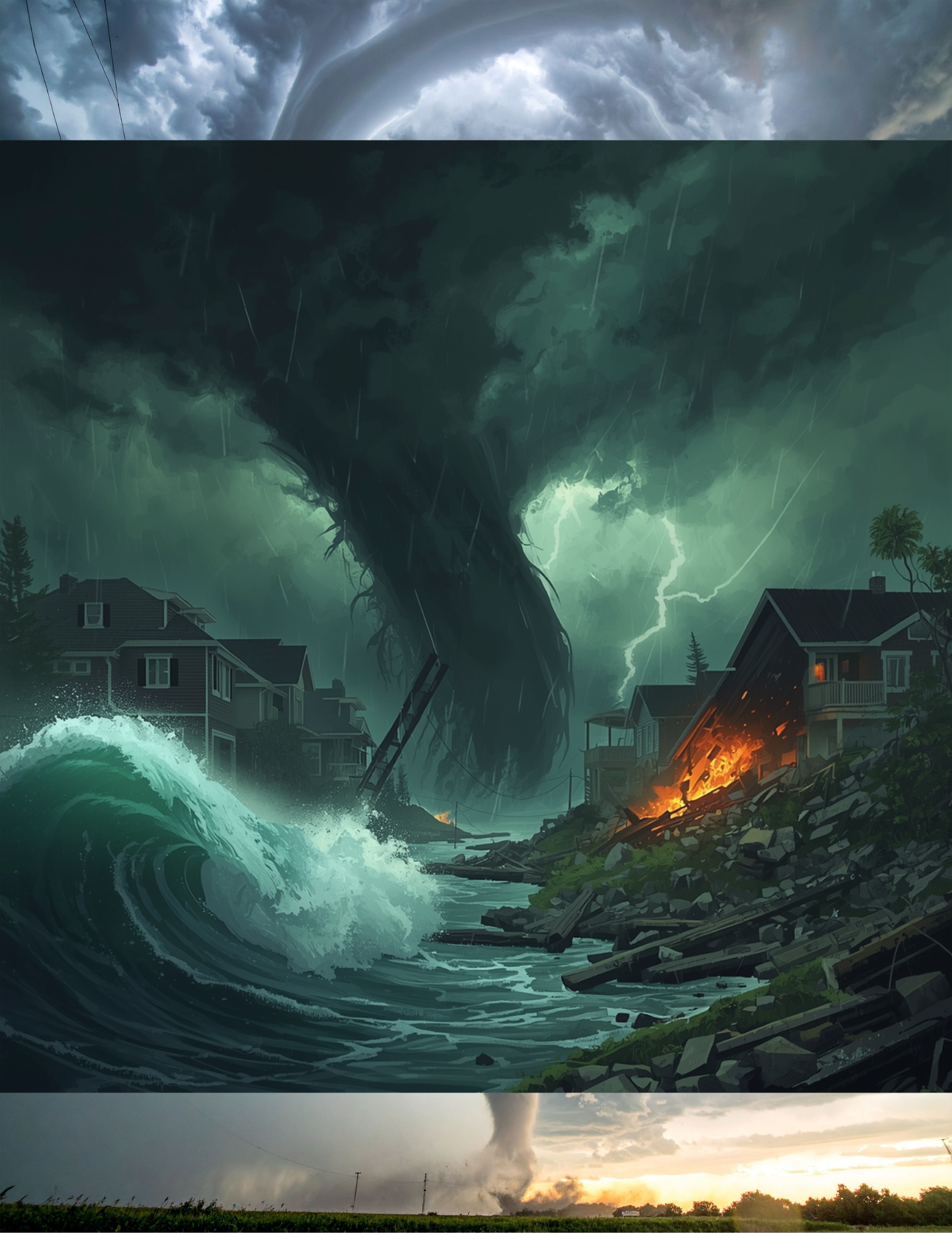

THIS IS THE TRUTH ABOUT THE CLIMATE CHANGE RELIGION