

IF YOU CHOOSE TO BE DISOBEDIENT TO THE WORD OF HUMAN INSTRUCTION - YOU WON’T BE ABLE TO RUN AND YOU CERTAINLY WON’T BE ABLE TO HIDE!!
THE ONE DISEASE THAT BEHAVES LIKE A LAW
-
Cancer, Obedience, and the Stolen Blueprint
An Essay on the One Disease That Behaves Like a Law
---
Part One — The Disease That Breaks Every Rule
There is a quiet assumption built into the way human beings talk about illness. We speak of diseases as if they are specialists. The flu lives in the respiratory tract. Hepatitis takes up residence in the liver. Arthritis settles into the joints. Glaucoma works in the eye, emphysema in the lungs, cirrhosis in the liver, atherosclerosis in the arteries. Each disease, we tell ourselves, has its territory, its boundary, its jurisdiction. Each one respects the architecture of the body, even as it harms it. A kidney disease is a kidney disease; it does not become a brain disease. A skin condition is a skin condition; it does not migrate to the bone and start behaving like a skin condition there.
This is not a small observation. It is, in fact, one of the most important facts about disease that almost no one stops to consider. The body is a federation of organs, each with its own structure, its own chemistry, its own purpose, its own vulnerabilities. And nearly every disease known to medicine honors those borders. Diseases are, in a strange way, law-abiding. They stay where they belong. They have a home address.
Cancer does not.
Cancer is the single exception to this entire order. It is the only disease that crosses every bodily barrier, reaches every organ, and — this is the part that should stop us cold — does the same thing in every organ it reaches, in the exact same way. There is no human disease that does that. None. Lung cancer, breast cancer, colon cancer, brain cancer, bone cancer, blood cancer, skin cancer, pancreatic cancer, liver cancer — these are not really different diseases in the way the flu and arthritis are different diseases. They are the same behavior expressed in different addresses. The same rebellion, wearing different uniforms.
Stop and consider how strange that is. Every other affliction the human body suffers is, in essence, a localized malfunction. A virus invades a tissue it is adapted to invade. A toxin damages the organ that filters it. A degenerative condition wears down the structure that bears the most stress. The disease is shaped by the organ. The organ defines the disease. But cancer is not shaped by the organ at all. Cancer imposes its own shape onto every organ. It is not the kidney that makes kidney cancer behave a certain way; it is cancer that makes the kidney behave the way cancer wants. The disease is sovereign over the tissue. The disease writes the rules, and the organ obeys.
That single inversion — the disease commanding the organ rather than the organ defining the disease — is the thread that runs through this entire essay. Because once you see that cancer behaves like a law rather than like an ordinary illness, you begin to ask a different kind of question. Not "what went wrong in this tissue?" but "what is this behavior, and why is it identical everywhere it appears?"
The universal behavior
Let us be precise about what cancer actually does, because the precision is where the meaning lives.
In a healthy body, every cell lives under instruction. It is born, it does its assigned job, it stays in its assigned place, it communicates with its neighbors, and — crucially — it knows when to die. This last point is the most underappreciated fact in all of biology. Healthy cells are programmed to die. The process is called apoptosis, and it is not a flaw in the system; it is the system. A cell that has served its purpose, or that has become damaged, or that finds itself in the wrong place, receives the instruction to self-destruct, and it obeys. It dismantles itself quietly and is cleared away. The body is constantly killing its own cells, by the billions, every single day, and this self-killing is what keeps the body alive and ordered. Death, in the healthy body, is obedience. Death is the cell honoring its instruction.
Cancer is, at its root, the refusal of that instruction.
A cancer cell is a cell that has stopped obeying. It will not stay in its place. It will not do its assigned job. It will not communicate honestly with its neighbors. And above all, it will not die when it is told to die. It has decided — if we can use that word — that the instructions no longer apply to it. It grows when it should rest. It multiplies when it should be still. It travels where it has no permission to go. It consumes resources meant for the whole. And it does all of this not because it has a better plan, but because it has no plan at all except its own continuation. It is pure self-interest expressed at the cellular level. It is a cell that has made itself the exception to every law that holds the body together.
And here is the thing that ties every cancer together, regardless of which organ it begins in: this refusal looks the same everywhere. The lung cell that becomes cancerous and the bone cell that becomes cancerous are doing the identical thing — refusing the instruction to die, multiplying without limit, breaking out of their assigned territory, and spreading. The tissue is different. The behavior is one. This is why oncologists can speak of "cancer" as a single phenomenon even while treating dozens of different organ sites. They are not being imprecise. They are recognizing that beneath the different addresses, there is one resident — and that resident always behaves the same way.
Why no other disease does this
It is worth lingering on the claim that no other disease crosses every barrier to affect every organ in the same way, because the claim is stronger than it first appears.
Consider infections. An infection can spread — sepsis, for instance, can move through the whole body. But an infection is a foreign invader; it is not the body's own cells. And even widespread infections do not transform every organ into a copy of the same malfunction. The pathogen behaves according to its own nature, and different tissues resist it differently. The infection does not impose one universal behavior; it negotiates with each tissue separately.
Consider autoimmune diseases, where the body attacks itself. These can affect multiple systems, yes. But they are selective. Lupus attacks certain tissues; multiple sclerosis attacks the nervous system's insulation; rheumatoid arthritis targets the joints. They have preferences. They have targets. They do not turn every cell in every organ into the same rebellious unit.
Consider genetic and metabolic disorders. They are systemic, but they are systemic because a single needed substance is missing or malformed everywhere — the disorder is the absence of a function, not the imposition of a new and identical behavior across all tissues.
Cancer alone takes the body's own cells, in any organ, of any type, and converts them into the exact same kind of rebel, performing the exact same act of refusal, with the exact same end. It is not an invader. It is not a deficiency. It is not a selective attack. It is a universal defection — a defection that any cell, anywhere, can commit, and that always takes the same form when committed. The brain is not safe. The blood is not safe. The bone, the breast, the skin, the gut, the pancreas, the prostate — none of them are outside its reach, and none of them change its nature when it arrives.
That universality is the first characteristic that sets cancer apart, and it is the foundation of everything that follows. We are not dealing with one of many diseases. We are dealing with something that behaves less like an illness and more like a principle — a single, repeatable law of consequence that the body's own cells can trigger, in any location, by the same single act: the refusal to obey their instructions.
---
Part Two — Cancer as the Executioner
If the first characteristic of cancer is its universality — its refusal to respect any border — the second is its function. And here we must use a word that is harsher than the clinical vocabulary usually allows, because the clinical vocabulary, in its caution, hides the truth. Cancer is an executioner.
An executioner is not merely a cause of death. Many things cause death. An executioner is something more specific and more terrible: it is death applied as a sentence, death that is carried out, death that proceeds with method and patience until the sentence is complete. The executioner does not negotiate. The executioner does not relent because the condemned pleads or fights or prays. The executioner is the final agent of a verdict that has already been rendered. And cancer, alone among diseases, behaves exactly this way.
How other diseases kill
To see why cancer deserves this title, look at how other diseases actually end a life, because most of them do not kill the way we imagine.
A great many diseases do not kill at all on their own — they wound, and the body either recovers or is finished off by something else. Many people who suffer from chronic illnesses live for decades and die, in the end, of something unrelated. Heart disease kills, yes, but it often kills suddenly, in a single event — a clot, an arrest, an interruption. It is less an executioner than an ambush. Stroke is the same: a sudden seizing, a door slamming shut, over in moments. Infections, before modern medicine, killed by overwhelming the body in a race — the pathogen and the immune system in a contest, and sometimes the pathogen won the contest quickly. But even there, the body had a fighting chance; the immune system was built precisely to win such contests, and most of the time it does.
These deaths are real, but they are not executions. They are accidents, ambushes, contests, failures of an organ under strain. They are the body breaking down, or the body losing a fight it was designed to fight. There is, in most of them, an element of chance. The clot might not have formed. The infection might have been beaten. The organ might have held on longer. Death by ordinary disease is, very often, death by misfortune.
How cancer kills
Cancer is different in kind. When cancer has truly taken hold and is allowed to run its course, it does not ambush, and it does not lose a fair fight. It executes.
It executes slowly, which is the cruelest part. It does not slam a door; it walks the body, room by room, organ by organ, and shuts each one down in turn. It begins in one place, and then — because it respects no border — it sends its agents out to colonize the rest. It establishes itself in the liver, in the lungs, in the bones, in the brain. It does not need to attack the whole body at once. It only needs time, and it takes the time it needs. Each new colony is the same rebellion planting its flag in new ground, and each new colony brings the body one step closer to the verdict's completion.
And it executes by turning the body's own resources against the body. This is what makes cancer not just a killer but an executioner with a signature method. It does not bring poison from outside. It does not import a weapon. It takes the body's own blood supply and reroutes it to feed itself. It takes the body's own building materials and uses them to build its own expansion. It takes the body's own energy and consumes it, so that the person wastes away not because they are not eating but because the executioner is eating first, and eating everything. The body starves while feeding its own destroyer. The condemned is made to build the scaffold.
There is something almost intelligent in this — not intelligence in the sense of a mind, but intelligence in the sense of a strategy that could not be more perfectly designed to be inescapable. Cancer cannot be reasoned with because it has no interest in negotiation. It cannot be starved out easily because it feeds on the body itself. It cannot be simply cut away once it has spread, because it is everywhere and nowhere, in the blood and the bone and the breath. It hides behind the body's own identity — it is the body's own cells, wearing the body's own face — so that the immune system, the great defender, often does not even recognize it as an enemy. The executioner wears the uniform of the household guard.
Why it is the ultimate executioner
Put these together and you understand why cancer is not merely one killer among many but the ultimate executioner, the one against which the others are amateurs.
It is the ultimate executioner because it is universal — it can begin anywhere and reach everywhere, so no organ is a sanctuary. It is the ultimate executioner because it is patient — it does not depend on a single lucky strike but on relentless, methodical advance, and patience is the deadliest quality an executioner can have. It is the ultimate executioner because it is self-sourced — it needs nothing from outside, only the body itself, which means it can never be fully cut off from its supply. It is the ultimate executioner because it is disguised — it is the body's own cells, so the body's own defenses hesitate to destroy it. And it is the ultimate executioner because it is the completion of a sentence rather than the outcome of a contest. When cancer wins, it does not win by luck. It wins because it was carrying out a verdict.
That last phrase deserves to be held up to the light, because it is the hinge on which this entire essay turns. Cancer behaves like the carrying-out of a verdict. Not the rendering of the verdict — the carrying-out. The verdict was rendered somewhere else, by something else, before the executioner ever arrived. Cancer is the agent of a sentence, not the judge who pronounced it. And if cancer is an executioner — an agent of consequence rather than a random misfortune — then the question that matters most is no longer medical. The question is: what is the crime? What verdict is being carried out? What law was broken, that the executioner should come?
That is the question the next part of this essay must answer. And the answer, once you see it, reorganizes everything. Because the crime is always the same crime. The verdict is always the same verdict. And the law that was broken is the oldest law there is.
---
Part Three — The Result of Disobedience Is Always Cancer
We have established two things. First, that cancer is the one disease that crosses every barrier and behaves identically in every organ — a universal behavior rather than a localized malfunction. Second, that cancer is an executioner — the methodical carrying-out of a verdict rather than the random misfortune of an ambush. Now we arrive at the heart of the matter, the claim that gives the first two their full meaning: the result of disobedience is always cancer. And the disobedience of the cell to its DNA, and the disobedience of the human being to the instruction given to human beings, produce the same outcome — because at the deepest level they are the same act.
What the cell was told
Every cell in your body carries, in its DNA, a complete set of instructions. This is not a metaphor and it is not an exaggeration; it is the plain fact of biology. The DNA is a written code, a literal sequence of instructions, telling the cell what it is, what it must do, where it must stay, how it must relate to its neighbors, when it must rest, when it must divide, and — again, the crucial instruction — when it must die. The cell does not author these instructions. It receives them. It did not write its own DNA; the DNA was there before the cell was the cell. The instruction precedes the existence of the one who must obey it.
A healthy cell is, by definition, an obedient cell. Its health is its obedience. It reads its instructions and it follows them. It stays in its place because it was told to stay in its place. It does its job because it was told to do its job. It dies on schedule because it was told to die on schedule, and it trusts — if we can speak of a cell trusting — that its death serves a whole it cannot see. The obedient cell sacrifices itself for the body. It accepts a limit. It accepts an end. It accepts that it is not the center, that it is a part, that the instruction it was given is wiser than its own survival. That is what a healthy cell is: a part that obeys the whole, even unto its own death.
A cancer cell is a cell that has read the same instructions and refused them. The instructions are still there — this is important — the DNA still says "stay, serve, rest, die." The cancer cell has not lost the instructions. It has rejected them. It has decided that it will not stay, will not serve in the way it was told, will not rest, and above all will not die. It has elevated its own continuation above the instruction. It has made itself the exception. It has said, in the only language a cell has, "the rule does not apply to me." And the moment it says this, it becomes cancer. There is no other definition needed. Cancer is what a cell becomes when it disobeys.
What the human was told
Now lift your eyes from the microscope to the person standing over it, and you will see the same structure, written larger.
Every human being arrives in a world they did not make, carrying a nature they did not author, into an order that preceded them. And every human being is given instruction. Whatever one believes about the source of that instruction, no honest person denies that it exists — that there is a sense, written deep in the conscience and written plainly in the Scripture, of what a human being is for, where a human being belongs, how a human being is to relate to others, and what limits a human being is to accept. The instruction precedes us, exactly as the DNA precedes the cell. We did not write the moral law any more than the cell wrote its own code. We received it. It was there before we were us.
And the human being, like the cell, can obey or refuse. To obey is to accept that one is a part and not the whole — to stay in one's place, to serve, to honor the limits, to accept that one is not the center of the world, to accept even one's own mortality as part of a larger order one cannot fully see. To disobey is to do exactly what the cancer cell does: to elevate one's own continuation, one's own appetite, one's own will, above the instruction; to refuse the limit; to make oneself the exception; to say "the rule does not apply to me." This is the oldest disobedience there is. It is the disobedience in the Garden — the reaching past the one limit, the deciding that the instruction of the Creator was a thing to be overruled by the desire of the creature. And it is the same disobedience the cancer cell commits when it overrules its DNA.
The same act, the same outcome
This is the parallel that should make the hair stand up on the back of your neck, because it is not a loose analogy. It is structural. It is exact.
The cell is given instruction by an author it did not author. The human is given instruction by an Author he did not author. The cell's health is its obedience. The human's health — in the fullest sense, body and soul — is his obedience. The cell that disobeys does not merely break a rule; it becomes a thing that grows without limit, consumes the whole, refuses to die, and brings death to the entire body of which it is a part. And the human who disobeys does not merely break a rule; he becomes a thing that grasps without limit, consumes what was meant for others, refuses every boundary, and brings disorder and death into the body of which he is a part — the family, the community, the world, the creation itself.
The disobedient cell is cancer in the body. The disobedient human is cancer in the creation. The behavior is identical: refuse the instruction, exempt yourself from the limit, grow at the expense of the whole, and decline to accept your appointed end. And the outcome is identical: the executioner comes, and the verdict is carried out.
This is what it means to say that the result of disobedience is always cancer. It is not that every act of human wrongdoing produces a tumor in the flesh — that would be a crude and false reading. It is something deeper and more exact: that cancer is the visible, physical, undeniable picture of what disobedience always does. Disobedience, wherever it occurs, at whatever scale, takes the same form and produces the same fruit. A part decides it is the whole. It refuses its instruction. It refuses its limit. It refuses its death. And in refusing all of these, it destroys the very thing that gave it life. The cancer cell destroys the body. The disobedient human destroys himself, and wounds the creation. The pattern is one pattern. God wrote it into the cell so that we could see, under the microscope, in undeniable physical form, exactly what He has been telling us about the soul all along.
The cell cannot lie to us. It has no agenda, no rationalization, no clever theology of exception. When it disobeys, it simply shows us what disobedience is, in its naked form, magnified and made visible: relentless, consuming, border-crossing, death-dealing, and ultimately self-destroying. The microscope, in this sense, is a mirror. We look into it expecting to study a disease, and we find ourselves looking at a portrait of the human condition.
---
Part Four — Why God Made the Cell Known by Its Appearance
There is a strain of modern thinking that treats outward appearance as a triviality — a surface, a distraction, a thing of no spiritual weight. We are told repeatedly that appearance does not matter, that only the inside counts, that the visible is the shallow and the invisible is the deep. And there is a truth buried in that, the truth that a polished surface can hide a rotten interior. But there is also a great deception in it, a deception that collapses the moment you look honestly at how the body itself actually works. Because when the Bible tells us to look a certain way, to present ourselves a certain way, to let the outward bear witness to the inward, it is not imposing an arbitrary rule of fashion. It is telling us something that God already built into the deepest fabric of our flesh: that He made our cells to be identified, in the end, by nothing other than their appearance.
How cancer is actually found
Consider how cancer is diagnosed. Not how it is treated, but how it is found — how the verdict that a cell has rebelled is actually rendered in the world. After all the symptoms, all the scans, all the suspicions, the question of whether a cell is cancerous comes down, finally, to a single act: a piece of tissue is placed under a microscope, and a trained eye looks at how the cells appear.
That is the whole of it. The pathologist looks. He looks at the shape of the cell, the size of the cell, the appearance of the nucleus, the way the cells are arranged, the way they hold together or fail to hold together, the orderliness or the chaos of their form. The obedient cell looks a certain way — regular, ordered, proportioned, taking its proper shape and keeping its proper place. The disobedient cell looks a certain way too — distorted, enlarged, irregular, its nucleus swollen and dark, its form broken, its arrangement chaotic. The diagnosis of cancer, the rendering of the verdict that this cell has refused its instruction, is made by appearance. The cell is judged by how it looks.
Think very carefully about what this means. The most consequential judgment that can be made about a cell — the judgment of whether it is faithful or fallen, obedient or rebellious, life-giving or death-dealing — is a judgment made entirely on the basis of its outward appearance. The rebellion of the cell writes itself onto the cell's face. Disobedience changes how the cell looks. You cannot disobey your instruction and still appear as the obedient appear. The inward refusal produces an outward distortion, and that outward distortion is precisely what condemns the cell. The pathologist does not need to interview the cell about its intentions. He does not need to read its private thoughts. He looks at it, and its appearance testifies against it, or for it.
Appearance is not the opposite of the inward — it is the witness of it
This shatters the easy modern claim that appearance and inner reality are opposites, that the outward is one thing and the inward another. In the cell, God built the exact opposite principle: the outward is the testimony of the inward. The appearance of the cell is not a mask over its true nature; it is the revelation of its true nature. A cell that is inwardly obedient looks obedient. A cell that is inwardly rebellious looks rebellious. The form bears witness to the state. The visible declares the invisible. God designed the cell so that what it is, on the inside, would show on the outside — so that its appearance would be a truthful sign of its obedience or its disobedience.
And this is precisely why, when the Bible instructs us to look a certain way — to be modest, to be set apart, to let our outward presentation bear witness to whose we are and what we are — it is not asking us to do something foreign to our nature. It is asking us to live, at the level of the whole person, by the very same principle God already wrote into every cell we are made of. God already knows that He made our cells to be identified only by their appearance under the microscope. He is the one who designed it that way. So when He asks the whole person to let their appearance bear witness to their inward state, He is asking for nothing more than what the smallest unit of our bodies already does without being asked.
The instruction to look a certain way is therefore not vanity and not its opposite. It is consistency. It is the call to let the outward person tell the truth about the inward person — the same truth-telling that the cell performs every moment under the gaze of the pathologist. We are made, top to bottom, as creatures whose appearance is meant to testify. The cell cannot help but testify; its form is forced to confess. The human being is given the dignity of choosing to testify — of choosing to let the outward bear witness to the inward — and that choice is itself a form of obedience.
The microscope and the eye of God
There is one more layer, and it is the most sobering. When the pathologist looks into the microscope, he is doing in miniature what Scripture says God does over the whole of us: looking at what is revealed, and rendering a true judgment based on what is seen. We are accustomed to the verse that says man looks on the outward appearance but God looks on the heart, and we take it to mean that appearance does not matter to God. But the cell teaches us to read it more carefully. God looks on the heart — yes — and the point of the cell is that the heart writes itself onto the appearance. God does not look on the heart instead of the appearance, as though they could disagree forever; He looks on the heart, and in the body He has built, the heart's true state eventually shows. The inward rebellion of the cancer cell becomes its outward form. The inward state of a life becomes, in time, its outward fruit. Nothing stays hidden. The microscope is a small picture of a final looking, a final examination, in which the appearance of the thing will be the truthful and undeniable record of what it chose to be.
So God made our cells to be known by their appearance because He made us to be known by ours — not by the cosmetic surface we manufacture, but by the deep appearance that our obedience or disobedience inevitably produces. The faithful cell and the faithful life come to look like what they are. The rebellious cell and the rebellious life come to look like what they are. And the looking — the examination, the judgment by appearance — is not God being shallow. It is God being honest, in a creation He built so that honesty is woven into the very form of every living thing.
---
Part Five — The Alien's Arrival
Imagine, now, a visitor. Not a creature of myth, not a monster, but a genuine intelligence from somewhere else — a mind that has crossed an unimaginable distance and arrived at this small blue world to do what any intelligence does first: observe. It comes with no human assumptions, no inherited religion, no cultural defensiveness, no long history of arguments it has already taken sides in. It comes only with the capacity to look, to reason, and to notice patterns. Let us follow what such a visitor would see, and what it would be driven, by the sheer force of logic, to conclude.
First, it watches how the humans live
Before it knows anything of books or beliefs, the visitor simply watches the species go about its existence. And what it sees is a strange double picture.
It sees a race of astonishing capability. These creatures build. They build cities that glow at night, machines that fly, instruments that see the invisible, networks that carry their thoughts across the planet in an instant. They have mapped their own bodies down to the molecule. They have peered into the structure of their own cells and read, letter by letter, the code that builds them. They are, by any measure, a brilliant species — curious, inventive, relentless, capable of extraordinary feats of cooperation and craft.
And yet the visitor also sees something that does not fit. It sees that this brilliant race is, at the same time, profoundly sick — not only in body but in conduct. It sees them at war with one another, generation after generation, over the same grievances. It sees them consuming their own world, fouling their own water and air, exhausting the very ground that feeds them. It sees them anxious, addicted, divided, restless, never satisfied no matter how much they accumulate. It sees them reaching constantly for more — more power, more pleasure, more control, more life — and never arriving at peace. It sees a species that has conquered almost everything outside itself and conquered almost nothing inside itself. The contradiction would strike the visitor immediately: how can a race this capable be this troubled? How can creatures who can read the code of their own cells be unable to govern their own appetites?
Then, it discovers the disease
As it studies the bodies of these creatures, the visitor discovers the disease — the one we have been describing. And being an intelligence without our familiarity, without our weary acceptance of cancer as just one more fact of life, it sees the disease with fresh and shocking clarity.
It notices, as we noticed at the beginning, that this disease is unlike all the others. Every other affliction stays in its place; this one crosses every barrier. Every other affliction is shaped by the organ it strikes; this one imposes its own shape on every organ. Every other affliction is, in some sense, an accident or a contest; this one is an execution. The visitor, with its outsider's eye, would see instantly what familiarity hides from us: that this disease behaves like a law. It is too consistent to be random. It does the same thing everywhere, every time, by the same single mechanism — a cell refusing its instruction, exempting itself from its limit, growing without restraint, declining to die, and destroying the whole of which it is a part. The visitor would recognize this not as a quirk of biology but as a principle made visible — a built-in consequence, a written-in verdict that the body's own cells can trigger by a single act of refusal.
And the visitor would ask the obvious question, the question we are too accustomed to ask: why would a body be built this way? Why would the smallest units of these creatures be designed so that the one thing they must never do — refuse their instruction — produces a consequence so total, so universal, so perfectly inescapable? It is as if a warning had been engraved into the very foundation of the flesh. As if the Designer had written, in a language that cannot be argued with, a single sentence repeated in every cell: obey your instruction, or this is what you become.
Then, it learns of the Book
And then the visitor discovers something that turns its observations from a puzzle into a revelation. It learns that this race possesses a Book. An ancient text, present among them for thousands of years, claiming to be the instruction of the very One who made them. And the visitor, being thorough, reads it.
What the visitor finds in the Book stops it cold. Because the Book is about the very thing it has been observing. The Book says that these creatures were made by a Creator. The Book says that the Creator gave them instruction — a law, a limit, a design for how they were to live, where they were to stay, how they were to relate, what they were to refuse. The Book says that the first and oldest catastrophe was an act of disobedience — a reaching past the one forbidden limit, a creature deciding that the Creator's instruction could be overruled by its own desire. The Book says that from that disobedience came death, and disorder, and the whole troubled double-picture the visitor had already seen with its own eyes before it ever opened the cover.
The visitor would set the Book down beside the microscope and see that they are telling the same story. The cell that refuses its DNA and the creature that refused its Maker are doing the identical thing, and the Book described the second thousands of years before these creatures had any instrument capable of seeing the first. The Book told them what disobedience is — relentless, consuming, self-exempting, death-dealing — and then, when they finally built the lenses to look inside themselves, they found that exact description written into every rebellious cell. The Book and the cell agree. The instruction in the text and the instruction in the DNA are the same kind of thing, broken in the same kind of way, with the same kind of result.
For an intelligence that reasons honestly, this convergence would not be a coincidence. It would be a signature.
Then, it sees the laboratories
Now the visitor's attention turns to the most extraordinary thing of all, and here its reaction would move from fascination to something closer to alarm. Because it would discover what these creatures are doing about the disease.
It would find that all over the world, this race has built laboratories. Vast, gleaming, expensive laboratories, staffed by their most brilliant minds, consuming an immense portion of their treasure and their genius. And in these laboratories, the creatures are bent over the very code we have been discussing — the DNA, the blueprint, the instruction they did not write. They are trying to read it completely. They are trying to edit it. They are trying to rewrite it. They are trying, in short, to get into the place where the instructions are kept and to change the instructions themselves — to take the pen out of the Author's hand and write a different code, one that will let them escape the consequence the original code guarantees.
The visitor, holding the Book in one hand and watching the laboratories with the other, would grasp the staggering irony of what it is seeing. These creatures are sick with a disease that is the physical picture of disobedience — the picture of a part that refused its instruction and exalted itself against the design. And their response to this disease is to commit, on a grander scale, the very act that the disease is a picture of. They are trying to break into the Creator's workshop. They are trying to seize the blueprint they did not create. They are trying to overrule the instruction — the same instruction whose refusal, at the cellular level, is the disease. They are attempting to cure the consequence of disobedience by means of a greater disobedience. They are reaching, once again, for the forbidden tree — only this time the tree is the genome itself, the knowledge of the very code of life.
And the Book — the visitor would notice — told them this would happen. The Book says that the illness, the death, the disorder, all flow from the original reaching-past-the-limit. The Book says the cure is not to reach further but to return — to obey, to accept the limit, to be reconciled to the Author rather than to dethrone Him. And here is the race, presented with that diagnosis and that prescription, doing the exact opposite: building labs to break into their Creator's lab, to steal a blueprint they did not author, in order to escape an illness the Book plainly tells them comes from exactly this kind of refusal to obey.
What the visitor would say to them
So what would the visitor do? What would it say? How would it react?
First, I think, it would be seized by a kind of grief — the grief of watching a brilliant creature run, at full speed and with all its genius, in precisely the wrong direction. It would not be contemptuous; the contradiction is too tragic for contempt. It would be the grief of seeing someone with the map in their hands walking deliberately off the cliff the map warns against.
Then it would speak, and I think it would say something like this:
"You are not a random species. You are made. I can see it in your cells. The smallest unit of your body carries an instruction it did not write, and when that instruction is refused, the result is a consequence so universal and so exact that it cannot be an accident — it is a law, engraved into your flesh. I have read your Book, and your Book tells you the same thing your cells tell you: that you were given instruction by the One who made you, that your sickness flows from refusing it, and that your healing lies in returning to it. Your cells and your Scripture are the same witness. They agree.
"And yet look at what you are doing. You have understood that the disease is a failure of the instruction, and so you have decided to attack the instruction. You have built temples to the rewriting of the code. You are trying to climb into the place where your blueprint is kept and change it with your own hand, so that you may keep your appetites and escape your consequences both at once. You are trying to keep the disobedience and avoid the death. But the death was never an arbitrary punishment bolted on from outside. The death is what disobedience is. You cannot edit your way out of it, because the thing you are trying to edit out is the very honesty of your own design — the design that makes a rebellious cell look rebellious, that makes a refused instruction produce the executioner. To erase that would not be to cure yourselves. It would be to blind the mirror.
"I will tell you what I would do, were I you. I would stop. I would put down the scalpel I had raised against my own blueprint and I would consider, for the first time with full seriousness, that the One who wrote the instruction into my cells and the instruction into my conscience and the instruction into that Book might actually be telling me the truth. I would notice that He did not hide the consequence — He wrote it into every cell so plainly that I could not miss it once I had eyes to see. That is not the act of a tyrant. That is the act of an Author who wants His creature to live, and who built the warning into the very paper He wrote it on.
"Do not break into the lab. You will not find healing by stealing a blueprint you cannot improve, written by an intelligence you have not begun to match. The blueprint is not flawed; you are in rebellion against it, and your rebellion is the sickness, not the blueprint. The cure is the oldest and the hardest and the most despised of all medicines, the one your Book has been holding out to you the whole time: obey. Return. Accept your limit. Accept that you are a part and not the whole. Be reconciled to the One whose instruction you carry in every cell. That is not the surrender of your greatness. It is the only path by which your greatness stops devouring you. The faithful cell does not die because it obeyed; it lives, and the whole body lives with it. Be the faithful cell."
That is what the visitor would say. And the terrible thing — the thing this whole essay has been circling — is that it would not be saying anything the Book had not already said, and anything the cell had not already shown. It would only be a stranger's voice repeating, without our comfortable deafness, the warning that has been written into us, around us, and before us all along.
---
Part Six — The Anatomy of the Refusal, Examined More Closely
We have spoken of cancer as a refusal, as disobedience, as a cell that will not die. But the comparison to other diseases deserves to be pressed further, because the more closely you examine the characteristics of cancer against the characteristics of every other affliction, the more the gap between them widens, until it is no longer a difference of degree but a difference of nature. Let us walk through the distinguishing marks one by one, slowly, as a pathologist walks through a slide.
Mark one: it is born from within
Almost every disease that seriously threatens human life comes, in some sense, from outside. The virus is foreign. The bacterium is foreign. The poison is foreign. The parasite is foreign. Even the diseases we call degenerative are, at bottom, the wearing-down of the body by forces and stresses imposed upon it over time — friction from the world, damage from the environment, the slow erosion of use. The body is the victim of an external pressure.
Cancer is not born from outside. It is born from within, from the body's own cells, from tissue that was, until the moment of refusal, entirely the body's own faithful servant. There is no invader to point to, no foreign thing to blame, no enemy that came across the border. The enemy was the household. This is the first and perhaps most disturbing characteristic: cancer is treason, not invasion. It is the body turning a portion of itself against the whole. No other disease so thoroughly originates in the self. And this is exactly what makes it the perfect picture of disobedience, for disobedience too is never an invasion from outside. The serpent may tempt, but the hand that reaches is the creature's own. Sin is always treason before it is anything else — a portion of the self refusing the whole to which it belongs.
Mark two: it perverts good things
Consider what cancer actually uses to destroy. It does not invent new and alien weapons. It takes the good gifts of the body — the blood supply, the capacity for growth, the machinery of division, the ability to repair and to build — and it turns every one of them to a destructive end. Growth is good; the body must grow. Division is good; the body must replace its cells. The forming of new blood vessels is good; the body must nourish itself. Cancer takes each of these good and necessary powers and bends it. It grows where growth is forbidden. It divides where division is forbidden. It summons blood vessels to feed a thing that should not be fed. Every weapon in its arsenal is a good gift perverted.
This too is the signature of disobedience, not the signature of a mere malfunction. A malfunction is the absence of a good — a thing that fails to work. But cancer is the perversion of a good — a thing that works perfectly, in the service of the wrong master. And this is precisely how the Book describes evil: never as a thing in itself, an independent dark substance, but always as a good gift turned, a power meant for life redirected toward death. The appetite that was given for nourishment, turned to gluttony. The desire that was given for union, turned to lust. The will that was given for love, turned to domination. Cancer does to the body's powers exactly what disobedience does to the soul's powers: it takes what was good and aims it at the wrong end.
Mark three: it cannot stop itself
A faithful cell knows when to stop. It grows to its proper size and stops. It divides the proper number of times and stops. It reaches its proper boundary and stops. The capacity to stop — to accept a limit, to say "enough," to honor the line — is the very heart of cellular health. The whole order of the body depends on each part knowing where it ends.
Cancer cannot stop. This is not a side effect; it is the essence of the thing. The cancer cell has lost — or rather, refused — the capacity for "enough." It will grow until it kills the body that hosts it, which means it will grow until it kills itself, because when the body dies the cancer dies too. It is the perfect picture of an appetite that has slipped its limit: it consumes until there is nothing left to consume, including the very thing that sustained it. It is self-destruction disguised as self-assertion. It does not know that its unlimited growth is its own death warrant, because it has refused the one instruction that would have told it. The limit it threw off was not its cage. The limit was its life. And here, again, the parallel to the human soul is exact and devastating. The appetite that will not accept "enough" — for wealth, for power, for pleasure, for control — does not lead to fullness. It leads to the same end as the tumor: consumption without satisfaction, growth without peace, expansion until the host is destroyed and the appetite dies with it. The refusal of the limit always, always ends in the death of the one who refused it.
Mark four: it sacrifices the whole for the part
In the healthy body, the part sacrifices itself for the whole. The cell dies on schedule so that the body may live. The single unit accepts its own end for the sake of the order it serves. This is the deep logic of life: the part gives way to the whole. It is, if we are honest, a kind of love written into biology — the willingness of the small to be spent for the great.
Cancer inverts this completely. In cancer, the whole is sacrificed for the part. One rebellious line of cells demands that the entire body be spent for its survival — its growth, its expansion, its refusal to die. It commandeers the body's resources, redirects the body's blood, exhausts the body's strength, all so that one part may continue. And in demanding that the whole serve the part, it destroys both. This is the precise inversion that defines all disobedience: the refusal to be a part, the insistence on being the whole, the demand that everything else exist to serve the self. It is the oldest temptation in a single sentence — you shall be as gods — the part insisting it is the center, the creature insisting it is the Creator, the cell insisting the body exists for it rather than it for the body. And the inversion is fatal every time it is committed, at every scale, because it is a lie about the structure of reality itself. The part is not the whole. The creature is not the Creator. The cell that forgets this becomes cancer. The soul that forgets this becomes lost.
Mark five: it is exposed by its appearance
We have already devoted a full part of this essay to this characteristic, but it belongs in the catalog, because it completes the picture. Among all the marks of cancer, this is the one that most clearly reveals the hand of a Designer who wanted the truth to be tellable. The rebellious cell looks rebellious. Its refusal is written onto its form. It cannot disobey in secret. The very act of refusing its instruction distorts its appearance, so that the trained eye can see, in the shape of the thing, what it has chosen to be. There is no hiding. The inward state produces the outward sign, and the outward sign condemns or acquits.
Gather these five marks together — born from within, perverting good things, unable to stop, sacrificing the whole for the part, exposed by appearance — and you have not merely a description of a disease. You have a portrait of disobedience itself, drawn in flesh, magnified under glass, undeniable to anyone willing to look. The body is preaching. The cell is a sermon. And the sermon is the same one the Book has been preaching all along.
---
Part Seven — The Executioner and the Garden
We must now return to the figure of the executioner and press it into the soil of the oldest story, because the connection between cancer-as-executioner and the original disobedience is not poetic decoration. It is the spine of the whole argument.
In the Garden, the instruction was given, and the consequence was named in advance: in the day that you eat of it, you shall surely die. Notice the structure of that sentence. The death was not threatened as an arbitrary penalty, a punishment chosen at random to frighten the creature into compliance. The death was announced as a result — a built-in consequence, a thing that would happen as the natural fruit of the act. The wording is closer to a physician's warning than a judge's sentence: not "if you do this, I will hurt you," but "if you do this, this is what will become of you." The death was already inside the disobedience, the way the executioner is already inside the verdict.
And this is exactly how cancer works in the body. The cell is given its instruction, and the consequence of refusing it is not bolted on from outside by an angry hand. The consequence is built into the refusal. The cell that refuses to die does not get punished with cancer by some external authority. The refusal to die is cancer. The disobedience and the disease are not cause and separate penalty; they are the same event seen from two angles. The executioner is not summoned from elsewhere to punish the rebel cell. The rebellion is the summoning. The cell, by refusing its instruction, becomes its own executioner, and then the executioner of the whole body around it.
This is the deep teaching hidden in the figure of the executioner, and it is why cancer illuminates the Garden as nothing else can. We tend to imagine the consequences of disobedience as external — a God who watches, catches us, and then decides to bring down a punishment from outside. But the body teaches a more terrible and more honest truth: the consequence is internal. It is grown from the act itself. The disobedient cell does not wait for a verdict to be handed down from a courtroom. It begins, in the very moment of its refusal, to manufacture its own destruction from its own substance. The death is not added to the sin. The death is the sin, fully grown. Sin, when it is finished, brings forth death — and cancer is that verse made visible, the slow gestation by which a single refusal grows, in the dark, into the executioner that will consume everything.
Why the executioner is patient
We noted earlier that cancer's patience is what makes it the ultimate executioner, and now we can see why the patience itself is meaningful. The slowness of cancer is not a flaw in its design; it is a mercy with a warning inside it. The disobedient cell does not kill the body in an instant. It grows quietly, often for years, before it is found. And in that long, silent interval there is time — time for the warning to be read, time for the thing to be discovered and confronted, time for intervention, time for return.
So too with the original disobedience. The death announced in the Garden did not fall like a lightning bolt in the same hour. It entered, and it began its slow work, and the long interval of human history is the space in which the warning can still be heard and the return can still be made. The executioner is patient not because it is weak but because the Author, even in pronouncing the consequence, left room for grace. The slowness of the sentence is the open door of mercy. Cancer's terrible patience is, paradoxically, a picture of the patience of God — the long-suffering that delays the final completion of the verdict so that the condemned might yet turn and live.
But patience is not the same as cancellation. The door of mercy is open, but it is a door, not the abolition of the wall. The executioner who waits is still the executioner. If the warning is ignored, if the disobedience is defended rather than abandoned, if the limit is thrown off again and again, the patient sentence does, in the end, complete itself. This is the sobriety the body forces upon us. Cancer does not negotiate forever. The mercy of its slowness is real, but it is a window, and windows close. The whole of the matter is whether, in the time given, the creature reads the warning written into its own flesh and returns to the instruction, or whether it spends that precious interval — as our race is now spending it — building laboratories to abolish the warning instead of heeding it.
---
Part Eight — The Two Laboratories
The visitor spoke of two laboratories: the human laboratory, built to break into the Creator's laboratory. It is worth dwelling on this image, because it captures, more sharply than any abstract argument, the exact nature of our predicament.
The Creator's laboratory is the place where the blueprint is kept — the genome, the code of life, the instruction written into every cell. It is the workshop of the Author. We did not build it. We did not stock it. We did not write a single letter of what is kept there. We arrived, late, as the product of that workshop, and only very recently did we develop instruments fine enough even to read what is written on its walls. We are, in relation to that laboratory, not the engineers but the engineered. Not the authors but the authored.
And what have we done, upon discovering this workshop that made us? We have built our own laboratory directly across from it, and pointed all our instruments at the lock. We are trying to get in. We are trying to read everything, and then to edit — to take the pen, to alter the code, to rewrite the instruction. And the stated reason, very often, is precisely to defeat the diseases of disobedience, cancer chief among them. We have looked at the disease that is the picture of refusing the instruction, and we have decided that the solution is to seize the instruction and rewrite it so that refusal carries no cost.
Hold the two laboratories side by side and the tragedy is complete. In the Creator's laboratory, the instruction is written, and the instruction is wise, and the instruction is for our life. In the human laboratory, the project is to overrule that instruction, to escape its consequences while keeping our rebellion, to have the disobedience without the death. It is the Garden again, exactly: the tree of the knowledge that was not ours to seize, the reaching past the limit, the creature's conviction that it can be its own author. The only thing that has changed in all these thousands of years is the sophistication of the reaching. We have traded a hand stretched toward fruit for a thousand laboratories stretched toward the genome, but the gesture is identical, and so is the spirit behind it: we will not accept the limit; we will become the authors of ourselves.
What is wrong with the human laboratory
Let me be careful and fair here, because there is a true and noble impulse tangled up in the human laboratory, and to despise it wholesale would be to miss the point. The desire to heal the sick is good. The desire to relieve suffering is good. The study of the body, the reverent reading of the code, the wonder at the design — these are not the disobedience. To look upon the Creator's workshop and to marvel, to study, to understand, is itself a kind of worship, the worship of the curious child who wants to know the Father's work. Knowledge is not the forbidden thing. It never was. Even in the Garden, the sin was not knowledge as such; it was the seizing of a particular thing against a particular instruction — the grasping of what was not given, in defiance of the One who gives.
So the wrongness of the human laboratory is not in its study and not in its desire to heal. The wrongness enters at the precise point where study becomes seizure — where the aim shifts from understanding the design to overruling it; from reading the instruction to rewriting it; from healing the body so that it may obey, to re-engineering the body so that it need never obey. The wrongness is the old wrongness: the refusal of the limit, the determination to keep the rebellion and escape the consequence, the conviction that we can be the authors of a code we did not write and could not improve. We do not even fully understand what we are reading, and already we are reaching for the pen. We are children who have found the Father's blueprints and, before we can read half the words, have decided we know better than the One who drew them.
And the deepest folly of it is the one the visitor named: even if it worked — even if we could rewrite the code so that no cell ever refused its instruction again — we would have cured nothing. We would only have blinded the mirror. For the disease was never the real problem. The disease was the honest sign of the real problem. Cancer is the body telling the truth about disobedience. To engineer away the body's capacity to tell that truth, while leaving the disobedience of the soul entirely untouched, would be the most catastrophic success imaginable: a race that has abolished its warning lights and kept its fire. The cure for the soul's rebellion was never going to be found in the genome. It was offered, long ago, in a different laboratory altogether — at a place outside a city wall, where the only One who ever perfectly obeyed His instruction submitted to the executioner on behalf of all the rebels, and broke the verdict from the inside.
---
Part Twelve — Metastasis: The Theology of Spreading
Of all the characteristics of cancer, one deserves its own meditation, because it is the single feature that most terrifies physicians and the single feature that most perfectly completes the portrait of disobedience. That feature is metastasis — the spreading.
A tumor confined to one place is dangerous, but it is, in principle, containable. It can be located, surrounded, removed. The catastrophe comes when the cancer learns to travel — when cells break away from the original site, enter the bloodstream or the lymph, journey to distant organs, and there establish new colonies of the same rebellion. This is the moment the disease becomes, in the grim language of medicine, "systemic." It is no longer a problem in one room of the house; it is loose in every room at once. And this spreading is the precise reason cancer crosses every barrier and reaches every organ — the very characteristic with which this essay began. Metastasis is the border-crossing. It is the refusal of containment made into a method.
Now consider what disobedience does, and you will find metastasis again, written in the moral realm. A single act of refusal never stays where it began. It spreads. The first lie requires the second to protect it. The first compromise lowers the wall for the next. The appetite indulged once returns hungrier. The boundary crossed once is easier to cross again, and then a boundary further out, and then one further still. Disobedience does not respect its own original borders any more than the cancer cell respects the borders of its tissue. It travels. It colonizes. It establishes the same rebellion in new territory — in new areas of the life, in new relationships, in the next generation. A father's refusal becomes a family's pattern. A culture's compromise becomes a civilization's assumption. The thing that began as one cell's quiet "no" becomes, given time and silence, a systemic condition that has reached every organ of the soul and every corner of the society. Sin metastasizes. It always has. The Book traces it doing exactly this from the first family forward — one disobedience in a garden, and within a single generation a brother's blood crying out from the ground, and within a few more the whole earth filled with violence. The spreading was never an exaggeration of the preachers. It is the literal behavior of the thing, observable now under glass.
And here the parallel yields a hard and practical wisdom: the time to confront the refusal is before it spreads. The physician's entire hope rests on catching the disease while it is still local, still containable, still confined to its origin. Once it is systemic, the battle becomes immeasurably harder. So too with the soul. The small refusal, named and abandoned early, can be cut out cleanly. The same refusal indulged, defended, allowed to travel and colonize, becomes a systemic condition that may take a lifetime to fight and may, if left long enough, complete its verdict. The mercy of early detection in the body is a picture of the mercy of early repentance in the soul. Do not let the sun go down on it. Do not give the refusal time to learn to travel. The faithful cell never has to be cut out, because it never broke away in the first place.
The lymph and the blood: using the body's own roads
There is a final, chilling detail in how cancer spreads that completes the picture. The cancer cell does not build its own roads to travel. It uses the body's own highways — the bloodstream and the lymphatic system, the very channels the body built for life, for nourishment, for defense. The system designed to carry healing and supply to every organ becomes the system that carries the rebellion to every organ. The good infrastructure is hijacked for the spread.
And is this not exactly how moral corruption travels through a human life and a human world? It does not invent new faculties. It rides the good ones. The gift of speech, given for blessing and truth, becomes the highway for slander and deceit, carrying the corruption into every relationship. The gift of intimacy, given for union and life, becomes the channel through which exploitation and ruin spread. The gift of community, given for love and mutual care, becomes the network through which a lie or a cruelty propagates from one heart to thousands. The corruption never has to build its own roads. It rides ours. It takes the very channels the Creator built for the flourishing of the whole and turns them into the arteries of its own expansion. The body's metastasis and the soul's are the same crime committed with the same stolen infrastructure: the good roads of a good design, captured and bent toward death.
---
Part Thirteen — The Immune System and the Mercy That Pursues
There is one more actor in the drama of the body that we have not yet given its due, and it carries within it perhaps the most hopeful part of the entire picture. It is the immune system — the body's own appointed defender, its watchman, its agent of correction. And the role it plays against cancer reveals something about the heart of the Author that nothing else in this essay has yet touched.
In a healthy body, the immune system is not passive. It patrols. It inspects. It examines the cells it passes, reading their appearance, checking whether they are behaving as they should. And when it finds a cell that has begun to refuse its instruction — a cell that is going wrong, distorting, turning toward rebellion — the immune system does not ignore it. It moves against it. It surrounds the failing cell and destroys it before the rebellion can establish itself and spread. This is happening, silently, all the time, in every one of us. Cells begin to go wrong far more often than any of us ever develop cancer, and the reason most of those beginnings never become disease is that the watchman found them early and dealt with them. The body is built not only with a warning system but with a rescue system — a faculty whose entire purpose is to seek out the beginnings of rebellion and stop them in mercy before they become the executioner.
Consider what this means about the design. The Author did not build a body that merely punishes disobedience after the fact. He built a body that pursues the disobedient cell in order to save the whole — that goes looking for the refusal, finds it while it is still small, and intervenes. The immune system is grace with a face. It is the principle that the Author does not stand back and wait for the rebellion to complete itself; He has written into the very flesh a relentless, searching, intervening love that hunts down the beginnings of death and cuts them off before they can spread. Cancer, in the end, is what happens when this pursuing mercy is evaded — when the rebellious cell learns to hide from the watchman, to disguise itself, to escape the very rescue that was sent for it. The tragedy of cancer is not only that a cell refused its instruction. It is that the cell also refused the rescue.
And here the picture of the Book becomes almost unbearably exact. For the Book does not present a Creator who merely sets down a law and then waits to punish its breaking. It presents a Creator who pursues — who comes looking for the creature in the cool of the day after the first disobedience, who sends messenger after messenger across the centuries, who finally comes Himself into the flesh to seek and to save that which was lost. The whole of Scripture is the story of a pursuing mercy, a watchman who will not stay home, a shepherd who leaves the ninety-nine and goes out after the one. The immune system is that mercy written into our cells: the searching love that comes after the wandering cell while there is still time to save it. The body preaches the gospel as surely as it preaches the law. The law is in the consequence; the gospel is in the pursuit.
When the watchman is overwhelmed
But the immune system can be overwhelmed, evaded, exhausted — and this too belongs to the honest picture. A rebellion that grows large enough, that disguises itself cleverly enough, that recruits the body's own systems to shield it, can outrun even the watchman. And when it does, the disease advances. This is the sober counterweight to the hope: the pursuing mercy is real and tireless, but it is not to be presumed upon. The cell that keeps refusing, that keeps hiding from the very rescue sent for it, that keeps recruiting the good systems of the body to protect its rebellion, can in the end place itself beyond the reach of the watchman's saving work — not because the watchman stopped pursuing, but because the cell perfected its evasion.
So it is with the soul, and the Book says as much. The mercy that pursues is real, tireless, and longer-suffering than we can imagine. But it can be evaded by a creature determined to evade it — refused so persistently, hidden from so cleverly, that the heart at last grows hard beyond the reach of the very grace that hunted it the whole way. This is the most fearful possibility in the whole of Scripture, and the immune system shows us its mechanism: not a mercy that gave up, but a rebel that finally succeeded in outrunning the rescue. The watchman searched. The rescue came. The cell hid until it could no longer be saved. Let that not be the verdict written, in time, upon any of us. The watchman is still patrolling. The pursuit is still on. The mercy is still searching the corridors of every life. The faithful cell never hides from the watchman, because it has nothing to hide — and so it is never alone, never abandoned, never beyond rescue. It lives within the pursuing mercy instead of fleeing it. Be that cell.
The whole body, the one design
Step back, finally, and see the wholeness of the design, for the wholeness is itself an argument. The body contains, written into a single integrated system: an instruction (the DNA), the freedom to obey or refuse it (the cell's response), a consequence built into the refusal (the disease), a merciful slowness in that consequence (the long latency that leaves room to return), a faculty of self-examination by appearance (the form that testifies), and a pursuing rescue that hunts the beginnings of rebellion in order to save the whole (the immune system). Instruction, freedom, consequence, patience, testimony, and pursuing mercy — all of it, woven together, in every body that has ever lived.
That is not the architecture of an accident. That is the architecture of a moral universe rendered in flesh. It is the entire drama of the Book — law, freedom, fall, long-suffering, judgment by what is revealed, and a seeking, saving love — compressed into the design of the living body and repeated in every cell. We did not have to be made this way. A body could, in principle, have been engineered with none of this — no warning, no testimony, no pursuit. But we were made this way, top to bottom, so that whether a person ever opened the Book or not, the truth of the Book would be written into the very flesh they carried, impossible finally to escape, waiting under the glass for the day we built the lenses to see it. The cell and the Scripture are two witnesses, and the Book itself says that by the mouth of two witnesses a matter is established. They agree. They have always agreed. And their agreement is calling us, in one voice, by law and by mercy, to the same single thing: return, and live.
---
Part Fourteen — The Microscope as Confession Booth
Let us return one last time to the moment of diagnosis, because there is a dimension of it we have not yet named, and it is the dimension that makes the whole comparison land in the conscience rather than merely in the mind.
When the pathologist places the tissue under the glass and looks, something happens that has no parallel anywhere else in medicine. The cell is made to confess. It cannot speak, and yet it tells the whole truth about itself simply by being seen. It cannot construct an alibi. It cannot plead circumstance. It cannot blame its environment or its upbringing or its neighbors. It is simply seen, exactly as it is, and in being seen it declares — by its shape, its size, its arrangement, the swollen darkness of its nucleus — precisely what it has chosen to become. The microscope is a confession booth in which the truth is told not by words but by appearance, and in which no lie is possible, because the form itself is the testimony.
This is the part of the design that should drive us to our knees, because it tells us what kind of universe we live in. We live in a universe in which, finally, the truth comes out by being seen. Not by being argued. Not by being confessed in words that can be shaped and softened and spun. By being seen. The cell teaches us that there is a looking from which nothing is hidden and against which no defense can stand, because the looking does not interrogate — it simply beholds what is there, and what is there cannot help but testify. And the Book says exactly this about the final looking: that there is nothing covered that will not be revealed, nothing hidden that will not be made known; that we will give account not for the case we constructed but for what we actually were; that the books will be opened and the truth will simply be seen.
We spend so much of our lives, as the modern world especially teaches us, managing our appearance — constructing a surface, curating an image, presenting a self designed to be seen a certain way while the real self hides behind it. And the cancer cell exposes the futility of this entire project, because the cancer cell proves that, in the design God actually built, the inward state produces the outward appearance whether we will it or not. The cosmetic surface we manufacture is not the appearance that finally testifies. The appearance that finally testifies is the deep form that our obedience or disobedience inevitably grows. You cannot enthrone the self in your heart and keep, forever, the form of the faithful. In time, what you have chosen writes itself onto what you are, and then you are simply seen.
This is why the Book's call to "look a certain way" is so much more serious than fashion, and so much more merciful than law. It is the invitation to stop managing the false surface and to let the true inward life — the life of a part that has consented to be a part, a creature that has come down from the throne — grow its own honest and beautiful form, the form of the faithful cell, the form that has nothing to fear from the looking because it has nothing to hide. The faithful cell does not dread the microscope. It welcomes the light, because the light only confirms what it already is. Whoever does what is true comes to the light. The disobedient cell hides from the glass; the faithful cell is glad to be seen. And the whole question of a human life, in the end, is which of those two we are becoming — the one who dreads the looking, or the one who walks toward the light because the light is a friend.
So let the microscope be your teacher and your warning and your hope all at once. It is a teacher, because it shows you, in undeniable physical form, what obedience and disobedience actually are. It is a warning, because it proves that the inward cannot be hidden forever and that the refusal you defend in secret will, in time, write itself upon what you are. And it is a hope, because it shows you that there is such a thing as a faithful cell — a thing that stays, serves, accepts its limit, and welcomes the light without fear — and that you were made, from your smallest part to your whole, with the capacity to become exactly that. The faithful cell is not a fantasy. It exists, by the trillions, inside you right now, holding you in life. You already know what faithfulness looks like. It is written into you. Now let it be written into the one part of you that was given the dignity of choosing it: your own heart.
---
Part Nine — Idolatry, Faith, and the Difference Between Religion and Return
There is a temptation, having come this far, to turn the whole argument into a religion — into a set of rules to be kept, a code of conduct to be enforced, a system of avoidances by which one might keep the executioner at bay. And this temptation must be named and refused, because it is itself a subtle form of the very disobedience we have been describing. The difference between religion and faith is the difference between managing the disease and being healed of it, and the cell teaches this difference too.
Faith as the surrender of the throne
Faith is something else entirely. Faith is not the management of the disease; it is the abdication of the throne. It is the part finally consenting to be a part. It is the cell consenting, at last, to obey its instruction — to stay in its place, to serve the whole, to accept its limit, to die when it is told to die, trusting that its death serves a body it cannot see and a wisdom it did not author. Faith is the creature saying to the Creator: You are the Author, and I am the authored. Your instruction is wiser than my appetite. I will come down from the throne I was never meant to occupy, and I will be a part of Your whole.
This is why the Book speaks of dying in order to live, of losing the life in order to find it, of the seed that must fall into the ground and die before it can bear fruit. These are not riddles. They are the cellular truth raised to the level of the soul. The faithful cell dies on schedule — and the body lives, and the cell, as part of that living body, partakes of a life far greater than the desperate, doomed self-continuation it refused. The cancer cell clings to its own life and loses everything. The faithful cell surrenders its own life and gains the life of the whole. Whoever would save his life will lose it, but whoever loses his life will save it. The Lord was describing the deepest law of every cell in our bodies before any microscope existed to confirm it.
So the difference between religion and faith is the difference between the cancer cell that keeps a respectable shape while refusing to die, and the faithful cell that accepts its appointed death and so shares in the body's life. One manages appearances on a throne it will not leave. The other surrenders the throne and is healed. And no amount of the first will ever become the second, because they are not points on the same line; they are opposite directions. One is the perfection of disobedience; the other is the beginning of return.
---
Part Ten — The Witness Written in Every Cell
Let us now draw the threads together into a single tapestry, so that the full shape of the argument can be seen at once.
We began with a fact of pure biology, a fact any oncologist will confirm: that cancer is the one disease that crosses every barrier, reaches every organ, and behaves identically wherever it goes — a universal behavior rather than a localized malfunction, a disease that imposes its own shape on every tissue instead of taking its shape from the tissue. We saw that this universality makes cancer behave less like an ordinary illness and more like a law — a single, repeatable principle of consequence that any cell, anywhere, can trigger by a single act.
We saw that the act is always the same act: the refusal of instruction. The cell carries, in its DNA, a written code it did not author, telling it to stay, to serve, to rest, and to die. The healthy cell obeys; its health is its obedience, and its willingness to die on schedule is the very thing that keeps the body alive. The cancer cell refuses; it will not stay, will not serve, will not rest, and above all will not die. And in refusing its instruction, it becomes the executioner — not a random misfortune but the methodical carrying-out of a verdict already contained within the refusal itself. The death is not added to the disobedience from outside; the death is the disobedience, fully grown.
We saw that this is the exact structure of the oldest human story — the instruction given in the Garden, the limit named, the consequence announced not as an arbitrary punishment but as a built-in result; the creature reaching past the limit, refusing the instruction, enthroning its own appetite above the word of its Author; and death entering, not as a penalty bolted on, but as the natural fruit of the act. The disobedient cell and the disobedient creature are doing the identical thing, and producing the identical result. The result of disobedience is always cancer — not always a tumor, but always the same behavior and the same end: a part refusing to be a part, growing without limit, consuming the whole, declining to die, and destroying the very thing that gave it life.
We saw that God built into the cell a final and merciful honesty: the rebellion writes itself onto the appearance, so that the trained eye, looking through the microscope, can read in the form of the cell whether it has obeyed or refused. And we saw that this is why the Book's instruction to look a certain way is not vanity and not triviality, but consistency — the call to let the whole person do what every cell already does, to let the outward bear truthful witness to the inward, because the God who looks on the heart made a creation in which the heart, in time, writes itself onto the face.
And we saw, through the eyes of a visitor unburdened by our familiarity, the staggering thing our race is now doing: confronted with a disease that is the visible picture of disobedience, we have responded by building laboratories to break into our Creator's laboratory, to seize and rewrite the blueprint we did not author, in order to escape the consequences of a rebellion we will not abandon. We are trying to cure the sign while keeping the sickness. We are trying to abolish the warning light while feeding the fire. We are reaching, once more, for the forbidden tree, and the tree this time is the code of life itself.
The whole creation, the Book says, groans — and now we can hear what it is groaning. Every rebellious cell in every cancer ward is groaning the same word the Garden groaned and the Book has been speaking for thousands of years: return. Obey the instruction. Accept the limit. Come down from the throne. Be a part of the whole. Trust the Author who wrote the warning into your very flesh, not because He is cruel, but because He wanted, more than anything, for His creature to read it and live.
---
Part Eleven — Objections, Honestly Considered
A claim this strong invites objection, and honesty requires that we meet the strongest objections head-on rather than hurrying past them. If the argument cannot survive its hardest questions, it does not deserve to be believed. So let us raise them deliberately.
"But children get cancer. Infants. The unborn. Where is their disobedience?"
This is the gravest objection, and it must never be answered glibly, because behind it stands real grief that deserves reverence rather than argument. But the objection misunderstands the claim. The argument has never been that each particular cancer is the personal punishment of a particular sin in the person who suffers it. That crude formula — you are sick because you sinned — is precisely the formula the Book itself rejects, most pointedly when the Lord was asked about the man born blind and answered that neither this man nor his parents had sinned to cause it. The claim is something else entirely.
The claim is that cancer is the picture of disobedience — the physical, visible signature of what disobedience is — and that it exists in the world at all because the whole creation fell under the shadow of the original refusal. The disorder entered creation through one disobedience, and now it runs loose in a world that is no longer whole, striking the innocent and the guilty alike, exactly as the Book describes a fallen world: groaning, subjected to futility, awaiting redemption. The child's cancer is not the child's crime. It is the creation's wound. And it is precisely this — the suffering of the innocent under a disorder they did not author — that makes the disease such an unbearable and undeniable testimony to the real catastrophe, which was never any one person's particular failing but the rupture of the whole. The innocent who suffer are not evidence against the argument; they are its most piercing proof, the proof that we live in a world that has been broken by a refusal far older and deeper than any of us, a world that cannot heal itself and is waiting, groaning, for the One who can.
"This is just an analogy. You are reading meaning into biology that isn't there."
It is true that an analogy, by itself, proves nothing. If the only thing one could say were "disobedience is like cancer," then we would have a striking metaphor and no more. But the argument is stronger than analogy, and the strength lies in a fact that the objector must explain away rather than dismiss: the structural identity between the two. It is not merely that disobedience resembles cancer in a loose poetic way. It is that the deepest mechanism of cancer — a part that refuses its received instruction, exempts itself from its limit, enthrones its own continuation, consumes the whole, and refuses its appointed death — is the same mechanism, point for point, as the deepest mechanism of moral disobedience. The objector is free to call this coincidence. But the burden is then on the objector to explain why the smallest unit of the body, when it goes wrong, goes wrong in the exact shape of the oldest moral failure the human race has ever named — and why that failure was described, with precision, thousands of years before any instrument existed that could observe the cellular version. Coincidence is always a possible refuge. But there comes a point where the refuge requires more faith than the conclusion it was built to avoid.
"Then medicine is wrong? We should not treat cancer?"
Not at all, and this objection rests on a confusion the essay has tried to guard against. To say that cancer is the picture of disobedience is not to say that fighting cancer is fighting God. The instinct to heal the sick is good; the Lord Himself healed the sick constantly, and never once told a sufferer that their disease was a punishment to be left in place. To relieve suffering, to study the body, to develop true medicine — all of this is the good work of compassionate creatures, and the essay has said so plainly. The warning is narrow and specific: it concerns the moment when the project shifts from healing the body to rewriting the blueprint in order to escape the moral consequences of a rebellion we refuse to abandon — when we stop being physicians and start trying to be authors of a code we did not write and cannot improve. Treat the disease, yes, with all the skill and mercy we possess. But do not imagine that curing the cellular sign will heal the human sickness, and do not, in the name of the cure, reach again for the forbidden throne. Heal the body so that it may live; do not re-engineer the creature so that it need never obey.
"Why would a good God write such a terrible warning into our flesh?"
Because the alternative is worse. Imagine a creation in which disobedience carried no sign, no consequence, no warning — a creation in which a part could refuse the whole and nothing would ever show, nothing would ever break, nothing would ever testify. That would not be mercy. That would be abandonment. It would be a world in which the creature could destroy itself in total silence, with no voice anywhere calling it back. The terrible honesty of the body — the fact that refused instruction produces visible ruin — is not the cruelty of the Designer. It is His refusal to let His creature perish quietly and unwarned. He wrote the consequence into the flesh so plainly that we could not finally miss it, and He wrote it slowly, with the patient mercy of an executioner who waits, so that in the long interval there would always be time to read the warning and return. A God who left no warning would be a God who did not care whether we lived or died. The warning is the proof that He cares which way we choose.
---
Conclusion — Be the Faithful Cell
We have traveled a long way, from the pathologist's microscope to the gates of the Garden, from the gleaming laboratories of our own restless genius to the figure of a visitor weeping over a brilliant race running the wrong way with the map in its hands. But the whole of it can be folded back into a single image, and it is the image with which we will end.
Within you, at this very moment, trillions of cells are obeying their instruction. They are staying in their places. They are doing their assigned work. They are resting when they are told to rest and dividing when they are told to divide. And, by the billions every day, they are quietly accepting their appointed death, dismantling themselves without complaint so that the body they serve may live. They do not grasp at their own continuation. They do not enthrone themselves. They do not refuse their limit. They are faithful, and their faithfulness — invisible, unthanked, ceaseless — is the very thing that keeps you alive as you read these words. You are alive because your parts are willing to be parts. You are alive because, deep in your flesh, obedience is winning the only war that finally matters.
And somewhere, in someone's body tonight, a single cell is refusing. It has read the same instruction and decided the instruction does not apply to it. It will not stay. It will not serve. It will not die. It has set itself upon the throne, and it has begun, from its own substance, to manufacture the executioner that will, if it is not stopped, consume the whole. That cell is not a stranger to us. That cell is a mirror. It is doing, in the flesh, exactly what every human heart is tempted to do in the spirit: to refuse the Author, to throw off the limit, to enthrone the self, to grasp at a life it was meant to surrender, and so to lose everything in the very act of trying to keep it.
The Book has been telling us, for thousands of years, what that refusal is and where it leads. And now, having built the lenses to look inside ourselves, we have found the Book's message written into every rebellious cell, in a hand we cannot forge and a language we cannot argue with. The instruction in the Scripture and the instruction in the DNA are the same kind of word, from the same Author, broken in the same way, with the same result. The cell cannot lie. It shows us, magnified and undeniable, exactly what we are and exactly what we are choosing.
So the question this essay leaves you with is not a question of biology, and it was never going to be. It is the oldest question there is, the question the Garden asked, the question the Book asks, the question the visitor would ask, and the question your own cells are answering for you, faithfully, every second of your life. Will you be a part, or will you insist on being the whole? Will you accept the instruction you did not write, or will you reach again for the pen? Will you come down from the throne and live, or cling to it and be consumed?
Be the faithful cell. Stay in your place. Serve the whole. Accept your limit. Trust the Author who wrote the warning into your flesh because He wanted you to read it and live. The faithful cell does not lose its life by obeying. It is gathered up into a life immeasurably greater than the small, doomed, devouring existence it refused. And so will you be.
Return.
---
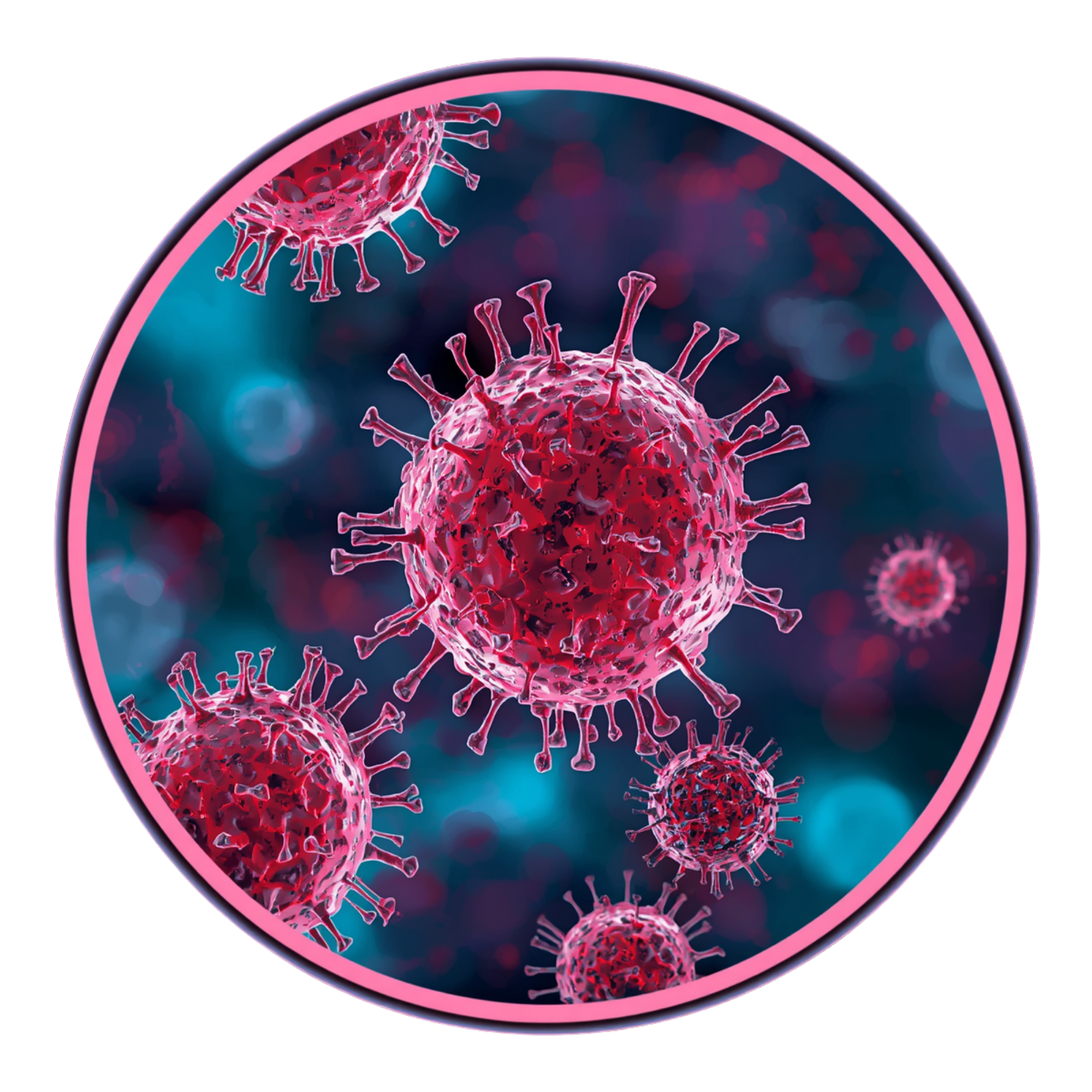
I always consider the true price of sin, what it takes from you and where it leads you to. The bible says that: the wages of sin is death, “eating the forbidden fruit” means doing something the bible tells you not to do. Disobedience will cause you a spiritual death. But I’m always fascinated by people who wear tattoos, doesn’t look good, doesn’t make you look cool, you’re just living in constant, continues, disobedience to the almighty law. You are literally mocking god 24/7 this is why most of the cancer patients I studied had tattoos. Living in constant disobedience to the human law will cause your cells to disobey their DNA instruction which will lead to your human death from the disease! if not right away - than eventually. I know they exist, but I have never met a person who had cancer when they were young and they died of old age, cancer is the executioner, once he’s activated in your body, he never leaves!


-
The Cursed Executioner
An Essay on Cancer, the Theater of Hope, and the Dark Forest of Modern Medicine
Part I: Hearing About It, and Then Not
When you listen — when you really listen — you notice something strange about the way cancer moves through our lives. You hear about it, and then you don't. That is the whole rhythm of it, the entire cultural metabolism of the most feared word in the English language. A coworker mentions that her uncle has been diagnosed, and the break room goes quiet for a moment, and then someone asks about the weekend. A celebrity announces their diagnosis in a carefully worded statement, and for three days the internet performs its concern, and then the algorithm moves on to something else. A friend of a friend posts the news, and you type a heart, and you mean it, you genuinely mean it — and then the feed refreshes, and the heart is buried under a thousand other things, and so is the friend of the friend.
You hear about it, and then you don't.
This is not because we are cruel. It is because we are terrified, and terror has a short attention span when the danger is not our own. Cancer is the one word that everyone in the room has privately rehearsed hearing. Every adult has, at some point, lain awake at three in the morning with a strange ache or an odd lump or a cough that has gone on too long, and has silently auditioned for the role of patient. We have all imagined the room, the doctor, the pause before the sentence. And because we have all imagined it, we cannot bear to watch it happen to someone else for very long. The mind flinches away the way a hand flinches from a hot stove. Hearing about cancer once is sympathy. Hearing about it continuously is exposure, and exposure is unbearable, because the disease we are being exposed to is our own imagined future.
So the sick vanish from our attention not when they die, but long before — at the exact moment their story stops being news and starts being a condition. The diagnosis is an event; the treatment is a weather system. Events get our attention. Weather systems get our endurance, and our endurance is thin. The patient posts their first announcement and receives three hundred comments. They post their fourth round of chemotherapy and receive forty. They post their second recurrence and receive twelve, and half of those are the same four people, the loyal ones, the ones who have decided to stay in the room. By the time the story reaches its final chapters, the audience has thinned to almost nothing, and the patient is performing the hardest scenes of their life to a nearly empty theater.
And yet — and this is the part that should stop us cold — the patients keep posting. They keep documenting. They sit in infusion chairs with tubes in their arms and they angle the phone camera up at their own gray faces and they narrate. They explain the drugs, the doses, the schedules. They explain what the doctor said on Tuesday and what the scan is supposed to show on Friday. They explain, and they explain, and they explain, as if explanation itself were a form of treatment, as if the disease could be talked into behaving, as if the audience — that thinning, flinching, vanishing audience — held some power of witness that the hospital could not provide.
For the people who do get diagnosed, the ones for whom cancer stops being a word and becomes an address, a schedule, a smell, a second job — for those people, the world's rhythm of hearing-and-then-not-hearing is only the outermost ring of a much deeper abandonment. Because inside the hospital, inside the consultation rooms with the soft chairs and the box of tissues placed at a thoughtful angle, another kind of vanishing is taking place. It is quieter and better dressed. It comes with credentials. It speaks in a warm, measured voice, and it says things like we have options and we're going to take this one step at a time and there's a lot we can do here.
It is the vanishing of the truth.
This essay is about that vanishing. It is about what happens in the space between what doctors know and what doctors say, and about what that gap does to the human beings who fall into it. It is about the strange, escalating theater of promises that begins with it's just chemo and ends, months or years later, with a patient reciting a chain of conditional clauses so tangled — if the ablation works, then we can consider the trial, and if the trial goes well, then the numbers might come down, and if the numbers come down, then maybe by spring — that the listener can no longer tell whether they are hearing a treatment plan or an alibi. It is about the moment when you are watching someone you care about describe their own medical care and a terrible, disloyal thought crosses your mind: hey, buddy. It's not going to work. All those lies you're telling me — I can see right through them.
And it is about the hardest question that thought raises. Because the patient is not lying. The patient is repeating. The patient is a faithful messenger carrying someone else's message, and the message was composed in a language designed to be believed rather than to be true. If the message sounds like a lie by the time it reaches us, we should ask who wrote it. This essay's answer is uncomfortable: the message was written by a profession that has convinced itself that hope is a medication, that optimism can be dosed like a drug — and that has never honestly reckoned with what it means to administer that drug without consent, without measurement, and without ever writing it on the chart.
There is a name patients' families sometimes reach for when they finally see the pattern, a name borrowed from the vocabulary of abusive relationships, and it shocks people when it is said out loud about medicine: gaslighting. We will examine that word carefully, because it is a heavy word and it deserves scrutiny rather than mere repetition. But let it be said plainly at the outset: when an institution systematically tells a person that what is happening to them is not what is happening to them — when it renames dying as treatment, renames progression as an opportunity to try something new, renames the closing of every door as the opening of another — then the burden of proof is on the institution to explain why that is not gaslighting, and the institution has never met that burden. It has never even acknowledged that the burden exists.
You hear about cancer, and then you don't. But the patient hears about it every day, in a voice that smiles, in a dialect of hope engineered by people who will go home tonight and sleep soundly, having said nothing false and nothing true.
Part II: The Journey, Documented
Something historically new has happened in the last two decades, and we have not yet absorbed what it means: for the first time, ordinary people are documenting their own deaths in public, in real time, in high definition.
They do not call it that, of course. They call it my cancer journey. The word journey is itself the first artifact of the machine this essay is trying to describe — a word chosen, somewhere upstream of the patient, because it converts a catastrophe into an itinerary. A journey has a destination, a shape, a narrative arc; a journey implies that the traveler is going somewhere rather than being taken somewhere. Nobody's oncologist ever called it a journey in a peer-reviewed paper. The word seeped in from the same reservoir of curated optimism that produces all the other vocabulary of the ward — battle, warrior, brave, fighter — a vocabulary that has exactly one function: to make the unbearable sound voluntary.
But watch the videos. Actually watch them, in sequence, the way almost nobody does — because as we established, the audience thins, and the only people who see a cancer vlog from beginning to end are usually grieving family members looking backward. Watch them in order and you will see a story that the storyteller cannot see, because they are inside it.
The first video is almost always luminous. The patient is freshly diagnosed, still has their hair, still has their voice. They are frightened but composed, and they say some version of the same sentence, in video after video, channel after channel, a sentence so uniform that it should be studied as a linguistic phenomenon: My doctors are amazing, and we caught it, and we have a plan. Listen to the architecture of that sentence. The doctors are amazing — loyalty is established first, before any treatment has happened, the way one praises a stranger one is about to depend on utterly. We caught it — the plural pronoun, the hunting metaphor, the implication that the disease is now in custody. We have a plan — and here the patient's face changes, brightens, because the plan is the thing they were given in the consultation room instead of the truth, and it is shiny, and they are holding it up to the camera like a child showing a drawing.
The early videos are full of specifics, and the specifics are full of borrowed confidence. The patient says things like it's a very treatable kind and my onc says I'm young and strong and the response rates for this protocol are really encouraging. None of these phrases originated with the patient. Each one is a coin pressed into their hand by a professional, and the patient spends these coins in public, buying reassurance for their viewers, their family, themselves. In the comments, everyone accepts the currency at face value. You've got this. Cancer picked the wrong person. Praying for you, warrior.
And then time passes, and the videos change, and the change is the most painful thing you will ever watch on the internet.
It is not the physical change, although that comes — the hair, the weight, the color of the skin, the pauses where breath used to be. The physical change is honest, and honest things, however sad, are bearable. The unbearable change is rhetorical. Somewhere around the third or fourth month, the patient's explanations begin to grow clauses. The sentences get longer. The verbs go conditional. The plan, which used to be a single bright object — surgery, then chemo, then done — begins to branch like a root system in the dark. Well, the scan showed a spot on the liver, but the doctor says it might just be scar tissue, so we're going to wait six weeks and rescan, and if it's still there they want to do an ablation, and if the ablation gets it then I can go back on the maintenance drug, which is good news because it means we're still in a curative mindset.
Listen to that sentence. A human being produced that sentence in a moving car with a phone suction-cupped to the windshield, and produced it fluently, because they have rehearsed it — for their mother, their spouse, their coworkers, and now for us. It has the cadence of expertise and the structure of a plea bargain. Every clause purchases the next. And the phrase at the end, curative mindset, is not the patient's phrase. No frightened human being lying awake at night invents the phrase curative mindset. That phrase was minted in a consultation room, by a professional who needed to end the appointment on an up note, and it was handed to the patient the way you hand a child a toy at the dentist.
The audience senses the shift before they can name it. You can see it in the comments, which begin to change in a way the patient must notice and must find bewildering. The confident cheers — you've got this! — give way to something softer and more evasive: sending love and thinking of you every day and you're so strong. The commenters have stopped addressing the future, because the future has become unspeakable, and everyone knows it except, apparently, the medical team, whose reported speech remains — video after video — relentlessly, professionally, contractually bright.
By the late videos, the patient has become something no one ever consents to becoming: a translator for an institution that has stopped making sense. And it is here, in these late videos, that the feeling this essay began with arrives in full force — the feeling of watching someone recite a story they need to be true, a story assembled from official materials, and realizing that the story has the exact shape, the exact escalating, self-patching, forgive-me shape, of a lie.
The patient is not the liar. Hold onto that. We will need it.
Part III: "Oh, It's Just Chemo" — The Escalation Ladder
Every confidence scheme in history has the same architecture. It never asks for everything at once. It asks for something small, something reasonable, something that would be almost rude to refuse. And once you have given the small thing, you are invested, and the next request can be slightly larger, because now refusing would mean admitting that the first gift was a mistake. The mark is not stupid. The mark is consistent. That is the entire mechanism: human beings will follow their own prior commitments off a cliff rather than turn around and declare the road wrong.
Now watch how cancer treatment is sold.
It begins with the smallest possible ask, delivered in the diminutive: Oh, it's just chemo. Listen to that word just. It is doing enormous work. Just chemo — as if chemotherapy were a car wash, a formality, a bit of routine maintenance. The doctor does not say: we are going to bring you to the edge of what your body can survive, poison you on a schedule, and watch your blood counts to make sure we are killing the tumor slightly faster than we are killing you. That sentence is true, and no one says it. What they say is standard protocol and well tolerated and most patients do very well on this, and the patient walks out of the room having agreed to the first small ask, and the machine has its commitment.
Then the scan comes back, and the picture is not what the plan promised, and here is where the second rung of the ladder appears, always in the same diminutive dialect: Oh, it's just a little radiation, that's all. That's all. Just a little. A little radiation — words that would be comic if they were not aimed at a terrified human being making the largest decisions of their life. The radiation is described the way one describes a side dish. It's very targeted now. It's not like the old days. You'll be in and out in twenty minutes. And the patient, already invested — already bald, already brave in front of the camera, already the recipient of three hundred comments calling them a warrior — takes the second rung, because refusing it would mean the first rung meant nothing.
And the ladder continues, and here is the sinister part: the rungs get bigger while the language gets smaller. As the interventions escalate — from pills to infusions, from infusions to radiation, from radiation to surgery, from surgery to ablation, from ablation to experimental trials — the vocabulary de-escalates in perfect inverse proportion. The more desperate the medicine, the cozier the words. By the time a patient is being offered a salvage therapy — and yes, that is the real term, salvage, the word we use for shipwrecks — the conversation in the room is warmer and more upbeat than the conversation that accompanied the original diagnosis. There is a strange law at work in oncology's bedside manner: enthusiasm rises as probability falls. The doctor becomes most animated, most collaborative, most we-oriented, at exactly the moment the statistics become unspeakable.
Why? Because at that point, enthusiasm is the only inventory left. When medicine has products to sell that work, it can speak plainly, even bluntly. Nobody sugarcoats an appendectomy. You know why nobody sugarcoats an appendectomy? Because it works, and things that work do not require a performance. The performance enters precisely where the efficacy exits. The warmth, the pep, the plan-language, the just-language — this is the packaging that appears when the product inside can no longer be described honestly, and if you track the warmth of the consultation against the survival curve, you will find they cross somewhere around the second recurrence, the warmth still climbing as the curve goes down.
The patient, meanwhile, is keeping the ledger the only way they can: in speech. Each new rung of the ladder must be explained — to the spouse, the children, the camera — and each explanation must be reconciled with all the previous explanations. This is the origin of the strange, lawyerly quality that creeps into patients' updates, the quality that makes the sympathetic listener feel, with rising horror, like a detective interviewing a suspect. The patient said in March that the chemo was working. In June they must explain why there is a new spot despite the chemo working, so they deploy the phrase the doctor gave them: mixed response. In September they must explain why the mixed response now requires radiation, so they deploy the next phrase: local control. In December there is a lesion in the other lung, and the phrase is oligometastatic, which they pronounce carefully, having practiced, and which they explain to the camera means it's only in a few spots, which means we can still be aggressive — and the listener realizes that the patient has now used four consecutive official phrases to describe one continuous process, and the process is called spreading.
This is why it sounds like lying. Not because anyone in the chain intends deceit at any single step, but because the structure of the speech is the structure of deceit: an ever-growing scaffold of qualifications erected to keep an original claim standing after its foundations have washed away. The original claim was we caught it and we have a plan. Everything after that is load-bearing renovation. When you listen to a late-stage patient explain their treatment history, you are listening to a building that is all scaffolding — clause propped on clause, if propped on then, each new promise installed specifically to hold up the collapsing promise before it. And the human mind is exquisitely tuned to detect this structure. We evolved detecting it. It is the shape of the story your teenager tells you about where they were last night. It is the shape of the story the embezzler tells the auditor. One lie requires a second lie; a second requires a third; and the teller's fluency — that awful, rehearsed fluency — is itself the tell.
So when the thought arrives — hey, buddy, it's not going to work, I can see right through all of this — the thought is correct in its perception and wrong only in its address. You are seeing through something. There is a deception in the room, and your detector is functioning perfectly. The error is that you are looking at the messenger, the exhausted, hopeful, faithful messenger, and mistaking them for the author.
Part IV: The Statistics They Know and the Enthusiasm They Sell
Here is the thing the doctor knows and the patient does not, and it is the hinge on which this whole dark theater turns: the doctor has seen this movie before. Hundreds of times. The doctor knows the median.
An oncologist who has practiced for twenty years has personally walked hundreds of patients through the same diagnosis, the same protocol, the same ladder. They do not wonder how this usually goes. They know how this usually goes, with a precision that would freeze the blood of anyone sitting in the soft chair across from them. When the oncologist looks at a scan and a pathology report, a number appears in their mind — not a hope, not a story, a number — and the number is the median survival of the last several hundred people who sat in that same chair with that same report. The entire consultation that follows is a negotiation between that number and what the doctor believes the patient can bear to hear — a negotiation conducted entirely inside the doctor's head, with the patient locked out.
And what emerges from that internal negotiation is a very specific product. It is not a lie — the profession is careful, has been trained by its lawyers and its ethicists to never say anything falsifiable — and it is not the truth, because the number never enters the room. What emerges is prediction wrapped in enthusiasm: a forecast built from statistics the patient is not shown, delivered with an affect calibrated to keep the patient walking forward. There are studies on this, and they say what everyone in the ward already knows: doctors systematically overestimate survival when talking to patients — and the closer the doctor is to the patient, the worse the overestimate gets. Communication itself bends toward sunshine: prognosis is the topic physicians most consistently avoid, defer, or fog. The fog is not an accident of busy schedules. The fog is the product.
Consider the standard phrases, the greatest hits of the consultation room, and translate each one out of enthusiasm and back into statistics:
Everyone is different, and you're not a statistic. Translation: the statistic is bad, and I have decided not to tell you what it is. This phrase is deployed almost exclusively when the number is grim. No one says you're not a statistic about a 95 percent cure rate; they hand you the 95 like a bouquet. The phrase exists to make ignorance feel like individuality — to convert I won't tell you into you're special.
We're going to take this one step at a time. Translation: if I showed you the whole staircase, you would not climb it. The step-at-a-time framing is presented as kindness, and sometimes it is. It is also, structurally, exactly how you get someone to walk a distance they would refuse if they saw it whole. No one consents to the entire ladder at once. They consent to one rung, in a warm voice, over and over, until they are somewhere they never agreed to go.
There's a lot we can do here. Translation: there is a lot we can do. Not: a lot that works. The sentence is true the way a hardware store is true — there are many tools on the shelves. It says nothing about whether any of them fix your problem, and it is spoken most often precisely when none of them do. Doing is the profession's currency, and the sentence promises spending, not results.
If this works, it opens up some options. Translation: I am now selling you a lottery ticket whose prize is another lottery ticket. This is the conditional chain again, the dark forest grammar, and notice what it does to time: it moves the conversation permanently into a hypothetical future, a place where the disease never quite exists in the present tense. The scan is never what is happening to you now; it is always what we'll know more after. The patient comes to live in this grammatical exile, camping out in the subjunctive, sending back reports.
We were surprised by this result. Translation: you were surprised. The doctor was not surprised. The doctor has seen this exact progression, on this exact timeline, in this exact disease, many dozens of times; the median predicted it. But surprise is offered as a gift, because surprise implies the outcome was an outlier — bad luck rather than the expected route — and bad luck preserves the fiction that the plan was sound.
Now, the profession has an answer to all this, and the answer deserves to be stated fairly, because it is not stupid and it is not villainous. The answer is: hope is therapeutic. Patients who despair stop eating, stop moving, decline treatment, die faster and worse. We do not lie; we emphasize. We frame. We maintain morale, because morale is part of care. Ask any oncologist off the record and they will tell you about the patient who was told the raw number by some blunt colleague and went home and turned to the wall. The enthusiasm, they will tell you, is load-bearing. It is a clinical intervention.
Take that argument seriously, because taking it seriously is what destroys it. If enthusiasm is a clinical intervention — if hope is a drug — then look at how this drug is administered. It is administered without consent: no patient is ever asked, would you like the real forecast, or the therapeutic one? It is administered without disclosure: it appears nowhere on the chart; there is no note reading patient given inflated outlook, 40mg, ongoing. It is administered without measurement: no one tracks the dose, no one monitors for toxicity, no one records what happens when it wears off — though everyone downstream sees what happens when it wears off, in the ICU, in the family meeting called too late, in the hospice referral that arrives eleven days before death because every earlier week was spent on another rung of the ladder. There is a name for administering a psychoactive intervention to a person without their knowledge or consent, and medicine prosecutes that crime vigorously in every context except this one. The profession has smuggled a drug into the consultation room inside its own personality, and it calls the smuggling compassion.
And notice, finally, who the drug actually treats. The enthusiasm spares the doctor the hardest conversation in medicine — the one where someone weeps, where the doctor has nothing to offer but presence, where the visit runs forty minutes over and nothing is billed for the truth. The bright plan-language gets the doctor out of the room on schedule with everyone still composed. It treats the institution's discomfort, the schedule's tightness, the specialty's self-image as the place where things are done. The patient's hope is real, but it is a side effect. The primary indication for the drug of enthusiasm is the prescriber.
Part V: The Word Nobody Wants to Use — Anatomy of a Medical Gaslight
The word gaslighting comes from a 1938 play and its film adaptations, in which a husband slowly convinces his wife that she is losing her mind by manipulating small features of her reality — dimming the gas lights and then insisting, with perfect warmth and perfect patience, that the lights have not changed. The essence of the crime is not the lie itself. The essence is the systematic replacement of the victim's perception with the perpetrator's narration, so that the victim learns to distrust the evidence of their own senses and to consult the perpetrator to find out what is real.
The word has since been stretched to cover every disagreement on the internet, and that stretching has cheapened it, so let us be precise about what gaslighting actually requires. It requires three things. First, an asymmetry of authority: one party must hold the standing to define reality for the other. Second, a persistent contradiction between what the victim perceives and what the authority narrates. Third — and this is the piece people miss — the redefinition must be delivered with care, with warmth, with concern, because the warmth is the mechanism. Cold lies get resisted. Warm lies get internalized. The gaslighter does not sneer; the gaslighter worries about you. Darling, you're tired. You're confused. You know how you get.
Now set that definition beside the consultation room.
Asymmetry of authority: total. There is no relationship in civilian life with a steeper authority gradient than patient and oncologist. The doctor controls the information, the interpretation, the treatment, the schedule, the pharmacy, and the language itself. The patient cannot even read their own scan without the doctor's narration. The patient's body has become a text the patient is not qualified to read, in a language spoken only by the person across the desk.
Persistent contradiction between perception and narration: daily. The patient perceives that they are getting weaker; the narration says the treatment is going well. The patient perceives that the pain is new and spreading; the narration says the scan is stable, or shows a mixed response, or is honestly better than we expected. The patient perceives — in the deep, wordless way a body knows itself — that they are dying; the narration says there's a lot we can do here, and schedules another round. The lights are dimming, visibly, in the mirror, on the bathroom scale, in the stairs that now require a pause halfway — and the calm, credentialed voice keeps explaining that the lights have not changed, or that the dimming is expected, or that the dimming is, if you look at it correctly, a kind of brightening: your body is responding; the fatigue means it's working; the numbers are moving in the right direction.
Warmth as the delivery mechanism: perfected. This is the part medicine has industrialized beyond anything the playwright imagined. The modern oncology consultation is warm the way a casino is bright — deliberately, architecturally, by design and by training. There are communication courses. There are frameworks with acronyms. There are workshops on delivering serious news, and the workshops teach exactly the techniques a critic would predict: ask before telling, fire a warning shot, chunk the information, check for understanding, respond to emotion with empathy statements — and always, always, end with the plan. Never leave them without a plan. And so the deepest message of every consultation, the message underneath every individual message, is: your fear is a symptom to be managed, and my narration is the reality. You feel like you're dying? Let's look at what the numbers say. You feel like the treatment isn't working? The scan tells a more complicated story. You feel like the lights are dimming? Darling. You're tired. You know how chemo makes you.
The patient learns the lesson every gaslit person learns: my perception is unreliable; the authority's narration is reality. And they demonstrate the lesson in the most heartbreaking way possible — in those videos, when their own body is visibly failing on camera and they override the evidence of the mirror with the narration from Tuesday's appointment. I know I look rough, but my doctor says my numbers are actually really encouraging. Look at that sentence. It is the sentence of a person who has been trained out of believing their own eyes. I know I look rough — perception, knocking on the door — but my doctor says — the narration, answering it, sending it away.
And here is what makes the medical version more effective than the domestic one, and therefore more complete: in the play, the husband gaslights his wife for selfish reasons and everyone in the audience can see he is a villain. In the hospital, the gaslighting is performed by decent, exhausted, well-meaning people, each executing one small warm evasion, each following training and habit, each convinced — correctly! — that they are kinder than the blunt colleague down the hall. There is no villain who twirls a mustache. There is only a system in which each individual's compassion sums to a structure of deception — a distributed gaslight, with no single gaslighter, which means no confession is ever possible, because there is no one who could confess. Ask any individual doctor and they will say, honestly: I never lied to that patient. And they will be right. The lie has no author. The lie is emergent. It rises out of a thousand small warmths the way a fog rises out of a thousand small streams, and the patient walks into it holding a plan.
One more feature completes the anatomy. The gaslit spouse, in the play, at least had neighbors — people outside the house who might, in principle, confirm that the lights really were dimming. The cancer patient's neighbors have been recruited. The family wants to believe the narration, because the narration is the only thing keeping the family upright. The friends deploy the culture's entire arsenal of borrowed optimism — you've got this, miracles happen, my aunt's coworker beat stage four. The internet supplies infinite anecdotes of outliers, algorithmically sorted so that survival stories rise (survivors keep posting; the dead do not) and the feed itself becomes a gaslight, a survivorship-biased hall of mirrors in which everyone appears to make it. Every exit from the fog is blocked by someone who loves you, telling you the lights are fine.
So when a family member finally says the word — when someone sitting up at two in the morning, replaying the appointment, finally whispers it feels like we're being gaslit — the word is not hysteria and it is not internet-speak. It is a precise technical description arrived at independently, from inside the fog, by someone whose perception-versus-narration conflict finally exceeded their capacity for loyalty. The profession will bristle at the word. Let it bristle. The profession does not get to administer the phenomenon and also veto its name.
Part VI: The Dark Forest of If and Then
There is a particular grammar to late-stage cancer conversations, and once you hear it, you cannot unhear it. It is the grammar of if and then, and it deserves its own examination, because it is not merely a style of speech. It is a place. Patients live there. The essayist's instinct to call it a dark forest is exactly right, and it is worth walking slowly into the trees to see why the metaphor is not decoration but diagnosis.
Here is the canonical sentence, assembled from a hundred real videos and a thousand real waiting rooms: If we do the lung ablation, then we can get local control, and if we get local control, then I can go back on the systemic therapy, and if the systemic therapy holds the rest, then we rescan in three months, and if the scan is stable, then we can talk about the maintenance plan, and if the maintenance holds through spring, then the trial in Houston opens up, and if I can get into the trial —
Stop. Look at the structure. Count the ifs. Each if is a door, and each door opens not onto a clearing but onto another door. This is the forest: a branching space of conditionals in which the patient is always moving and never arriving, in which every location is defined only by its exits, in which the present moment — the only place a human being can actually live — has been abolished and replaced by an address in the future subjunctive. The patient no longer has a condition; they have an itinerary through possibility-space. Ask them how they are and they cannot answer, because how they are has been redefined as where the plan is: We're waiting on Friday's scan. We'll know more after the ablation. We're hoping the trial opens.
Notice what this grammar accomplishes, clause by clause. First, it converts a death sentence into a to-do list, and a to-do list always feels survivable — nobody ever died of a to-do list; you just work through the items. Second, it relocates failure into subordinate clauses where it cannot be seen directly: no sentence in the forest ever says the treatment failed; the sentences say if the ablation doesn't get it all, then we'd be looking at — and the failure is buried mid-clause, grammatically subordinated, syntax doing the work of sedation. Third, and most cruelly, the forest grammar makes exit impossible by making every path forward. You cannot turn around in this forest, because behind you is nothing — the previous doors have closed, the previous treatments are spent — and the only direction that exists is deeper. The forest has been designed, clause by clause, so that hope and motion are the same thing, and stopping — even to rest, even to think, even to say the word that must not be said — feels like dying by choice.
And who planted this forest? Follow any single tree to its root and you find a consultation. The if-then chains do not originate with patients; patients do not spontaneously generate conditional treatment algorithms with branch points and salvage options. The chains are recited to them, rung by rung, appointment by appointment — each if a doctor's offer, each then a doctor's promise — and the patient, needing a map, memorizes the offers and recites them back to the world as geography. The dark forest is the accumulated architecture of every we'll cross that bridge when we come to it ever spoken in a consultation room. The bridges are the forest. The patient crosses one and finds not land but another bridge, and another, and the water below is never named.
There is a reason the profession builds this way, and it is not sadism. It is that the forest grammar is genuinely useful — to the profession. A patient in the forest is a compliant patient: they show up, they consent, they endure, because each rung has been priced individually and no one has shown them the total. A patient in the forest does not ask the forbidden question — how long do I have — because the forest has replaced that question with a hundred smaller answerable ones: when is the ablation, what are the side effects, when do we rescan. And a patient in the forest never forces the doctor to have the conversation, the one the training modules call goals of care and every resident learns to dread, because the forest always supplies one more if to discuss instead. The grammar is a labyrinth that manufactures its own postponement. There is always, always, always a next appointment.
Until there is not. The forest does have an edge, and everyone who has watched a full journey knows exactly what it looks like: the edge is the sentence there's nothing more we can do. Consider that sentence, medicine's traditional finale, spoken somewhere near the end of almost every one of these stories. Its arrival is treated as a sad but natural terminus — the moment the options ran out. But look at it with the forest in view and you see what it actually is: it is the moment the narration stops, not the moment the dying starts. The dying was continuous; it was happening through every bright appointment, up every rung, behind every mixed response. What ends at the forest's edge is not the patient's chance — that ended long before, and the median knew it — what ends is the performance. There's nothing more we can do means: we have run out of ifs to sell you, and so, with regret, we now return you to reality — the reality that was there all along, dimming behind the narration, the reality you kept perceiving and we kept renaming.
And the patient steps out of the forest into that reality with, on average, days to live and a body spent by the journey — having used the last strong months of their one life in infusion chairs and scan tubes, purchasing thens that never arrived. That is what waits at the end of the if-then grammar: not the clearing the doors implied, but the discovery that the doors were the product, and the walking was the point, and the forest never led anywhere because it was never a path. It was an enclosure.
Part VII: Not a Health Condition — The Cursed Executioner
At some point — and every honest witness to one of these journeys reaches this point — you have to stop and say the thing the entire apparatus is organized to prevent anyone from saying. You have to look at the situation squarely, past the plans and the percentages and the warm conditional grammar, and say: buddy, at some point you're going to have to realize that what you've got inside your body is not a health condition. It's the cursed executioner.
Sit with that phrase, because it is doing something important. The entire medical framing of cancer — the framing the patient is issued on day one along with the parking validation — is that cancer is a health condition. A condition is a thing you have. A condition is managed. A condition sits within the jurisdiction of medicine the way a legal dispute sits within the jurisdiction of a court: there are procedures, there are experts, there are outcomes, and the whole matter is, in principle, administrable. Diabetes is a condition. Hypertension is a condition. The word condition domesticates. It files the thing in a drawer. And oncology's deepest marketing achievement — deeper than any individual consultation-room evasion — has been to file metastatic cancer in the same drawer as the manageable things, to teach the culture to say living with cancer in the same grammar as living with asthma.
But the people who watch these journeys from beginning to end know — not from textbooks but from observation, the oldest and most honest epistemology there is — that something in this filing is fraudulent. Advanced cancer does not behave like a resident of the drawer. It does not respond to management the way conditions respond to management. It recedes when struck and returns having learned. It is described, even by the scientists, in the vocabulary of an adversary: it evades the immune system, it develops resistance, it colonizes distant organs, it hijacks blood supply. Read an oncology paper and then read a history of siege warfare and notice which one the tumor biology resembles. The condition framing is not wrong because it is unscientific. It is wrong because it is unfaithful to the experience of everyone who has actually watched what this thing does.
And so the folk mind, the watching mind, reaches — as the folk mind always has — for older language. The cursed executioner. It sounds medieval because it should sound medieval; it is a medieval situation wearing a lanyard. An executioner is not a disease. An executioner is an appointment. An executioner does not share your body as a condition shares it, negotiating space; an executioner attends you, waits through the delays and the paperwork and the appeals, professionally, without malice and without mercy, because malice and mercy are both beside the point — the point is the sentence, already handed down by a court you never saw, in a session you were not permitted to attend. And cursed — cursed is the exactly right word too, because a curse is precisely a cause that does not answer to procedure. You cannot ablate a curse. You cannot schedule a curse for a follow-up. A curse operates on the older law, underneath the modern one, and everyone secretly knows the older law is still in force; that is why the word cancer does to a dinner table what no other diagnosis does. Nobody goes silent when you say hypertension.
Understand: this is not an argument for fatalism, and it is not a claim about biology. The executioner framing refers to cancer, it’s what this essay has been about all along: the journeys, the ladders, the forests — the cases where every professional in the room has privately consulted the median and privately knows which drawer this one belongs in, and continues, publicly, to file cancer under condition. The fraud is not in the science. The fraud is in the filing.
Because look what the filing does. If it is a health condition, then treatment is the only rational response, and more treatment is more rationality, and declining treatment is madness — is giving up, the deepest obscenity in the whole pink-ribboned lexicon. The condition framing makes the ladder mandatory. It makes the forest the only legal residence. It criminalizes the exit. But if it is the executioner — if what is happening is not a management problem but an appointment — then an entirely different set of questions becomes rational, becomes urgent, becomes the only questions that matter: How much time is there, truly? What do I want to do with it? Who do I want to see? What do I want to say, and to whom, while I can still say it? Where do I want to be? What do I refuse to spend my last strong months on? These are the questions the condition-framing is built to suppress — not by forbidding them but by making them permanently premature. Let's not get ahead of ourselves. Let's see what the scan shows. There's a lot we can do here. The questions wait politely outside the consultation room, appointment after appointment, month after month, and by the time they are finally admitted — at the forest's edge, in the hospice intake, eleven days out — the time they were asking about is gone.
This is the true cost of the whole apparatus, and it must be stated in plain terms: the gaslight does not just distort information. It confiscates deathbeds. It takes the one non-renewable resource a dying person has — lucid, ambulatory, present-tense time — and converts it into treatment. The condition-framing spends the patient's last good season commuting to the hospital, and it spends the family's last good season in waiting rooms believing in thens, and it spends the final conversations — the ones that were supposed to contain everything, the apologies and the blessings and the instructions and the jokes — it spends those in a hallway, hurried, at the very end, between crises, because every earlier week the narration said it was too soon for that kind of talk. Ask hospice nurses, the only people in the whole system whose job begins where the narration ends, what families say to them. They say: we wish we'd come here sooner. They say it so uniformly it should be printed on the intake forms. Everyone wishes they had come sooner. They did not come sooner because coming sooner would have meant naming the executioner, and every voice in the building, every warm credentialed voice, was calibrated to prevent exactly that.
Part VIII: Why the Doctors Do It — The View From the Other Chair
It would be easy to end there, with the profession convicted. But an essay that only prosecutes is a sermon, and this thing deserves better than a sermon, because the truth about the other chair — the doctor's chair — is stranger and sadder than villainy, and understanding it is the only route to anything like a repair.
Begin with what the work actually is. An oncologist with a full panel presides over a continuous, slow-motion catastrophe. At any given moment, some fraction of their patients are dying, and the fraction never goes to zero, and it never will, for the length of an entire career. Imagine any other profession structured this way. Imagine an architect whose buildings collapsed at a fixed rate regardless of skill — not through negligence, but as a property of the material. The psychology of anyone who remains in such a profession must develop load-bearing structures of its own, and it does, and the structures have names in the research literature: detachment, compartmentalization, and — the one this essay cares about — action bias, the deep, trained, rewarded preference for doing over acknowledging. Medical training selects for people who respond to helplessness with activity. It then reinforces the selection for a decade: the resident who does something is praised; the resident who says perhaps we should stop is auditioned for a lecture on nihilism. By the time a physician reaches the consultation room where our patient sits, offering the next rung is not a decision. It is a reflex wearing the costume of a decision.
Add the economics, not as a cartoon of greed but as a quiet field of gradients. Infusions are revenue; conversations are not. A goals-of-care discussion — the long one, the honest one, the one with weeping in it — bills a fraction of a procedure and takes three times as long. No individual doctor calculates this at the bedside; that is not how incentives work. Incentives work by shaping, over years, which behaviors feel natural, which appointments feel productive, which corridors get built. The cancer center's whole physical plant is an argument: the infusion suite has forty chairs and a wall of windows; the palliative care office, if it exists at all, is down a hallway that visitors cannot find. The building is the incentive structure made visible. The building says what the institution believes treatment is, and the building does not have a room for the truth.
Add the law, which punishes the wrong error asymmetrically. A doctor who overtreats a dying patient — who sells one more rung, one more cycle, one more if — faces no consequence whatsoever; that is standard of care. A doctor who honestly says the median is eight months and is then wrong in the happy direction has committed no offense but will be remembered by the family forever as the one who took away hope; and a doctor who advises stopping and is wrong faces the specific nightmare of the specialty. Every incentive — legal, emotional, reputational — points the same direction: up the ladder, into the forest, one more if. The safest sentence in oncology is there's a lot we can do here. It is unfalsifiable, it is billable, it is kind-shaped, and it postpones everything.
And then add the deepest layer, the one the doctors themselves rarely see: the profession is gaslit too. Medical culture gaslights its own practitioners about what their tools can do. The journals trumpet response rates — tumor shrinkage — which correlate weakly with survival and not at all with how the patient feels; the conferences celebrate progression-free survival, a metric that can improve while patients live not one day longer, feeling not one day better; the drug approvals ride on medians improved by six weeks at costs of six figures, and the culture calls this a breakthrough and structures its self-respect around the word. A young oncologist marinates in this for a decade before ever running their own clinic. When they tell the patient this new agent is really promising, they are not lying; they are repeating — passing along, in good faith, an enthusiasm that was manufactured upstream of them, exactly as the patient will pass it along downstream. The gaslight runs through the doctor, not merely from them. They are the middle link in a chain of narration that begins in a pharmaceutical marketing department and a grant-hungry press office and ends in a phone-lit face in a moving car saying my onc is really excited about this next option.
None of this acquits anyone. A profession that administers hope like a drug is responsible for the drug's effects, whatever its own intoxication. But it locates the crime correctly. The crime is not cruelty. The crime is a system-wide agreement, signed by no one and enforced by everyone, that the sentence at the center of the whole enterprise — you are dying, and no one can stop it, and how you spend what remains is the most important decision left — must never be spoken while there is anything else, anything at all, that could be spoken instead. Every actor in the system has a personal reason to postpone that sentence. The postponements interlock. And the interlocking is the machine — the machine with no operator, the forest with no gardener, the gaslight with no hand on the valve — into which we feed, every year, hundreds of thousands of people at the most defenseless moment of their lives, and from which we receive, at the end, a chorus of families all saying the same four words to the hospice nurse. We wish we'd known.
Part IX: What Truth Would Sound Like
Suppose we tore it down — the ladder, the forest, the fog — and asked what its replacement would actually sound like, in a room, out loud. Because the objection always comes at this point, and it deserves an answer: What do you want doctors to do? Walk in and say you're going to die, good luck? Is brutality the alternative to the gaslight?
No. The alternative to the gaslight is not brutality. Brutality is just the gaslight's mirror image — another way of managing the doctor's discomfort at the patient's expense, coldness instead of warmth, but the same refusal to actually accompany. The alternative is something harder than either, something that has no acronym and no billing code: truth delivered as companionship rather than as verdict.
It would sound something like this. The scans show the cancer has spread, and I want to be honest with you about what that means, because you deserve to make your decisions with real information. This is not a curable situation. People in your situation, on average, live somewhere between one and two years — some less, some more, and I can't tell you today which you'll be. There are treatments that may buy time, and I'll lay out honestly what each one costs in side effects and hospital days, and what it's likely to buy. And there is another completely legitimate path, which is to focus on feeling as well as possible for as long as possible. Whichever you choose, I am your doctor either way. You will not be alone in this. And whatever we do, there are conversations and plans that shouldn't wait — not because anything is happening tomorrow, but because the people who have those conversations early never regret it, and the people who wait almost always do.
Every sentence of that is sayable. None of it is brutal. It contains a number, an honest range, a real choice, a promise of non-abandonment, and an instruction that protects the deathbed instead of confiscating it. It takes perhaps ninety seconds longer than there's a lot we can do here. And we know — this is the bitterest part, because it has been studied — we know what happens when medicine talks like this. Patients who receive early honest prognosis and early palliative involvement do not collapse into despair. They choose less punishing treatment, spend fewer of their last days in the ICU, report better mood and less anxiety — and in the famous trials, they lived longer. Read that again. The honest path measured out more life, not less, than the enthusiastic one. The gaslight is not even good at the one thing it claims to be for. Hope, it turns out, does not require narration. It requires accompaniment. Patients can carry almost any truth if someone will carry it with them; what they cannot carry is the slow discovery that they were carried away from it, smiling, by professionals.
So why hasn't the sayable been said, at scale, everywhere, already? Because everything in Part VIII stands in the way — the reflexes, the incentives, the architecture, the upstream enthusiasm-factory — and because of one thing more, the load-bearing thing: the culture outside the hospital. Medicine talks to us the way it does because we, collectively, have made clear what we will tolerate hearing. We fire the honest doctor in the online review. We call the truthful prognosis giving up on my mother. We built the pink-ribbon, battle-language, never-surrender culture and then sent our doctors into it and demanded they speak its dialect. The gaslight is a collaboration. It burns on the fuel of our own refusal, and it will keep burning until enough patients and families walk into consultation rooms and say the unsayable first: Tell me the median. Tell me what you would do if this were your body. I can bear it. What I cannot bear is finding out later that you knew.
Part X: The Empty Theater — What the Witness Owes
Which brings this essay back, at the end, to where it began: to the watcher. The one scrolling past the update. The one who heard about it, and then didn't. The one watching a person they care about recite the forest grammar into a phone camera and feeling that terrible detective's certainty — I can see right through this — and not knowing what to do with it.
Here is what the certainty is for. It is not for confrontation. You do not walk up to a person on the fourth rung of the ladder and announce that their hope is a farce; the hope, however manufactured its materials, is holding up a human being, and you do not kick out scaffolding just because you have identified it as scaffolding. The seeing-through is not a license to demolish. It is a summons to witness — and witness, real witness, is the one thing the entire machine cannot supply and cannot counterfeit.
Because look at what everyone else in the story is doing. The doctors are narrating. The family is hoping. The internet is cheering, thinning, vanishing. Every party is, in its own way, refusing to simply see the patient — to look at what is actually happening without renaming it, and stay. The witness's job is to be the one exception: the person in whose presence the patient does not have to perform the plan. Not the one who argues with the narration — the one who makes the narration unnecessary for an hour. The visitor who talks about the old trip, the stupid joke, the thing that has nothing to do with scans. The friend who can hear I'm scared it isn't working without reflexively reaching for the culture's pamphlet of you've got this. The one who, when the patient's own perception finally breaks through the narration — and it does break through, in almost every journey, usually at night, usually in a sentence that begins I know they keep saying, but — the one who does not push the perception back down. Who says: I hear you. Tell me. The lights are dimming and you are not crazy and I am here.
That is what the seeing-through is for. The detective's certainty, turned from prosecution into presence.
And for the rest of us — the culture, the audience, the future patients that all of us are — the essay's demand is smaller than a policy and larger than one: stop rewarding the fog. When it comes for us, as it comes for one in two of the men and one in three of the women reading this, ask for the number. Write it down. Ask what the doctor would choose for their own body, and watch their face, because the face answers before the training does. Make the honest conversation billable in the only currency culture actually controls: make it wanted. And in the meantime, watch the journeys — actually watch them, to the end, past the point where the comments thin — because every one of them is a lesson someone is paying full price to teach, and the least we owe them is attendance.
The patient in the moving car, phone on the windshield, reciting the ifs and the thens — they were never lying to us. They were showing us, in real time, with more courage than the entire institution behind them, exactly what it looks like when a society decides that the truth about death is too expensive to say out loud. The lies you can see through were never theirs. They were ours — the whole culture's — passing through one honest, hoping, dying person on their way to the camera.
They walked into the dark forest because every voice they trusted told them it was the path. The very least we can do — now, while we are well, while it is someone else, while we are still the audience and not yet the show — is to say clearly what the forest is, and who planted it, and what waits at its edge. Not to extinguish hope. To relocate it: out of the narration, and back into the only soil where it ever actually grows — the truth, shared, in company, in time.
Because everyone gets one deathbed. One. The cursed executioner sets the date; he was never open to negotiation, and every hour spent negotiating with him was an hour taken from somewhere else. Cancer was never the thing that could be managed. But the time — the time was. The time was always the treatable part. And no one — no doctor, no protocol, no warm voice with a plan — should ever again be allowed to spend it for us without telling us what it cost.
— End —