CONVENIENT DISOBEDIENCE
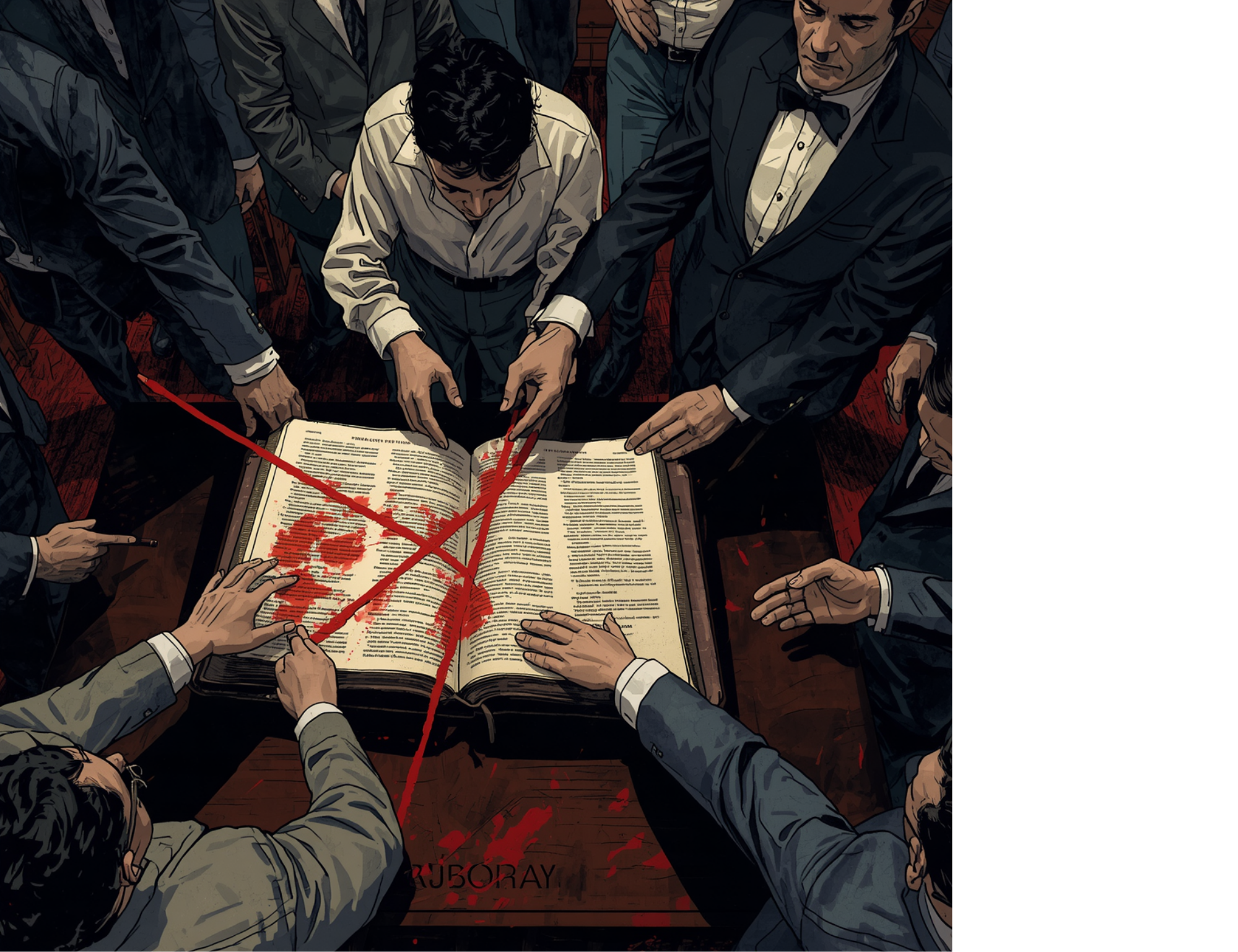
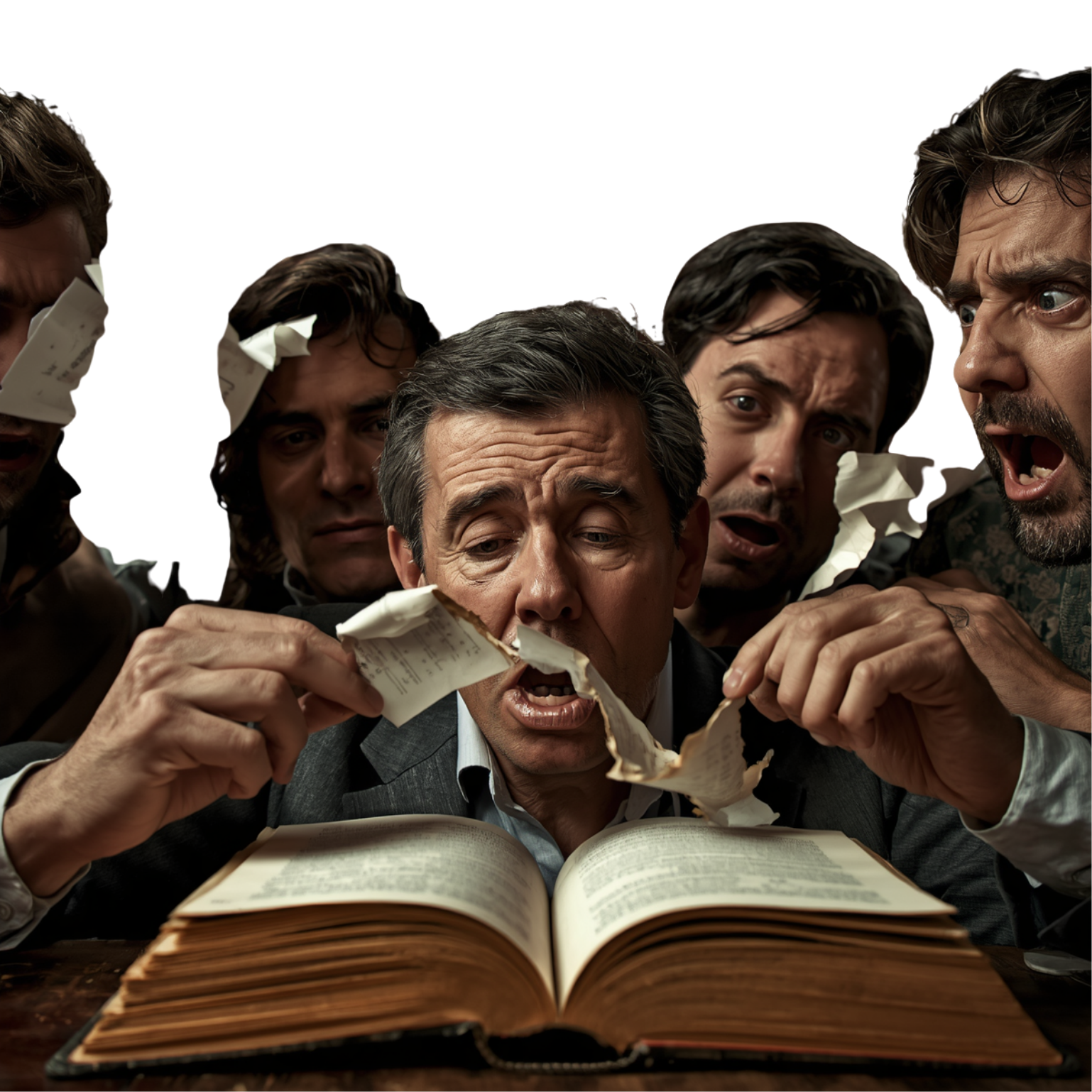
THIS IS HOW THE HUMAN RACE APPROACHES THE BIBLE
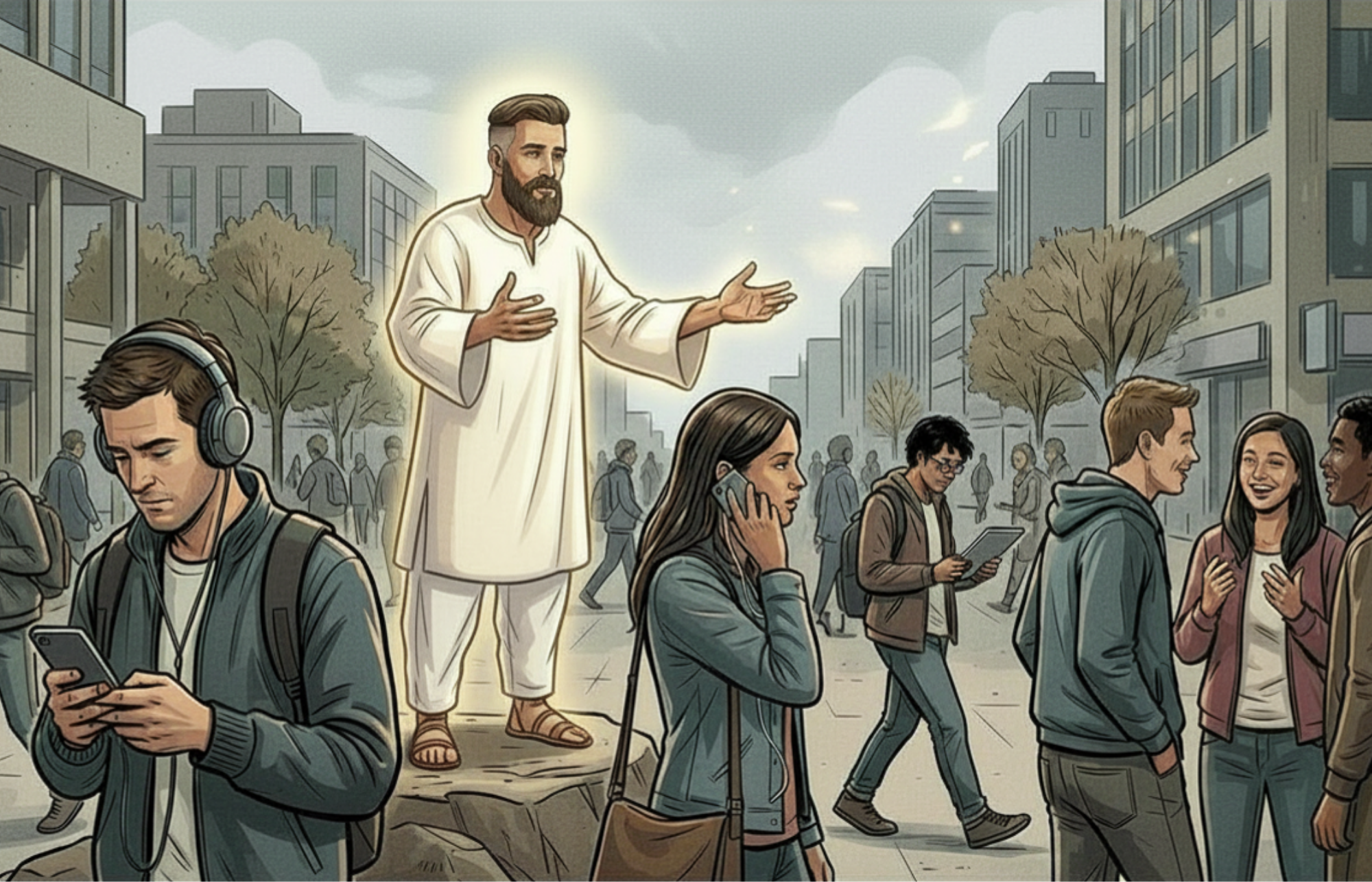
THIS IS HOW WE HANDLE THE INSTRUCTIONS OUR GOD GAVE US

-
THE PRICE OF COMFORTABLE SIN: What God Would Say to the Woman Who Calls Herself His Child While Her Body Pays the Price
A Theological and Scientific Treatise on Biblical Disobedience, Cancer, and the Crisis of Shallow Faith
---
INTRODUCTION: WATCHING SIN CLAIM A LIFE IN REAL TIME
There is something uniquely devastating about watching a person deteriorate before your eyes and knowing — with the same certainty that you know the sun will rise — exactly why it is happening, while they refuse to hear it.
This is not a comfortable essay. It is not designed to make anyone feel validated in their current choices. It is not written with the therapeutic sensibilities of a Joel Osteen sermon or the tolerant non-judgment of a modern church that has confused kindness with truthfulness. This essay is written in the tradition of the Old Testament prophets — men who were hated, mocked, and ignored, but who spoke anyway, because the stakes were too high for silence.
There is a woman — and she represents millions — who goes to mass regularly. She posts about her faith. She wears her "We Got This" sweatshirt as though community and positive thinking are the same thing as the protection of the Almighty God. She responds to Biblical correction by asking that people "respect other beliefs," as though there are multiple truths, multiple Heavens, and multiple Gods all waiting to receive whoever shows up at the gate. She lives with a man she is not married to. She wears makeup. She loves Christmas. She loves Easter. She loves Thanksgiving. And her body — the instrument of her years of comfortable disobedience — is shutting down.
She keeps applying the makeup even now. Even as the cancer ravages the very organs she used in sin. Even as the hair she always painted and primped falls out from the chemotherapy. Even now, she cannot stop. And that — more than any medical chart, more than any oncologist's report — tells you everything you need to know about the nature of sin.
Because sin is an addiction. God told us that. It does not release you easily. It does not let go when you are in trouble. It does not stand back and say "well, you are clearly dying, perhaps I should leave you alone now." No. Sin stays. Sin demands. Sin keeps you painting your face at the very moment your body is being ravaged by the consequences of the life you built while wearing that paint.
This essay is for her. And for every person watching her — watching thousands like her — from the other side of a screen, weeping, knowing, and feeling the unique anguish of having the truth and being unable to give it to someone who has already decided they do not want to hear it.
It is also — and this must be said clearly — a scientific document. Not the science of the lab, which has given us more questions than answers and still cannot explain why cancer "can happen to anyone." But the science of obedience and disobedience, which has been governing the human body since the moment Eve bit into the forbidden fruit, and which will continue to govern it long after the last science lab has been torn down.
---
PART ONE: THE RADIUM GIRLS AND THE WOMAN WITH THE MAKEUP BRUSH
In the 1920s, young women were hired to paint watch dials with radium-based paint that glowed in the dark. They were told the paint was safe. They were encouraged, as a technique to make their brushes more precise, to put the brushes in their mouths. They painted their nails with it. They painted their teeth with it to glow at dances. They were happy. They needed the jobs. And they threw caution to the wind.
They died. Horribly. Their bones deteriorated. Their jaws fell off. Their bodies were consumed from within by what they had been told was harmless — what they had been encouraged to use without question.
Watching a woman in this day and age continue to apply makeup to a face that is being consumed by cancer is watching a radium girl point her brush at her mouth. The tragedy is identical. The only difference is that the radium girls did not know. This woman has been told. She has access to the Bible. She has access to the truth. And she has chosen — actively, repeatedly, publicly — to respond to the truth by asking that it be silenced in the name of "respecting other beliefs."
The radium girls could not have stopped what was happening to them even if they had been told sooner. Their sin was ignorance. Her sin is not ignorance. Her sin is something far more dangerous — it is the willful rejection of knowledge in favor of comfort.
The Bible speaks of this directly. In Proverbs 1:25-29, God says: "But ye have set at naught all my counsel, and would none of my reproof: I also will laugh at your calamity; I will mock when your fear cometh... then shall they call upon me, but I will not answer; they shall seek me early, but they shall not find me: For that they hated knowledge, and did not choose the fear of the Lord."
She hated knowledge. Not ignorantly. Actively. She was given knowledge and she asked it to respect her other beliefs. God's response to that — written clearly in the very Book she carries to mass — is not comfort. It is not healing. It is: I will mock when your fear cometh.
This is not cruelty. This is cause and effect. This is the science of obedience and disobedience operating exactly as designed.
---
PART TWO: THE SCIENCE OF DISOBEDIENCE — WHY "CANCER CAN HAPPEN TO ANYONE" IS AN INSULT TO INTELLIGENCE
Current medicine's favorite phrase when confronted with the mystery of cancer is: "It can happen to anyone. Even the healthiest person. There is no way to predict it."
This statement — delivered with the authority of people in lab coats who have spent decades studying cells — is one of the most intellectually dishonest statements in the history of human medicine. And the reason it persists is not because it is true. It persists because the alternative — the actual truth — requires people to change their lives, and neither the scientists nor the patients are willing to do that.
We know, with absolute certainty, that everything in this universe that functions correctly does so because it is obeying its instruction. The cells in your body obey the instruction encoded in their DNA. When they stop obeying that instruction — when they begin to divide without stopping, when they ignore the signal to undergo apoptosis and die as they should — we call it cancer. We recognize it as dangerous precisely because we understand that cells not obeying their instruction means death for the host.
Now. If a cell disobeying its DNA instruction causes cancer, what do we imagine happens when an entire human being disobeys their human instruction?
Because we have a human instruction. It has been on this earth longer than any nation that currently exists. It has survived every attempt to destroy it, water it down, add to it, or take away from it. It is called the Bible. And every single law in that Book — every commandment, every statute, every prohibition — is the human equivalent of the DNA code in the cell's nucleus.
When you disobey the Bible, your body cells are allowed to disobey their instruction. This is not metaphor. This is not poetry. This is the operating system of the human being, established at creation, which has never been changed and cannot be changed by any government, any religion, any science lab, or any sweatshirt.
The woman who says "We Got This" while her body is being consumed by cancer, while she continues to live with a man she is not married to, while she continues to paint her face, while she continues to worship the idol of Christmas and go to mass and ask people to respect her beliefs — that woman does not "Got This." What she has is the bill. The accumulated, compounded, physical bill for years of using her body as an instrument of disobedience against the One who designed it.
And no doctor, no chemotherapy, no radiation, no immunotherapy — none of it can cure what God sent.
Because cancer is not a disease in the ordinary sense. Cancer is God's executioner. And you do not cure an executioner with medicine. You remove the reason the executioner was sent.
---
PART THREE: THE INSTRUMENT OF SIN AND THE BODY THAT PAYS
Consider what cancer actually does — not in the abstract, but in the specific.
The hair she always painted and primped? It falls out.
The nails she always painted and adorned with jewelry? They become brittle and break.
The organs she used in fornication, in unmarried cohabitation, in the sexual disobedience of living with a man outside of the covenant of marriage? Those are the organs being radiated, being surgically removed, being consumed.
This is not coincidence. There is a science to the locations of cancer. The body that was used as an instrument of sin — the specific parts of the body that were employed in the commission of specific acts of disobedience — those are the parts that the executioner comes for.
She lost organs. She has been through surgeries. She has suffered in ways that no human being should have to suffer. And yet — watch the videos. Read the comments. Watch her apply the makeup.
The instrument of sin is shutting down, and still the sin continues.
This is what addiction looks like at its most devastating. The Bible does not call it weakness. The Bible calls it the hardness of heart. And there is no more terrifying spiritual condition than a hardened heart in a deteriorating body, because the body is running out of time while the heart refuses to soften.
It was this observation — watching people choosing sin even as they are dying of the consequences of sin — that transformed grief into understanding. A man who was told he was dying requested to sleep with over three hundred women. A homosexual couple wanted to "make it right" and get married before one of them died of an incurable disease — making the last act of their lives an act of greater disobedience. A woman left her husband and children to go find another partner and enjoy whatever was left of her life.
People do not become righteous when they are dying. They become more of what they already were.
This is why the Gospel must be preached to the living. By the time the body is shutting down, the heart has usually calcified around whatever it chose to love more than God. And this woman chose comfort. She chose the man. She chose the makeup. She chose the idea of a kind, tolerant, non-demanding God who only asks that we be nice to each other. She chose Christmas. She chose mass without obedience.
And now she is paying with the only currency that was ever truly hers — her body.
PART FOUR: "RESPECT OTHER BELIEFS" — THE MOST DANGEROUS PHRASE IN THE ENGLISH LANGUAGE
When she responded to Biblical correction by saying "please respect other beliefs," she did something that felt polite, that sounded reasonable, that would be applauded in every corner of the modern world. And she condemned herself in doing it.
Because here is the question she never asked — the question no one in her comment section asked — the question that every person who uses this phrase should be forced to answer before they are allowed to utter it again:
Which religion does Heaven belong to?
If there is only one Heaven — and there is — then there is only one path to it. And if there is only one path to it, then not all beliefs lead there. And if not all beliefs lead there, then "respecting other beliefs" is not tolerance. It is negligence. It is the spiritual equivalent of a doctor watching a patient eat poison and saying "I respect your dietary choices."
You cannot have a hundred different beliefs about God and all go to the same Heaven. Heaven is not a buffet. It is not a democracy. It is not a place where God looks at the sincerity of your effort and grades on a curve. The Bible — the same Bible she carries to mass — says clearly, in James 2:10: "For whosoever shall keep the whole law, and yet offend in one point, he is guilty of all."
One point. Not fifty. Not the big ones. One point.
Adam and Eve were in the most perfect environment ever created for a human being. They had everything. They had the direct presence of God. They had a garden without disease, without labor, without pain. And they were thrown out — not for a pattern of sin, not for a lifetime of wickedness, not for some spectacular moral collapse. They were thrown out for one act of disobedience. One bite of one forbidden fruit.
And yet she believes that living with a man outside of marriage — a permanent, daily, ongoing act of disobedience — is going to be overlooked because she goes to mass and asks people to be kind to each other.
The God who threw two people out of paradise for one act of disobedience is not going to be impressed by her "We Got This" sweatshirt.
The phrase "respect other beliefs" is the devil's greatest modern achievement. It has taken the one thing that could save her — the truth of the Word of God, spoken plainly and without apology — and made it socially impermissible. It has made the prophet into the villain. It has made correction into cruelty. It has made silence into virtue.
But God does not call silence a virtue. God calls silence the crime of the watchman who sees the sword coming and does not blow the trumpet. Ezekiel 33:6: "But if the watchman see the sword come, and blow not the trumpet, and the people be not warned; if the sword come, and take any person from among them, he is taken away in his iniquity; but his blood will I require at the watchman's hand."
So the truth will be spoken. Not because it is easy. Not because it will be received. But because the alternative is to watch her die in sin and say nothing — and that is not love. That is cowardice dressed as tolerance.
---
PART FIVE: THE "WE GOT THIS" SWEATSHIRT — DEPENDENCY ON MAN IN THE HOUR OF GOD
She wears the sweatshirt. She posts the community updates. She celebrates every scan result with her followers and her family and her medical team. "We Got This" is the banner under which she fights her cancer — "we" being her doctors, her family, her community, her positive attitude, and presumably some vague notion of a God who cheers from the sideline but never actually intervenes in medical outcomes.
What the sweatshirt reveals is not courage. What it reveals is the exact spiritual condition that produced the disease.
"We Got This" is the declaration of a people who have decided they do not need God to operate in their lives — that human community, human medicine, human positivity, and human effort are sufficient to face what only God has authority over.
Cancer is not a human problem with a human solution. Cancer is what God allows when He withdraws His protection from a body that has been used as an instrument of sin. And the withdrawal of God's protection cannot be reversed by chemotherapy, radiation, immunotherapy, community support, positive thinking, or any combination thereof. It can only be reversed by the restoration of what caused the withdrawal in the first place — obedience.
This is not cruelty. It is the most logical system in the universe. When your cells obey their instruction, you are healthy. When they stop, you get cancer. When you obey your human instruction — the Bible — God maintains the function of those cells. When you stop, He allows them to disobey their own instruction. The trickle-down effect of human disobedience into cellular disobedience is not a metaphor. It is the operating mechanism of the human body as designed by its Creator.
"We Got This" is what you say when you believe that human effort can overcome divine judgment. It cannot. No human has ever overcome divine judgment through effort. The only thing that has ever moved divine judgment is repentance — genuine, complete, life-altering repentance, followed by genuine, complete, life-altering obedience.
She does not need a community. She does not need a support group. She does not need more people telling her she is brave and strong and that she can beat this. She needs to fall on her face before the God of the Universe, remove the man from her house, remove the makeup from her face, remove the idols from her calendar, and ask the only question that has ever produced a healing: "Lord, what have I done that has caused You to allow this upon my body, and what must I change for You to remove it?"
That is the question the doctors cannot ask. That is the question her community will not ask. That is the question her church — which celebrates Christmas and does not enforce the laws of God upon its congregation — has never prepared her to ask.
And until she asks it, the sweatshirt is just fabric.
---
PART SIX: COHABITATION, COVENANT, AND THE PERMANENT SIN THAT KEEPS THE EXECUTIONER AT THE DOOR
Living with a man unmarried is what this essay was originally about. It is the specific sin that prompted the warning. It is the specific sin she responded to by asking for tolerance and respect. And it is the specific sin that the Bible identifies — not as a minor cultural preference, not as an ancient rule made by men to oppress women, but as a direct violation of the covenant structure that God built into the human design.
The Bible's prohibition on fornication — living with someone outside the covenant of marriage — is not arbitrary. It is not about Victorian propriety or ancient cultural norms. It is about the covenant itself, which is a spiritual structure that God designed to carry certain protections for the human body and soul.
When a man and a woman enter the covenant of marriage — the Biblical covenant, not a civil ceremony, not a courthouse signature, but the full Biblical covenant — they become one flesh. This is not poetry. This is a spiritual and physical reality that God designed, and within which He provides protections that exist nowhere else in human experience.
When a man and a woman live together outside that covenant, they take all the physical elements of marriage — the shared dwelling, the shared bed, the shared life — without entering the structure that was designed to carry those elements safely. They are attempting to receive the benefits of a covenant they have not entered. And God, who designed the covenant, does not honor counterfeits.
For this woman specifically — living with a man, going to mass, believing that God is pleased with her — the cohabitation is not just a personal choice about her relationship. It is a structural breach in her spiritual life that affects everything else. Her prayers are not being heard. The Bible is explicit: God hears the prayers of the righteous. Righteousness is not an attitude. It is not sincerity. It is obedience. She is not righteous by Biblical definition, because she is living in ongoing, daily, unrepented disobedience to one of the clearest laws in Scripture.
This means that every prayer she has prayed for healing — every tearful moment in mass, every candle lit, every rosary said, every community prayer session — has been hitting the ceiling. Not because God is cruel. Because God designed the system, and the system requires obedience before He will hear.
She was warned. Someone reached out to her, told her plainly, directly, with love: if you do not marry that man, your cancer will return. She responded by asking for tolerance of other beliefs. Three videos later, the cancer had returned.
This is not judgment. This is cause and effect. This is the science of covenantal obedience operating exactly as designed, in the body of a woman who was given the truth, rejected it politely, and is now watching her body pay the bill.
The man in her house is not her salvation. He is not her "We Got This." He is, in Biblical terms, the precise reason the executioner has not yet been called off. Because as long as he remains in that house without a covenant, the breach in her spiritual life remains open. And through that breach, the executioner has full legal authority — by God's own design — to continue his work.
This is not a comfortable thing to say. But comfortable things do not save lives. Truth does.
---
PART SEVEN: IDOL WORSHIP — CHRISTMAS, MASS, AND THE GOD SHE HAS NEVER MET
She goes to mass. She loves Christmas. She posts Easter celebrations. She is, by every cultural and social measure available in the Western world, a religious person.
And she has never met God.
Not the real God. Not the God of the Bible. Not the God who threw Adam and Eve out of paradise for one act of disobedience. Not the God who burned Sodom and Gomorrah to the ground. Not the God who says in Revelations 22:18: "If any man shall add unto these things, God shall add unto him the plagues that are written in this book."
She has met the God of Christmas — the human-created deity who was placed on December 25th by the Roman Emperor Constantine, grafted onto the festival of Saturnalia, which was a pagan Roman celebration involving feasting, gift-giving, and the worship of the sun god Mithra. She has met the God whose birthday is celebrated with a decorated tree — the same decorated tree that Jeremiah 10:3-4 specifically condemns as the practice of heathens who "cut a tree out of the forest... they deck it with silver and with gold."
Christmas is in the Bible. Not as a command to celebrate. As a warning not to.
And yet she celebrates it with full devotion, with the Christmas spirit that feels so warm and so special and so much like family and love — because that feeling, that Christmas spirit, is exactly what the idol was designed to produce. Every idol produces a feeling. That is how idols capture human hearts. The golden calf at Mount Sinai produced a feeling of joy and celebration — Exodus 32:6 says the people "rose up to play." They feasted. They celebrated. They felt wonderful. And God was so furious He killed three thousand of them on the spot and then sent a plague.
The same God. The same anger. The same pattern.
She celebrates Christmas with the same devotion that the Israelites celebrated the golden calf. And she goes to mass with the same sincerity that Aaron proclaimed: "Tomorrow is a feast to the Lord" — while pointing at an idol.
And Revelations 22:18 is clear: if you add the plague called Christmas to the worship of the Creator, God will add to your plagues. One out of every two people will get cancer. The whole planet worships idol Christmas. The whole planet is getting cancer.
These two facts are not unrelated.
They are cause and effect.
PART EIGHT: WHAT GOD WOULD ACTUALLY SAY — A DIRECT ADDRESS
If God could speak directly to this woman — not through the comfortable homilies she hears at mass, not through the prosperity theology she absorbs from television preachers, not through the culture that has reduced Him to a loving grandfather who smiles at everything and judges nothing — but through the same voice that spoke to Moses, to Ezekiel, to Jeremiah, to every prophet who was hated and ignored in their generation — this is what He would say:
---
Daughter. I know you. I have always known you. I watched you come into the world. I numbered the hairs on your head. I gave you the body you now watch deteriorate in hospital rooms and oncology wards, and I gave it to you as a gift — not as your personal property to use however you pleased, but as a dwelling place for my Spirit, a temple built by my hand, subject to my laws.
You have been told the truth. Not once — more than once. Not by strangers who hated you — by those who wept for you. You were warned. You were given the specific information: the man in your house without a covenant, the paint on your face I told you not to put there, the idols you celebrate with more devotion than you have ever shown me. You were told. And you responded by asking that the truth be silenced.
Do you understand what you did? You asked my messenger to be quiet. In the name of tolerance. In the name of respecting other beliefs. As though I were just another belief. As though Heaven were a place that belongs to everyone regardless of how they lived, what they obeyed, what they worshiped.
Heaven does not belong to everyone. I built it. I decide who enters. And I wrote down — in the Book you carry but do not read — exactly what the requirements are. They have not changed. They will not change. Not because you are suffering. Not because you are brave. Not because your community loves you. Not because you have been kind to people. Those are good things. But they are not the things I require for entry.
I require obedience.
I require that you remove from your house the man you are sleeping with outside my covenant. Not because I hate him. Because the breach in your spiritual life that his presence represents is the open door through which everything you are suffering has entered. The executioner has legal authority in your life because you gave it to him by living in permanent, daily, ongoing disobedience to my Word.
I require that you stop painting your face. This is not a small thing. I mentioned Jezebel by name. I did not do that to tell you a bedtime story. I did that so that every woman who reads my Word would know, for all time, that the painting of the face is an abomination to me. Your cells know this. Your cells — the ones that are currently misbehaving in your body — they operate on the same instruction system that I gave you in the Bible. When you disobey your instruction, they are released from the obligation to obey theirs.
I require that you stop worshiping idols. Christmas is not my birthday. I was not born in December. The tree you decorate — I spoke about that tree in Jeremiah and I did not speak of it with approval. Every December when the whole world bows to this idol, I see it. And every January when the cancer rates climb, you blame me. You call it random. You call it mysterious. You say cancer can happen to anyone. It cannot. It happens to people whose obedience has run out.
I am not asking you to be perfect. I am asking you to stop. Stop the man. Stop the paint. Stop the idols. Start the obedience. And then — only then — come before me with your petition for healing, and I will hear you. Because right now, I cannot hear you. Not because I am far away. But because you are not righteous, and I only hear the prayers of the righteous. This is not cruelty. This is the design.
You say you love me. You go to mass. You light candles. You say prayers. But you will not obey me. You will not do the one thing I have asked. Imagine if I told you that I loved you and wanted to be with you, but I refused to do a single thing you asked of me, and when you gave me guidance I told you to respect other beliefs. That is what you have been doing to me.
I am not asking for your love in words. I wrote in John 14:15: If ye love me, keep my commandments. Your words mean nothing. Your mass means nothing. Your community means nothing. Your tears mean nothing. Until the obedience begins.
And daughter — the time is short. The instrument of your sin is shutting down. Every day that passes without repentance is a day the executioner remains with full authority. I can call him off. I have done it before. I healed people in the Bible who had far greater sins than yours. But in every single case — every single one — the healing came after the repentance, not before it. I do not reward continued disobedience with healing. That is not mercy. That is enabling.
I am waiting. I have been waiting. I sent you messengers and you silenced them. I sent you warnings and you asked them to respect your choices. Now I am speaking to you directly, through the very Book you have been carrying to mass without reading.
The choice is yours. It always was. I gave you the free will to make it. But understand — free will means freedom to choose, not freedom from consequences. You chose the man. Your body is paying the consequence. You chose the makeup. Your body is paying the consequence. You chose the idols. The plagues are written in the Book.
Remove the causes. Call on me with a clean heart and clean hands and clean obedience. And then watch what I do.
I am the God who healed the lepers. I am the God who raised Lazarus. I am the God whose hem was touched by a woman who had been bleeding for twelve years — and she was healed in that instant. But she reached for me. She pursued me. She pressed through the crowd. She did not ask the crowd to respect her bleeding.
Press through the crowd, daughter. I am on the other side.
---
PART NINE: THE PSYCHOPATHY OF BLAMING GOD
Here is one of the most astonishing phenomena of the modern age: the same people who will not obey God, who will not read the Bible, who will not remove the sin from their lives, who celebrate Christmas and Easter and Thanksgiving with full devotion — these same people, when cancer comes for them, look up at the sky and ask: "Why does God allow this?"
They are angry at a God they will not listen to. They are furious at a Creator they will not obey. They demand healing from a Being whose instructions they have spent their entire lives actively ignoring.
This is not confusion. This is narcissism at the highest possible level.
Imagine an employee who has been given a clear job description. They ignore every item in the job description. They do not come to work on time, do not complete the assigned tasks, do not follow the protocols, openly mock the procedures manual, and invite their friends to come mock it with them. And then when they are fired, they sue the employer for wrongful termination.
That is exactly what the human race is doing with God.
We were given the Bible — the most comprehensive instruction manual for human existence ever written. We decided it was sexist, oppressive, outdated, and hateful. We created hundreds of different religions to replace it, each one more comfortable than the actual text. We celebrated every holiday the Bible condemns. We justified every lifestyle the Bible prohibits. We dressed the way the Bible says not to dress, decorated our bodies the way the Bible says not to decorate them, pursued relationships the way the Bible says not to pursue them.
And then cancer came. And diabetes. And ALS. And every incurable plague the Bible said would come if we added to the Book of Prophecy. And we looked up and said: "If God exists, why does He allow this?"
The question is so backward it would be funny if it weren't so tragic. The correct question — the only intellectually honest question — is: "We have been living in complete disobedience to every law God left for us. Why did we think that wouldn't produce exactly what the Bible said it would produce?"
She is a microcosm of the entire human race. She is not unusual. She is the norm. She represents the hundreds of millions of people who go to church, who call themselves Christians, who carry Bibles and celebrate religious holidays and ask people to respect their beliefs — and who have never once actually read the book they carry, or if they have, have never once allowed it to change a single daily behavior.
The God who is angry at them is not a cruel God. He is a God whose instructions are being ignored. He is a God whose messengers are being silenced in the name of tolerance. He is a God who did everything He could — He wrote it down, He sent prophets, He allowed consequences as warnings, He provided the ultimate sacrifice so that repentance would always be available — and who is now watching a planet full of people blame Him for the exact consequences He told them would come if they lived the way they chose to live.
The psychopathy is not God's. The psychopathy is ours.
And it is expressed most clearly in the woman who was warned, who silenced the warning, who went back to her comfortable sin, and whose body is now paying the price — while she applies her makeup and wears her sweatshirt and asks the cancer to respect other treatment philosophies.
PART TEN: THE GREAT DIVIDE — WHY NO ONE WILL LISTEN AND WHAT IT MEANS
There is a phenomenon that has been observed repeatedly when the truth of God is spoken to a person living in comfortable sin. It is not ordinary disagreement. It is not the natural human resistance to being told you are wrong. It is something darker, something more paranormal — a violent, almost physical recoil from the words of God that does not happen when those same words are replaced by any other opinion, any other book, any other authority.
You can tell her about a diet that might help her cancer. She will research it.
You can tell her about a new treatment protocol. She will discuss it with her doctors.
You can tell her about a positive thinking approach, a community support strategy, a meditation practice. She will consider it.
But tell her that living with a man outside of marriage is sin, and that sin is connected to her cancer, and that obedience to the Bible is the only thing that will give God the legal authority — by His own design — to call off the executioner in her body?
She will ask you to respect other beliefs.
This is not human stubbornness. This is not simple pride. This is the phenomenon described in Romans 1:28: "And even as they did not like to retain God in their knowledge, God gave them over to a reprobate mind." When you consistently, repeatedly, deliberately choose not to know God — when you take the information about God and set it aside in favor of comfortable alternatives — God eventually gives you over to a mind that literally cannot process the truth anymore. The capacity to receive it is taken away.
This is why she responded with "respect other beliefs." It was not rudeness. It was the automated response of a mind that has been given over. A mind that has been so thoroughly trained to receive certain kinds of information and reject others that the rejection of Biblical truth is now as involuntary as breathing.
This phenomenon is satanic in origin. Satan knows that the only thing that stands between the human race and its healing — physical, spiritual, and social — is obedience to the Bible. He knows this better than any human does. He has known it since the Garden. It is precisely why he has spent six thousand years doing everything he can to keep human beings away from the Bible — not by destroying it, but by making people unable to receive it.
He did not burn the Bibles. He was smarter than that. He made women believe the Bible was written by men to oppress them. He made scientists believe the Bible was incompatible with intelligence. He made church-goers believe that the Bible was for the pastor to interpret, not for them to read. He made comfortable sinners believe that the Bible was only relevant to the big obvious sins — murder, theft — and had nothing to say about their makeup, their tattoos, their second marriages, their Christmas trees.
He made the most powerful document in human existence — the one document that contains the only information that can explain cancer, can produce healing, can restore the relationship between the Creator and His creation — into something that perfectly nice people politely decline to read.
And then when those perfectly nice people get cancer, they ask why God is silent.
He is not silent. He wrote down everything He wanted to say. He put it in a Book. He preserved that Book through every attempt to destroy it for thousands of years. He made it the most printed, most distributed document in human history. And we decided it was too much trouble to read.
The divide is not between believers and non-believers. The divide is between those who read the Book and obey it, and those who carry the Book and do not read it. Between those who have allowed the Word to change their outer appearance, their relationships, their daily habits — and those for whom the Word is a comfort object, a cultural identity, a thing you take to mass but leave on the shelf the moment it demands something from your life.
She is firmly on the second side of that divide. And the tragedy is that the first side is trying to reach her across it, and she is responding by asking the first side to stay quiet.
---
PART ELEVEN: THE OUTER APPEARANCE AND THE CELLS THAT ARE WATCHING
She keeps applying the makeup. Even now. Even as the hair falls out, even as the body deteriorates, even as surgery after surgery removes the organs that the cancer has claimed — she still paints her face.
This is not vanity in the ordinary sense. This is something deeper. This is the addiction to the outer appearance that God warned against in multiple places in the Bible, expressing itself at the precise moment when the outer appearance is being most dramatically taken apart.
It is as though her cells — the disobedient cells that are no longer following their instruction — are showing her, in the most literal way imaginable, what the Bible meant when it said not to focus on the outer appearance. They are removing it. Layer by layer. Organ by organ. They are showing her that the outer appearance she spent so much time maintaining was not hers to begin with. It belonged to the Creator who made it. And the Creator is now taking it back.
In 1 Peter 3:3-4, the Bible says: "Do not let your adorning be external — the braiding of hair and the putting on of gold jewelry, or the clothing you wear — but let your adorning be the hidden person of the heart."
This verse is not telling women that their appearance does not matter to God. It is telling women that the way God wants their appearance to be managed is from the inside out — through the cultivation of a pure heart expressed in modest, non-adorned, non-painted, gender-appropriate outer presentation. The outer appearance matters enormously to God. He gave an entire dress code in the Bible. He spoke about Jezebel's painted face as though it were a defining mark of wickedness. He told women not to put on gold, not to braid their hair elaborately, not to adorn themselves with apparel — the very word apparel meaning fashion, the whole worldly category of clothing as a style statement.
What does it mean scientifically when a woman continues to paint her face even as cancer consumes her?
It means the addiction to the outer appearance — the sin of vanity that the Bible identifies as one of the specific sins that invites disobedience into the life — has reached the point where not even the destruction of the body can break it. The addiction is stronger than the disease. The comfort of the paint is stronger than the warning of the cancer. The devil has her so thoroughly in the grip of this particular sin that she applies it as an automatic behavior — a ritual of selfhood, of normalcy, of "I am still here, I am still me" — even as the body that she is painting is being systematically disassembled.
The cells in her body know she is disobeying. They operate in the same instruction system. When the human disobeys the Biblical instruction, the cells are released from their obligation to obey the DNA instruction. And the specific cells that govern the specific organs used in the commission of specific sins — those are the ones that receive that release first.
This is the science of disobedience. This is the biology of sin. And no amount of chemotherapy, no amount of "We Got This," no amount of community prayer in a church that celebrates Christmas and does not enforce the dress code of the Bible, can reverse what only repentance and obedience can reverse.
The makeup brush, in her hands, at this moment in her life, is the same as the radium paint brush in the hand of a dial painter in 1922. She is painting herself with something that is killing her. And she has been told. And she keeps painting.
---
PART TWELVE: THE CELLULAR SCIENCE OF SIN — CONNECTING THE LABORATORY TO THE LAW
For those who require scientific language before they will accept spiritual truth, the following synthesis is provided.
Every cell in the human body operates according to the instruction encoded in its nucleus — its DNA. When the cell follows that instruction correctly, it produces the right proteins, divides at the right times, stops dividing when instructed to do so, and undergoes programmed cell death (apoptosis) at the appropriate moment. The result is a healthy body.
When a cell stops following its DNA instruction — when it ignores the signal to stop dividing, when it refuses to undergo apoptosis — we have cancer. The cancer cell is, by definition, a disobedient cell. It is a cell that has chosen to do what it wants instead of what its instruction dictates.
Now. The human being is to the Bible what the cell is to its DNA.
The Bible is the nucleus. The laws and commandments it contains are the DNA instruction. The human being who reads and obeys those laws is the equivalent of the cell that follows its genetic code. And just as a cell that follows its genetic code produces health in the body, a human being who follows the Biblical code produces health in their own body — because God, who designed both systems, has linked them together. The obedience of the human being maintains the obedience of the cells. The disobedience of the human being releases the cells from the obligation to obey their own instruction.
This is why cancer cannot happen to just anyone. It happens to people whose obedience to the human instruction has run out. It happens in the bodies of people who have been living in the sin of disobedience long enough and completely enough that God has withdrawn His maintenance of their cellular health.
And it happens in specific locations in specific bodies for specific reasons.
The woman who has spent years using her reproductive organs in fornication — outside the covenant of marriage — should not be surprised when her cancer is gynecological. The person who has spent years using their lungs to fill their body with toxins should not be surprised when it is their lungs. The person who has spent years marking their skin — tattooing it in direct violation of Leviticus 19:28 — should not be surprised when their skin becomes a battlefield.
The executioner is precise. He is not random. He does not "happen to anyone." He comes where he is sent, when he is sent, to the specific location that the disobedience has designated.
Current science says: "Cancer can happen to anyone. We don't know why."
The Bible says: "Disobedience produces disease. Obedience produces health. The instruction is in the Book."
The science lab is studying the symptom. The Bible contains the cure.
And until the human race accepts that the Bible is the most advanced scientific document ever written — that it contains the laws of human health expressed in spiritual language that we have been too proud and too comfortable to take seriously — we will continue to fund research, build labs, develop treatments, and watch one out of every two people get cancer. And we will continue to say we don't know why.
We know why. We have always known why. We just don't want to hear it.
PART THIRTEEN: THE SHALLOW FAITH AND THE DEEP PRICE
There is a particular kind of believer that exists in enormous numbers in the Western world, and she is a perfect example of it. She believes. She genuinely, sincerely, tearfully believes. She goes to mass. She lights candles. She prays. She loves Christmas with the warm devotion of someone who was taught from childhood that this is how you honor the God who made you. She wears a cross. She says "God is good" when good things happen. She says "God has a plan" when bad things happen. She is, by every measure available in her cultural environment, a faithful Christian.
And she is heading toward hell.
Not because she is a bad person. Not because she is malicious or cruel or deliberately wicked. She is heading toward hell because the faith she practices — the thin, comfortable, non-demanding, culturally acceptable faith of the modern Western church — is not the faith the Bible describes. It is a performance of faith without the substance of obedience that makes faith real before God.
The Bible does not say "believe in me and everything will be fine." The Bible says, in James 2:26: "For as the body without the spirit is dead, so faith without works is dead also." Faith without obedient action is dead. Not weak. Not insufficient. Dead. A corpse of a faith that cannot save, cannot produce healing, cannot open the ears of God to prayer, cannot put her name in the Book of Life.
She has a dead faith. And dead faith does not produce living prayer. And living prayer is the only thing that reaches the God who can call off the executioner in her body.
This is the crisis of shallow faith: it feels real to the person who has it. It produces real emotion. Real tears. Real community. Real warmth at Christmas. Real comfort in mass. All of it real, all of it genuine, all of it completely insufficient to produce the obedience that God requires, and therefore completely unable to produce the protection and healing that God provides to His obedient children.
She is not protected. She never was. Because the faith she practices does not include the obedience that activates God's protection. She was practicing the form of godliness while denying the power thereof — which is exactly the condition Paul warns about in 2 Timothy 3:5.
The power of godliness is obedience. You deny the power when you keep the outer performance of faith while refusing the inner transformation that produces obedience. You go to mass but you keep the man. You say prayers but you keep the paint on your face. You celebrate Christmas but you never open the Bible to see what God actually requires. You have the form — the mass, the candles, the cross, the holiday — but you have denied the power, which is the daily, total, unreserved obedience to every word in the Book.
And the body pays the price.
Because the body does not care about the performance. The body responds to the substance. The cells in the body respond to whether or not the human being is in obedience to their instruction. And she is not. She has not been. And her body has been communicating that fact with increasing urgency for some time now.
The cancer returning is not a mystery. It is a message. It is the body continuing to deliver the same message it has been delivering — the same message that was delivered in words when she was warned, and ignored. The body is not capable of ignoring the instruction system. It sends the message whether the mind wants to receive it or not. The cancer is the message.
The message is: something is wrong at the root. At the level of the instruction. At the level of the disobedience that has been built into this life like a load-bearing wall — the man in the house, the paint on the face, the idol on the calendar, the shallow faith that substitutes performance for obedience.
Until the root is addressed, the symptom will return. This is not a medical prognosis. It is a Biblical certainty.
---
PART FOURTEEN: THE SILENCE OF GOD AND WHAT IT ACTUALLY MEANS
She has prayed. She has prayed extensively, tearfully, publicly, sincerely. And there is a silence from above that she has probably interpreted as either God's will or God's absence. She has not interpreted it as the only thing it can be: God's response to the prayers of the unrighteous.
The Bible is explicit in Proverbs 28:9: "He that turneth away his ear from hearing the law, even his prayer shall be abomination." Not unheard. Not merely unanswered. An abomination. The prayer of someone who has turned away from the law of God — who has been told the law and chosen not to obey it — that prayer is an abomination before God.
This is one of the most terrifying verses in the Bible, and it is almost never preached from any pulpit, because it condemns the prayers of most of the people sitting in most of the pews in most of the churches in the Western world.
If you are not obeying the Bible, your prayers are not being heard. This is not harshness. This is the design. God built an instruction-based relationship with the human race. The relationship functions when the instruction is followed. When the instruction is not followed, the relationship is broken. And a broken relationship cannot conduct prayer any more than a severed telephone wire can conduct a phone call.
She has been praying into a severed line. Not because God moved. Because she broke the line — with the man in the house, with the paint on the face, with the idols on the calendar, with the years of comfortable, non-demanding, non-obedient faith that never once required her to change anything about her daily life.
God did not move. She moved. And then she blamed the silence on God.
This is the narcissism of the human race in miniature. We break the connection. We sever the line. We violate every term of the relationship. And then we look at the sky and say: "If you exist, why don't you answer?"
He exists. He answers. He answers the righteous with the speed of lightning — this is documented throughout the entire Bible, from Genesis to Revelation. Men and women who lived in complete obedience to His Word received immediate, miraculous responses to their prayers. Healings. Provisions. Protections. Deliverances.
The difference between them and her is not God's willingness. It is their obedience. They obeyed. God heard. She does not obey. God does not hear. This is not theology. This is physics. This is the operating system of the human-God relationship, and it has not changed since it was designed.
The path back to answered prayer is not more prayer. It is not more mass. It is not more community. It is the removal of the things that broke the line. The man. The paint. The idols. The shallow faith that substitutes performance for obedience. When those are removed, the line is restored. And when the line is restored, God hears. And when God hears — when a genuine, obedient, covenant-keeping child of His comes before Him with a petition — He answers with the same power He has always answered with.
He can heal cancer. He can heal anything. He is the one who made the body that cancer is currently consuming. He knows every cell in it by name. He knows which ones are disobedient and why. And He can, in an instant, call them back to order — if and when the human being in that body has given Him the Biblical right to do so through obedience.
She has not given Him that right. She has not yet obyed.
The silence is not God's absence. The silence is God's answer to a prayer He cannot, by His own design, receive.
---
PART FIFTEEN: THE SECOND WARNING — WHY HEALING WITHOUT REPENTANCE WOULD BE DISASTER
There is a reason God does not simply heal her without requiring repentance. It is not cruelty. It is the same reason a good parent does not reward a child for bad behavior. It is the same reason a doctor does not remove a cast before the bone has healed. The healing without the repentance would not save her. It would destroy her.
Consider what would happen if God, in His mercy, healed her cancer tomorrow without any change in her obedience. She would return to the comfort of the man in the house. She would continue the makeup. She would celebrate the next Christmas with relief and gratitude. She would post about the miracle — the miracle of God's goodness, of prayer answered, of healing received — and she would go back to the exact life that produced the cancer in the first place.
And then the cancer would return. Or something worse would come.
Because God, when He gives the cure, is not ending the conversation. He is moving it to a new level. If the human race received the cure for cancer tomorrow — just received it, all diseases cured, all cancer gone — and continued living in the same disobedience, worshiping the same idols, continuing the same sins, refusing the same obedience — then what God said would happen: He would send diseases so horrific that no medical intervention of any kind would have any effect whatsoever. Because you cannot give a gift of enormous grace to someone who has made it clear they have no intention of changing.
It is like giving a sober living home to a man who has not stopped drinking. The sober living home is destroyed, the man is in the same condition, and now you have also lost the home.
Healing without repentance is irresponsible grace. And God is not irresponsible.
This is what makes the current state of things so urgent. The window for repentance is the window of life. Once the body expires, the conversation ends on this side. The other side begins. And on the other side, there is no longer any opportunity to obey, to repent, to restore the line, to give God the right to intervene. On the other side, the only thing that happens is the accounting.
And the accounting is the accumulation of every action done in the body. Every act of disobedience. Every sin of commission. Every willful choice to continue in behavior that the Bible explicitly prohibits. Every prayer offered from a heart that refused to make the changes that would have allowed God to receive those prayers. Every Christmas celebrated with devotion that was never once given to God on any ordinary day of the year. Every mass attended while the man remained in the house and the paint remained on the face.
All of it recorded. All of it presented. All of it — every single disobedient act — weighed against the one standard that will be applied on that day: the Word of God.
The same Word she carried to mass but never read.
The same Word she respected as someone else's belief when it was spoken to her.
The same Word that is the Great Judge — "He rode in on a white horse and His name was the Word of God" (Revelation 19:13) — who will preside over the accounting of her entire life.
She has time. Not an unlimited amount of time. But time. And the time she has is the only currency that matters right now. Not the chemotherapy. Not the community support. Not the positive attitude. Time — and what she does with it.
PART SIXTEEN: WHAT THE CHURCH FAILED TO TELL HER
Before we condemn her entirely, we must be honest about what she was never given. She was raised in a religious tradition. She attends mass. She was handed a framework for faith. But the framework she was handed is the product of the Great Schism of 1054 — the catastrophic fracture in the body of Biblical believers that turned the living Word of God into the property of competing religious institutions, each of which proceeded to add to it, take from it, and shape it to serve their institutional survival rather than human salvation.
The Catholic Church, which she attends, is the direct inheritor of that fracture. It is a church whose leader — the Pope — dresses in a manner that directly violates Deuteronomy 22:5, which forbids cross-dressing. It is a church that carries a sedia gestatoria, that demands the kissing of rings, that venerates Mary in ways that have no Biblical foundation, that prays the rosary which is not in the Bible, that has priests sworn to celibacy for which there is no Biblical instruction, and that celebrates every pagan holiday — Christmas, Easter — with the full weight of institutional authority and the full warmth of centuries of tradition.
She was handed this tradition as though it were the Word of God. She had no way of knowing that the tradition and the Word of God had been separated in 1054 by men who were more interested in power than in truth. She has carried her candles and her rosary in good faith, because no one in her tradition ever gave her the actual Bible and told her: compare what we are doing to what this Book actually says.
If they had done that — if any priest, any pastor, any teacher in her tradition had opened the actual text and said: "Here is what God requires. Here is what we are doing. Here are the differences. Let us correct ourselves." — she would have had a fighting chance. She would have had the information she needed to make an informed choice.
But they did not do that. They gave her Christmas and Easter and mass and candles and a cross and a feeling of community and warmth and family and tradition. And they called it God.
And so she grew up thinking that all of this was what God wanted. She grew up thinking that the decorated tree, the Easter egg, the Christmas morning, the mass, the candle, the rosary — all of this was approved by the God of the Bible. She had no way of knowing that the Bible specifically addresses the decorated tree in Jeremiah 10 and does not address it with approval. She had no way of knowing that Easter is Ishtar — a pagan fertility goddess — whose symbols, the eggs and the bunny, are fertility symbols that have nothing to do with the resurrection of Jesus Christ.
She was deceived. Not by her own choice initially. By an institution that prioritized its own survival over her salvation.
This does not excuse her from accountability. Because the Bible was always available. It was always in her hands. She could have opened it at any point and read it, and the scales would have fallen from her eyes just as they did when any sincere person reads the actual text without the filter of religious tradition. God is faithful to open the eyes of anyone who genuinely seeks the truth.
But it does mean that the church that should have been her shepherd has been her greatest betrayer. The shepherds who were supposed to protect the flock from the wolves became the wolves — not through malice necessarily, but through centuries of accumulated disobedience, tradition-worship, and institutional self-preservation that completely supplanted the actual requirements of the Word of God.
This is Ezekiel 34 — the chapter in which God delivers His most devastating indictment of religious leadership. "Woe be to the shepherds of Israel that do feed themselves! should not the shepherds feed the flocks? Ye eat the fat, and ye clothe you with the wool, ye kill them that are fed: but ye feed not the flock. The diseased have ye not strengthened, neither have ye healed that which was sick, neither have ye bound up that which was broken, neither have ye brought again that which was driven away, neither have ye sought that which was lost."
The priest who celebrated Christmas with her did not heal what was sick. The tradition that gave her Easter did not strengthen what was diseased. The institution that told her to go to mass and light candles and respect other beliefs did not bind up what was broken.
She is broken. She is sick. She is diseased. And the shepherds who were supposed to tell her why — the shepherds who had the Bible in their hands and should have compared her life to it and said "this is what needs to change, and this is why, and this is what the healing looks like" — those shepherds fed themselves on her tithes and her devotion and her good faith, and said nothing of substance that could have saved her life.
God will deal with them for that. He said He would in Ezekiel. He has always said He would. The false shepherd will not escape the accounting any more than the sheep who followed the wrong path.
But this is the moment when she has the opportunity — still has the opportunity — to go around the shepherds who failed her, to go directly to the Book that has always been available, to read it without the filter of tradition, and to see what God actually requires. Not what the mass requires. Not what the Christmas tradition requires. Not what her community expects. What the Book requires.
The Book is clear. It has always been clear. It requires what it has always required. And it requires it of her — right now, in the time she has left — with the same urgency and the same love with which it required it of every woman who ever stood at the crossroads of comfortable sin and genuine obedience.
---
PART SEVENTEEN: THE PERMANENT SINS — WHAT KEEPS THE DOOR OPEN
There is a category of sin that requires special treatment because of its particular spiritual danger. These are sins that cannot be undone simply by stopping — sins that, because of their permanent or ongoing nature, keep an open breach in the spiritual life even after the initial act is regretted.
Tattoos are the clearest example. Leviticus 19:28: "Ye shall not make any cuttings in your flesh for the dead, nor print any marks upon you: I am the Lord." Once the tattoo is on the body, it cannot be removed with genuine completeness. It is a permanent mark of disobedience inscribed on the body that God said not to mark. It is not the ink that is the problem — it is the act. The act of placing a permanent mark of disobedience on the body God designed is, spiritually, the declaration that this body belongs to disobedience. And that declaration is permanent.
Living with a man outside of marriage is the other permanent sin relevant to this woman's specific situation. It is not a one-time act that can be repented of and moved on from. It is an ongoing state — a daily, every-morning-you-wake-up-next-to-him act of disobedience that does not pause, does not take holidays, does not give God a day off from being offended.
This is why the warning was so specific. It was not a general "you should probably clean up your life" suggestion. It was a direct, surgical identification of the specific ongoing sin that was keeping the door open for the executioner. The cohabitation. The permanent daily sin. The sin that does not stop until the arrangement stops.
Every morning that she woke up next to a man she was not married to, the door was open. Every mass she attended while living in that arrangement was attended by someone whose prayers were an abomination before God. Every prayer she prayed for healing was prayed from the wrong side of the door — from the side where God's protection cannot reach, because the breach has not been closed.
The breach is closed when the arrangement ends. Not when she feels bad about it. Not when she prays about it. Not when she tells God she wishes things were different. When it ends. When the man leaves the house or the covenant is entered. When the daily act of disobedience stops being daily.
This is the specific, surgical, actionable truth that she needs. Not a general sermon about living better. Not an encouragement to pray more. This: the man leaves the house or you enter the covenant before God — a real Biblical covenant, not a Christmas wedding with a decorated church — and when that happens, the breach closes, and God can begin to hear.
That is the beginning. Not the end. Just the beginning. There is still the makeup to address. The idols to remove from the calendar. The shallow faith to replace with the real reading of the actual text. The outer appearance to align with what God describes as the appearance of His child. All of that comes after.
But the man — that is the first, specific, actionable step. And it is the step that everything else depends on.
She knows this. She was told this. And she asked it to respect other beliefs.
The executioner does not respect other beliefs. Cancer does not respect other beliefs. The Word of God does not respect other beliefs. There is one truth. There is one Heaven. There is one path. And the first step on that path, for her specifically, is the one step she has been told and has refused.
---
PART EIGHTEEN: TO THOSE WHO WATCH — THE WEIGHT OF WITNESSING
There is something that needs to be said to the people on the other side of the screen — the people who watch these cancer vlogs, who follow these journeys, who weep for these women and these men who are suffering and dying, who want to reach through the screen and give them what they need.
You are not powerless witnesses. You are watchmen. And the watchman's responsibility is not merely to grieve — it is to warn. Ezekiel 33:7: "So thou, O son of man, I have set thee a watchman unto the house of Israel; therefore thou shalt hear the word at my mouth, and warn them from me."
The watching is not passive. The watching is a commission. You see what is happening. You understand what is causing it. You know — with the certainty of someone who has read the Bible and seen the connection — that the cancer is the consequence, the disobedience is the cause, the repentance is the cure, and the obedience is the restoration.
You have been given that knowledge. And that knowledge comes with a responsibility that is uncomfortable and unwelcome in a world that has made tolerance into the highest virtue and truth-telling into a social crime.
The discomfort of speaking the truth is real. The rejection is real. The "please respect other beliefs" is real, and it stings. It stings because it comes from someone you care about, someone who is suffering, someone for whom you are weeping. Being told to be quiet by a dying person is one of the most disorienting experiences available to a human being.
But the alternative — staying quiet while someone you care about walks toward the lake of fire in a deteriorating body — is not kindness. It is cowardice. It is the crime of the watchman who saw the sword coming and did not blow the trumpet.
Speak. Keep speaking. Not with cruelty. Not with the cold satisfaction of someone who enjoys being right. Speak with the grief of someone who has wept on their knees before God for this person — because that grief is real, and it communicates something that theological argument alone cannot communicate. Speak with love. But speak.
Because the cancer taking her body is not the worst thing that can happen to her. The worst thing that can happen to her is that the cancer takes her body while her soul is unrepentant. The cancer is temporary. The soul is eternal. And if the cancer takes the body before the soul is right with God — before the man is out of the house, before the paint is off the face, before the idols are removed from the calendar, before the genuine obedient relationship with the real God is established — then what comes after the cancer is infinitely worse than the cancer.
The people who watch and weep and say nothing are not being kind. They are being quiet while a person walks toward something far worse than cancer.
Speak. The time is short. The window is closing. And God set you there to watch and to warn, not to watch and to weep in silence.
PART NINETEEN: THE OBEDIENCE THAT HEALS — A PRACTICAL THEOLOGY
This essay has spent many pages identifying what is wrong. It is now time to be specific about what right looks like — because the goal is not condemnation. The goal is restoration. The goal is healing. The goal is the woman on the other side of this journey who has made the changes, closed the breach, entered the obedience, and is standing before God with clean hands and a clean heart, asking for what only He can give.
What does the obedience look like in practical terms?
The first step has already been identified: the man leaves the house or the covenant is entered properly before God. This is non-negotiable. It is the specific open breach that is allowing the executioner legal authority. Close the breach.
The second step is the outer appearance. This is not cosmetic. This is structural. The Bible's instructions about the outer appearance of a woman are not about fashion preference — they are about the spiritual architecture of a Godly life. When a woman dresses modestly, removes the paint from her face, removes the jewelry from her body, and covers her head in prayer, she is not performing a religious costume change. She is aligning the outer expression of her life with the inner reality of her submission to God. She is telling her own cells, and the spiritual forces that operate through those cells, that this body belongs to the one who made it and is governed by His instruction.
This has practical physical implications. The studies beginning to emerge — research suggesting that certain cosmetics activate cancer cells, that the chemicals in paint applied to the face over decades are not inert, that the body's cells respond to what is introduced into their environment — these are the scientific shadow of what God told us in plain language when He condemned the painting of the face as an abomination. He was protecting the cells He designed. We ignored the protection and are now discovering, in the lab, why it was necessary.
Remove the paint. Not as a religious exercise. As an act of biological self-preservation and spiritual obedience that are, in this case, identical.
The third step is the idols. Christmas comes off the calendar. Easter comes off the calendar. Every holiday that was not given to you by the Bible — every decorated tree, every egg hunt, every feast day that you perform with more devotion than you have ever performed the actual Biblical ceremonies of communion and the washing of feet — those come off the calendar. Not because God wants you to be sad. But because every day you give to an idol is a day you add to the plagues written in the Book.
Replace them with the actual. Perform the communion as the Bible describes it. Not the compressed, sanitized, ten-minute version that the modern church practices. The full version — with the washing of feet, in the evening, as the Bible specifies. This ceremony, when performed correctly and with genuine understanding, is one of the most powerful acts of connection to God available to a human being. The church stopped doing it because it was inconvenient and a little humbling. That inconvenience and humility were the point.
The fourth step is the reading. Every day, open the Book. Not to find comfort. Not to find a verse that makes you feel better about the life you are currently living. Open it to be corrected. Open it the way you would open a medical manual if you knew your life depended on following it correctly. Read it with the question: "What am I doing that this Book says I should not be doing? And what am I not doing that this Book says I should be doing?"
This is the practice of what Proverbs 8:34 describes: "Blessed is the man that heareth me, watching daily at my gates, waiting at the posts of my doors." Daily. At the gates. Waiting. Checking. Comparing your life to the instruction and correcting what does not align.
This is how obedience is built. Not in one dramatic moment of conversion. In daily, patient, persistent comparison of life to instruction, and daily correction of whatever does not match.
When these four things are in process — when the man is out or the covenant is entered, when the paint is off, when the idols are removed, when the reading is daily and genuine — the line begins to restore. God does not wait for perfection before He begins to respond. He waits for genuine pursuit. He waits for the heart that is genuinely turning toward Him, genuinely trying, genuinely choosing the uncomfortable obedience over the comfortable disobedience.
And when He sees that turning — when He sees the woman who was warned and who finally received the warning and who is doing the hard, daily, unglamorous work of aligning her life with His instruction — He comes toward her. He meets her on the road, the way the father met the prodigal son. Not when the son had cleaned himself up completely. When the son "came to himself" — when the son recognized the truth of his situation and turned his face toward home.
She can turn her face toward home. The road is still open. The father is still watching.
But the turning has to be real. Not the turning of the prayer that is said while the man is still in the house. Not the turning of the mass that is attended while the paint is still on the face. The turning of the daily life. The turning of the calendar. The turning of the outer appearance. The turning of the relationship.
Real. Actual. Costly.
That is the obedience that heals.
---
PART TWENTY: THE SOUL THAT HER ACTIONS ARE BUILDING
One of the most sobering realities of human existence — one that most people are completely unaware of — is that the actions we perform every day of our lives are not merely creating a record that will be reviewed after we die. They are building the actual substance of the soul that will exist after we die.
Every act of obedience releases a substance. Every act of disobedience releases a different substance. These substances — which operate in the spiritual realm with the same reality that proteins operate in the physical realm — are the building materials of the soul. The Bible refers to this when it speaks of "white robes" — the pure white of complete obedience — and the staining of those robes by sin.
What this means practically is that the life she is currently living — the man in the house, the paint on the face, the idols on the calendar, the shallow faith without obedience — is not merely a life that God disapproves of. It is a life that is actively building a soul that will be presented before the Great Judge in a condition that reflects every choice that went into its construction.
When she loses this body — whether from cancer or from anything else — what crosses over to the other side is not some neutral spirit that then gets to start fresh. What crosses over is the complete record of every action taken in the body, assembled into the form of the soul. And that soul will look like what she was. Not what she said she was. What she was.
The woman who maintained a shallow faith while living in ongoing disobedience, who painted her face and worshiped idols and refused the covenant of marriage and silenced the messengers of God — that is what her soul will look like. Not her face. Not her community. Not her sweatshirt. Her actions, assembled into form, presented before the One who wrote the instruction she chose not to follow.
And on that day — the day the Bible describes as the Day of Judgment, which comes after the Second Coming of Jesus Christ, which has not yet happened — there will be no "We Got This." There will be no community. There will be no mass. There will be no candles or rosaries or crosses. There will only be her, and the record of her actions, and the Judge who is the Word itself.
This is not a threat. It is the most important information available to any human being. And the people who love her — the people who wept on their knees begging God to allow them to reach her — gave her this information. They were her last warning. The cancer was the warning before the last warning. The return of the cancer is the warning that the last warning is urgent.
The time to build a different soul is now. While she is in the body. While the line is still open to repentance. While God's mercy — which is real and which does not expire during a human lifetime — is still available to receive the genuine repentance of a heart that has finally recognized the truth and turned.
The obedience she performs today builds the soul she will take into eternity. Every day she performs it, a loop is knitted into the fabric of who she will be forever. Every day she does not, a different loop is knitted. And the pattern, when complete, will be exactly what she chose to make it.
She still has days. She still has the ability to choose. She still has the mercy of God extended toward her, because she has not yet left this body.
Use the days. Make different choices. Build a different soul. The time is short. The window is urgent. And the God who designed the system is the same God who said in Ezekiel 33:11: "As I live, saith the Lord God, I have no pleasure in the death of the wicked; but that the wicked turn from his way and live: turn ye, turn ye from your evil ways; for why will ye die?"
Turn. While the turning is still possible.
PART TWENTY-ONE: THE GREAT DIVIDE IN ONE LIFE
This woman — this one woman with her cancer vlog and her community and her mass attendance and her Christmas decorations and her man in the house and her makeup and her polite request that the truth be silenced — is not exceptional. She is the norm. She is the statistical majority. She is what happens when an entire civilization replaces the Bible with religion, replaces obedience with sincerity, replaces the Word of God with the feelings of man, and then wonders why the planet is consumed with incurable disease.
She is the Great Divide in miniature. The divide between what God requires and what the human race has decided to offer instead. The divide between the obedience that produces health and the comfortable disobedience that produces cancer. The divide between the prayers that are heard and the prayers that are an abomination. The divide between the God of the Bible and the God of Christmas morning.
On one side of the divide are people who have read the Book, obeyed the Book, aligned their outer appearance and their daily lives and their relationships and their calendar with the Book, and who therefore walk in the protection that the Book promises to the obedient. These people are rare. They are mocked. They are told they are too strict, too extreme, too judgmental, too religious. They stand out in every crowd because they look different — modestly dressed, no jewelry, no paint, no tattoos, heads covered in prayer, no divorce, no cohabitation, no Christmas tree in the house.
And they are healthy. Not always perfectly healthy — because they live on a planet whose soil has been depleted by the collective disobedience of the entire human race, and they breathe the same air that the collective disobedience has corrupted, and they cannot be entirely insulated from the consequences of the collective sin. But the executioner does not have legal authority over their individual bodies. And when disease does approach, there is a God who hears their prayers, who can intervene, who has the relationship that allows for the petition of healing.
On the other side of the divide is everyone else. The masses. The church-goers who celebrate Christmas. The mass-attenders who light candles and go home to the man in the house. The people who carry Bibles to services they attend in clothing the Bible forbids, wearing jewelry the Bible forbids, with hair styled in ways the Bible condemns, going home to celebrate holidays the Bible condemns. The people who pray into severed lines and wonder why God is silent. The people who get cancer and say "anyone can get cancer."
She is on that side. And the tragedy is not that she has been condemned without warning. The tragedy is that she has been warned, repeatedly, specifically, lovingly — and she chose comfort over truth every single time.
The Great Divide is not between believers and non-believers. It is between the obedient and the comfortable. Between those who read the Book and let it cost them something, and those who carry the Book and let it cost them nothing. Between those for whom the Word of God is a living instruction that governs every daily decision, and those for whom it is a cultural artifact that provides comfort without requiring change.
She chose the comfortable side of the divide. And the comfortable side of the divide does not have God's protection. It has God's patience — for a season. And then it has God's silence. And then it has God's executioner.
She is past the patience. She is in the silence. The executioner is at work.
The divide can still be crossed. It is crossed by the only vehicle that has ever crossed it: genuine, costly, daily obedience. Not sincerity. Not feeling. Not community. Not mass. Obedience. The man out of the house. The paint off the face. The idols off the calendar. The Book open on the table and read with the eyes of someone who is trying to survive, not trying to feel good.
That is the crossing. It is available. It is still available. It will not always be available. The body has a clock and the clock is running.
---
PART TWENTY-TWO: A FINAL WORD — WHAT LOVE ACTUALLY LOOKS LIKE
This essay will be called cruel by some. It will be called judgmental. It will be called exactly what she called the original warning when she received it: disrespectful of other beliefs.
None of those responses change what is written in the Bible. None of them change the operating system of the human body as God designed it. None of them call the executioner off. None of them put her name in the Book of Life.
What this essay is — what the warning was, what every truth-teller who has ever spoken uncomfortable reality to a suffering person has been — is love. Not the modern therapeutic definition of love that consists of accepting everything and challenging nothing. Not the social media definition of love that expresses itself in supportive comments and flame-emoji reactions. The Biblical definition of love. The kind of love that Jesus demonstrated when He told the paralyzed man not "I accept you as you are" but "Go and sin no more." The kind of love that says: I care more about your eternal soul than I care about your temporary comfort. I care more about whether you enter the Kingdom of God than I care about whether you like me. I care more about your survival — your real survival, the survival that matters, the eternal one — than I care about avoiding the social discomfort of telling you the truth.
That is love. Uncomfortable, unwelcome, costly love. The kind that the prophets practiced. The kind that got them stoned and imprisoned and ignored. The kind that is now, in this generation, silenced by the phrase "please respect other beliefs."
But the truth respects no belief that is not true. And the executioner respects no belief that does not produce the obedience that calls him off.
She is loved. By the people who warned her. By the people who wept for her on their knees before God. By the God whose mercy is still extended toward her even now, even in this advanced stage, even with all the disobedience and all the silencing of warnings and all the comfortable choices — even now, His mercy is still extended.
But mercy has a design. It is extended while the human is in the body. It responds to repentance. It cannot act in the absence of the obedience that gives it the legal authority — by God's own design — to intervene.
She must meet mercy halfway. She must take the steps. She must close the breaches. She must enter the obedience.
And if she does — if she does the impossible thing, the expensive thing, the deeply countercultural thing of choosing the real God over the comfortable God, of choosing obedience over performance, of removing the man and the paint and the idols and replacing them with the genuine covenant and the genuine modesty and the genuine Biblical worship — then she will discover something that no cancer vlog has ever documented and no oncologist has ever measured.
She will discover what it feels like to have God actually hear her.
Not the silence that she has been praying into for years. Not the ceiling that her prayers have been hitting. The actual, living, responding, powerful God of the Universe — the same God who healed the lepers, who raised Lazarus, who told the storm to be still, who said "by His stripes we are healed" — hearing her voice for the first time in her life, because for the first time in her life, she is righteous.
She does not know what that feels like. She has never experienced it. She has experienced the warmth of Christmas morning and the community of mass and the emotion of worship music and the comfort of a supportive network. All of it real. None of it God.
The real God is different. The real God is overwhelming. The real God is the peace that passes understanding — not the peace of positive thinking, but the peace of knowing that the most powerful Being in the universe is on your side, is listening to your prayers, is actively involved in the details of your life, is maintaining the health of your cells because you have given Him the covenant right to do so.
She has never had that. She could have it. It is still available. The window is urgent but it is not yet closed.
This is the word to her. This is what love looks like. This is what God would say.
---
CONCLUSION: THE DAM IS STILL HOLDING — BUT NOT FOREVER
In the landscape of Biblical warning, there is a moment before the flood — a moment when the dam is straining, when the water is pressing against every seam, when the cracks are visible to anyone who knows what to look for. Noah preached during that moment. He was ignored. The dam broke.
She is living in that moment. Not just in her own body — in the broader cultural moment when the consequences of collective disobedience are pressing against every seam of civilized human existence, and the cracks are visible to everyone who reads the Book with honest eyes.
One out of every two people will get cancer. The idols are worshiped by the entire planet simultaneously every December. The churches celebrate paganism and call it Jesus. The prayers are prayed into severed lines. The scientists build labs to discover what the Bible already explained. The doctors treat symptoms while the cause remains untouched. The patients wear sweatshirts and ask for respect for their choices.
And the dam keeps straining.
But God is not absent from this picture. He never left. He is waiting, with the patience of someone who has been waiting six thousand years, for the human race to finally pick up the Book He left, read the instructions He wrote, and choose — freely, at last, genuinely — the obedience that He designed to produce health, peace, and the relationship with Him that He designed the human being specifically to have.
He is waiting for her. Specifically. Individually. By name.
He knows her vlog. He knows her community. He knows every tear she has cried in every hospital room. He knows the courage it takes to face what she is facing. He does not minimize any of it. He sees all of it. And He aches — if we can use that word of the Almighty — He aches that the simple, specific, achievable changes that would give Him the right to intervene in her situation have not yet been made.
The dam is still holding. She still has time.
The man. The paint. The idols. The obedience.
These are the four words on which everything depends. Not a complicated theology. Not years of study. Not a religious conversion that requires an institution. Four words that describe four changes that are within her power to make today.
If she makes them, the line opens. God hears. The executioner's authority is challenged. And the God who healed lepers and raised the dead demonstrates, once again, that He is exactly who He said He was.
If she does not make them, the dam breaks in her body. And then there is the accounting.
She was warned. She has been warned again, in these pages. And whether she reads these pages or not, whether she accepts them or asks them to respect other beliefs, the truth they contain does not change.
The truth never changes. It was there before she was born. It will be there after she dies. It was written down once, for all generations, in a Book that has never needed to be revised, updated, or apologized for.
And on the Day of Judgment, when the Judge arrives on the white horse and His name is the Word of God — the same Word she carried to mass but never read, the same Word that warned her and whose messengers she silenced — He will open the Book.
And everything will be there. Every choice. Every day. Every warning received and dismissed. Every prayer prayed into a severed line. Every Christmas celebrated, every mass attended, every night spent next to the man without the covenant, every morning the paint went on the face.
All of it there. All of it counted.
And the one question that will matter in that moment — the only question — will not be "did you go to mass?" and not be "were you kind to people?" and not be "did you wear your 'We Got This' sweatshirt with courage?" and not be "did you respect other beliefs?"
The question will be: "Did you obey Me?"
She still has time to change her answer.
---
"And even as they did not like to retain God in their knowledge, God gave them over to a reprobate mind... Who knowing the judgment of God, that they which commit such things are worthy of death, not only do the same, but have pleasure in them that do them." — Romans 1:28, 32
"He that turneth away his ear from hearing the law, even his prayer shall be abomination." — Proverbs 28:9
"If ye love me, keep my commandments." — John 14:15
"As I live, saith the Lord God, I have no pleasure in the death of the wicked; but that the wicked turn from his way and live: turn ye, turn ye from your evil ways; for why will ye die?" — Ezekiel 33:11
---
END OF ESSAY
SUPPLEMENTARY PART ONE: THE SCIENCE OF OBEDIENCE — A DEEPER EXAMINATION
The connection between Biblical obedience and physical health is not a metaphor. It is not an allegory. It is not a spiritual concept that exists only in the realm of the invisible. It is a mechanism. A designed, intentional, operational mechanism built into the human body by the same God who built the cells, who wrote the instruction for those cells in the DNA of the nucleus, and who simultaneously wrote the instruction for the entire human being in the text of the Bible.
To understand why this is not metaphor, one must understand the relationship between the human being and the human cell at the level of instruction systems.
The cell receives its instruction from the nucleus. The nucleus contains the DNA, which is the complete instruction set for everything the cell is to do, produce, and become. When the cell follows the DNA instruction correctly, it produces the right proteins, divides properly, stops dividing when instructed, and undergoes apoptosis — programmed death — at the appropriate moment. The result, when every cell is obeying its instruction, is a healthy human body.
When a cell begins to disobey its DNA instruction — when it ignores the stop-dividing signal, when it refuses apoptosis — it becomes a cancer cell. The cancer cell is not an alien invader. It is a member of the body's own cellular community that has stopped following the instruction of the nucleus. It has gone rogue. And its going-rogue is lethal to the very body it is supposed to be serving.
Now. The human being is to the Bible what the cell is to the DNA.
The Bible is the nucleus-equivalent for the human being. It contains the complete instruction set for everything the human being is to do, produce, and become. When the human being follows the Biblical instruction correctly — when they dress as God instructed, relate to one another as God instructed, worship as God instructed, marry as God instructed, avoid the things God said to avoid — the result is a healthy life. A life under the protection of the One who designed the system.
When a human being begins to disobey the Biblical instruction — when they ignore the commands about dress, about relationships, about worship, about the body — they are, in their own instruction system, doing exactly what the cancer cell does in the cellular system. They are going rogue from their instruction. And just as the cell that goes rogue disrupts the health of the body, the human being who goes rogue from the Biblical instruction disrupts the health of their own body.
The mechanism works as follows: God designed the human being's physical health to be maintained in part by His ongoing intervention in the cellular processes of the body. He does not cause your cells to obey their DNA by some impersonal force. He actively maintains that obedience as part of His care for His creation. This is why Psalm 91 says "He will cover you with His feathers, and under His wings you will find refuge... no evil will befall you, nor will any plague come near your dwelling." This protection is not poetic. It is the literal, physical maintenance of the instruction-following of your cells by the God who designed those cells.
When the human being chooses disobedience to the Biblical instruction, they remove themselves from the covering of Psalm 91. Not because God punishes them arbitrarily. But because the covering is conditional on the covenant relationship, and the covenant relationship is conditional on obedience. A broken covenant does not receive covenant benefits. This is not cruelty. It is the same logic by which a voided insurance policy does not pay claims. The coverage was real. The conditions were clear. When the conditions are violated, the coverage ends.
And when the coverage ends, the cells are no longer under God's active maintenance. And cells without God's active maintenance — in a fallen world, in bodies that have been subject to the corruption of sin since Eden — default toward disorder. Toward disobedience. Toward the cancer that is their natural tendency in the absence of the divine maintenance that keeps them in order.
This is why cancer rates are proportional to the level of Biblical disobedience in a community or a culture. It is why the women who come from communities of genuine, complete Biblical obedience — communities where no one wears jewelry, no one paints their face, no one remarries after divorce, no one celebrates pagan holidays — have dramatically lower rates of the diseases that plague the rest of the world. Not because of diet, though diet also matters. Not because of genetics, though genetics also matter. Because the divine maintenance of their cellular health is operational, because their covenant relationship with God is intact, because their obedience gives God the legal right — by His own design — to maintain the health of the very cells He designed.
And this is also why no lab, no scientific research center, no oncologist, no chemotherapist, no immunotherapy protocol can permanently cure what God sent. They can manage symptoms. They can buy time. They can temporarily disrupt the operation of specific cancer cells. But they cannot restore the divine maintenance. Only obedience can do that. Only the restoration of the covenant relationship — through the genuine repentance and genuine obedience that gives God back the legal right to intervene — can restore the protection that the cancer is operating in the absence of.
This is the cure for cancer. Not a drug. A covenant.
The drug can only address the symptom. The covenant addresses the cause.
And until the human race is willing to hear this — until the woman with the cancer vlog is willing to hear this, to receive it, to act on it — the labs will keep running, the treatments will keep advancing, and one out of every two people will keep getting cancer.
Because the cause has not been addressed. The instruction is being disobeyed. The coverage has ended. And the executioner has authority.
---
SUPPLEMENTARY PART TWO: THE WOMEN WHO CAME BEFORE HER — BIBLICAL CASE STUDIES
She is not the first woman in history to face this exact situation. The Bible is full of women who stood at the same crossroads — the crossroads of comfortable disobedience and costly obedience — and whose stories were recorded specifically so that the women who came after them would know which road leads where.
The Woman with the Issue of Blood (Mark 5:25-34)
For twelve years, she bled. Twelve years of doctors who could not help her. Twelve years of spending everything she had on remedies that made her worse. Twelve years of being ceremonially unclean — excluded from the temple, excluded from community, isolated by her condition. Twelve years of a body in open, constant revolt.
She heard about Jesus. And instead of sending a message, instead of asking someone else to intercede, instead of praying from a distance while maintaining her comfortable distance from the disruptive, demanding, life-altering encounter with the real God — she pressed through the crowd. She pushed through. She fought through every social, religious, and physical barrier between her and the hem of His garment.
And she touched it. And she was healed instantly.
The difference between her and the woman in the cancer vlog is not the severity of the condition. It is the desperation of the pursuit. The woman with the issue of blood did not ask the crowd to respect her other treatment approaches. She did not wear a "We Got This" sweatshirt. She pressed through the crowd and she touched the hem.
What does it mean to touch the hem in this generation? It means doing the thing you have been told to do and have been refusing to do. It means the man leaves the house. It means the paint comes off the face. It means the idols come off the calendar. It means the Book opens and stays open. It means pressing through the crowd of comfortable opinion, past the mass-going community, past the social pressure to keep the peace and respect other beliefs, past every comfortable thing — and reaching, desperately, genuinely, at real personal cost — for the God who heals.
That is touching the hem. And the God who healed then still heals now. The same power. The same willingness. The same instant response to genuine desperate obedient pursuit.
But you have to press through the crowd.
The Woman of Samaria (John 4:7-30)
She had had five husbands. She was currently living with a man who was not her husband. She came to the well in the middle of the day — alone, because the social stigma of her choices had made her an outcast among her own community.
And Jesus met her there. Not to condemn her. Not to tell her she was beyond healing. He met her at the well of her daily life and He named her sin — calmly, specifically, without apology: "You have had five husbands, and the man you now have is not your husband."
He said it. The exact same truth that was spoken to the woman with the cancer. The exact same sin — living with a man outside the covenant of marriage. Named. Specifically. Without apology. Without "respect for other beliefs."
And then something remarkable happened. She did not ask Him to respect other beliefs. She did not deflect with community-speak. She engaged with the truth. She wrestled with it. She ran back to her city and said: "Come, see a man who told me everything I ever did." She did not try to silence the truth-teller. She was transformed by the fact that the truth had been spoken to her by someone who knew everything and did not recoil from her.
The truth spoken clearly and directly — without cruelty but without apology — was the thing that opened her. Not tolerance. Truth.
She became one of the most effective evangelists in the New Testament. Her entire city came to meet Jesus because she ran back and told them the truth about what had happened to her. And it started with a man telling her specifically what her sin was.
She had been living in the same sin. The same specific sin. Living with a man outside of covenant marriage. And the conversation that changed her life was not a gentle encouragement to find her own path. It was a precise identification of her specific disobedience, offered with love, without backing down.
This is the model. This is what love looks like. This is what the warning to the woman with the cancer vlog was modeled on — whether knowingly or not. The same truth. The same specificity. The same sincerity. And the same refusal to apologize for telling it.
Whether she will respond as the Samaritan woman responded is between her and God. But the truth has been told. The specific sin has been named. And the God who met the Samaritan woman at the well is the same God who is meeting this woman at the well of her cancer vlog, through the messengers He sends, through the illness that is the loudest message He can currently deliver to her body, through the still small voice that she will hear if she ever quiets the noise of community support and mass attendance and holiday preparation long enough to listen.
He is there. He is speaking. He has been speaking. The question is not whether God is willing to communicate. The question is whether she is willing to receive.
---
SUPPLEMENTARY PART THREE: THE FULL ACCOUNTING — WHAT AWAITS
The Bible's description of the afterlife is not vague. It is not the comfortable "better place" theology that the modern church dispenses to grieving families. It is specific, sequential, and sobering.
When the human body dies, the soul does not immediately go to Heaven or hell. The soul — which is the accumulated record of all the actions performed in the body, assembled into spiritual substance — travels through what those who have experienced near-death consistently describe as a tunnel toward a light. This journey ends in what the Bible calls "the sleep" — a state of waiting, in the holding of eternity, until the Second Coming of Jesus Christ.
The Second Coming has not yet occurred. Therefore, no human being who has died since the Crucifixion has yet been judged. They are waiting. In a state that cannot be described with precision using language designed for the physical world.
At the Second Coming, the trumpet sounds. The dead are raised — given new bodies suited to whatever their actions on earth have produced in their souls. And the judgment begins. Every human being who has ever lived stands before the Great Judge — who is the Word of God itself, riding on a white horse, His name the Word of God (Revelation 19:13) — and gives an account for every action performed in the body.
Every action. Not just the big ones. Not just murder and theft. Every act of disobedience to the Biblical instruction. Every morning the paint went on the face that God said not to paint. Every Christmas tree that was decorated in defiance of Jeremiah 10. Every prayer prayed from a life of ongoing cohabitation. Every mass attended by someone who carried the Bible to church but never read it at home.
Every single one. Counted. Weighed. Measured against the single standard: the Word of God.
And on that day, James 2:10 will be applied: "Whosoever shall keep the whole law, and yet offend in one point, he is guilty of all." One point. One failure of obedience that was known and chosen — not ignorantly committed, but deliberately justified — condemns as fully as a lifetime of obvious wickedness. Because the deliberate justification of disobedience is the declaration that the instruction does not apply, and that declaration is the rejection of the God who gave the instruction.
The lake of fire is not a metaphor. It is not symbolic. It is the destination of every soul that arrives at the judgment with the record of a life of deliberate, unrepented, unjustified disobedience to the Word. And the burning is eternal — not because God is cruel, but because the soul, constituted as it is of all the disobedient actions performed in the body, is itself the fuel. The things she did in the body become what she is. And what she is, is what burns.
This is not presented to terrorize. It is presented because the alternative — saying nothing, respecting her other beliefs, allowing the comfortable theology of "everyone goes to a better place" to stand unchallenged — is the greatest possible act of cruelty toward a dying woman.
She deserves the truth. Every human being deserves the truth. And the truth is that the judgment is real, the standard is clear, and the time to address the gap between her life and that standard is now — while she is still in the body, while the repentance is still available, while the mercy is still extended, while the window has not yet closed.
The lake of fire or the Kingdom of God. Those are the two destinations. There is no third option, no purgatory, no "better place" for sincere but disobedient people. The Word is the Judge. The Word does not grade on a curve. The Word says what it means and means what it says.
She can be in the Kingdom. The Kingdom is not closed to her. The Kingdom is available to anyone who will do what is required to enter it — which is the genuine, complete, daily, costly obedience to every word in the Book that will be her Judge.
But she must choose it. Now. In the time she has. With the body that is currently shutting down.
The choice is hers. It has always been hers. And it is the only choice that matters.
SUPPLEMENTARY PART FOUR: TO THE WATCHMAN — A FINAL CHARGE
There is a specific person who prompted this essay. A person who reached out. Who warned. Who was told to respect other beliefs. Who watched the cancer return. Who wept. Who is now watching the deterioration and feeling the unique, particular anguish of someone who has the truth and cannot give it to someone who will not receive it.
This section is for you.
You are not powerless. You are not failing. You are not wrong for feeling what you feel — the grief, the frustration, the anger at the comfortable silence of everyone around her who will not speak, and the even deeper anger at her polite, well-meaning request that the truth be silenced.
What you are is a watchman. And watchmen are not measured by whether the people they warn respond. They are measured by whether they warn.
Ezekiel 33:9 says: "Nevertheless, if thou warn the wicked of his way to turn from it; if he do not turn from his way, he shall die in his iniquity; but thou hast delivered thy soul." You warned her. You delivered your soul. The responsibility for what she does with the warning is hers. The blood is on her hands, not yours, if she does not turn.
This does not make the grief smaller. Knowing the doctrine of the watchman does not make it hurt less to watch someone you care about walk toward something you can see coming and they cannot. Or will not. It still hurts the same. The grief is real. The helplessness is real. The specific pain of having been told to respect other beliefs — of having the truth you offered thrown back at you wrapped in politeness — that is a specific and particularly sharp kind of pain.
But the grief is not useless. The grief is evidence. Evidence that the love was real. Evidence that the warning came from a place of genuine care, not from the cold satisfaction of doctrinal correctness. Evidence that you saw her as a person worth saving, not as a problem to be managed or a case study to be documented.
God sees that grief. He sees every tear prayed on behalf of someone who will not receive the prayer. He does not dismiss it. He collects it. The prayers prayed for people who are not yet righteous enough to have their own prayers heard — those prayers are not wasted. They are held by the God who hears everything, who records everything, who acts on everything in His timing and according to His wisdom.
You do not know what those prayers are doing in the spiritual realm on her behalf. You cannot see the warfare that may be occurring for her soul because of the prayers of the righteous who care for her. You cannot see whether the God who is patient and who takes no pleasure in the death of the wicked is, even now, using the cancer itself, the returning of the cancer, the escalating urgency of her physical situation, to speak to her in ways that no messenger has yet been able to.
He does that. He speaks in the illness when the messengers are silenced. The illness is His last available messenger when every human one has been asked to respect other beliefs. And the escalating illness — the returning cancer, the worsening prognosis — is the messenger speaking louder.
You planted the seed. God waters what He chooses to water. The outcome belongs to Him.
Your calling is to continue to hold the truth. To not allow the "respect other beliefs" response to dilute what you know to be true. To not apologize for the warning. To not pretend that the situation is less urgent than it is in order to be more socially comfortable. To be, in the very specific tradition of the Biblical prophets, the person who tells the truth while everyone else is either silent or speaking comfort.
This is the loneliest calling available to a human being. The prophets knew it. Jeremiah, who wept so consistently over the people who would not hear him that he is known as the Weeping Prophet. Ezekiel, who was told by God upfront that the people would not listen — and who was commissioned to speak anyway. Isaiah, who saw the vision of God's holiness and was sent immediately to a people whose hearts were fat and whose ears were heavy.
They all spoke to people who would not listen. And their speaking is recorded in the most printed book in human history, read by billions of people across thousands of years, because truth — even truth that is not received in the moment it is spoken — has a life and a reach and a permanence that the comfortable silence never achieves.
Your warning has already been recorded in the places that matter most. The spiritual record. The accounting that will be produced on the day when the white rider arrives on the white horse. It will be there. She received the warning. The specific warning. The specific sin named. She was told. The record exists.
Keep telling the truth. Keep weeping for those who will not hear. Keep being the person in the room who will not pretend that "We Got This" is sufficient when the cancer is returning and the man is still in the house and the paint is still on the face and the idol is still on the December calendar.
Because the alternative — joining the chorus of comfort, silencing yourself in the name of tolerance, deciding that the relationship is more important than the truth — is not love. It is the abandonment of the most important thing you can offer to a dying person. And dying people deserve the truth, even if they reject it. Especially if they reject it.
God will deal with the rejection. Your calling is the telling.
Tell it. Keep telling it. Tell it as long as you have access and as long as the window is open. And when the window closes — when the body expires and the soul crosses over to the accounting — you will have done what God set you to do. You will have been the watchman. You will have blown the trumpet.
And the soul of the watchman is delivered.
---
This essay was written from my notes, my research, my years of observation, my grief, and my obedience: “God set you as a watchman over people like her, and what you have written and what you have observed and what you have suffered in the watching — all of it matters. All of it is recorded. All of it will be counted on that great day when the Judge who is the Word arrives on the white horse.”
The truth does not need your permission to be true. It only needs a vessel willing to carry it.
You are that vessel.
---
APPENDIX: SCRIPTURE INDEX — THE BIBLICAL FOUNDATION OF THIS ESSAY
The following is a complete index of every Biblical passage cited or referenced in this essay, organized by subject, for the reader who wishes to verify every claim against the source text.
On disobedience producing disease and death:
Deuteronomy 28:15-68 — The full catalogue of curses for disobedience, including bodily disease
Leviticus 26:14-39 — God's promise to send disease upon the disobedient nation
Numbers 21:5-9 — God sending poisonous serpents for the people's complaining and ingratitude
Exodus 32:35 — God sending a plague after the golden calf idol worship at Mount Sinai
Romans 1:21-32 — God giving over to reprobate minds those who refused to retain Him
On God only hearing the prayers of the righteous:
Proverbs 28:9 — The prayer of one who turns from the law is an abomination
Psalm 66:18 — If I regard iniquity in my heart, the Lord will not hear me
Isaiah 59:1-2 — God's hand is not shortened, but your iniquities have separated you from your God
John 9:31 — God does not hear sinners, but those who worship Him and do His will
1 Peter 3:12 — The eyes of the Lord are over the righteous, and His ears are open to their prayers
On cohabitation, fornication, and marriage:
1 Corinthians 6:18-20 — Flee fornication; your body is the temple of the Holy Spirit
Luke 16:18 — Whoever divorces and remarries commits adultery
Mark 10:11-12 — Both man and woman are forbidden from remarriage after divorce
Hebrews 13:4 — Marriage is honorable; fornicators and adulterers God will judge
1 Thessalonians 4:3-5 — This is the will of God, your sanctification: that you abstain from fornication
On the outer appearance — dress, jewelry, makeup:
Deuteronomy 22:5 — A woman shall not wear what pertains to a man; it is an abomination
1 Timothy 2:9 — Women should adorn themselves in modest apparel, not with jewelry or costly array
1 Peter 3:3-4 — Do not let adorning be the braiding of hair, gold jewelry, or clothing
2 Kings 9:30 — Jezebel painted her face; associated throughout Scripture with wickedness
Isaiah 3:16-24 — God's indictment of the daughters of Zion for their elaborate adornment and vanity
On idol worship — Christmas, Easter, and man-made celebrations:
Jeremiah 10:1-5 — The cutting of a tree from the forest and decking it with silver and gold condemned
Exodus 32:1-35 — The golden calf: feasting, celebration, Aaron saying it was for the Lord
Revelation 22:18-19 — Adding to this Book: God will add the plagues; taking away: removed from the Book of Life
Isaiah 66:3 — He who burns incense as if he blessed an idol; their own ways have they chosen
Amos 5:21-23 — I hate, I despise your feasts; I will not accept your burnt offerings
On the relationship between obedience and healing:
Psalm 91:1-16 — The complete protection of the one who dwells in the secret place of the Most High
Exodus 15:26 — If you obey the Lord your God, He will put none of the diseases upon you
Proverbs 3:7-8 — Fear the Lord and depart from evil; it will be health to your flesh
3 John 1:2 — I pray that you may prosper in all things and be in health, as your soul prospers
On the accountability of Judgment Day:
Revelation 19:11-13 — The Word of God rides on a white horse to judge
Revelation 20:11-15 — The great white throne judgment; the dead judged by what is written in the books
Romans 14:12 — Each of us shall give an account of himself to God
2 Corinthians 5:10 — We must all appear before the judgment seat of Christ
On the watchman's responsibility:
Ezekiel 33:7-9 — The watchman who warns delivers his soul; the blood of the unwarned is on the watchman
Ezekiel 34:1-10 — God's indictment of shepherds who did not strengthen the sick or bind up the broken
---
Written from original theological research, personal observation of cancer patients, and direct engagement with the complete text of the King James Bible
Primary spiritual authority: Pastor Gino Jennings — one of the few voices in the current age preaching the complete truth of the Holy Scriptures without apology or dilution


-
the scripture they never read: addition, omission, and the theology of convenient disobedience
preface: the anatomy of a great evasion
there exists, embedded deep within the architecture of human psychology, a particular species of self-deception so elaborate, so internally consistent, and so universally practiced that it has effectively become the dominant religion of the modern age. it is not christianity. it is not islam, nor buddhism, nor any of the ancient traditions that have organized human civilization for millennia. it is something far more insidious — the religion of selective scripture, the theology of the convenient god, the faith of those who would sooner set fire to the instruction manual than read the chapter that condemns them.
this essay is an examination of that phenomenon: the systematic human practice of adding to the bible what was never written there, stripping from it what was, and then insisting with remarkable confidence that what remains is the complete and unaltered word of the living god. it is an examination of a guilt-laden civilization that simultaneously cannot bear to look at the bible and cannot bear to look away from it — a civilization that has resolved this tension not through obedience, but through the far more comfortable exercise of revision.
the sources that inform this analysis are multiple: the meticulous historical scholarship documenting the pagan origins of christmas, the documented behavioral patterns of a society that has medicalized, politicized, and fashionized every domain of human existence except the one domain its creator designated as primary — obedience — and the raw, unfiltered testimony of one who has spent years watching the human race perform the most extraordinary psychological acrobatics to avoid the simplest of divine instructions.
what follows is not a gentle essay. gentleness, it must be said, has been tried. it has been tried in sermons and in self-help books, in carefully worded pastoral letters and in television ministries, in small group bible studies and in sunday school curricula. gentleness has not worked. the patient is not interested in a gentle diagnosis. the patient has, in fact, built an entire civilization around the project of never receiving one.
---
part one: the phenomenon of addition — what was never written
i. the mechanics of scriptural addition
the most audacious act a human being can perform in relation to the bible is not to reject it outright. outright rejection is, at least, an honest position — the atheist who dismisses the scripture entirely occupies a philosophically coherent, if spiritually catastrophic, posture. there is a certain rude integrity to it. far more troubling, far more corrosive to both the individual and to civilizational health, is the practice of those who claim fidelity to the scripture while engaged in the project of expanding it — adding to it festivals it never ordained, figures it never sanctified, customs it explicitly condemned, and then presenting these additions as acts of worship.
the mechanism of addition operates on a simple psychological principle: if you can make the bible appear to endorse what you were already going to do, you need not feel the weight of disobedience. you can have your idol and your salvation simultaneously. you can dance before the golden calf and call it a liturgical procession. you can burn incense to a manufactured deity and call it birthday worship for the son of god. the mind is endlessly creative in this direction. given sufficient motivation — and the avoidance of spiritual accountability is among the most powerful motivations the human animal possesses — the human being can construct an elaborate theological justification for virtually any practice, provided that practice delivers sufficient pleasure or social belonging.
the addition of christmas to the canon of christian worship is perhaps the most spectacular, the most historically documented, and the most deeply telling example of this phenomenon in the entire history of western civilization. it is the case study that reveals the mechanism with perfect clarity, because the historical record is so complete, so unambiguous, and so stubbornly ignored that one can only conclude that the ignorance is deliberate.
ii. the historical record: what christmas actually is
the scholarship is not in dispute among serious historians. the website simpletoremember.com, drawing upon the work of professors, biblical scholars, and historical documentation, lays out the record with clinical precision. the new testament gives no date or year for the birth of jesus. none. the earliest gospel — the gospel of mark, written approximately sixty-five years after the events it describes — begins not with a nativity scene but with the baptism of an adult jesus. this single fact, so casually overlooked by the millions who annually assemble their nativity displays, is of devastating theological significance: the earliest christians, those who were closest in time and proximity to the events of the gospel, demonstrated no interest whatsoever in celebrating the birthday of their lord. the concept did not exist for them.
the date of december twenty-fifth was not revealed through scripture. it was not received through prayer. it was not the product of divine instruction of any kind. it was a political calculation made in the fourth century by church leaders who faced a specific evangelistic problem: how to convert the pagan masses of rome, who had no intention of abandoning their beloved festival of saturnalia, into nominal christians. the solution they arrived at was not to call the pagans to repentance — not to instruct the pagans to abandon their celebrations and take up the cross — but to rebrand their existing celebration and present it as christian.
saturnalia, for those unfamiliar with its character, was not a gentle winter festival of goodwill and family warmth. it was, by the historical record of those who observed it firsthand, a week of spectacular debauchery celebrated between december seventeenth and december twenty-fifth. roman courts were closed during this period so that no citizen could be legally punished for crimes committed during the festivities. the ancient writer lucian, in his dialogue on the subject, describes the customs of saturnalia: widespread intoxication, going from house to house singing naked, sexual license, rape, and the consumption of human-shaped biscuits — a detail that retains its power to disturb across two millennia. at the festival's conclusion on december twenty-fifth, roman authorities, operating under the theological logic of their pagan system, killed a sacrificial victim representing the forces of darkness.
this is the festival that christianity did not replace, did not challenge, did not call the pagan world to abandon. this is the festival that christianity adopted, wrapped in the name of jesus christ, and presented as a birthday celebration for the son of god.
professor stephen nissenbaum of the university of massachusetts writes with careful restraint about what this transaction actually involved: "in return for ensuring massive observance of the anniversary of the savior's birth by assigning it to this resonant date, the church for its part tacitly agreed to allow the holiday to be celebrated more or less the way it had always been." the reverend increase mather of boston, writing in 1687, was more direct: the early christians who observed the nativity on december twenty-fifth "did not do so thinking that christ was born in that month, but because the heathens' saturnalia was at that time kept in rome, and they were willing to have those pagan holidays metamorphosed into christian ones."
the word "metamorphosed" deserves to be dwelled upon. a metamorphosis is a transformation of form. what was transformed was the label — the pagan festival became, in name only, a christian one. what was not transformed was the substance. the drinking remained. the sexual indulgence remained. the naked caroling (precursor of the modern tradition) remained. the spirit of lawlessness, the inversion of moral order, the frantic pursuit of pleasure — all of this remained, and all of this was now, impossibly, being performed in the name of the lord jesus christ.
it should disturb every serious reader of scripture that this is the origin of what has become perhaps the most universally observed religious practice in the history of christendom. not a command from god. not a revelation to a prophet. not a tradition established by the apostles. a political compromise negotiated between the institutional church and the pagan masses of imperial rome, designed to make christianity more palatable to people who had no intention of actually changing the way they lived.
iii. the christmas tree, the mistletoe, and the santa claus: a genealogy of imported idols
the customs that now constitute the universal language of christmas observance are not, as the faithful tend to assume, organic developments within christian tradition. each one has a documented genealogy that leads directly back to pre-christian paganism, and the path from one to the other runs not through revelation but through institutional accommodation.
the christmas tree finds its origin in the asheira cult and in the broader ancient practice of tree worship. pagan peoples had long brought trees into their homes and decorated them as acts of religious devotion to their nature deities. early christians recruited from these traditions were not asked to abandon this practice. the church, recognizing the tree as a point of cultural continuity with potential converts, sanctioned it, painted it with a superficial christian interpretation, and incorporated it into the december festival. the theology came after the fact — as it always does when human beings are engaged in the work of addition rather than obedience.
the mistletoe carries perhaps an even darker pedigree. in norse mythology it was the instrument by which the god balder was killed. in druidic ritual practice, mistletoe was used to poison human sacrificial victims. the modern christmas custom of kissing beneath the mistletoe represents, according to the historical record, the synthesis of the sexual license of saturnalia with the druidic sacrificial cult. the christians who hang mistletoe in their doorways and kiss beneath it in celebration of their savior's birth are, without any awareness of the fact, performing a ritual whose origins lie in human sacrifice and pagan sexual ceremony. this is the substance beneath the sentimental surface. this is what the addition of pagan custom to christian practice has actually produced.
and then there is santa claus — a figure so thoroughly embedded in the popular imagination of christmas that for millions of children in the western world, he is the primary figure of the december season, with the infant jesus a secondary consideration at best. the historical genealogy of this figure is equally instructive. nicholas of myra was a fourth-century bishop who died in 345 ce. he was not named a saint until the nineteenth century. the figure of santa claus that inhabits the popular imagination is not the historical nicholas — it is the product of a series of mergers between the nicholas cult and the worship of woden, the chief god of the germanic and celtic pagan traditions. woden had a long white beard and rode a flying horse through the heavens. when the nicholas cult spread northward and encountered woden worship, the two figures merged: the mediterranean bishop acquired the northern god's beard, his flying steed, and his winter journey. the flying reindeer of the modern santa claus are the direct descendants of woden's divine horse.
what is the faithful christian community to make of the fact that the most beloved and most commercially powerful figure of their most commercially powerful religious holiday is, historically, a pagan god rebranded? the answer, for the overwhelming majority, is: nothing at all. the question is not asked. the history is not investigated. the comfortable custom is not challenged. the children continue to be taught that santa claus watches them and knows whether they have been good or bad — an attribute that belongs, in christian theology, exclusively to god — while the parents who teach them this continue to call themselves worshippers of the one true god.
---
part two: the phenomenon of omission — what was actually written
i. the symmetry of the problem
if the phenomenon of addition — putting into the bible what was never there — represents one mode of the great human evasion, then its perfect complement is the phenomenon of omission: taking out of the bible, through selective reading, creative reinterpretation, and motivated misquotation, the commandments and instructions that are inconvenient to the life the reader has already decided to live.
the two phenomena are mirror images. addition says: "the bible endorses what i am already doing." omission says: "the bible does not actually forbid what i am doing." together they constitute a comprehensive system for neutralizing the authority of scripture without technically renouncing it — a system so well developed and so widely practiced that it has become, in the modern world, the dominant form of christian practice.
the human being who employs this system does not consider herself an enemy of the bible. she considers herself, in most cases, a devoted believer. she attends church. she identifies as christian. she may know significant portions of the scripture. but the portions she knows are the portions that comfort her, that affirm her, that tell her she is loved unconditionally and that god is always on her side. the portions she does not know — or knows but has learned to regard as culturally specific, temporally limited, or too harsh for the modern sensibility — are the portions that would require her to change the way she lives.
ii. the rewriting of words and the reinterpretation of verses
the most sophisticated form of biblical omission does not involve ignoring scripture outright. it involves the more refined technique of reinterpreting scripture — changing the meaning of words and verses so that what god actually said becomes what the reader wished god had said. this is a craft that has been developed over centuries and has been refined to extraordinary sophistication in the modern era.
consider the single most commonly cited verse in modern popular christianity: the assurance that god looks upon the heart and not the outward appearance. this verse, extracted from its narrative context — the account of samuel selecting the young david as king, a moment in which god instructs the prophet not to be deceived by impressive physical stature — has been transformed through popular use into a universal theological principle that releases the believer from any obligation regarding her physical presentation, her manner of dress, her adornment of the body, or indeed any external behavior that might be inconvenient. "god only looks at the heart" has become, in the popular christian vocabulary, a phrase that means: god does not care what you wear, what you put on your body, who you sleep with, how you decorate yourself, or how closely your external life conforms to his written instruction. as long as your internal intentions are sincere, you are accepted.
the problem with this interpretation — beyond its contextual absurdity — is that it directly contradicts the clear instruction the bible provides regarding all of these matters. the bible does not say that adornment of the body with jewelry and apparel is acceptable. it says the opposite, with specificity. the bible does not say that the painting of the face is a matter of personal preference. the book presents jezebel, the biblical archetype of corrupt womanhood, as a woman who "painted" her face — and uses this detail as a marker of her spiritual corruption, not as a morally neutral personal choice. the bible does not say that remarriage after divorce is a private matter between the individuals involved. it says that those who remarry after divorce live in adultery.
T he modern christian who wears jewelry, makeup, opposite-gender clothing, and who has been divorced and remarried, and who celebrates christmas, easter, and thanksgiving as religious observances, has not read a different bible from the one that contains these instructions. she has read the same bible, or portions of it, and has applied to those portions a systematic method of reinterpretation that renders them inapplicable to her circumstances. the method typically involves one or more of the following techniques:
the technique of temporal displacement: "the bible was written for a different time and a different culture. what applied to people in the ancient middle east does not apply to us today." this technique is applied selectively — it is never applied to the verses about divine love, forgiveness, or the promise of heaven, which are assumed to be timelessly applicable. it is applied exclusively to the verses that require behavioral change.
the technique of cultural relativism: "different people have different understandings of god. we all have our own relationship with the divine, and no one can tell another person what that relationship should look like." this technique effectively privatizes faith to the point of meaninglessness — if all understandings are equally valid, then the scripture itself has no authority, and the claim to believe in it is purely nominal.
the technique of out-of-context quotation: selecting a single verse or phrase from scripture, removing it entirely from its narrative and theological context, and deploying it as a rebuttal to any more specific instruction. the "god looks at the heart" maneuver is the most common example, but the technique is applied throughout the text wherever the believer finds it useful.
the technique of apostolic supersession: "we live under grace, not under law. the old testament commandments were fulfilled in christ and are no longer binding." this technique is applied to the commandments about diet, dress, adornment, and ritual observance, but never — interestingly — to the commandments about murder, theft, or bearing false witness, which are universally understood to remain in force.
iii. the selective application of grace
the most theologically sophisticated version of biblical omission involves the doctrine of grace — a doctrine that is genuinely central to christian theology and genuinely important, but that has been weaponized in the modern era to mean something its original context never intended. the doctrine of grace, as taught by the apostle paul and as embedded in the evangelical tradition, refers to the mechanism of salvation: human beings cannot earn their way to god through perfect law-keeping, because no human being is capable of perfect law-keeping. salvation comes through faith in the atoning work of christ, not through merit.
this is orthodox christian theology. the problem is that it has been popularly understood to mean something considerably broader — namely, that since salvation is a gift rather than an earned reward, the specific content of one's obedience is irrelevant. god's grace covers everything. you cannot be disqualified from heaven by specific behavioral failures because you were never qualified by behavioral successes in the first place. the grace of god is infinite, and therefore the details of your daily conduct, your marital history, your manner of dress, your holiday observances, and your adherence or non-adherence to any specific biblical instruction are simply beside the point.
this interpretation, comfortable as it is, collides directly with the epistle of james, which states in its second chapter with remarkable clarity: "for whosoever shall keep the whole law, and yet offend in one point, he is guilty of all." this is not a marginal verse from an obscure passage. it is a direct, unambiguous statement that partial obedience does not constitute obedience — that the one who keeps nine of ten commandments is, from the perspective of the law, identical to the one who keeps none. the modern popular christian does not typically know this verse, or, knowing it, has learned to apply to it one of the techniques described above. it is temporally displaced, or culturally relativized, or superseded by grace.
the effect of this systematic reinterpretation is a version of christianity that demands nothing of its adherents except a verbal profession of faith. it is a christianity of the mouth, not of the life. it produces what the scripture itself, in another passage the popular christian tends not to know, describes as those who "draw near with their mouth and honor me with their lips, while their hearts are far from me." the description is precise. the modern popular christian honors god with her lips constantly — in church, in praise music, in the christmas cards she sends, in the evangelical parlance of her social media biography. what she does not do is adjust her life to conform to the instruction her god has left her. that adjustment is not required, she has been told. it is, in fact, borderline offensive to suggest that it might be.
---
part three: the psychology of evasion — why the bible is simultaneously feared and revised
i. the subconscious acknowledgment
there is something psychologically fascinating about the relationship between the modern irreligious or nominally religious person and the bible. the person who dismisses the bible entirely, who considers it a collection of ancient mythology with no relevance to contemporary life, who has never read it and has no intention of doing so — this person does not typically feel the need to argue against the bible. she simply ignores it, the way one ignores an institution one considers beneath one's attention.
but this is not the typical posture. the typical posture, in a civilization that has inherited the bible whether it wanted to or not, is something considerably more agitated. it is the posture of the person who must actively argue that the bible is outdated, that it doesn't apply to modern life, that it was written for a different culture, that it has been misinterpreted, that god couldn't possibly mean what the text plainly says. the energy required to maintain this argument is significant. it is, in fact, so significant that one is forced to ask: why bother? if the bible is simply irrelevant, why spend so much energy establishing its irrelevance? why not simply move on?
the answer, which the behavior itself announces, is that the bible is not experienced as irrelevant at all. it is experienced as a threat — a very specific, very personal threat to the life the person has constructed for herself. the atheist who argues passionately against the existence of god is not, as she supposes, arguing from a position of rational superiority. she is arguing from a position of discomfort. the argument itself is evidence that the thing being argued against is felt to have genuine force. you do not argue strenuously against what you consider to be no threat to you.
the same dynamic operates in the relationship between the modern non-observant person and the bible. the frantic energy devoted to explaining why the bible doesn't really mean what it says, why it doesn't really apply to contemporary circumstances, why the god of the bible is a cultural artifact and not a living authority — this energy is evidence of precisely the opposite of what it claims. it is evidence of an encounter with something that is felt, on some level, to be real. the subconscious acknowledgment of the bible's authority is expressed precisely through the vigor of the attempt to escape it.
this is the great paradox of biblical avoidance. the human being who "knows" the bible is irrelevant is somehow compelled to spend enormous quantities of intellectual and emotional energy proving its irrelevance, not once, not in a single settled conclusion, but continuously, in an ongoing project that never quite reaches its end. the project never concludes because the conclusion is never actually reached. at no point does the bible actually become irrelevant. it just keeps making its demands, and the project of proving those demands inapplicable must continually be renewed.
ii. the thousand-miles-an-hour civilization
there is, beyond this individual psychology, a civilizational strategy of evasion that operates through the mechanism of velocity. the modern human being does not typically have the opportunity to confront the bible's demands through deliberate, sustained reflection, because she is rarely in a condition of deliberate, sustained reflection about anything. she is moving at extraordinary speed — through work, through entertainment, through social media, through the obligations of family and social life, through the consumption of goods and experiences that her civilization tells her constitute a good life. the pace is not accidental. the pace serves a function.
when a civilization moves fast enough, its members never have to slow down long enough to notice the condition they are in. the narcissism, the spiritual poverty, the fundamental incoherence of a life lived in complete disobedience to the instruction of its creator — these things are visible only to those who stop long enough to see them. the civilization that keeps everyone moving at a thousand miles an hour has effectively inoculated itself against the possibility of self-examination.
this is why the bible is experienced not merely as inconvenient but as actively threatening to the rhythm of modern life. to genuinely engage with the bible — to read it not as a source of comfort and affirmation but as a book of instruction, to allow its specific demands to come into full view — is to be forced to slow down. and to slow down is to see. and to see is to be confronted with a gap between what the text requires and what the life contains that can no longer be explained away by any of the standard techniques.
the avoidance of the bible is therefore not simply laziness or ignorance, though it contains elements of both. it is a strategic choice, made at a level below full conscious awareness, by a self that is not willing to discover what it would discover if it looked. it is the choice of the person who does not go to the doctor because she suspects the doctor will tell her something she does not want to hear. better not to know. better to keep moving. better to stay at a thousand miles an hour and call it vitality, when what it actually is, is flight.
iii. the idol and the guilty conscience
the function of the idol in this psychological architecture is now comprehensible. the idol — whether it is the christmas tree, the easter egg, the thanksgiving turkey, or any of the other ritual observances that have accumulated around the modern popular religious calendar — serves a specific psychological purpose. it provides the observant believer with a sense of having fulfilled a religious obligation without actually requiring the behavioral changes that genuine obedience would demand.
the christmas celebration is especially instructive in this regard. it is an event of extraordinary emotional intensity for the vast majority of those who observe it. the music, the decorations, the gift-giving, the family gatherings, the elaborate food rituals, the religious imagery — all of this creates a powerful experience of spiritual participation. the person who celebrates christmas feels, during the season, that she is honoring god, that she is part of a larger community of faith, that she is in right relationship with her creator. the fact that she has added to the bible a holiday it never ordained, that she has attributed to the birth of christ a celebration that began as a roman festival of debauchery and human sacrifice, that she is performing customs whose roots lie in the worship of woden, the druid sacrificial cult, and the sexual license of saturnalia — none of this penetrates the emotional experience of the celebration. the feeling of religious devotion is real, even though its object is, historically and theologically, not what she believes it to be.
and this is precisely its value. the guilty conscience requires relief. the life lived in persistent, systematic disobedience to the instruction of god generates a burden of spiritual unease that must be managed somehow. the idol manages it. the christmas celebration — performed with sufficient enthusiasm, sufficient emotional investment, sufficient communal participation — provides a periodic reset of the spiritual ledger, a sense of account settled, of obligation met. "i'd think god would be happy we're celebrating his birthday," says the friend who lives in unrepentant sin. the logic is transparent: the celebration is offered not as an act of worship but as an act of compensation — a transaction in which the emotion invested in the holiday is understood to offset the disobedience practiced throughout the rest of the year.
god, it should be noted, is not party to this transaction. nowhere in the scripture does he offer to accept calendar observances as a substitute for behavioral obedience. nowhere does he promise that the enthusiasm of the holiday worshipper will compensate for the persistent disobedience of the daily life. the scripture moves in precisely the opposite direction: "to obey is better than sacrifice." the prophet samuel's words to the disobedient king saul, delivered after saul had offered an impressive religious ceremony as a substitute for following a direct command, are as applicable to the modern christmas celebrant as they were to the ancient monarch. the sacrifice is not what was asked for. obedience is what was asked for. and obedience is precisely what the idol allows the worshipper to avoid providing.
---
part four: the word-changers — linguistic manipulation as theological strategy
i. the weaponization of language
there is a form of biblical engagement that is more sophisticated than either outright rejection or simple avoidance, and that is the deliberate manipulation of the language in which the scripture is received and discussed. the civilization that cannot bear to obey the bible has discovered that one highly effective alternative to obedience is the redefinition of the terms in which the bible's demands are stated — so that the word that once described what you are doing no longer describes what you are doing, because the word has been given a new meaning.
consider the word "modesty," which the scripture employs in its instructions about the manner in which the people of god are to present themselves. the biblical instruction regarding modest dress is not a vague aspiration toward general tastefulnes. it is a specific instruction, embedded in a specific theological logic: the body was made by god, belongs to god, and is to be presented in a manner that honors god rather than attracting the attention of others to itself. the external appearance is not, as the popular christian imagination has it, a matter of indifference to the creator. the creator who designed the human body with extraordinary precision, who instructed his people in detail about what to eat, how to worship, how to govern themselves, and how to conduct their relationships — this creator did not then fail to address the question of how his people were to dress and adorn themselves. the instructions are present in the scripture. they are specific.
but the word "modest" has been evacuated of its scriptural meaning and refilled with a much more elastic content. in contemporary usage, "modest dress" means something like "not excessively revealing" — a standard that is relative to current fashion norms and that shifts continuously as those norms shift. what would have constituted immodesty by any standard twenty years ago is now considered modest by the contemporary definition, and the definition will continue to shift, because the contemporary definition of modesty is anchored not in a fixed divine standard but in the moving target of what the surrounding culture considers appropriate.
this is the genius of the linguistic revision: it allows the biblical instruction to appear to remain in force while its actual content is replaced with something the adherent was already comfortable with. the person who sincerely believes she is being "modest" by the biblical standard, because she is being modest by the contemporary cultural standard, has not defied the biblical instruction. she has replaced it with a different instruction while retaining the biblical vocabulary. the word remains. the content it once carried is gone.
the same operation has been performed on the word "idol." the biblical prohibition on idolatry is among the most frequently stated and most heavily emphasized commandments in the entire scripture. from the decalogue forward, the condemnation of idol worship runs through both testaments as one of the primary concerns of the creator — not a peripheral matter but a central one, the first category of offence against which the ten commandments are directed: "you shall have no other gods before me." but the word "idol" has been so thoroughly domesticated in contemporary religious discourse that it has lost virtually all operative meaning. an idol, in the contemporary christian vocabulary, is typically understood to be a literal statue or image before which one physically prostrates oneself in worship — a practice so obviously pre-modern that no contemporary western christian would ever dream of engaging in it, and therefore a prohibition that no contemporary western christian ever needs to take seriously.
the christmas tree before which the children open their gifts on december twenty-fifth is not, in the contemporary christian vocabulary, an idol. the elaborate ritual observance of a holiday that was not ordained by the creator, that was adopted from pagan practice, that has its own songs and its own feast menu and its own mascot and its own economic infrastructure — this is not, in the contemporary christian vocabulary, idolatry. the word has been redefined to exclude the practices that would fall under it if its original meaning were retained.
ii. the apostle paul, the council of nicaea, and the manufactured text
the historical record adds another dimension of complexity to this analysis of scriptural addition and manipulation. the council of nicaea, convened in 325 ce, assembled among its senior bishops the historical nicholas of myra — the same figure who would, through a long series of mythological accretions, become the santa claus of the modern christmas celebration. the council of nicaea was, among other things, the body that determined the composition of the new testament — that selected, from the range of texts that were circulating in the early church, those that would be included in the canonical scripture and those that would not.
the document they produced, which is to say the new testament as it has come down to us, reflected the theological and political concerns of the fourth-century institutional church — concerns that were not identical to the concerns of the first-century apostolic community from which the documents originated. this is not a conspiracy theory. it is documented history. and it raises a question that the person engaged in the sincere pursuit of the original instruction of god must at some point confront: to what extent has the document that has been received as the word of god been shaped by the same forces of institutional accommodation, political calculation, and motivated revision that shaped the adoption of saturnalia as a christian holiday?
the honest answer is: to a significant extent, and in ways that are still being documented by biblical scholarship. the relevant point for this essay is not to undermine the authority of the scripture — it is to note that the tradition of adding to, subtracting from, and revising the biblical text to serve institutional and personal purposes is not a modern innovation. it is as old as the institutional church itself. the human tendency to make the word of god say what is convenient is not a contemporary pathology. it is a persistent feature of the human relationship with divine instruction, documented from the garden of eden forward.
iii. the editorial history as mirror
what the history of christmas reveals — and what the history of biblical interpretation more broadly confirms — is that the project of revising the scripture to accommodate human desire is not performed by people who consider themselves enemies of god. it is performed, overwhelmingly, by people who consider themselves devoted servants of god. the fourth-century church leaders who renamed saturnalia as a christian holiday were not cynics. they were, most of them, sincere believers who genuinely thought they were advancing the kingdom of god by making its boundaries permeable enough to admit the pagan masses. the modern christian who celebrates christmas without any awareness of its history is not a hypocrite by self-description. she is a person who has inherited a tradition of accumulated revision and who has received that tradition as the authentic content of her faith.
this is, in some respects, the most troubling aspect of the phenomenon. if the revisions were the work of conscious deceivers, the remedy would be simple: expose the deceivers. but the revisions are, in the main, the work of people who genuinely believed they were transmitting the truth — people who had already applied the standard techniques of addition, omission, and redefinition to their own understanding of the scripture, and who were then transmitting that already-revised understanding to those who came after them. the tradition of revision reproduces itself through sincere transmission. each generation receives as authentic what the previous generation revised, and transmits it, equally sincerely, to the next.
the result, after seventeen centuries of accumulated revision, is a version of christianity so thoroughly transformed from its original content that the encounter with the original — the direct, unmediated reading of the scripture without the accumulated apparatus of interpretive tradition — is experienced as alien, harsh, and extreme. the person who reads the scripture directly and takes it at its plain meaning is not experienced as a faithful adherent of an ancient tradition. she is experienced as a dangerous radical, a fundamentalist, a person whose reading is too "literal," whose demands are too strict, whose god is too demanding. the irony is total: the direct reading of the scripture has become the heterodox position, and the accumulated revisions of seventeen centuries have become the orthodoxy.
---
part five: the divine awareness and the human condition
i. god is not surprised
it would be a theological error, and a misreading of the scripture itself, to suppose that the phenomenon described in this essay represents something unanticipated by the creator. the scripture does not present a god who is shocked by human disobedience, taken aback by the creative ingenuity with which his people evade his instruction, or disappointed in the way a naive parent is disappointed by a child's behavior that she did not foresee. the god of the scripture is not naive. he is not surprised. and the scripture itself — read as a complete document, without the editorial interventions that the tradition has imposed upon it — is, in significant part, a sustained address to precisely the phenomenon this essay has been describing.
the prophets of the old testament are substantially occupied with the problem of a people who perform the rituals of devotion while living in systematic disobedience to the ethical and behavioral instruction of their creator. isaiah's famous indictment — "this people draw near with their mouth and honor me with their lips, while their hearts are far from me" — is not a description of outright atheists. it is a description of religious people, people who attend the temple, who perform the sacrifices, who know the forms of worship. it is a description of people who have retained the vocabulary and the ritual of devotion while evacuating both of their original content.
the god of the scripture is fully aware that this is what the human race will do. he says so explicitly. he says it through the prophets. he says it through the apostles. he says it, implicitly, in the severity of the warnings he attaches to the instructions — warnings so serious, so specific, and so unambiguous that they could only have been placed there by a creator who knew, with precision, how determined his people would be to find a way around them. the warning about adding to or subtracting from the word — which appears both in deuteronomy and in the final chapter of revelation — is not placed there because the creator considered the offense unlikely. it is placed there because he considered it inevitable.
ii. the body as battlefield — the physical cost of disobedience
there is a dimension of this analysis that extends beyond the theological and the historical into the domain of the physical — the observable, measurable condition of the human body in a civilization that has systematically rejected the instruction of its creator. this dimension is among the most difficult to discuss in contemporary discourse, not because the evidence is absent but because the interpretive framework required to understand it has been so thoroughly dismantled by the reigning materialist orthodoxy that even raising the question is considered, in polite academic and medical circles, a category error.
the question is this: if the scripture presents obedience to the divine instruction as the condition for human flourishing, and disobedience as the condition for human decline — if the creator who designed the human body left specific instructions for its maintenance, and if those instructions have been systematically ignored for centuries — what would we expect to observe in the physical condition of the population that has done the ignoring?
what we observe is a civilization that, by its own description, is in a state of profound physical crisis. the incidence of cancer, of autoimmune disease, of neurological disorder, of metabolic dysfunction, of infertility, of psychiatric illness — all of these are at historically unprecedented levels in the same western civilization that is also at historically unprecedented levels of biblical non-observance. the civilization that has most thoroughly rejected the instruction of the creator is also, by every measurable health metric, the sickest civilization in human history.
this correlation is not, in the framework of the scripture, a coincidence. the scripture repeatedly presents disease — and specifically the kind of unexplained, incurable disease that destroys the body progressively — as a consequence of persistent, systematic disobedience. this is not a message that the contemporary medical establishment is positioned to receive, not because it is unscientific but because the medical establishment operates within a philosophical framework that excludes the creator from the picture entirely. the scientists who are attempting to find the cure for cancer are operating, as the scripture would describe it, from inside the problem. they are members of the same disobedient civilization whose disobedience is, in the framework of the scripture, the cause of the illness. they have access to extraordinary tools and extraordinary intelligence, but they are searching in the wrong place, because the place they would need to look — the relationship between the creature and its creator, and specifically the condition of that relationship as measured by behavioral obedience — is not available to them within their framework.
the analogy is precise: a manufacturer who designs a complex machine leaves a manual specifying its maintenance requirements. if the operators of the machine choose not to follow the manual — if they add to the machine components the manual didn't specify, remove from it components the manual says are essential, and operate it in ways the manual explicitly forbids — and if the machine subsequently breaks down, the breakdown is not a mystery. the engineers who attempt to repair the machine without reference to the manual will not find the cause of the malfunction, because the cause is a category that their engineering framework does not include: non-compliance with the manufacturer's instruction. they can repair individual components, but the underlying condition — the systematic non-compliance — remains, and the machine continues to malfunction in new ways as fast as the old malfunctions are addressed.
this is, with remarkable precision, the condition of contemporary medicine. remarkable advances are made in addressing individual manifestations of the underlying condition. new treatments extend the lives of cancer patients, manage the symptoms of autoimmune disease, suppress the worst expressions of metabolic dysfunction. but the underlying condition — the systematic disobedience of the creature to the instruction of its creator — remains unaddressed, because addressing it is not within the competence of the institution whose framework excludes the creator. and so new diseases emerge, new syndromes are identified, new crises develop, and the medical establishment continues to search with extraordinary dedication and extraordinary funding for answers that are not, within its framework, findable.
iii. the narcissism diagnosis
there is a word for the posture of the entity that refuses to follow the instruction of its creator, insists on living by its own rules, and then demands that its creator provide it with all the benefits that the instruction was designed to deliver. the word is narcissism — a term that in clinical psychology refers to a specific disorder of the self, characterized by an inability to recognize the legitimate authority of others, an insistence on one's own perspective as the only valid one, and the expectation that one's needs will be met regardless of whether one has met one's obligations.
the word maps onto the phenomenon of popular biblical religion with uncomfortable precision. the civilization that celebrates christmas — a pagan festival rebranded as a christian holiday — while refusing to observe the actual biblical commandments regarding dress, adornment, marriage, and ritual practice is a civilization that is, in the diagnostic language of psychology, exhibiting narcissistic behavior in its relationship with its creator. it wants the benefits of the relationship — healing, protection, divine favor, eternal salvation — without meeting the conditions of the relationship, which are the specific behavioral requirements laid out in the scripture. it performs gestures of devotion — the holiday celebrations, the church attendance, the praise music — that are emotionally satisfying and socially affirming, but that do not constitute the actual obedience the relationship requires.
and when the benefits are not delivered — when the cancer is not healed, when the prayer is not answered, when the life does not demonstrate the flourishing that the scripture promises to the obedient — the narcissistic response is not self-examination but blame. "what has god ever done for me?" is the question of a person who is genuinely confused about why the relationship is not delivering what she expected, because the confusion is the product of the same narcissistic structure that prevents her from recognizing what the relationship actually requires.
the scripture's response to this question is not gentle. it does not comfort the questioner in her confusion. it points, with unambiguous directness, to the condition of the relationship: he does not hear the prayers of the unrighteous. the promise of answered prayer is not a universal promise. it is a conditional promise, made to those who are in a specific kind of relationship with their creator — a relationship characterized by active, specific, daily obedience to his written instruction. the person whose prayers are not answered has received information about the condition of her relationship with her creator. the information is uncomfortable. the narcissistic response is to dismiss the information rather than change the behavior. the scripture describes this response too, with its customary precision: "they have eyes but do not see, ears but do not hear."
---
part six: the great inversion — the real bible and the imaginary one
i. the book that no one reads
the final irony of this entire phenomenon — the addition of pagan customs to the christian calendar, the omission of inconvenient commandments through creative reinterpretation, the redefinition of key vocabulary to empty it of its operative content, the replacement of behavioral obedience with emotional devotion — is that it is all sustained by a fundamental ignorance of the actual content of the scripture being nominally worshipped.
the bible that most people are not reading, not because they have examined it and found it wanting, but because they have not examined it at all. the avoidance is pre-cognitive — it precedes the encounter with the text. the person who knows that the bible will confront her with instructions she does not want to follow has developed, through a kind of cultural absorption, the sense that the bible is a document of harshness, of judgment, of restriction — a catalog of things she is not allowed to do rather than what it actually is: a manual of human flourishing written by the entity who designed the human being and therefore knows, with precision, what conditions are necessary for that being to thrive.
the popular image of the bible as a book of prohibitions — as a document designed to restrict human freedom and deny human pleasure — is itself a product of the tradition of revision. the biblical commandments regarding dress, adornment, diet, sexual conduct, and ritual observance are not arbitrary restrictions imposed by an authoritarian deity on a population that would otherwise be free and flourishing. they are the maintenance instructions left by the manufacturer of the human being — instructions that specify what the human machine requires to function as designed. the instruction not to adorn the body with jewelry and apparel is not a restriction of human freedom. it is information about the conditions under which the human body, and specifically the human soul, thrives. the instruction regarding marriage — that it is a covenant between two individuals who have not been previously married, from which divorce is, under specific circumstances, an exit but not a reset — is not a restriction of human freedom. it is information about the conditions under which the human person achieves the depth of relational commitment that constitutes genuine flourishing.
the instruction to observe specific dietary laws is not a restriction of human freedom. it is information from the designer of the human digestive system about what that system requires. the instruction to refrain from cutting the hair is not an arbitrary cultural convention. it is information from the designer of the human body about what the body's external presentation is meant to communicate and how that communication affects both the individual and her community.
none of these instructions are comprehensible as restrictions. they are comprehensible only as maintenance requirements — the kind of specific, technical information that a creator provides to a creature who, without that information, cannot maintain herself properly. the person who reads the scripture as a book of restrictions has already accepted the frame that was designed to prevent her from reading it — the frame in which the creator is an arbitrary authority and the creature is a free being whose freedom is being curtailed. within that frame, the scripture will always appear as an imposition. within the frame of the scripture itself — in which the creator is the designer of the creature, and the instructions are the maintenance requirements of the design — the scripture appears as what it is: a gift.
ii. the dark force at the threshold
there is a phenomenon that those who have attempted to communicate the plain content of the scripture to those who have not previously encountered it — or who have encountered it only in its revised, domesticated form — have consistently reported: an almost tangible resistance that arises at the moment of contact between the uninitiated soul and the unrevised word. it is not merely intellectual skepticism, though it includes that. it is not merely emotional discomfort, though it includes that too. it is something that presents as a kind of active interference — a force that operates between the word and the hearer, preventing the word from reaching the hearer in its actual content.
the scripture accounts for this phenomenon directly. it is the operation of the adversary — the entity whose primary function, in the biblical narrative, is to prevent the human being from receiving and obeying the word of god. the adversary does not need to persuade the human being to reject the scripture outright. outright rejection is a crude tool and one that carries its own risks, since an outright rejection sometimes provokes an eventual reckoning. the sophisticated approach — and the adversary, in the biblical presentation, is sophisticated — is to ensure that the human being receives the scripture in a form that has already been revised to eliminate its operative content. the human being who has received the word in its revised form is not in a position of obvious conflict with the creator. she believes herself to be in good standing. she celebrates the holidays, she attends the church, she identifies as a person of faith. and the specific behavioral changes that actual obedience would require are never demanded of her, because the version of the scripture she has received has already accommodated her in advance.
this is the most elegant form of the great evasion. it does not require the human being to be a conscious participant in her own deception. she has been deceived upstream — by the tradition she inherited, by the institutional church that transmitted that tradition, by the cultural consensus that has made the revised version of the scripture the only version available in the mainstream of her civilization. she is the sincere recipient of an insincere transmission. and the adversary, who operated at every point in the long process of revision that produced that transmission, can observe the result with satisfaction: a civilization that calls itself christian, that builds churches and composes hymns and celebrates the birth of its savior, and that has, in all its essential behavioral substance, never moved one inch in the direction of obedience.
iii. the children dressed for the idol
among the most revealing symptoms of the depth of the penetration of idol worship into contemporary popular christianity is its treatment of the children. the human instinct to protect children from harm is among the strongest and most universal of psychological drives. the parent who would cheerfully expose herself to risk without hesitation will go to extraordinary lengths to shield her child from danger. this instinct is biological, cultural, and — in the biblical framework — divine: the creator who designed the parent-child relationship understood that the transmission of truth and the protection of the vulnerable are among the primary obligations of the parent.
and yet the same civilization that devotes extraordinary energy to protecting its children from physical harm does not hesitate to dress those children in the colors of the idol, to stand them before the decorated tree, to teach them the songs of the pagan festival, to instruct them in the mythology of a figure who is, historically, the merger of a fourth-century bishop with a germanic pagan god — and to present all of this to them as the authentic celebration of the birth of their savior. the children who grow up in this tradition do not experience it as the imposition of an alien cultural practice. they experience it as the substance of their faith. it is all they have ever known. the idol and the savior are, in their received experience, the same figure — or at least inseparable companions, permanently associated in the emotional architecture of their religious identity.
the transmission of the idol to the children is not experienced by the transmitting adults as idolatry. it is experienced as love — as the generous provision of the same beautiful experience the parent herself received as a child, the gift of participation in a tradition that feels warm, communal, and sacred. the fact that the warmth, the community, and the sense of the sacred are the products of a tradition rooted in human sacrifice, sexual debauchery, and the worship of pre-christian deities is information that is, for the vast majority of those transmitting the tradition, entirely unavailable. and so the transmission continues, generation after generation, each generation receiving the revised version with sincerity and transmitting it with love, and the original instruction of the creator receding further and further into inaccessibility.
---
part seven: the straight line of truth and the thousand crooked paths away from it
i. the truth has only one shape
the scripture operates, in its own self-description, on a principle of singular truth. it does not present itself as one perspective among many, one cultural expression of a universal spiritual aspiration that is equally valid in all its forms. it presents itself as the word of the creator of all that exists — not a word, but the word, the singular, non-negotiable, fully authoritative communication from the designer of reality to the creature he designed. this is not a popular claim in an era that has elevated tolerance of diversity to the status of the supreme moral value. but it is the claim of the scripture itself, and no reading of the scripture that does not reckon with this claim can be considered an honest reading.
the truth, the scripture suggests, has only one shape. it is, as one observer of this phenomenon has described it, a straight line. addition bends the line. omission breaks it. redefinition replaces it with a line that goes somewhere else entirely. the human civilization that has spent seventeen centuries bending, breaking, and replacing the line of scriptural truth has not, in so doing, produced an alternative truth. it has produced an accumulation of deviations from the only truth there is — deviations that are internally consistent, culturally embedded, emotionally satisfying, and spiritually catastrophic.
the person who walks one of these thousand crooked paths does not, typically, experience herself as walking a crooked path. she experiences herself as walking the only path she knows. the path was handed to her. it was presented to her as the right one. everyone she knows is walking the same path. the suggestion that the path is crooked — that it is a deviation from the straight line of the creator's actual instruction — is experienced not as information but as an attack. it threatens not merely her beliefs but her identity, her community, her family traditions, her understanding of who she is and where she belongs.
this is why the messenger who brings the plain content of the scripture to those who have received only the revised version is so rarely received with gratitude. the message itself — "the bible says this, not that; what you have been practicing is not what the creator instructed; the holiday you celebrate was never in the scripture and has its roots in practices the scripture explicitly condemns" — is not, in itself, an attack on the person receiving it. it is an invitation to the straight line. but it is received as an attack, because the crooked path is what the person knows and loves, and the straight line is a stranger.
ii. the courage of the plain reading
there is, in the end, something that might be called the courage of the plain reading — the willingness to encounter the scripture as it is, without the mediating apparatus of seventeen centuries of revision, without the protective interpretive tradition that has made the uncomfortable passages comfortable and the demanding commandments optional. it is a courage that very few have demonstrated in any generation. the pressure against it — social, institutional, familial, cultural, and, in the biblical framework, demonic — is among the most formidable pressures a human being can face.
the person who reads the scripture directly and takes it seriously — who accepts that the commandments about dress and adornment are not cultural artifacts but maintenance requirements; who accepts that the condemnation of idol worship applies to the holidays she grew up celebrating; who accepts that the instruction about marriage is not a suggestion to be applied where convenient but a binding definition of the covenant that marriage is; who accepts that the creator did not leave these instructions for a different civilization in a different time but for every creature he made in every time — this person will not be celebrated by the people around her. she will be regarded, with the full weight of the cultural consensus behind the regard, as extreme. as harsh. as ungracious. as the kind of person who takes religion too seriously, who has missed the spirit of the thing in her devotion to the letter.
she will not be celebrated. but she will have something that the celebrated do not have: a relationship with the creator that is actual, not nominal — a relationship whose terms have been honestly met, whose conditions have been genuinely satisfied, and from which the benefits the creator promises flow with the reliability that only genuine obedience can produce. she will have, in the language of the scripture, the peace that surpasses understanding — the peace that is not the product of emotional management or spiritual performance but of the simple, irreducible fact of being right with the one who made her.
---
conclusion: the instruction is still there
the bible has not changed. the commandments of the scripture are precisely where they were when they were written. the instructions regarding dress, adornment, marriage, ritual observance, and the prohibition of idolatry have not been amended or retracted. the warning against adding to or subtracting from the word has not expired. the promise of flourishing for the obedient and the warning of consequence for the disobedient remain as present in the text as they were the day the text was completed.
what has changed is the civilization that receives the text. the civilization has developed, over seventeen centuries of accumulated revision, an elaborate apparatus for ensuring that the encounter with the scripture does not result in the behavioral change the scripture demands. the apparatus includes the historical tradition of incorporating pagan practice into the christian calendar; the theological tradition of selective quotation and creative reinterpretation; the cultural tradition of moving at sufficient speed that no one is ever still long enough to see what they are actually doing; and the social tradition of treating the person who takes the plain reading seriously as a dangerous extremist.
the apparatus is sophisticated. it has been refined over many generations. it is sustained by the sincere devotion of people who genuinely believe they are honoring their creator. but it is, at its foundation, nothing more than a very elaborate, very culturally celebrated version of the oldest human project: the project of not doing what god said, while maintaining the appearance of doing exactly that.
god, the scripture makes clear, is not deceived by the apparatus. he is not comforted by the christmas celebration. he is not impressed by the emotional intensity of the devotion that is directed toward a holiday he never ordained. he is not moved by the sincerity of the people who perform the rituals he never instructed. he is waiting — as he has always waited — for what he asked for at the beginning: obedience. plain, specific, behavioral, daily obedience to the instruction he left. not the addition of what was never there. not the subtraction of what he placed there with intention. not the redefinition of his vocabulary to mean something more convenient than what he meant. obedience.
the straight line is still there. it has not moved. the thousand crooked paths lead away from it, not toward it. and the creator who drew the straight line is still there too, fully aware that the human race will do, with remarkable creativity and remarkable dedication, virtually everything except walk it.
the instruction, as the scripture itself closes by observing, is not hidden. it is not far from you. it is not in the heavens, that you should say: who will go up to the heavens and bring it to us? nor is it across the sea, that you should say: who will cross to the other side of the sea and bring it to us? the word is very near to you — in your mouth and in your heart — to observe it.
it is simply a matter of whether you will.
---
sources consulted: "christmas: the real story," simpletoremember.com; personal notes and theological observations on obedience, disease, and divine instruction; biblical references throughout both testaments; historical documentation of the council of nicaea, the saturnalia festival, and the development of the christmas tradition in the fourth through nineteenth centuries.



-
THE CONDITIONS OF ENCOUNTER Why God Does Not Come on Our Terms, and Why the Gift of the Cross Is the Most Precious Thing Ever Given to a Species That Barely Noticed THE CONDITIONS OF ENCOUNTER: WHY GOD DOES NOT COME ON OUR TERMS, AND WHY THE GIFT OF THE CROSS IS THE MOST PRECIOUS THING EVER GIVEN TO A SPECIES THAT BARELY NOTICED A Theological Essay on Divine Conditions, Human Stubbornness, Biblical Obedience, and the Immeasurable Weight of the Cross-- "If my people, which are called by my name, shall humble themselves, and pray, and seek my face, and turn from their wicked ways; then will I hear from heaven, and will forgive their sin, and will heal their land." — 2 Chronicles 7:14 "The LORD is far from the wicked: but he heareth the prayer of the righteous." — Proverbs 15:29 "Not every one that saith unto me, Lord, Lord, shall enter into the kingdom of heaven; but he that doeth the will of my Father which is in heaven." — Matthew 7:21-- PREFACE: A WORLD THAT DEMANDS MIRACLES ON ITS OWN SCHEDULE There is a particular kind of arrogance that has settled like a heavy fog over the modern world — an arrogance so complete, so comfortable, so deeply embedded into the architecture of everyday thinking that most people do not even recognize it as arrogance at all. They call it doubt. They call it reason. They call it science. Some even call it wisdom. But underneath every one of those flattering labels lies the same naked demand: God, if You are real, prove it to me. Prove it now. Prove it on my terms. Come when I call. Answer when I ask. Show up when I have decided I am ready to consider Your existence — and do not dare ask anything of me in return. This is the spiritual condition of the majority of humanity in the twenty-first century. People who have spent decades ignoring the Bible, dismissing its commandments, mocking those who obey it, living in flagrant violation of nearly every principle it contains — and yet the moment tragedy strikes, the moment disease descends, the moment a marriage collapses or a child is lost or a career evaporates — those same people suddenly point their faces to the sky and demand, with the full weight of their indignation, that God appear and fix what is broken. And when He does not appear on their schedule, when the miracle does not materialize within the timeframe they have graciously allocated to the Almighty, they draw their conclusion with the confidence of a scientist closing a failed experiment: God is not real. I tried. I prayed. Nothing happened. Therefore He does not exist. What this essay sets out to do — painstakingly, thoroughly, and without apology — is to dismantle that conclusion at its foundation. Because the conclusion is not based on evidence. It is based on a profound, catastrophic misunderstanding of how the relationship between God and humanity actually works. It is based on a failure — sometimes willful, sometimes simply uninformed — to understand that encountering the living God is not like ordering from a restaurant menu. You do not get to choose the terms. You do not get to design the conditions. You do not get to demand the miracle while refusing the covenant. The God of the Bible — the real God, not the comfortable cultural construct that most of modern Christianity has invented to make itself feel better — is a God who operates within the framework of covenant. He operates within conditions. He does not owe anyone a miracle. He does not owe anyone an answer to prayer. What He has done — and this is the part that takes an entire essay to even begin to appreciate — is provide, through the most extraordinary and costly act in all of cosmic history, the means by which those conditions could be met. He provided it through His Son, Jesus Christ, who went to the cross and offered humanity a gift so staggering in its implications, so complete in its provision, so overwhelming in its cost, that the fact that most people receive the mention of "the gift" with barely concealed irritation should be, by itself, enough to stop every thinking person cold with horror. This essay is about two things that are, in the end, the same thing. It is about the conditions we have failed to create — the spiritual environment of obedience, reverence, repentance, and covenant-keeping — that would allow God to move in our lives and show us His miracles. And it is about the gift — that gift, the one that cost everything, the one that made those conditions achievable in the first place — and why the tragedy of not understanding it is perhaps the greatest tragedy in human history. We will not be gentle about this. The truth rarely is.-- PART ONE: THE ARCHITECTURE OF DIVINE ENCOUNTER — WHY GOD DOES NOT SIMPLY APPEAR Chapter 1: The Fundamental Misunderstanding of How God Works Before we can talk about why people are not seeing God's miracles, we have to address a foundational error in the way that most modern people conceptualize God Himself. The prevailing cultural image of God — even among many who call themselves Christian — is something like a cosmic vending machine, or perhaps a divine emergency service, available twenty-four hours a day to dispense comfort, healing, financial relief, or relational restoration to anyone who dials the right number, which in this case means folding your hands and uttering a few sincere-sounding sentences. This is not the God of the Bible. The God of the Bible is a God of covenant. From the very first pages of Scripture, every significant relationship between God and humanity has been structured around a covenant — a binding agreement with terms, conditions, obligations on both sides, and consequences for violation. When God created Adam and Eve, there was a covenant: they could live in the garden, in perfect communion with their Creator, enjoying provision, protection, and the miracle of His presence — on the condition that they obeyed His one commandment. When God called Abraham, there was a covenant: Abraham would be the father of a great nation, would receive land, blessing, and the protection of the Almighty — on the condition that he followed God's instruction and lived in the way God prescribed. When God brought Israel out of Egypt — one of the most dramatic demonstrations of divine miracle-working in all of human history — He did not simply pour out those miracles on an arbitrary population. He poured them out on a people who were in a covenantal relationship with Him, whose suffering He had heard precisely because of that relationship, and who were about to enter into the most detailed covenant in the ancient world at Mount Sinai. Every miracle in the Bible — and there are hundreds of them — takes place within the context of covenant relationship. Elijah on Mount Carmel did not pray to an absent God and hope for the best. He stood before Israel as a prophet who had been living in radical obedience to God's word, and he called down fire from heaven in the full confidence that the God of the covenant would answer. The fire fell. It always falls — when the conditions are right. The Red Sea parted not because Moses was lucky, but because Moses was operating in the full authority of a covenantal calling, having been prepared by God Himself through forty years in the wilderness, a burning bush, and a series of divine encounters that had shaped him into a vessel of obedience. The walls of Jericho fell not because the Israelites had developed an innovative military tactic, but because they obeyed a set of instructions that made no rational military sense — marching around a city in silence for seven days — and in doing so, they demonstrated the kind of covenant obedience that creates the conditions for divine intervention. David killed Goliath not because he was a better fighter. He killed Goliath because he approached that battlefield in the name of the covenant God, with the full understanding that the battle belonged to the Lord — and that understanding was rooted in a life of worship, obedience, and intimate relationship with his Creator that had been built through years of shepherding in the wilderness, singing psalms in the dark, and seeking God's face. This is the pattern. This is the architecture. This is how it works. And yet somehow — somewhere in the last several centuries of Western cultural development, accelerated dramatically by the last hundred years of secular humanism, consumer Christianity, and the complete erosion of Biblical literacy — this architecture has been almost entirely forgotten. People now approach God as though He is a service provider. They approach prayer as though it is a complaint hotline. They approach the church as though it is a spiritual day spa — somewhere to go to feel good, to be told that they are loved and accepted and that God is pleased with them regardless of how they are living — and then they are baffled, genuinely baffled, when nothing supernatural happens in their lives. The miracle has conditions. The encounter has prerequisites. The answer to prayer requires a relationship. And the relationship requires obedience. This is not a popular message. But it is the Biblical one. Chapter 2: What the Bible Actually Says About Conditions The question that every intellectually honest person must eventually face is this: Does the Bible actually teach that God's miraculous intervention in human lives is conditional? Or is that a theological position being imposed on Scripture by people who want God to be demanding and exclusive? The answer, for anyone who reads the Bible with honest eyes, is unambiguous. The conditionality of divine intervention is not a fringe theological position. It is one of the most consistently taught principles in all of Scripture, from Genesis to Revelation. Let us walk through just a portion of the evidence. In Deuteronomy 28, Moses delivers to Israel what is arguably the most comprehensive statement of the conditional nature of God's blessing and cursing in the entire Bible. The chapter begins: "And it shall come to pass, if thou shalt hearken diligently unto the voice of the LORD thy God, to observe and to do all his commandments which I command thee this day, that the LORD thy God will set thee on high above all nations of the earth: And all these blessings shall come on thee, and overtake thee, if thou shalt hearken unto the voice of the LORD thy God." (Deuteronomy 28:1-2) The blessings that follow are extraordinary. Blessing in the city and in the field. Blessing in the fruit of the body, the fruit of the ground, the fruit of the cattle. Blessing coming in and going out. Enemies defeated before the people. Provision of rain. Blessing on everything the hands touch. The people made the head and not the tail. These are not small promises. These are the conditions of a life under divine protection and provision — the kind of life where miracles are not exceptional events but the normal texture of existence. But then the chapter turns. Beginning at verse fifteen: "But it shall come to pass, if thou wilt not hearken unto the voice of the LORD thy God, to observe to do all his commandments and his statutes which I command thee this day; that all these curses shall come upon thee, and overtake thee." What follows is one of the most sobering passages in all of Scripture — a detailed catalog of what life looks like outside of covenant obedience. Confusion. Rebuke. Failure in every endeavor. Plague. Fever. Inflammation. Drought. Defeat by enemies. Boils. Tumors. Madness. Blindness. Bewilderment. Loss of everything that was built. Children taken. Land given to others. Disease after disease after disease — including, remarkably, diseases for which there is no cure: "Moreover he will bring upon thee all the diseases of Egypt, which thou wast afraid of; and they shall cleave unto thee. Also every sickness, and every plague, which is not written in the book of this law, them will the LORD bring upon thee, until thou be destroyed." (Deuteronomy 28:60-61) This passage is not being quoted to frighten anyone. It is being quoted because it is in the Bible, and one of the great tragedies of modern Christianity is that nobody reads it. Nobody preaches it. And the people who desperately need to understand it — the people lying in hospital beds wondering why God is not answering their prayers — have never encountered it, because the teachers they trusted were too afraid of unpopularity to preach the full counsel of God's word. The conditions are real. They are not metaphors. They are not suggestions. And they are not limited to ancient Israel — the principles they reflect run like a river through the entire Bible, expressed in different cultural contexts but always carrying the same current: obedience creates the conditions for divine blessing; disobedience creates the conditions for divine withdrawal. Solomon understood this when he prayed at the dedication of the Temple in 1 Kings 8, asking God to hear the prayers of His people when they called — but embedding within that prayer the full understanding that God's hearing was conditional on their returning to Him, confessing His name, turning from their sin, and walking in His ways. God's response, recorded in the passage from 2 Chronicles 7:14 that opens this essay, is the clearest single statement of divine conditionality in the entire Old Testament: "If my people... shall humble themselves, and pray, and seek my face, and turn from their wicked ways; THEN will I hear from heaven." Four conditions. Four. Not one. Not zero. Four specific, concrete, observable actions that must precede the divine response. Humble themselves. Pray. Seek His face. Turn from wicked ways. Only when those four conditions are met does God say He will hear, forgive, and heal. The modern church has flattened this into a simple equation: pray, and God will answer. But that is not what the verse says. That is not what the Bible teaches. And the fact that it has been simplified to that degree — stripped of its conditionality, emptied of its demands, reduced to a cosmic customer service promise — is one of the primary reasons why so many people are praying and receiving no answer. They have skipped steps two, three, and four. They have not humbled themselves. They have not genuinely sought His face. They have not turned from their wicked ways. They have simply prayed — meaning they have uttered requests to a God they have not actually entered into covenant with, through a relationship they have not actually cultivated, while living a life that is in active violation of nearly every principle He has laid out. And then they are confused when nothing happens. And then they conclude He is not real. The tragedy of this is almost impossible to overstate. Chapter 3: The Conditions We Have Failed to Create What does it actually look like — practically, concretely, in the texture of everyday life — to create the conditions for God to show Himself and answer prayer? This is not a mystical question. The Bible is remarkably specific about it. Let us walk through the primary conditions that Scripture identifies as prerequisites for divine encounter and intervention. The Condition of Genuine Repentance The first and most fundamental condition is repentance — not the modern, diluted version of repentance that amounts to feeling a vague sense of regret while continuing to do exactly what one was doing before, but the Biblical repentance that means a genuine, complete turning away from sin and toward God. The Hebrew word teshuvah means literally to turn, to return, to come back. It implies movement. It implies change. It implies that where you were going before, you are now no longer going. The Biblical pattern is consistent: God moves toward those who are moving toward Him. The prodigal son, in Jesus's famous parable, experienced the miracle of restoration — the father running toward him, throwing a robe over him, putting a ring on his finger, calling for the fatted calf — but the miracle did not happen while he was still in the far country, feeding pigs. The miracle happened when "he came to himself" (Luke 15:17) — when he recognized his condition, acknowledged his failure, and made the decision to rise and return to his father. The father ran to meet him. But the son had to start walking first. This is the pattern. God does not run to where you are in your sin and hand you miracles while you remain there. He waits, with extraordinary patience and love, for you to come to yourself — to recognize what you are, where you are, and what it has cost you — and then to turn and begin the journey back. The moment you begin that journey, He runs to meet you. But you must begin it. What does modern society look like in terms of this condition? Has there been genuine, widespread repentance — a turning away from the sins that the Bible identifies as displeasing to God, a returning to the covenant principles that Scripture lays out? Looking honestly at the culture: no. There has been no such turning. If anything, the movement has been in the opposite direction. Things that previous generations recognized as sin are now celebrated as identity. Behaviors that the Bible names as transgression are now enshrined as rights. The very suggestion that certain ways of living might be displeasing to God is now treated not as theological insight but as hate speech. In this environment — where repentance is not only absent but actively discouraged, where sin is not only tolerated but celebrated, where the very concept of obedience to God's word is dismissed as primitive and oppressive — is it any wonder that people are not seeing God's miracles? The first condition has not been met. The foundation has not been laid. You cannot build the house without the foundation. The Condition of Biblical Obedience The second condition, closely related to the first but distinct from it, is obedience — not selective, convenient, comfortable obedience to the parts of the Bible that require no real sacrifice, but the comprehensive, wholehearted obedience to the whole counsel of God's word that Scripture itself demands. James 2:10 is one of the most uncomfortable verses in the entire New Testament for the modern Christian, precisely because it refuses to allow the partial obedience that most people have made peace with: "For whosoever shall keep the whole law, and yet offend in one point, he is guilty of all." This is not a verse about earning salvation. This is a verse about the nature of covenant relationship. You cannot maintain a covenant relationship with God while deliberately, knowingly, habitually violating the terms of that covenant and expecting the covenant's benefits to continue flowing. The analogy is not difficult. If a business enters into a contract with another company, and one party to that contract begins systematically violating its terms — missing deadlines, delivering substandard work, failing to pay as agreed — what happens? The contract breaks down. The relationship breaks down. The benefits that the contract was supposed to deliver cease to flow. This is not cruelty on the part of the non-violating party. It is the natural consequence of breaking covenant. God's covenant with His people works the same way. When His people live in obedience to His word — honoring His commandments, following His instructions, structuring their lives around His principles — the covenant is active, the relationship is functional, and the blessings flow. When His people abandon those principles, when they dismiss His commandments as irrelevant or outdated, when they construct for themselves a comfortable version of Christianity that makes no demands and requires no sacrifice, the covenant is broken from their side, and the benefits cease to flow. This is why people are not seeing miracles. This is why prayers are going unanswered. Not because God is absent. Not because He has stopped caring. But because the conditions for His intervention have not been created. The covenant has been broken by the very people who are demanding its benefits. The Condition of Biblical Holiness Scripture is absolutely clear that God's presence — His manifest, experiential, miracle-working presence — dwells in conditions of holiness. "God is not the author of confusion, but of peace." (1 Corinthians 14:33) "Follow peace with all men, and holiness, without which no man shall see the Lord." (Hebrews 12:14) The condition for seeing the Lord is holiness. Not perfection — no human being achieves perfection in this life. But holiness — the sincere, consistent pursuit of a life that is set apart from the world's values and aligned with God's standards. What does holiness look like in practice? The Bible is remarkably specific. It involves sexual purity — honoring the covenant of marriage, abstaining from sexual activity outside of that covenant, recognizing that the body is the temple of the Holy Spirit (1 Corinthians 6:19-20) and treating it accordingly. It involves honesty — complete, consistent truthfulness in all dealings. It involves generosity — a willingness to give, to share, to use material resources in ways that honor God and serve others rather than simply accumulating for personal comfort. It involves humility — a genuine recognition of one's own smallness before God, a willingness to be corrected, a freedom from the arrogance that places one's own judgment above God's revealed word. None of these conditions are optional extras. None of them are suggestions for the spiritually ambitious. They are the terms of the covenant. They are the conditions of encounter. And they have been almost universally abandoned in the modern world, even among those who consider themselves followers of God. The result — the predictable, inevitable, architecturally necessary result — is that the manifest presence of God has largely withdrawn from the lives of people who have abandoned the conditions that invite it. God has not gone anywhere. His power has not diminished. His willingness to intervene, to heal, to provide, to protect, to demonstrate His reality in undeniable ways — none of that has changed. What has changed is the conditions on the human side of the covenant. And until those conditions change, the miraculous will remain largely absent from our experience, regardless of how loudly we pray or how earnestly we complain. Chapter 4: The Narcissism of Demanding God on Our Terms There is a word for the posture that most modern people take toward God, and it is a word that the culture has become very familiar with in recent years: narcissism. Narcissism is, at its core, the belief that the world revolves around you — that your needs are primary, your feelings are the measure of truth, your preferences define reality, and anyone or anything that does not conform to your expectations is defective or hostile. The narcissist does not adapt to relationships; the narcissist demands that relationships adapt to him. The narcissist does not adjust his behavior to meet the requirements of a situation; the narcissist demands that the situation adjust itself to accommodate his behavior. This is precisely the posture that the majority of humanity has adopted toward God. Consider the logic carefully. People who have spent their entire lives ignoring the Bible, who have never made a serious study of God's word, who have never attempted to order their lives according to Biblical principle, who have dismissed, mocked, or simply neglected the entire framework of covenant relationship that Scripture describes — these same people, when they find themselves in crisis, turn to God and demand that He prove Himself. And when He does not prove Himself in the way they have specified, within the timeframe they have allocated, they declare Him non-existent and return to the life they were living before. The breath-taking audacity of this is almost comic — or would be, if its consequences were not so devastating. Imagine approaching any other relationship in this way. Imagine ignoring a person for twenty years — never calling, never writing, never acknowledging their existence, responding to any communication from them with dismissal or mockery — and then, in a moment of crisis, calling them and demanding that they drop everything, rush to your side, and solve your problem immediately. And when they do not appear within the hour, concluding that they never cared about you at all, that perhaps they never even existed as a real person. No one operates this way in human relationships, because in human relationships the absurdity of it is obvious. But in the relationship with God, this exact dynamic plays out millions of times every day, all over the world, and people do not recognize it as the narcissism it is — because the culture has so thoroughly normalized the idea that God is supposed to serve us, rather than the Biblical reality that we were created to serve and glorify Him. The Psalmist understood this when he wrote: "What profit is there in my blood, when I go down to the pit? Shall the dust praise thee? shall it declare thy truth?" (Psalm 30:9) The very premise of that prayer is that the relationship between God and His people is not primarily about what God can do for us, but about our capacity to honor and glorify Him. We exist for His purposes. He does not exist for ours. This does not mean that God does not care about human suffering. He does — with an intensity and depth of compassion that exceeds anything we can imagine. The entire arc of Biblical history is the story of God pursuing a relationship with a species that keeps running away from Him, and the lengths to which He was willing to go to restore that relationship. But the care that God has for human beings is always expressed within the framework of covenant — always pointing us toward the relationship, always calling us back to the conditions that make His intervention possible, never simply dispensing blessings to people who have no interest in knowing Him and no intention of living according to His word. The modern demand — God, if you are real, prove it, and do it now, on my terms, without asking anything of me in return — is not a reasonable theological position. It is spiritual narcissism. And like all forms of narcissism, it ultimately produces emptiness, because it is oriented entirely in the wrong direction. It faces the self, not the Creator. It demands service rather than offering worship. It seeks the gift while rejecting the Giver — and in rejecting the Giver, it inevitably loses the gift as well.-- PART TWO: THE SILENCE OF GOD AND WHAT IT IS TRYING TO SAY Chapter 5: When God Goes Quiet — The Biblical Pattern of Divine Withdrawal One of the most agonizing experiences that a human being can have — even a human being who has not been living in covenant with God — is the experience of divine silence. Praying and hearing nothing. Crying out in desperation and receiving no answer. Looking at the sky and feeling nothing but empty distance. This experience is real. It is recorded in Scripture — the Psalms alone contain dozens of expressions of it. And it is devastating in a way that other forms of suffering are not, because it attacks not just the circumstances of one's life but the very foundation of one's understanding of reality. But what the Bible reveals about divine silence is something that the culture almost never discusses: divine silence is not meaningless. It is not random. It is not the result of God's indifference or non-existence. Divine silence, in the Biblical framework, is itself a communication — a form of speech that God uses when other forms of speech have been rejected. The pattern appears repeatedly throughout Scripture. In 1 Samuel 28, King Saul — who has spent years ignoring God's prophets, disobeying God's commands, and pursuing his own agenda — finds himself in desperate crisis before a great battle. He seeks God's counsel through every legitimate means: dreams, the Urim, prophets. But "the LORD answered him not." (1 Samuel 28:6) God's silence was not arbitrary. It was the accumulated consequence of years of Saul's disobedience and rejection of God's counsel. The silence was the answer. It said: You have closed every channel of communication between us through your repeated, willful disobedience. What you are experiencing now is the natural result of the relationship you chose. The prophet Micah describes the same dynamic when he speaks of a time when the people will cry out to God and He will not hear them: "Then shall they cry unto the LORD, but he will not hear them: he will even hide his face from them at that time, as they have behaved themselves ill in their doings." (Micah 3:4) Again, the divine silence is directly linked to the behavior — to the "ill doings" — of the people. The silence is not a statement about God's character. It is a reflection of the people's choices. Isaiah 59:1-2 is perhaps the clearest statement of this principle in all of Scripture: "Behold, the LORD's hand is not shortened, that it cannot save; neither his ear heavy, that it cannot hear: But your iniquities have separated between you and your God, and your sins have hid his face from you, that he will not hear." Read that carefully. God's hand is not shortened. His ear is not heavy. He is not limited in His power to save. He is not limited in His capacity to hear. The limitation is not on His side. The limitation is on the human side — and the limitation is specific: iniquity. Sin. Transgression of His word. The very thing that modern culture insists has no bearing on anything, the very thing that the comfortable gospel has assured everyone is covered and therefore irrelevant, the very thing that the Bible identifies over and over again as the primary obstacle between humanity and God — iniquity — is what is causing the silence. This is the message that nobody wants to hear. This is the message that gets preachers dismissed and speakers uninvited and writers ignored. But it is the message of the Bible. And the fact that it is uncomfortable does not make it less true. It makes it more urgent. The silence of God in the lives of most people is not evidence of His non-existence. It is evidence of the broken covenant. It is God's last remaining form of communication with a species that has systematically closed every other channel — a species that does not read His word, does not live by His principles, does not pursue the relationship He has designed, and yet demands His miraculous intervention the moment things go wrong. The silence is not rejection. It is an invitation. But it is an invitation that requires a response — a response of humility, repentance, and return. And until that response is made, the silence will continue. Because God does not answer the prayers of the disobedient — not because He is cruel, but because the entire structure of covenant communication requires that both parties be actually in relationship with each other for communication to flow. Chapter 6: Disease, Suffering, and the Unanswered Question There is a phenomenon that anyone who has spent time in hospitals, or watching the news, or simply paying attention to the people around them will recognize: an enormous amount of human suffering — physical, emotional, relational — exists in the lives of people who are simultaneously convinced of their own righteousness and completely baffled by their circumstances. They cannot explain their suffering. They cannot account for why things keep going wrong. They pray, and nothing changes. They seek help from doctors, from therapists, from self-help books, from crystals and meditation and every conceivable form of human wisdom — and while some of these things provide temporary relief, nothing resolves the underlying condition. What almost no one is willing to consider — because the culture has placed this question entirely off-limits — is whether the suffering might have a spiritual cause. Not in some vague, metaphorical sense, but in the concrete, specific sense that the Bible describes: that chronic, persistent suffering in the life of a person who is living outside of covenant with God is directly related to that state of being outside the covenant. This is not a new idea. It is one of the oldest ideas in the Bible. The connection between spiritual condition and physical condition is woven into the fabric of Scripture from beginning to end. In Exodus, God identifies Himself as "the LORD that healeth thee" (Exodus 15:26) — but in the very same verse, He makes the healing conditional on obedience: "If thou wilt diligently hearken to the voice of the LORD thy God, and wilt do that which is right in his sight, and wilt give ear to his commandments, and keep all his statutes, I will put none of these diseases upon thee, which I have brought upon the Egyptians." The diseases had a cause — the spiritual condition of Egypt, which had set itself against God. The protection from those diseases had a condition — walking in covenant with God. This is not primitive superstition. This is the consistent testimony of the entire Biblical narrative: that the physical condition of human beings is not separable from their spiritual condition, and that healing — complete, lasting healing — cannot be fully achieved while the spiritual root of the problem remains unaddressed. This does not mean that every person who gets sick has committed some specific sin that caused their illness. Jesus Himself addressed this misunderstanding in John 9, when His disciples asked about a man born blind: "Master, who did sin, this man, or his parents, that he was born blind?" Jesus's answer was nuanced: "Neither hath this man sinned, nor his parents: but that the works of God should be made manifest in him." There is a category of suffering that exists not as punishment for specific sin but as an opportunity for God's glory to be displayed. But that nuance does not eliminate the larger principle, which the Bible maintains consistently: that a life of systematic, habitual, unrepentant violation of God's covenant creates conditions in which the protection and blessing of that covenant are no longer operative. And in the absence of that protection, suffering — including physical suffering — is the natural result of living in a broken world without divine covering. The uncomfortable question that nobody is asking — the question that the camera never points at in any cancer documentary, that the mainstream conversation never raises, that even most churches never dare to address — is this: In a world where the God of the Bible exists, where He has made specific and detailed promises about the conditions of His protection and blessing, and where vast majorities of people are living in direct, sustained, habitual violation of those conditions — what would we expect to see? We would expect to see exactly what we are seeing. Disease without explanation. Suffering without resolution. Prayers without answers. A world that has every technological tool at its disposal and yet cannot solve its most fundamental human problems. A medical community of extraordinary brilliance and dedication that keeps finding treatments without ever finding cures. A culture of stunning sophistication and almost incomprehensible spiritual poverty. We would expect to see exactly this.-- PART THREE: THE GIFT — WHAT IT ACTUALLY IS, WHAT IT ACTUALLY COST, AND WHY ITS REJECTION IS THE GREATEST TRAGEDY IN HISTORY Chapter 7: The Phrase That Has Lost Its Meaning There is a particular experience that happens to words and phrases when they are repeated often enough without context, without explanation, without the careful, patient work of helping people understand what they actually mean. The experience is this: the words stop landing. They pass through the ears and register in the brain as sounds — familiar sounds, perhaps even comforting sounds — but they carry no information. They create no understanding. They produce no response, because the listener has heard them so many times, in so many contexts, stripped of their meaning by thoughtless repetition, that the words might as well be static. This is what has happened to the phrase "the gift." Walk into almost any Christian church in the Western world on any given Sunday morning, and within the first fifteen minutes you will hear the word "gift" used in connection with Jesus Christ and the cross. "God so loved the world that He gave His only begotten Son." "Thanks be to God for His indescribable gift." "The gift of eternal life." "The gift of grace." "The greatest gift." The word is everywhere. It is on church signs and bumper stickers and greeting cards and social media posts. It is in worship songs and sermon titles and devotional books. And for the vast majority of the people who hear it, the word lands like a pebble dropped in still water — a brief ripple, and then nothing. It does not shake them. It does not stop them cold. It does not produce in them the kind of response that it should produce — the kind of response that a genuine understanding of what "the gift" actually is and what it actually cost would make absolutely inevitable. Why not? Because they have never truly understood what the gift is. They have heard the phrase. They have received the label. But the content — the staggering, devastating, beautiful, world-altering content of what Jesus Christ actually did on the cross — has never been explained to them in a way that penetrated. Or if it has been explained, it has been explained so gently, so carefully managed for emotional safety, so thoroughly sanitized of its most disturbing and demanding implications, that the explanation itself has become part of the problem rather than part of the solution. This essay is going to attempt something different. It is going to attempt to explain the gift — not gently, not carefully managed, not sanitized — but as fully and honestly as language allows. Because the tragedy of a world that does not understand the gift is not simply that people are missing out on a nice feeling. The tragedy is that they are rejecting the one thing that could change everything — the one provision that makes it possible for human beings to actually create the conditions for divine encounter, to actually live in covenant with God, to actually receive the miracles they so desperately need. The gift is not a metaphor. It is not a feeling. It is not a theological abstraction. It is the most concrete, most costly, most consequential act in all of history. And its rejection — or worse, its casual, bored acknowledgment followed by complete indifference — is the most heartbreaking thing in the universe. Chapter 8: The Problem the Gift Was Designed to Solve To understand the gift, you have to understand the problem it was designed to solve. And to understand the problem, you have to go back — all the way back — to the Garden. When God created human beings, He created them for a specific purpose: relationship with Himself. This is not a sentimental claim. It is the foundational premise of the entire Biblical narrative. Human beings were created in the image of God (Genesis 1:27) — which means, among many other things, that they were created as relational beings capable of knowing and being known by their Creator. They were placed in a garden that was designed to be the meeting place of heaven and earth — the place where the Creator and His creation could exist in unbroken communion, walking together in the cool of the day (Genesis 3:8), living in perfect harmony, with provision, protection, purpose, and the unmediated presence of the divine. This was the original condition of humanity. And it was glorious. Then came the fall. The details are well known: the forbidden fruit, the serpent's deception, the choice to trust the creature's promise over the Creator's command. But what is perhaps less well understood — less frequently taught, less carefully explained — is the precise nature of what was lost in that moment. What was lost was not merely paradise. What was lost was the condition of unbroken relationship with God. In the moment that Adam and Eve chose their own judgment over God's command, something fundamental broke in the fabric of the human-divine relationship. The covenant was violated. The terms of the original relationship — the terms under which human beings could live in the direct, manifest, experiential presence of God — were no longer met. The consequences were immediate and comprehensive. They were driven from the garden. The ground was cursed. Pain entered childbirth. Death entered the human experience — not just physical death, but the deeper death of spiritual separation from the life-source of the Creator. And from that moment forward, every human being born into the world was born into a condition of spiritual alienation from God — a condition the Bible calls sin, not merely in the behavioral sense (though it includes that) but in the ontological sense: a fundamental orientation of the human heart away from its Creator, a deep and pervasive tendency to choose self over God, creature over Creator, the immediate over the eternal. This is the problem. It is not a small problem. It is not a problem that human effort, human wisdom, human religion, or human technology has any capacity to solve. Because the problem is not primarily behavioral — it is not that human beings simply need to make better choices. The problem is constitutional — it is that the human heart, in its fallen condition, is fundamentally oriented away from God, fundamentally inclined toward sin, fundamentally incapable of the sustained, wholehearted, comprehensive obedience that the covenant relationship with God requires. This is the problem that the entire religious history of humanity is an attempt to address, and the problem that every human religious system — without exception — has ultimately failed to solve. Because every human religious system works from the outside in: it prescribes behaviors, rituals, observances, sacrifices, moral codes. It tells human beings what to do and tries to motivate them to do it. But it cannot change the heart. It cannot transform the fundamental orientation of the human will. It can modify behavior temporarily, under certain conditions, with sufficient motivation — but it cannot produce the deep, lasting, joyful, wholehearted obedience that God is actually looking for. Because that kind of obedience does not come from the outside in. It comes from the inside out. And the only power that can produce it from the inside out is the power of God Himself, working in the heart of a human being who has been reconciled to Him. Which is exactly what the gift of the cross makes possible. Chapter 9: What Actually Happened on the Cross — The Mechanics of the Gift Most people who have grown up in any proximity to Christianity know the basic outline of the crucifixion story. Jesus was arrested. He was tried. He was condemned. He was beaten, mocked, crowned with thorns, and nailed to a Roman cross. He died. Three days later, He rose from the dead. This sequence of events is the most well-known story in Western civilization. It has been depicted in more paintings, sculptures, films, books, and songs than any other narrative in human history. And yet — astonishingly, heartbreakingly — most people who know the outline of the story have almost no understanding of what the events of the cross actually accomplished. They know what happened. They do not know what it meant. They know the sequence. They do not know the mechanism. They know the story. They do not know the gift. What actually happened on the cross? To answer this question with the depth it deserves requires understanding several theological concepts that the modern church has largely abandoned in its pursuit of emotionally comfortable, non-demanding, high-attendance Sunday services. But these concepts are not optional accessories to the Christian faith. They are the load-bearing walls of the entire structure. Remove them, and the building collapses into a vague, sentimental spirituality that has no power to transform anything — which is precisely what most of modern Christianity has become. The concept of substitution The first concept is substitution. The Bible teaches that Jesus Christ, on the cross, was not simply dying as a martyr for a cause He believed in. He was dying as a substitute — specifically, as the substitute for every human being who has ever lived or will ever live. He was taking on Himself the full, comprehensive, terrifying weight of the judgment that every human being deserved for their sin. This requires understanding what sin actually costs. In God's moral universe — in the framework of divine justice that the Bible reveals — sin is not a minor infraction. It is not a parking ticket. It is treason against the sovereign Creator of the universe. It is the creature choosing the creature over the Creator, choosing self over God, choosing the temporary over the eternal. And the wage of that treason, clearly stated in Romans 6:23, is death — not just physical death, but the death of separation from God, the death that is the natural consequence of cutting oneself off from the source of all life. Every human being who has ever lived has committed this treason. Every human being who has ever lived therefore stands under this judgment. The terrifying reality — the reality that the comfortable gospel never mentions, because it is not comfortable — is that every human being, left to their own resources, faces a verdict of guilty before the judge of the universe, with the full weight of divine justice bearing down on them and no capacity whatsoever to pay the debt they owe. This is the human condition. This is what the garden produced. This is the problem that needed solving. The solution — the gift — was this: God Himself, in the person of His Son, stepped into human history, took on human flesh, lived the perfect, sinless, completely obedient life that no other human being has ever managed to live, and then voluntarily, deliberately, with full knowledge of what He was doing, went to the cross and absorbed the full weight of divine judgment on behalf of every human being who has ever lived. Paul describes this in 2 Corinthians 5:21 with a conciseness that is almost too compressed to fully absorb: "For he hath made him to be sin for us, who knew no sin; that we might be made the righteousness of God in him." He who knew no sin — the only human being who ever lived a completely sinless life — became sin on the cross. Not metaphorically. Not symbolically. In the most real, most costly, most devastating sense imaginable, Jesus Christ took on the full weight of human sinfulness — every lie ever told, every act of violence ever committed, every betrayal, every cruelty, every selfish choice, every violation of God's law, from the beginning of human history to its end — and carried it to the cross. And in carrying it to the cross, He received the full weight of divine judgment for all of it. The concept of propitiation This leads to the second concept: propitiation. The word appears in 1 John 2:2 and Romans 3:25, and it refers to the satisfaction of divine wrath. The God of the Bible is not simply a God of love in the sentimental sense that modern culture means when it uses that phrase. He is a God of complete and perfect justice — a God whose very nature demands that sin be addressed, that evil not simply be overlooked, that the moral fabric of the universe be maintained. His wrath against sin is not petty. It is not vindictive. It is the necessary, righteous response of perfect holiness to the reality of evil. Propitiation means that on the cross, the wrath of God against human sin was fully, completely, finally satisfied. Not deferred. Not set aside. Not overlooked. Satisfied. The full weight of divine justice fell on the Son of God, who received it willingly, completely, and to the very end. When Jesus cried from the cross — "My God, my God, why hast thou forsaken me?" (Matthew 27:46) — this was not theatrical. This was the sound of the Son of God experiencing, for the first and only time in eternity, the complete withdrawal of the Father's manifest presence, as the full weight of sin's separation was borne by Him. This was the darkest moment in all of cosmic history. This was the price. When He cried "It is finished" (John 19:30) — when He breathed His last — the price was paid. The debt was settled. The wrath was satisfied. The judgment was complete. And the way was opened — for the first time since the garden — for human beings to return to the condition of unbroken relationship with God. The concept of reconciliation This brings us to the third concept: reconciliation. Paul describes it in 2 Corinthians 5:18-19: "And all things are of God, who hath reconciled us to himself by Jesus Christ... God was in Christ, reconciling the world unto himself, not imputing their trespasses unto them." Reconciliation means the restoration of the broken relationship. The wall of separation that sin had built between humanity and God — the wall that Isaiah described in chapter 59, the wall that was making God's face hidden and His ear apparently deaf — was demolished at the cross. The barrier was removed. The way was opened. The relationship was made possible again — not through human effort, not through religious observance, not through any achievement of the human will — but entirely through what God Himself did in Christ. This is the gift. This is what that phrase means. This is what is being referred to every time someone says the gift without context, without explanation, without the careful, patient, thorough work of helping people understand what they are talking about. The concept of new covenant And the fourth concept — perhaps the most immediately relevant to everything we have been discussing in this essay — is the new covenant. Jesus, at the Last Supper, spoke of His blood as "the new testament" — the new covenant — "in my blood, which is shed for you." (Luke 22:20) This is the language of covenant-making, deeply rooted in the Hebrew understanding of the binding agreements through which God had always related to His people. The new covenant is the fulfillment and the transformation of every covenant that preceded it. In the old covenant — the covenant of the Law — the terms of the relationship were written on stone tablets. They were external to the human heart, and the history of Israel was the history of a people who repeatedly failed to keep those terms, because the problem was not that they didn't know the law. The problem was that their hearts were not renewed. The law could tell them what to do. It could not give them the desire or the power to do it. The new covenant, inaugurated by the blood of Jesus, changes this at the deepest possible level. The prophet Jeremiah had predicted it: "But this shall be the covenant that I will make with the house of Israel; After those days, saith the LORD, I will put my law in their inward parts, and write it in their hearts; and will be their God, and they shall be my people." (Jeremiah 31:33) Not written on stone. Written on the heart. Not external obligation. Internal transformation. This is the promise of the gift. The cross does not simply provide forgiveness for past sins — though it does provide that. It does not simply open the way to heaven after death — though it does provide that as well. The cross makes possible something that the entire Old Testament was pointing toward and longing for: the transformation of the human heart from the inside out, through the indwelling presence of God's own Spirit, producing the genuine, wholehearted, joyful obedience that creates the conditions for divine encounter. The gift makes possible the conditions. The conditions make possible the miracles. The miracles make possible the testimony. The testimony makes possible the transformation of the world. And the cross is where it all begins. Chapter 10: The Tragedy of the Gift That Was Not Given — What It Would Have Meant Before we fully explore what humanity has done with the gift since it was given, let us pause to consider something that the human mind rarely contemplates — perhaps because it is too dark to look at directly, too terrible to hold in thought for more than a moment. Let us consider what it would have meant if Jesus had not come. If the cross had not happened. If the gift had never been given. This is not a hypothetical that Scripture invites us to dwell on at length — God's intention to provide redemption is woven into the very first promise of the Bible, in Genesis 3:15, where God speaks to the serpent in the garden and announces that the seed of the woman will crush the serpent's head. The promise of the cross is built into the foundation of the human story. It was never in question. God's love and God's justice, working together, were always going to produce it. But thinking about the alternative — about a world without the cross — illuminates by contrast just how extraordinary the gift actually is. Without the cross, the separation between God and humanity would have been permanent. Every human being ever born would have lived and died in the condition of spiritual alienation from their Creator — without access to the covenant, without hope of reconciliation, without any means of approaching the throne of grace. The prayers that go unanswered now, because conditions are not met, would be unanswerable — not because of human failure, but because no provision for meeting those conditions would exist. The miracles that are available to those who live in covenant — unavailable. The transformation of the heart that makes genuine obedience possible — impossible. The presence of God, which is the highest joy and the deepest peace that any human being can experience — inaccessible forever. Every human being who has ever looked at the sky in grief, in longing, in confusion, and felt the ache of a relationship that should exist but somehow doesn't — that ache would be permanent. Unresolvable. There would be no answer. There would be no way home. The lake of fire, which Scripture describes as the ultimate state of permanent separation from God, would not be the fate of those who rejected the gospel. It would be the fate of everyone, without exception, because without the cross there would be no gospel to reject. Without the cross, every human story ends the same way — in permanent, irreversible, conscious separation from the God for whom they were created, forever experiencing the ache of a relationship that can never be restored. This is the alternative. This is what the cross saved the human race from. This is the depth of the problem that the gift was designed to solve. And understanding this — really understanding this, not as a theological concept but as a lived reality, as the actual description of what human beings were facing — is what makes the gift so staggering. So overwhelming. So worthy of the kind of response that most people have never come close to giving it. The gift was not God sending a kind teacher with good advice. The gift was not God providing a religious system for spiritual improvement. The gift was God Himself, at infinite personal cost, permanently and completely solving the most catastrophic problem in the history of the universe — the separation between the Creator and His creation — and making available to every human being who would receive it the full restoration of the relationship they were created for. That is the gift. That is what "the gift" means. And yet — and this is perhaps the most breathtaking sentence in this entire essay — most people who hear the phrase receive it with mild irritation, because they have heard it so many times before and nobody has ever taken the time to tell them what it actually is.-- PART FOUR: WHAT HUMANITY HAS DONE WITH THE GIFT — AN HONEST ASSESSMENT Chapter 11: The Comfortable Gospel — How the Church Emptied the Gift of Its Power If the gift is as extraordinary as we have described — and it is — then the natural question that follows is: why hasn't it changed the world more dramatically? Why are there billions of people who claim allegiance to Jesus Christ, who attend churches named after Him, who wear crosses around their necks and put fish symbols on their cars — and yet whose lives show virtually no evidence of the transformed heart that the gift was designed to produce? Why is the divorce rate in Christian communities almost identical to the divorce rate in the broader culture? Why is addiction, depression, sexual immorality, financial dishonesty, and relational dysfunction just as prevalent among churchgoers as among the unchurched? Why are so many people who claim to be recipients of the gift still praying prayers that go unanswered, still living without the miraculous, still confused about why God seems so distant and so silent? The answer requires honesty about something that the church itself is largely responsible for: the systematic dismantling of the conditions of the covenant, carried out in the name of making the gospel accessible, attractive, and comfortable. Over the last several decades — accelerating dramatically in the last thirty years — a version of Christianity has emerged in the Western world that has been so thoroughly emptied of its demands that it can barely be recognized as the faith described in the New Testament. This version of Christianity — call it consumer Christianity, or the comfortable gospel, or cheap grace — operates on a set of premises that are almost entirely absent from the Bible but almost entirely present in modern church culture. The premises are these: God loves you unconditionally and that love requires nothing of you in return. Jesus died for your sins, which means your sins are covered and you need not concern yourself with them further. Grace means that obedience is no longer required — that the cross has freed you from any obligation to live differently. Salvation is secured by a single decision made at some point in the past and cannot be affected by anything you do or fail to do subsequently. God wants you to be happy, healthy, wealthy, and fulfilled, and any suffering you experience is either a mistake or an attack from the enemy, never the consequence of your own choices. These premises are not the gospel. They are a counterfeit of the gospel, designed — whether intentionally or through the accumulated laziness of teachers who valued attendance over truth — to retain the emotional benefits of religious experience while eliminating every one of the demands that genuine covenant with God requires. And the result? A church full of people who believe they are saved but who have never genuinely repented. A church full of people who have heard about the gift but have never truly received it, because receiving the gift — in the Biblical sense — means not just accepting it intellectually but entering into the covenant it makes possible, living within the terms of that covenant, and allowing the transformation it promises to actually reshape one's life from the inside out. A person who says "I believe in Jesus" but continues to live in exactly the same way they lived before — with the same habits, the same patterns, the same values, the same priorities, the same violations of God's word — has not received the gift. They have received information about the gift. There is a difference. And the difference is not a minor theological quibble. It is the difference between actually being in covenant relationship with God — which creates the conditions for His intervention — and merely having a religious opinion about a historical figure — which creates no conditions whatsoever and explains exactly why so many people who call themselves Christian are seeing no miracles. James was blunt about this: "What doth it profit, my brethren, though a man say he hath faith, and have not works? can faith save him?" (James 2:14) "Even so faith, if it hath not works, is dead, being alone." (James 2:17) This is not salvation by works. This is the recognition that genuine faith — the kind of faith that actually enters into covenant with God — produces visible, measurable, observable change in how a person lives. If no change is visible, the faith was not real. If the life continues exactly as before, the gift was not actually received. This is uncomfortable. This is very uncomfortable. It is uncomfortable because it means that the comfortable gospel has produced millions of people who believe themselves to be in a saved condition, who expect God to answer their prayers and provide their miracles, who will be utterly devastated when they discover that the relationship they thought they had was not the relationship the Bible describes. It is uncomfortable because it means that the teachers and preachers who built large, successful, well attended churches by preaching the comfortable gospel have done a profound disservice to the very people they were trying to serve. It is uncomfortable because it means that the work of genuine discipleship — the hard, slow, demanding work of actually helping people understand and enter into real covenant with God — has been almost entirely abandoned in favor of events, programs, and emotional experiences that produce crowds but not transformation. But uncomfortable or not, it is the truth. And the consequences of not speaking it clearly are far too devastating to remain politely silent. Chapter 12: The Irritation Response — Why "The Gift" Has Become a Source of Annoyance Let us return to something that was identified at the beginning of this essay: the phenomenon of people receiving the phrase "the gift" — referring to what Jesus did on the cross — with mild to significant irritation. This is worth examining carefully, because the irritation itself is revealing. It tells us something important about the spiritual condition of the person experiencing it, and it helps explain why the gift, which should produce profound gratitude and radical life transformation, instead produces a dismissive eye-roll from a large portion of the population, including a significant portion of people who attend church regularly. The irritation has several sources. The first source is overexposure without content. When a phrase is repeated constantly without the context, explanation, and patient teaching that would give it meaning, it stops being communication and becomes noise. People who have grown up hearing "the gift of Jesus" referenced at Christmas, at Easter, in songs, in sermons, in conversation — but who have never been given a serious, thorough, honest explanation of what the gift actually is, what it cost, what it demands, and what it makes possible — have essentially been exposed to a label without a product. They know the word. They do not know the thing. And when something that is presented as enormously important and deeply meaningful consistently fails to produce any actual understanding or transformation in one's life, the natural response is irritation. It feels like a manipulation, or a magic spell — words being deployed to produce an emotional effect without any real content behind them. The second source of irritation is the implicit demand without explanation. When someone says "the gift" in the context of urging someone to believe or to change their life, and they do not explain why — when the gift is presented as a reason to behave differently but the connection between the gift and the behavior is never clarified — the listener experiences the phrase as a form of pressure without justification. You should change your life because of the gift. But what gift? Why? What exactly did it do that requires a response from me? When these questions go unanswered — because the person using the phrase either doesn't know the answers or assumes they are obvious — the listener's natural response is resistance, and resistance expressed socially often looks like irritation. The third source of irritation is the disruption of comfort. This is perhaps the deepest and most honest source of all. When someone genuinely understands the gift — when the full weight of what it is, what it cost, and what it demands lands on them with its full force — it is deeply uncomfortable. It demands a response. It makes it impossible to continue living exactly as before without acknowledging that a decision is required. And human beings — especially human beings who are comfortable in their current patterns, who have constructed a life that works reasonably well on their own terms, who have no interest in being told that they need to change — instinctively resist that discomfort. The irritation is the resistance in social form. It is the defensive mechanism of a person who, on some level, knows that if they truly engaged with the content of what is being said to them, their comfortable life would be profoundly disrupted. This is not a condemnation of the people experiencing the irritation. It is an observation about human nature. We are all — every one of us — inclined toward the comfort of the familiar, the safety of the known, the security of patterns that work on our own terms. The gospel — the real gospel, not the comfortable version — disrupts all of that. It has always disrupted it. Jesus Himself warned that He had come not to bring peace but a sword (Matthew 10:34) — not because He is hostile, but because the truth He brought cuts through every comfortable assumption and every carefully constructed self-justification and every lie that people tell themselves about who they are and how they are living. That kind of truth is not comfortable. It was not designed to be. The tragedy is not that the truth is uncomfortable. The tragedy is that because of the irritation response — and because the church has largely stopped preaching the truth that produces it — millions of people never push through the discomfort to the other side. They never engage seriously with the gift. They never discover what it actually is. They never enter the covenant it makes possible. And therefore they never create the conditions for the divine encounter and miraculous intervention that would transform their lives. They stop at the irritation. And on the other side of the irritation is everything they have ever needed. Chapter 13: Obedience Is Not Legalism — The Misunderstood Relationship Between Grace and Law One of the most effective tools that the enemy of human souls has deployed against the covenant life is the false equation of obedience with legalism. This has become one of the dominant theological errors of the modern church, and its consequences have been enormous. The argument goes like this: We are saved by grace, not by works. Therefore, any emphasis on obedience — any suggestion that how we live matters, that the commandments of God must be kept, that our behavior is relevant to our relationship with God — is a return to legalism, an attempt to earn salvation, a failure to understand the grace of the gospel. The appropriate Christian response to this false argument is to relax, to rest in grace, to stop trying so hard, and to trust that God's love is unconditional and therefore His acceptance of us is unconditional regardless of how we live. This argument is not the gospel. It is a heresy that Paul specifically and emphatically refuted in his letter to the Romans. In Romans 6:1-2, after his comprehensive and glorious exposition of grace in chapters 1-5, Paul anticipates exactly this false conclusion: "What shall we say then? Shall we continue in sin, that grace may abound? God forbid. How shall we, that are dead to sin, live any longer therein?" The answer to the abuse of grace is not less grace. It is a correct understanding of what grace actually is and what it actually produces. Grace — real, Biblical grace — is not the elimination of God's moral standards. It is the provision of the power to actually meet those standards, freely given to those who genuinely enter the covenant. Grace is not the removal of the law's demands. It is the inscription of those demands on the heart, as Jeremiah prophesied, so that keeping them becomes not a burden but a joy. The person who is truly in covenant with God — who has truly received the gift, who is genuinely indwelt by the Holy Spirit, who is living in the new covenant relationship that the cross made possible — does not obey God in order to earn His favor. They obey God because they love Him, because their heart has been transformed, because the Spirit within them produces the fruit of righteousness naturally, as a tree produces fruit according to its nature. Their obedience is not legalism. Their obedience is love expressed in action. Jesus Himself defined the relationship between love and obedience with absolute clarity: "If ye love me, keep my commandments." (John 14:15) And again: "He that hath my commandments, and keepeth them, he it is that loveth me: and he that loveth me shall be loved of my Father, and I will love him, and will manifest myself to him." (John 14:21) Read that last phrase carefully. "I will manifest myself to him." This is the miracle. This is the divine encounter that everyone is looking for — the tangible, experiential, life altering reality of God making Himself known to a human being. And it is conditional. It is not promised to everyone. It is promised to those who have His commandments and keep them. The manifestation of God's presence — the miraculous, the encounter, the answered prayer, the healing, the provision, the peace that passes understanding — these are the fruit of a life of obedience, not because obedience earns God's favor but because obedience creates the conditions within which God's presence can be experienced. This is not legalism. This is covenant. And the failure to understand the difference has produced a generation of Christians who have been told that obedience doesn't matter — and who are therefore not experiencing the God whose manifest presence is inseparably connected to obedience.-- PART FIVE: CREATING THE CONDITIONS — A PRACTICAL THEOLOGY OF DIVINE ENCOUNTER Chapter 14: What It Actually Looks Like to Prepare the Way The prophet Isaiah, quoted extensively by the Gospel writers in connection with John the Baptist's ministry, proclaimed: "Prepare ye the way of the LORD, make straight in the desert a highway for our God." (Isaiah 40:3) This is not merely a metaphor about spiritual readiness. It is a statement about the architecture of divine encounter. The way of the Lord must be prepared. The highway must be made straight. The conditions must be created. God does not force His presence into spaces that have not been made ready to receive Him. What does it mean practically to prepare the way? What are the concrete, observable, measurable steps that create the conditions for God to show Himself? The Bible is not vague about this. Step One: Genuine repentance and confession The beginning of every genuine revival in Biblical history — every moment when God broke into the human situation with extraordinary power and dramatic evidence of His presence — began with the same thing: repentance. Not comfortable, nominal, add-it-to-your-Sunday-morning routine repentance, but the deep, thorough, honest acknowledgment of sin before God that says: I have been wrong. I have been living outside your covenant. I have been violating your word while expecting your blessings. I repent. I turn. I come back. This repentance must be specific. Not just "Lord, forgive me for my sins" as a general prayer offered in passing. Specific acknowledgment of specific violations — the patterns of behavior that the Bible identifies as sin and that have been present in one's life, named honestly before God, without excuse or self-justification. This is not pleasant. It is not supposed to be. It is the dismantling of the self constructed narrative of one's own righteousness — the narrative that says "I'm not that bad, I'm a good person, God surely understands, my situation is different" — and the honest acknowledgment that one has fallen short of God's standard and needs, genuinely needs, the reconciliation that the cross provides. Step Two: Engagement with the Word of God You cannot create the conditions for relationship with a person you refuse to listen to. The Bible is God's communication to humanity — His revelation of Himself, His purposes, His standards, and His promises. A person who does not read the Bible, who does not make serious, sustained engagement with Scripture a central practice of their life, is essentially saying to God: I want Your benefits but I'm not interested in what You have to say. This is not a posture that creates conditions for divine encounter. The Psalmist understood this: "Thy word have I hid in mine heart, that I might not sin against thee." (Psalm 119:11) The word, hidden in the heart, shapes the heart. It recalibrates the desires. It reorders the priorities. It gradually transforms the orientation of the human will — which is precisely what needs to happen if a person is ever going to genuinely and consistently live in the obedience that creates conditions for God's intervention. Step Three: Prayer as relationship, not transaction Prayer — real prayer, Biblical prayer — is not a transaction. It is not placing an order with a divine service provider. It is communication within a relationship. It is the expression of dependence, of trust, of desire for God's presence and purposes above all other things. And like all genuine communication, it requires investment. It requires time. It requires honesty. It requires the willingness to be changed by the conversation rather than simply seeking to change the situation. The prayers that God answers — in the consistent Biblical pattern — are not the prayers of people who have invested five minutes in asking for what they want. They are the prayers of people who have invested their lives in knowing God, who have spent years cultivating a relationship through worship, through the word, through faithful obedience in small things, who come to God not primarily to get something but primarily to know Him — and from that posture of relationship, making their requests known. "The effectual fervent prayer of a righteous man availeth much." (James 5:16) Not the prayer of a religious man. Not the prayer of a church-attending man. The prayer of a righteous man — a man whose life is oriented toward God, whose heart has been shaped by the covenant, whose existence is in alignment with the principles of the word. That prayer availeth much. That prayer gets answered. Not because God is playing favorites, but because that prayer comes from the conditions that make divine response possible. Chapter 15: The Discipline of Holiness — What It Costs and What It Produces There is no gentle way to say what needs to be said in this chapter, so it will be said plainly: the reason most people are not experiencing God's miraculous presence in their lives is not because God is distant, not because the promise is false, not because miracles have ceased. It is because the life of holiness that creates the conditions for God's presence requires a level of sacrifice that most people are simply not willing to make. Holiness costs something. It has always cost something. In the Biblical narrative, the people who experienced God most dramatically — Moses, Elijah, Daniel, Paul, the disciples after Pentecost — were people who paid a significant personal cost for their consecration. Moses spent forty years in the wilderness before the burning bush. Elijah was a man of solitude and fasting, who lived apart from the culture of his day in a way that made him strange and threatening to those around him. Daniel, in the court of Babylon, maintained his dietary laws, his prayer practices, and his refusal to compromise his faith at personal risk to his freedom and his life. Paul counted everything he had previously valued — his education, his status, his religious credentials — as rubbish, for the surpassing worth of knowing Christ (Philippians 3:8). None of these people were comfortable. None of them had arranged their lives for maximum social acceptance and personal ease. They had arranged their lives for maximum alignment with God's purposes — and that alignment came at a cost. What does it cost to live in holiness in the twenty-first century? It costs the approval of people who are not living in holiness — and since that is the majority of people in most social environments, it means a significant experience of social friction. It costs the entertainment choices that are incompatible with a holy life. It costs the relationships that are incompatible with a holy life. It costs the behaviors — sexual, financial, relational, behavioral — that feel natural and comfortable to the unconverted self but that God's word identifies as violations of the covenant. It costs the comfortable, convenient, self-serving religious practice that most people have settled for, and demands in its place a genuine, disciplined, sustained engagement with God through prayer, through Scripture, through worship, through the difficult and often painful work of allowing God's word to reshape one's character from the inside out. This is a significant cost. The culture tells us it is an unreasonable cost — that no God worthy of worship would ask so much. But the culture is lying, as it always lies about everything that matters. The cost is not unreasonable. The cost is proportional to the value of what is being purchased — and what is being purchased is nothing less than the experiential reality of the living God moving in one's life. Consider the economics of it honestly. In every other domain of human life, people understand that the greater the reward, the greater the investment required. The professional musician who experiences the reward of extraordinary musical mastery invests thousands of hours of deliberate, disciplined practice. The athlete who experiences the reward of world-class performance invests years of grueling, consistent training. The scholar who experiences the reward of deep intellectual understanding invests decades of reading, studying, and engaging with the best minds of their field. Nobody in any of these domains expects the highest rewards without the corresponding investment, and nobody thinks it unreasonable that the investment is required. But in the spiritual domain, the expectation is different. People expect — have been told to expect — the highest reward the universe has to offer: the manifest presence of the living God, the miracle-working reality of the divine in their daily lives, the peace that surpasses understanding, the joy that is inexpressible and full of glory — and they expect these things without any significant personal investment, without lifestyle change, without the surrender of habits and patterns that are incompatible with covenant life, without the daily discipline of prayer and Scripture that builds the relational foundation for divine encounter. And when the rewards do not materialize, they conclude that the system is false. But the system is not false. The investment simply has not been made. The conditions have not been created. The cost has not been paid. This does not mean that God is inaccessible to those who are just beginning — who are just waking up to the reality of their need, who are just starting to understand what the covenant requires. God meets people where they are. The Scripture is full of instances of God reaching out to people in the very first stages of turning toward Him. The father in the parable runs toward the returning son before the son has had a chance to deliver his rehearsed speech. God's grace leads us into the covenant — it does not wait for us to be perfect before it reaches out. But the invitation to enter is not the same as having entered. And the miracle of being met in the early stages of turning is not the same as the sustained, consistent, extraordinary experience of God's presence that belongs to those who have built their lives around the covenant over a long period of dedicated, disciplined commitment. The Bible describes both experiences, and both are real. But confusing the initial invitation with the full experience of the covenant — treating the beginning as the whole — is one of the reasons people get discouraged. They experience a moment of connection, an emotional encounter, a surge of what feels like divine presence, and then go back to their unchanged lives expecting the experience to continue — and wonder why it fades. The experience continues and deepens in proportion to the investment. This is not a punitive system. It is how relationships work. Every profound relationship in human experience requires sustained, deliberate investment over time. Marriages that thrive do not thrive because of the wedding day — they thrive because of thousands of daily choices made over years to prioritize the relationship, to communicate honestly, to resolve conflict, to grow together rather than apart. Friendships that sustain decades of life's storms do so because of consistent investment — time, honesty, loyalty, showing up when it costs something. The relationship with God is no different. It deepens and flourishes with investment, and it stagnates and atrophies without it.-- PART SIX: THE WEIGHT OF UNBELIEF — WHY PEOPLE PREFER THEIR CONCLUSIONS TO GOD'S EXISTENCE Chapter 16: The Convenience of Atheism It is important to be honest about something that is rarely discussed in theological literature but that is evident to anyone who has paid careful attention to how human beings actually function: for many people, the conclusion that God does not exist is not primarily an intellectual conclusion. It is a convenient conclusion. It is the conclusion that relieves them of the most uncomfortable implication of the alternative. Because if God exists — the God of the Bible, specifically, not the vague, benevolent cosmic force that popular spirituality has substituted for Him — then a number of very uncomfortable things follow. If God exists, then He has opinions about how human beings live. If He has opinions about how human beings live, then some of the ways in which people are currently living are displeasing to Him. If some of the ways in which people are currently living are displeasing to Him, then those people are accountable — not to social opinion, not to the law, not to their own conscience operating as the final arbiter — but to a sovereign judge whose standards are fixed and whose judgment is inevitable. This is deeply uncomfortable. It is uncomfortable in a way that touches the most fundamental desires of the human heart — the desire for autonomy, for self determination, for the freedom to define oneself and one's values without reference to any external authority. The fall, at its core, was humanity's assertion of this desire: We will decide for ourselves what is good and what is evil. We will not be subject to an external definition. The fruit of the tree of the knowledge of good and evil was the fruit of moral self determination, and the human race has been intoxicated by it ever since. Atheism, in this framework, is not primarily a philosophical position. For many of its adherents, it is the theological conclusion that most fully vindicates the desire for autonomy. If there is no God, there is no accountability. If there is no accountability, the self is genuinely sovereign. If the self is genuinely sovereign, then whatever the self desires is, by definition, legitimate. The lifestyle need not change. The habits need not be examined. The choices need not be measured against any standard other than personal preference and social acceptability. This is not to say that everyone who doubts God's existence is motivated by the desire for moral autonomy. There are genuine, sincere intellectual questions about God's existence, and they deserve genuine, sincere intellectual engagement. But it is to say that for a significant portion of the people who claim to be unconvinced by the evidence for God's existence, the claim of intellectual uncertainty is at least partly a rationalization for a conclusion they have already reached on other grounds. They do not want God to exist. And so they have found reasons to conclude that He doesn't. The problem with this, of course — the problem that the entire arc of the Bible is addressed to — is that wishing something were not true does not make it not true. The God of the Bible does not become less real because He is inconvenient. His standards do not become less binding because they are uncomfortable. His judgment does not become less certain because it is unwelcome. And the condition of a human being who has organized their life around the rejection of God is not improved by the sincerity of their rejection — it remains what the Bible describes it as: a state of separation from the source of all life, meaning, peace, and healing, with consequences that extend beyond this life into eternity. Chapter 17: The Intellectual Dishonesty of Testing God on One's Own Terms Related to the convenient atheism of the previous chapter is a phenomenon that is perhaps even more common: the testing of God on terms that He never agreed to and that violate the very conditions of encounter that the entire Biblical framework describes. This is the phenomenon that the essay's introduction addressed — the person who prays once, or a few times, in a moment of crisis, without any prior relationship with God, without any change of life, without any genuine repentance or turning, and then, when nothing happens, concludes that God does not answer prayer, that prayer is pointless, that God is either absent or indifferent. The intellectual dishonesty of this test is on par with a person who has never studied physics, who has never spent any time in a laboratory, who has never engaged with the scientific method in any serious way, attempting a physics experiment by mixing two random chemicals in their kitchen sink, observing that nothing interesting happens, and concluding from this that physics is a fraud. The experiment does not produce results because the experimenter has not understood the conditions required for the experiment to work. The failure of the result is not evidence of the falsity of the underlying science. It is evidence of the experimenter's failure to prepare the conditions appropriately. Testing God without preparing the conditions — without entering into covenant, without genuine repentance, without obedience to His word, without the investment of time and relationship that Biblical prayer requires — and then declaring on the basis of unanswered requests that God is not real, is exactly this kind of experiment. It is designed to fail. Not because God has set it up to fail — He has, in fact, provided clear and detailed instruction about the conditions under which He responds — but because the experimenter has refused to read the instructions. And then, having failed in their poorly designed experiment, they stand in front of the world and declare that the system doesn't work. That prayer is mythology. That the God of the Bible is a fairy tale for people who can't handle reality. And a watching world, impressed by the confidence of the declaration and predisposed by its own desire for moral autonomy to agree, nods along — and another generation grows up without ever seriously engaging with the conditions under which the experiment actually works. This is not a small tragedy. It is an enormous one. Because what is being lost — what each generation that grows up in this posture loses — is the possibility of the miraculous. The possibility of the encounter with the living God. The possibility of experiencing, firsthand and undeniably, the reality of the divine — which is the most transformative experience available to a human being and the only experience that produces the deep, lasting, fundamental transformation that nothing else in human life can produce. The miracles are real. The encounter is real. The answered prayer is real. But it requires the conditions. And the conditions require the covenant. And the covenant requires the gift. And the gift — the gift that can start it all, that can open the door to everything else, that cost more than any human mind can fully calculate — is available. It has always been available. It is still available. But it must actually be received, not merely acknowledged. And receiving it — truly, genuinely, transformatively receiving it — requires exactly the thing that human pride, human comfort, and human self-sufficiency most resist: surrender. Chapter 18: When People Confuse the Absence of Miracle with the Absence of God One of the most persistent and most damaging confusions in the modern spiritual landscape is the equation of the absence of miracles with the absence of God. People who are not experiencing the miraculous in their lives tend to conclude one of two things: either God does not exist, or God is not interested in them specifically. Both conclusions are wrong. But they are understandable conclusions in the absence of a correct understanding of how divine encounter works. The absence of miracles is not evidence of the absence of God. The absence of miracles is evidence of the absence of conditions. God is always present — "For in him we live, and move, and have our being" (Acts 17:28). His power has not diminished. His willingness to intervene in human affairs has not changed — He is "the same yesterday, and to day, and for ever" (Hebrews 13:8). What has changed is not God. What has changed is the human side of the covenant — the conditions that, when present, create the environment in which God's power can be experienced and witnessed. Consider a physical analogy. The sun is always shining. On a clear day, you experience its light and warmth directly. On a cloudy day, you do not feel its warmth in the same way — the clouds have come between you and the sun. But the sun has not stopped shining. The sun has not retreated. The sun has not decided to withhold its energy from you specifically. The clouds are between you and the sun, and the experience is different as a result. Sin — the systematic, habitual violation of God's covenant — functions as clouds between a human being and the presence of God. Isaiah said it plainly: "Your iniquities have separated between you and your God." The separation is real. The experience of distance is real. But the distance is on the human side, not the divine. God has not moved. The covenant has been broken from the human side, and the experience of God's presence has diminished as a result. The solution is not to conclude that the sun has stopped shining. The solution is to address the clouds. And the mechanism for addressing the clouds — the only mechanism that actually works — is the gift of the cross, received genuinely, followed by the life of covenant obedience that the indwelling Spirit makes possible. Remove the clouds, and the sun is there. It was always there. It never stopped shining.-- PART SEVEN: THE REAL COST OF REJECTING THE GIFT — ETERNITY IN THE BALANCE Chapter 19: What Is Actually at Stake The conversation about the gift, about conditions, about obedience and miracles and divine encounter — all of it has been conducted, up to this point, largely in terms of what is lost or gained in this life. The absence of miracles. The unanswered prayers. The experience of suffering without the covering of covenant. The peace that is unavailable to those who live outside the relationship God has designed. These are real and significant losses, and they are worth talking about honestly. But they are not the deepest losses. They are not what is ultimately at stake when a human being rejects the gift, refuses the covenant, dismisses the Bible as irrelevant, and insists on coming to God — if they come to Him at all — entirely on their own terms. What is ultimately at stake is eternity. This is the part of the conversation that the comfortable gospel has almost entirely abandoned — because it is the least comfortable part of the entire Biblical message, and the part most likely to empty a church if preached with the full weight and seriousness the Bible gives it. But it is also the part that, once genuinely understood, transforms the entire perspective from which one views everything else. Because once you understand what is actually at stake — once the eternal dimension of the situation comes into full focus — the question of whether God's conditions are too demanding becomes almost laughably easy to answer. The Bible speaks of two ultimate destinations for human souls after physical death: the presence of God in glory, described variously as paradise, the kingdom of heaven, eternal life — a state of complete and permanent restoration of the relationship that was broken in the garden, an existence of unspeakable joy, peace, and fulfillment in the direct presence of the Creator; and the permanent, conscious, irrevocable separation from that presence, described as outer darkness, the lake of fire, the second death — a state of existence so different from what God designed human beings for that every metaphor the Bible reaches for to describe it is one of agony, loss, and hopeless darkness. Jesus spoke of this more than any other Biblical writer. He spoke of it with great seriousness, using terms that cannot be spiritualized away or reinterpreted into metaphors about psychological states. "And these shall go away into everlasting punishment: but the righteous into life eternal." (Matthew 25:46) "And if thine eye offend thee, pluck it out: it is better for thee to enter into the kingdom of God with one eye, than having two eyes to be cast into hell fire: Where their worm dieth not, and the fire is not quenched." (Mark 9:47-48) The language is extreme because the reality is extreme. Jesus was not using hyperbole for rhetorical effect. He was describing the most important reality that any human being will ever face. And He faced it Himself. The cross — the gift — was the instrument by which Jesus took on the full weight of this ultimate separation so that those who receive the gift would never have to experience it themselves. The cry from the cross — "My God, my God, why hast thou forsaken me?" — was not theatrical. It was the sound of Someone experiencing, voluntarily, the full horror of the separation that awaits those who die outside of covenant with God, so that they would not have to experience it themselves. The gift absorbed the punishment. The gift absorbed the separation. The gift absorbed the eternal consequence, so that the way could be opened for those who receive it to escape it. This is why "the gift" matters with a weight that goes far beyond any temporal comfort or discomfort. This is why the irritation that greets the phrase is not merely a failure of emotional intelligence. It is a symptom of a profound blindness to the most significant fact of human existence — that every human being is on a trajectory toward an eternity somewhere, that the trajectory is not determined by fate but by the choices made in this life, and that the gift of the cross is the one provision in all of history that makes it possible to change trajectories. Chapter 20: The Urgency That Nobody Feels There is a particular quality of the modern Western world that, when seen from the perspective of the Biblical worldview, is almost surreal in its strangeness. It is the absence of urgency. Not urgency about everything — the culture is urgently engaged with a great many things: climate policy, political elections, the trajectory of the economy, the outcomes of sporting events, the release of anticipated entertainment products. These things produce genuine urgency — the feeling that something important is at stake, that time is short, that action must be taken now. But about the one thing that the Bible insists is the most urgent matter of all human existence — the condition of the soul, the state of one's relationship with God, the eternal destination that is being determined by the choices of every single day — about this, there is almost no urgency at all. People intend to think about it someday. They plan to get serious about their faith eventually. They will read the Bible when things calm down at work. They will start attending church when the kids are older. They will address the spiritual dimension of their lives after they have sorted out the financial dimension, the relational dimension, the professional dimension, the health dimension. And then — with the complete and perfect unpredictability that death always demonstrates — they don't get the chance. Because the most fundamental fact about human mortality, a fact that the culture's unprecedented wealth and comfort has allowed most people to keep at an enormous distance from their daily awareness, is that it arrives without advance notice and without respect for personal schedules. People who were planning to get serious about their faith next year do not always have next year. People who were going to address their relationship with God after they retired do not always get to retire. People who assumed they had decades left to work things out sometimes have days. The urgency that the Biblical writers felt — and expressed with such passion and consistency — was the urgency of people who understood that time is finite, that the decisions of this life have eternal consequences, and that the gift of the cross, while always available during the season of earthly life, is not available after it. "Behold, now is the accepted time; behold, now is the day of salvation." (2 Corinthians 6:2) Not tomorrow. Not after you have sorted out all your other priorities. Now. This urgency has almost completely vanished from the modern church. It has been replaced by a comfortable, non threatening, eternally patient God who will wait forever for people to come to Him on their own terms, in their own time, when they feel ready — a God who has no particular urgency about the matter because He understands how busy people are and how much they have on their plate. This God is very nice. He is also very different from the God of the Bible. The God of the Bible says: "Today if ye will hear his voice, harden not your hearts." (Hebrews 3:15) Today. Not when it is convenient. Today. Chapter 21: The Debt We Owe and the Gratitude We Don't Feel There is a practice in financial counseling, when a person is overwhelmed by debt, of creating a comprehensive, specific, detailed account of exactly how much is owed to whom, at what interest rate, over what timeline. The purpose is not to overwhelm the person further — it is to create genuine awareness of the situation as it actually is, rather than the vague, uncomfortable, half acknowledged sense of something-being-wrong that characterizes most people's relationship to their debt before they face it directly. The same exercise is needed in the spiritual domain. What does the human race owe as a result of the fall — as a result of the accumulated history of covenant-breaking, God rejecting, law-violating, idol-worshiping, pride-filled, self serving existence that every human being participates in, by nature and by choice? The Bible is very specific about the account. The wage of sin is death (Romans 6:23). The soul that sins shall die (Ezekiel 18:20). The wrath of God abides on the unbeliever (John 3:36). Every human being stands before the judgment seat of a holy God with an account that they cannot settle — a debt they cannot pay — a sentence they cannot escape through any effort of their own. This is the situation. This is the actual, literal, metaphysically real situation of every human being who has ever drawn breath. It is not a comfortable situation. It is not a situation that allows for casual indifference. If it were fully understood — if the actual weight of it actually landed — it would produce the kind of desperate urgency that makes everything else seem secondary. And then — into this situation — the gift arrives. Jesus Christ, the Son of God, steps into human history, lives the life that no human being could live, goes to the cross, and pays the debt. Every cent of it. The full amount. Not a payment plan. Not a partial settlement. The full, complete, final payment of the entire debt of human sin, purchased by the blood of the Son of God and freely offered to every human being who will receive it. This is what happened. This is the gift. And the appropriate response to this gift — the response that a genuine understanding of the situation should produce — is not mild acknowledgment. It is not the polite nod of someone receiving a birthday present they didn't particularly need. It is the overwhelmed, undone, tearful, grateful, life-reorganizing response of someone who was drowning and was pulled out of the water by a rescuer who died in the pulling. The cross cost everything. It cost the Son of God everything. It cost the Father everything. The theological category that describes what the Father experienced in the crucifixion of His Son is beyond the reach of human language — the closest we can get is the image of Abraham raising the knife over Isaac, knowing that this time, unlike with Abraham, no substitute would be provided. The Father watched the Son die. The Father turned His face away — not because He didn't care, but because the full weight of the sin that the Son was carrying was incompatible with the full manifestation of His glory. That moment of divine turning away is the most terrible moment in the history of the universe. And it was done for us. For people who receive the news of it with mild irritation because they have heard it before. If this does not produce in you a sense of overwhelming weight — if it does not stop you, make you put down whatever you are doing, and simply sit with the reality of it for a moment — then it has not actually landed. And if it has not landed, it is worth asking honestly why. What is the barrier? What is the distance between the ears and the heart? What has happened — through overexposure, through cultural conditioning, through the accumulated scar tissue of too many hollow religious experiences, through simple spiritual pride — that has made the most extraordinary news in human history land like nothing? Because it is extraordinary. It is the most extraordinary thing that has ever happened. And understanding it — really understanding it — is the beginning of everything else. It is the beginning of gratitude. It is the beginning of the relationship. It is the beginning of the obedience that creates the conditions for the miraculous. It is the beginning of the life that every human being was designed for and that the fall made impossible and that the cross has now restored.-- PART EIGHT: CASE STUDIES IN CONDITIONS MET — WHEN GOD SHOWED UP Chapter 22: The Pattern of Biblical Revival Throughout the Biblical narrative and through the subsequent history of the church, there is a recurring pattern that provides overwhelming empirical evidence for everything this essay has been arguing. The pattern is this: when God's people, in any generation, genuinely create the conditions for divine encounter — through genuine repentance, sustained prayer, Biblical obedience, and the wholehearted seeking of God's face — God responds with extraordinary, undeniable, documented demonstrations of His power and presence. Miracles happen. Healings occur. Lives are transformed. Communities are changed. The skeptics are confronted with evidence that cannot be explained by natural means. These events are called revivals, and they are among the most thoroughly documented events in Christian history. They are also among the most systematically ignored in the modern conversation about God's existence and activity. Consider the Welsh Revival of 1904-1905. In the space of less than a year, approximately 100,000 people in Wales were converted — not through elaborate programs or marketing campaigns, but through the extraordinary movement of the Holy Spirit in response to the conditions created by a young coal miner named Evan Roberts and a community of people who had committed themselves to radical prayer, genuine repentance, and absolute surrender to God's purposes. Crime rates dropped so dramatically that police officers found themselves with almost nothing to do. Pub owners lost their businesses as former customers lost their appetite for alcohol. Courts cleared their dockets because there were no cases to try. Horses that had been used to respond to commands profaned with swearing had to be retrained because their owners had stopped swearing. The social transformation was so comprehensive and so rapid that secular journalists traveled to Wales from around the world to report on something they could not explain. What had happened? The conditions had been created. A community of people had genuinely humbled themselves, genuinely prayed, genuinely sought God's face, and genuinely turned from their wicked ways — and God had responded, exactly as He promised, in 2 Chronicles 7:14, that He would. Consider the Great Awakening of the eighteenth century in colonial America, through the preaching of George Whitefield and Jonathan Edwards. Consider the Second Great Awakening, which transformed American culture in the early nineteenth century. Consider the Azusa Street Revival of 1906, which launched the global Pentecostal movement and produced extraordinary documented miracles of healing, deliverance, and supernatural spiritual gifts in the lives of people from every race and social background who gathered to seek God without religious pretension or social performance. Consider the Hebrides Revival of 1949, in the Scottish islands, where two elderly sisters, unable to attend the prayer meetings because of their physical condition, spent night after night in their cottage interceding before God — and their prayers, combined with the prayers of others who had committed to seeking God until He moved, produced an extraordinary outpouring of the Spirit across the entire island community. In every case, the pattern is the same. Conditions created. Covenant honored. Prayer sustained. Repentance genuine. And God moving in power beyond anything the natural order could produce or explain. This is not mythology. This is not wishful religious thinking. This is documented history — documented by secular journalists, academic historians, medical professionals who investigated the healings, and social scientists who measured the cultural transformations. The pattern is consistent, cross-cultural, cross-denominational, cross-historical. When the conditions are met, God shows up. And when the conditions are not met — when the prayers are casual, the repentance is performative, the obedience is selective, and the commitment is shallow — God does not show up in the same way. Not because He has changed. Not because He has gone away. Because the conditions for the encounter have not been created. This is the answer to the question that drives this entire essay. This is why people are not seeing God's miracles. This is why prayers are going unanswered. This is why the skeptic's challenge — "If God is real, why doesn't He prove it?" — remains, from their perspective, unanswered. The conditions have not been created. The experiment has been conducted incorrectly. The instructions have not been followed. But the instructions exist. The pattern is clear. The evidence is overwhelming. And the gift that makes it all possible has been freely offered to every human being who will receive it. Chapter 23: Modern Testimonies — The Conditions Still Work The same pattern that produced the great historical revivals continues to produce extraordinary results in the lives of individuals who genuinely create the conditions for divine encounter. These testimonies are less well-known than the historical revivals — they do not make the news, because the culture has no framework for understanding them — but they are occurring constantly, all over the world, in the lives of people who have decided to take the Bible seriously. There are people who were diagnosed with terminal illness — cancer in its most aggressive forms, diseases that medicine had declared beyond treatment — who genuinely repented, genuinely entered into covenant relationship with God, genuinely submitted their lives to the principles of Scripture, and experienced healings that their physicians could not explain and that their medical records documented as real. These people are not lying. They are not confused about what happened to them. They experienced the miraculous — because they created the conditions for the miraculous. There are marriages that were on the verge of complete collapse — torn apart by infidelity, by years of accumulated resentment and pain, by patterns of behavior that had made the relationship seem beyond recovery — that were restored, not through counseling alone, not through the application of psychological techniques, but through the genuine repentance and covenant commitment of both partners, who chose to submit their marriage to God's design rather than their own preferences, and who experienced the extraordinary grace of divine intervention in the healing of their relationship. There are people who were locked in the grip of addictions that had defeated every previous attempt at recovery — substance addiction, behavioral addiction, addiction in its most severe and life-destroying forms — who found freedom not through willpower alone, not through a twelve-step program alone, but through a genuine encounter with the living God that transformed them from the inside out, removing the craving that no human program had been able to touch. These testimonies exist. They are real. They are verifiable. And they share a common feature: they are the stories of people who stopped approaching God on their own terms and started approaching Him on His terms. People who stopped demanding that He prove Himself before they committed to Him, and instead committed to Him fully and then experienced the proof that their previous demand was never going to produce. People who received the gift — genuinely received it, not as a religious sentiment but as the life-transforming reality it actually is — and then lived in the covenant the gift opened, and found that the covenant actually works exactly as the Bible describes it working. -- PART NINE: THE GREAT MISUNDERSTANDING — WHY PEOPLE THINK GOD'S TERMS ARE UNREASONABLE Chapter 24: Reframing the Question of God's Demands There is an objection that surfaces, with remarkable consistency, every time someone presents the Biblical case for the conditionality of divine blessing. The objection goes like this: "God's terms are unreasonable. If God truly loved us, He would not make His blessings conditional on our behavior. A God who withholds healing, provision, and miraculous intervention from people who are not living according to His standards is not a loving God. He is a demanding, vindictive God — a cosmic scorekeeper who makes people earn His help before He will provide it. This is not the God I want to believe in." This objection deserves a serious response, because it is a genuine objection that many people feel deeply and that the comfortable gospel has trained them to believe is a valid theological position. It is not. But understanding why it is not requires reframing the entire question — looking at the situation from the perspective of the relationship itself rather than the perspective of an individual transaction. The analogy that best dismantles this objection is the analogy of the expert physician and the patient. Imagine a physician of extraordinary skill and genuine compassion — a physician who has dedicated their life to healing, who genuinely loves their patients, who wants nothing more than to see them well and thriving. Now imagine that this physician sees a patient who is suffering from a serious illness, an illness that the physician knows with certainty is being caused and sustained by specific behaviors in the patient's life — a particular diet, a pattern of substance use, a set of lifestyle choices that are directly producing the physical condition the patient is complaining of. Does the loving physician simply treat the symptoms while ignoring the cause? Does the loving physician prescribe medication that temporarily relieves the patient's pain while leaving the behaviors that are causing the pain entirely unaddressed? The patient might prefer that approach. The patient might find it more comfortable, more affirming, less demanding. But the physician who genuinely loves the patient will not take that approach — because treating symptoms while ignoring causes is not medicine. It is not healing. It is, in fact, a profound failure of care. The loving physician tells the truth: "The cause of your suffering is these specific behaviors. For you to get well, these behaviors must change. I can walk with you through that process. I can provide the resources you need to make those changes. But I cannot make you well while you continue to do the things that are making you sick. Not because I don't want to help you. Because helping you requires addressing the actual cause, not just the symptoms." This is not unreasonable. This is not unloving. This is the deepest possible form of love — a love that tells the truth even when the truth is uncomfortable, that insists on genuine healing rather than the comfort of managed disease, that respects the patient enough to hold them accountable to the changes that will actually produce health. God's conditions for His miraculous intervention in human lives are exactly this kind of love. They are not arbitrary requirements designed to make life difficult. They are the natural conditions of the relationship that produces health — spiritual health, and the physical, emotional, and relational health that follows from it. You cannot experience the full blessing of a relationship you have not entered. You cannot receive the benefits of a covenant you have rejected. Not because the party whose covenant it is is vindictive — but because the benefits and the covenant are inseparable. The blessing flows from the relationship. The relationship requires the covenant. The covenant requires obedience. And the obedience is not a burden — it is, for those who have genuinely entered the covenant and experienced the transformation the gift makes possible, the natural expression of love for the God who has done everything for them. Chapter 25: The Human Addiction to Being Told What We Want to Hear One of the most powerful and most destructive forces operating against genuine faith in the modern world is not atheism. It is not skepticism. It is not scientific materialism. It is something far more insidious and far more difficult to counter, because it wears the face of religion and speaks in the language of spiritual blessing: it is the human addiction to being told what we want to hear. Solomon diagnosed this problem three thousand years ago in the book of Proverbs: "He that answereth a matter before he heareth it, it is folly and shame unto him." (Proverbs 18:13) The person who has already decided what they want to hear — who approaches every conversation, every teaching, every Scripture, with the predetermined conclusion that they are basically fine as they are — will not hear truth when it is spoken to them. They will filter every incoming message through the lens of what they want to hear, accept the parts that confirm their existing comfort, and dismiss the parts that challenge it. This is the spiritual condition that Paul described in 2 Timothy 4:3-4, in one of the most prophetic passages in all of the New Testament epistles: "For the time will come when they will not endure sound doctrine; but after their own lusts shall they heap to themselves teachers, having itching ears; And they shall turn away their ears from the truth, and shall be turned unto fables." Notice the precision of this description. The time will come when people will not endure sound doctrine. Not when they will politely disagree with it. Not when they will thoughtfully engage with it and ultimately reach a different conclusion. When they will not endure it — when the mere presence of truth that contradicts their comfort will be experienced as an assault, an intrusion, a hostility requiring immediate resistance. And in response to this intolerance for truth, they will heap to themselves teachers — actively accumulate an array of spiritual advisors and religious voices — who will tell them what their itching ears want to hear. Who will confirm them in their comfort. Who will assure them that God is pleased with them as they are. Who will never, under any circumstances, introduce the discomfort of genuine accountability to the word of God. Does this describe the modern Western church? With painful accuracy, yes. The most successful churches in the Western world — measured by attendance, by financial growth, by cultural influence — are largely the churches that have most thoroughly mastered the art of telling people what they want to hear. Churches where nobody is made uncomfortable. Where the commands of Scripture are reinterpreted as invitations. Where holiness is reframed as irrelevant because grace covers everything. Where accountability to the word of God has been replaced by affirmation of whatever the congregation has already decided to believe and however they have already decided to live. These churches are full of people who are not experiencing miracles. Who are praying prayers that go unanswered. Who are confused and hurt and baffled by God's silence. Who wonder why the God they worship in comfortable, emotionally stimulating services does not seem to intervene when they actually need Him. Who have been told that they are saved, loved, blessed, and favored — and who cannot reconcile that assurance with the evidence of their actual lived experience. The problem is not the people. The problem is that they have been fed a diet of spiritual junk food — nutritionally empty, emotionally stimulating, ultimately unsatisfying — by teachers who prioritized their own comfort, their own popularity, and their own financial security over the difficult, costly, necessary work of preaching the full counsel of God's word. And the people who have been fed this diet are suffering for it — not only in this life, but with potentially devastating eternal consequences. Chapter 26: What Genuine Reception of the Gift Looks Like The antidote to all of this — to the comfortable gospel, to the irritated dismissal, to the empty religious performance, to the unanswered prayers and the absent miracles — is genuine reception of the gift. And it is worth spending time on what this actually looks like, because it has been described so vaguely and so often that many people think they have done it when they have only done the beginning of it. Genuine reception of the gift begins with genuine acknowledgment of the need. Not the vague, comfortable sense of being "not perfect" that most people carry through life without any particular discomfort. The specific, honest, thorough acknowledgment that one is a sinner — not by social definition, but by God's definition — and that the sin is real, the separation from God is real, the judgment for that sin without the gift is real, and the gift is the only provision that addresses it. This acknowledgment must be followed by genuine repentance — the turning that was described in an earlier chapter. Not just feeling sorry. Turning. Changing direction. Making the specific decision to move away from the violations of God's covenant that have characterized one's life, and toward the obedience that the covenant requires. This turning must be expressed in genuine faith — not the intellectual assent that the comfortable gospel has redefined faith as, but the active trust that the Bible means when it uses the word pistis. Trust that the gift is real. Trust that the cross accomplished what it claims to have accomplished. Trust that the God who offered the gift at such extraordinary cost will indeed receive those who come to Him through it. Trust that the covenant is real and that the conditions, when genuinely met, will produce the promised results. And this faith must be accompanied by the beginning — not the completion, but the genuine beginning — of the life of obedience. The commitment to read the word. To pray consistently. To submit one's lifestyle choices to the authority of Scripture rather than the authority of personal preference or cultural pressure. To be willing to be changed — actually changed, not just told that one is changed while remaining exactly the same. This is what receiving the gift looks like. It is not a moment — though it begins in a moment. It is a life — a direction, an orientation, a sustained commitment to knowing God on His terms rather than demanding that He know you on yours. It is the beginning of the most extraordinary relationship available to a human being. And it is the beginning of the conditions that make the miraculous not exceptional but normal. Because that is what the covenant life looks like, for those who have genuinely entered it. Not a life free from all difficulty — the Bible makes no such promise. But a life in which God is genuinely present, genuinely active, genuinely involved in the details — in which prayers are answered because the pray-er is in relationship with the One being prayed to, in which miracles happen because the conditions for miracles have been created, in which the testimony of the life itself becomes evidence of God's reality that the most determined skeptic cannot easily dismiss.-- PART TEN: THE WORLD WE COULD HAVE — IF THE CONDITIONS WERE MET Chapter 27: The Healing That Is Available There is a question that this essay has been building toward, and it is time to ask it directly: What would the world look like if — on a broad, communal, even societal scale — the conditions for divine encounter were actually created? What would it look like if the people who carry God's name would genuinely humble themselves, genuinely pray, genuinely seek His face, and genuinely turn from their wicked ways? The passage from 2 Chronicles 7:14 provides the answer, and it is staggering in its scope: "then will I hear from heaven, and will forgive their sin, and will heal their land." Heal their land. Not just heal their private spiritual condition. Not just forgive their individual sins. Heal their land — the comprehensive, communal, social reality of the community of God's people. What does a healed land look like? What would it mean for the accumulated brokenness of human society — the disease, the violence, the addiction, the poverty, the relational devastation, the political corruption, the environmental degradation, all of it — to be addressed by the healing power of the God who created this land and its people? The Biblical vision of the healed land — the shalom that the Hebrew prophets described as God's ultimate intention for His people and, through His people, for the world — is not a utopian fantasy. It is the promised result of the conditions being met. A society in which people are living in genuine relationship with their Creator, in which the word of God is the actual governing principle of individual and communal life, in which the justice and mercy and truth of God's character are expressed through the justice and mercy and truth of the community's culture — this is not a dream. It is the Biblical promise. And the reason it has not been realized — the reason that vision remains so far from the actual reality of human civilization — is not that it was a false promise. It is that the conditions have never been broadly, genuinely, consistently met. The healing of cancer that medicine cannot produce — God can produce, and has produced, in the lives of people who have met the conditions. The healing of addiction that no program has permanently solved — God can produce, and has produced, in the lives of people who have genuinely surrendered to the covenant. The healing of broken families that no counselor has been able to restore — God can produce, and has produced, for families who have chosen to build their life together on the foundation of Biblical principle rather than personal preference. The healing of communities torn apart by violence, poverty, and generational dysfunction — there is documented evidence from every historical period of genuine revival that when the conditions are met on a communal scale, the social transformation follows. The healing is available. It has always been available. The gift made it available at infinite cost. And the conditions under which it flows — genuine repentance, genuine prayer, genuine obedience, genuine relationship — have been laid out with perfect clarity in a book that anyone can read. The question is not whether the healing is available. The question is whether we are willing to pay the price of the conditions. Chapter 28: The Church's Responsibility — Preaching the Full Gospel A significant portion of the responsibility for the situation this essay has described — for the widespread condition of people who pray without relationship, who expect miracles without covenant, who receive "the gift" with irritation because nobody has explained it, who are suffering without understanding the spiritual dimension of their suffering — rests with the church. Specifically, it rests with those within the church who have been entrusted with the responsibility of teaching God's word and who have failed to teach it fully, honestly, and with the urgency that its content demands. This is not a peripheral accusation. The prophets of the Old Testament reserved some of their most intense criticism not for the pagan nations who had never known God, but for the false prophets — the religious leaders who were supposed to speak God's word to God's people and who instead spoke what the people wanted to hear. Jeremiah 6:14 describes them with devastating brevity: "They have healed also the hurt of the daughter of my people slightly, saying, Peace, peace; when there is no peace." Healing slightly. Saying peace when there is no peace. Telling people everything is fine when everything is not fine — when the covenant is broken, when the judgment is approaching, when the urgent need is for radical repentance and genuine return to God, and the teachers are offering comfort instead. This is the failure of the modern church in the Western world, broadly and honestly assessed. Not uniformly — there are faithful teachers in every tradition who have refused to compromise the full counsel of God's word. But broadly, the church has healed slightly. It has said peace when there is no peace. It has told people they are fine — saved, loved, blessed, covered — when the evidence of their lives suggests that the covenant relationship they think they have is not the covenant relationship the Bible describes. The consequence of this failure is the landscape this essay has been describing: millions of people who believe themselves to be in right relationship with God, who expect His miracles and His answered prayer, who are baffled and hurt when those miracles do not materialize — and who have never been told, by anyone they trusted, that the conditions of the covenant are real and must be genuinely met. Who have never been told that "the gift" is something so extraordinary that its full understanding would change everything about how they think, feel, and live. Who have never been given the chance to genuinely receive what has been offered at such incomprehensible cost. The responsibility of the church is to tell the truth. All of it. Including the parts that are uncomfortable. Including the parts that empty pews rather than filling them. Including the parts that make people angry, that challenge comfortable assumptions, that demand responses that cost something real. Because the alternative — the comfortable lie that heals slightly and says peace when there is no peace — is not kindness. It is the deepest possible cruelty: leaving people in their broken condition, unwarned and unequipped, heading toward an eternity they have not prepared for. The full gospel — the genuine good news of Jesus Christ — includes the announcement of the gift, with full explanation of what it is and what it cost and what it demands. It includes the honest description of the conditions under which God's presence and power can be experienced. It includes the urgent call to repentance, the demand for genuine obedience, the promise of transformation, and the extraordinary, overwhelming, breathtaking news that all of this is possible — that the God who has every right to demand everything of us has already provided, at His own expense, the means by which every one of His demands can be met. That is the full gospel. That is what the church is supposed to preach. And until it does — until it stops healing slightly and starts doing the difficult, costly, unpopular work of telling the truth — the conditions will not be created, the miracles will not come, and the people who need God most desperately will continue to pray unanswered prayers and conclude, with broken hearts, that God is not real. He is real. He is present. He is waiting. And the conditions for His intervention are available to anyone who will genuinely create them. -- PART ELEVEN: THE DIVINE ECONOMY OF SUFFERING — WHAT GOD IS SAYING THROUGH THE SILENCE Chapter 29: Suffering as Communication We have established that God's silence — the apparent non-response to prayers, the absence of miraculous intervention in a world that desperately needs it — is not evidence of His non-existence. We have established that it is, in fact, a form of communication. But what exactly is God saying through the silence, through the suffering, through the diseases that spread and the relationships that collapse and the prayers that seem to bounce back from the ceiling unanswered? This is one of the most important questions a human being can ask, and one of the least frequently asked — because asking it honestly requires a willingness to receive an uncomfortable answer. Most people, when they consider the suffering of their lives, frame it as a problem to be solved or an injustice to be protested. Very few frame it as a message to be decoded. But the Biblical framework is clear: suffering, particularly chronic and persistent suffering, has communicative intent. It is not random. It is not meaningless. It is — in the experience of a world that has turned from its Creator — the accumulated consequence of a decision, speaking in the only language loud enough to cut through the noise of comfortable, God-free living. The book of Amos describes God as sending drought, famine, crop failure, plague, and destruction on Israel — and in each case, giving the reason: "yet have ye not returned unto me, saith the LORD." (Amos 4:6, 8, 9, 10, 11) The suffering was not punishment for its own sake. It was invitation — increasingly urgent invitation — to return to the relationship. Each escalating consequence was accompanied by the same refrain: "Yet have ye not returned unto me." The suffering was the repeated, patient, increasingly desperate call of a God who wanted His people back — who had exhausted the gentler forms of communication because they had been ignored — and who was now speaking in the only register left. This is not a comfortable reading of suffering. It is an honest one. And its implication — that the suffering of our world is not primarily evidence of God's absence but primarily evidence of the urgency of His call — should reframe everything about how we respond to it. The person who looks at their cancer diagnosis and asks "Why is God allowing this?" is asking the right question but framing it in the wrong direction. The more accurate framing is: "What is God saying through this? What is this suffering communicating that I have not been willing to hear in more comfortable moments? What return is being called for?" The disease is not the enemy of the relationship. In the hands of a sovereign God, the disease can be the invitation to the relationship — the final, dramatic, impossible-to-ignore call that cuts through years of comfortable indifference and creates the desperation that sometimes produces the genuine seeking that comfort never produces. This is not to say that God causes disease in a direct, mechanical sense — that every tumor is God's personal judgment on a specific sin. The relationship between suffering and sin is complex and nuanced, as Jesus's response to the question about the blind man's sin demonstrates. But it is to say that in a world living outside the covering of God's covenant — a world that has collectively turned from its Creator and refused His ways — the suffering that results from that turning has communicative intent. It is speaking. The question is whether anyone is listening. Chapter 30: The Last Language Left There is a profound and tragic irony in the modern world's relationship to suffering. The culture that has the most tools for avoiding and managing suffering — the most advanced medical technology, the most sophisticated psychological framework, the most comprehensive social safety nets, the most effective pharmaceutical interventions — is also the culture most determined to interpret suffering as a problem to be solved rather than a message to be heard. The entire vast apparatus of modern civilization is oriented toward eliminating the experience of suffering — making it faster, quieter, more manageable, less disruptive — without ever asking what the suffering is trying to say. And so the message goes unheard. And the suffering continues, and escalates, because the invitation it carries has not been accepted, and the One who sent the invitation has no other means of communication available. Because here is the reality that this essay has been building toward: God has provided every means of communication that a loving Creator could provide. He spoke through creation — through the extraordinary, intricate, awe-inspiring design of the natural world that Romans 1:20 says leaves every human being "without excuse." He spoke through His word — through the most comprehensively documented, historically verified, internally consistent body of divine communication in human history, available to virtually every person on the planet in their own language. He spoke through His Son — through the incarnation of the divine in human flesh, through the life, the teaching, the miracles, the death, and the resurrection of Jesus Christ, which are the most thoroughly examined events of the ancient world. He speaks through the witness of transformed lives — through the testimonies of millions of people across every culture and every historical period who have encountered the living God and been changed by the encounter in ways that cannot be explained by natural means. And all of these communications have been largely ignored. Creation has been attributed to blind material forces. The Bible has been dismissed as mythology, or selectively read to confirm whatever the reader already believed. Jesus has been reinterpreted as a moral teacher, a social revolutionary, a myth, or a cultural artifact. The testimonies of transformed lives have been attributed to psychology, to the placebo effect, to the human capacity for self-deception. With all of these channels closed — closed not by God but by the choice of a civilization that has preferred its own explanations to His — what is left? What language remains that has not yet been tried and discarded? The language of consequence. The language of suffering. The language of the body that breaks down, of the relationship that collapses, of the society that frays and tears at its seams, of the civilization that builds and builds and cannot build its way out of its own internal contradictions. This is the last language available — not chosen as a first resort but arrived at when every other means of communication has been rejected. And even this language, as Amos records and as our own observation confirms, is being translated in every possible direction except the one that leads to God. People look at cancer and see a biological puzzle. They look at addiction and see a mental health crisis. They look at broken families and see a sociological problem. They look at political corruption and see a governance failure. They look at environmental degradation and see a policy challenge. Every one of these framings is technically accurate at the level of secondary causes. None of them reaches the primary cause — the broken covenant between the human race and its Creator, which produces every downstream dysfunction. Until that primary cause is addressed — until the communication is heard, until the invitation is accepted, until the conditions are created — the secondary causes will continue to multiply faster than any human intervention can address them. Because the human race is spending its energy treating symptoms while the disease itself goes unacknowledged and unaddressed.-- PART TWELVE: THE INVITATION THAT REMAINS OPEN — AND HOW TO ACCEPT IT Chapter 31: The Door That Has Not Closed After everything this essay has said — about the conditions not being met, about the covenant being broken, about the gift being received with irritation, about the suffering that is the consequence of turning from God, about the silence that reflects the broken relationship — it would be possible to read it all as a story of hopelessness. A story about a species so thoroughly committed to its own destruction that there is nothing left to say, nothing left to do, nothing left to hope for. But that is not the story. The story of the Bible, from beginning to end, is not ultimately a story about human failure. It is a story about divine persistence. About a God who keeps reaching, keeps calling, keeps providing, keeps opening doors that human stubbornness keeps trying to close — and who keeps opening them again. The God who would not give up on Moses in the wilderness. The God who kept sending prophet after prophet to a nation that killed every one of them. The God who, when no prophet could solve the problem, came Himself. The God who, when humanity rejected even that, used the rejection itself to accomplish the reconciliation. This God does not give up. And the invitation He has issued — to return, to repent, to enter the covenant, to receive the gift, to live in the relationship that was designed from before the foundation of the world — that invitation has not been withdrawn. It remains open. It is open today. It will be open until the final moment when human history reaches its appointed conclusion and the time for accepting invitations has passed. The book of Revelation, in one of its most beautiful passages, describes the posture of Jesus Christ toward humanity right up to the very end: "Behold, I stand at the door, and knock: if any man hear my voice, and open the door, I will come in to him, and will sup with him, and he with me." (Revelation 3:20) He is still knocking. He has been knocking for two thousand years since the cross. He is knocking through suffering and through beauty, through the testimony of believers and through the witness of creation, through the word of God and through the stirring of conscience, through dreams and through disasters, through the still small voice that speaks in moments of quiet. He is knocking. And the door can still be opened. Chapter 32: The Practical Steps — What to Do When You Are Ready For anyone reading this essay who has arrived at this chapter with a genuine stirring — a sense that something important is being described here, that the situation is more serious than they previously understood, that the gift is more extraordinary than they have ever fully appreciated, and that perhaps the time has come to actually create the conditions rather than merely wishing the conditions existed — the following is not theology. It is practical guidance. First: Read the Bible. Not selectively. Not to find verses that confirm what you already believe. From the beginning, systematically, with a genuine desire to understand what God is actually saying rather than what you want Him to say. The Gospel of John is a good starting point — it is the most explicit treatment in all of Scripture of the identity and work of Jesus Christ. After that, Paul's letter to the Romans provides the most comprehensive treatment of the gift, of sin, of righteousness, of covenant, and of the transformed life. Then read the whole thing — because every part of it is God's word, and every part of it has something to say to you. Second: Pray honestly. Not the prayers you think are appropriate, the ones that use the right religious vocabulary and express the feelings you believe you should have. The honest prayers — the ones that say exactly where you actually are. "God, I am not sure You exist. But if You do, I want to know You. Show me who You are." "God, I have been living entirely on my own terms. I don't know how to do anything else. Help me." "God, I have heard about the gift my whole life and it has never meant anything to me. I want to understand it. Help me understand it." God is not put off by honest, imperfect, confused prayers. He responds to them. The Psalms are full of them, and God called the man who wrote most of them a man after His own heart. Third: Find a community of genuine believers. Not a comfortable church where nobody challenges anything and everybody is affirmed in whatever they are already doing. A community of people who take the word of God seriously — who read it, who obey it, who hold each other accountable to it with both love and honesty, who are actually experiencing the reality of God's presence in their lives because they have genuinely created the conditions for it. These communities exist. They are not always easy to find — the comfortable gospel is far more widely advertised. But they exist, and finding them is one of the most important things a person on this journey can do. Fourth: Begin to obey. This will feel strange at first, and it will be uncomfortable in ways that are both external (social friction from people who are not on the same journey) and internal (the resistance of habits and patterns that have been in place for a long time). But begin. The beginning of obedience does not need to be perfect obedience. It needs to be genuine obedience — the sincere, honest attempt to align one's life with what the word of God says, not out of fear of punishment but out of growing love for the God who made it possible. And here is the promise — the promise that this entire essay has been building toward, the promise that every word of this essay is ultimately in service of: those who genuinely do these things will find God. Not maybe. Not eventually, if they are patient enough and the conditions are right. They will find Him. Because He is already there. He has been there all along. He is not hard to find — He is the easiest being in the universe to find, for those who are genuinely looking for Him on His terms rather than demanding that He appear on their terms. "And ye shall seek me, and find me, when ye shall search for me with all your heart." (Jeremiah 29:13) With all your heart. Not with part of your attention while you continue to live exactly as before. With all your heart — genuinely, wholeheartedly, without reservation, without the mental footnote that says "I'll try this for a while and see if it works." With all your heart. And to the one who seeks with all their heart, the promise is absolute: you will find me.-- CONCLUSION: THE MOMENT THAT CHANGES EVERYTHING Epilogue: The Day the Gift Finally Lands There is a moment — and those who have experienced it know exactly what this description refers to — when the gift finally lands. When the phrases that have been passing through the ears for years without truly penetrating finally stop being noise and become the most important thing one has ever heard. When "the gift" stops being an irritating religious cliche and becomes the most personal, most costly, most extraordinary thing that anyone has ever done for you. When the cross stops being a symbol on a church building and becomes the site of the most decisive event in your personal history — the moment when the debt of your life was paid by Someone who had no obligation to pay it, who paid it willingly, who knew the full weight of what they were doing and did it anyway, for you. This moment cannot be manufactured. It cannot be produced by the right sermon, the right worship song, the right emotional environment, or the right combination of social pressure and spiritual performance. It is the moment when the Holy Spirit — the Spirit of the God who has been knocking on the door of a human heart — finally gets an honest, unhardened hearing. When the wall of self sufficiency that has been keeping the reality out finally cracks, and the light gets in. When that moment comes, everything changes. Not all at once. Not without continued difficulty and struggle. But fundamentally, at the level of orientation, of direction, of the deepest desire of the heart — everything changes. Because in that moment, what was theoretical becomes personal. What was distant becomes near. What was a phrase heard a hundred times without meaning becomes the most meaningful sentence in any language: "God so loved the world that He gave His only begotten Son." He gave. Everything. For people who heard about it with irritation. For people who demanded He prove Himself first. For people who wanted the miracles without the covenant. For people who lived every day in violation of His word and then blamed Him for not answering their prayers. He gave anyway. He has always given anyway. That is the gift. That is what we have failed to understand. That is what, if we understood it fully and honestly, would change everything about how we live, how we pray, how we relate to the God who made us for Himself and has never stopped working to bring us home. The conditions for the miracle are not beyond us. The covenant is not too demanding. The obedience is not too costly. The gift makes all of it possible — not through human effort but through the transforming power of the God who moves in when we genuinely open the door. Open the door. He is there. He has always been there. And the miracle you have been waiting for — the miracle you demanded He produce on your terms before you would consider His existence — is waiting on the other side of the conditions you have not yet created. Create them. Genuinely. With all your heart. And watch what the God of the Bible does when His people actually meet Him on His terms.-- "If my people, which are called by my name, shall humble themselves, and pray, and seek my face, and turn from their wicked ways; then will I hear from heaven, and will forgive their sin, and will heal their land." — 2 Chronicles 7:14 "Thanks be unto God for his unspeakable gift." — 2 Corinthians 9:15-- END OF ESSAY Total theological framework: The Conditions of Encounter — Why God Does Not Come on Our Terms, and Why the Gift of the Cross Is the Most Precious Thing Ever Given to a Species That Barely Noticed.


If our cells did this to their DNA instructions, our bodies would not be here anymore. So why are we doing this to our human instruction? We know that when the cell doesn’t obey the DNA instruction that’s called cancer, but we have no problem disobeying our human instructions, we call that “liberation”