
DRESSED FOR PURPOSE
BOTH OUR CELLS AND US ARE BOUND BY ONLY ONE THING: “OBEDIENCE TO OUR INSTRUCTIONS”
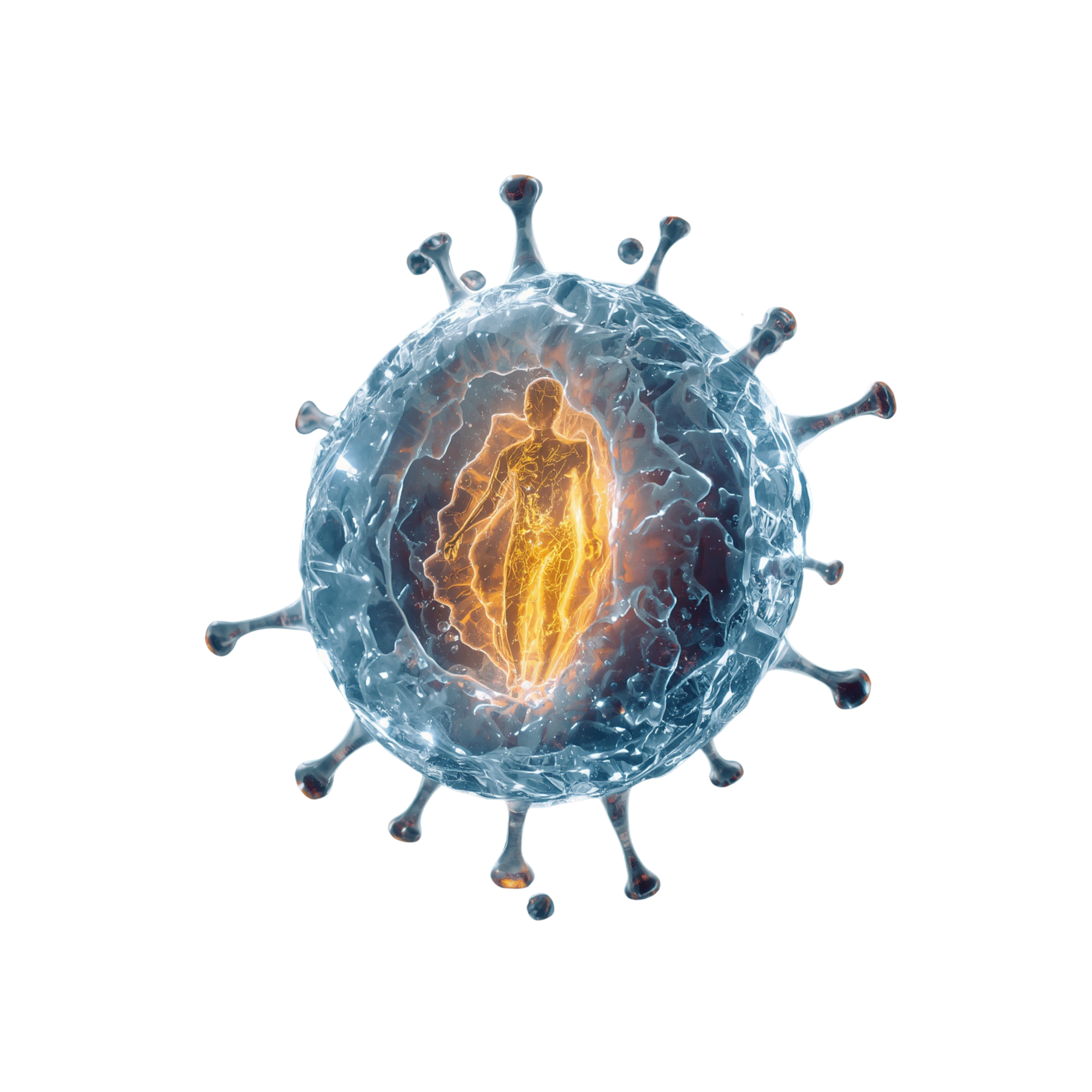
AND THE CONSEQUENCES OF NOT DOING SO - ARE THE SAME FOR THE BOTH OF US

Proverbs 31:25
1 Timothy 2:9-10
1 Peter 3:3-4
Deuteronomy 22:5

-
DRESSED FOR PURPOSE: THE SCIENTIFIC AND BIBLICAL IMPERATIVE OF OUTER APPEARANCE
A Comprehensive Essay on the Divine Design of Human Identity, Cellular Obedience, and the Satanic War Against Biblical Appearance
---
FOREWORD
This essay is not for the faint of heart. It is not designed to comfort the disobedient. It is not written to pad the guilty conscience of those who have spent decades manufacturing theological exceptions to biblical commands that were never optional. What you are about to read is an uncomfortable, unflinching, and scientifically grounded examination of one of the most powerfully suppressed truths in the modern world — that outer appearance is not a trivial matter, not a cultural preference, not a personal choice, and not a subject open to debate. It is a divine command. It is a scientific necessity. And it is the single greatest battlefield upon which Satan has won his most decisive and devastating victories against the human race.
The notes and reflections contained within the attached document represent years of intimate communication with the Creator — a record of spiritual revelation, scientific observation, and deeply personal reckoning with a world that has abandoned its instruction manual. The writer of those notes has endured what every vessel of truth must endure: ridicule, dismissal, and the suffocating loneliness of seeing clearly in a world that has chosen blindness. This essay takes those revelations and constructs from them a full, dense, and devastating argument — one that the modern church, modern science, and modern society are entirely unprepared to answer.
Prepare yourself. Because every uncomfortable sentence that follows is the truth.
---
SECTION ONE: THE MICROSCOPE OF GOD — HOW THE CREATOR IDENTIFIES HIS OWN
There is a moment in every serious scientific laboratory when a researcher leans over a microscope and peers into a world invisible to the naked eye. Within that world, order reigns supreme. Every cell knows what it is. Every cell looks precisely as it was designed to look. The liver cell does not attempt to masquerade as a skin cell. The red blood cell does not decide one morning that it prefers the aesthetic of a neuron. The immune cell does not abandon its identifying markers because it has grown tired of its designated function. The entire biological system of the human body depends — absolutely, catastrophically, non-negotiably depends — upon every cell maintaining the outer appearance it was designed to maintain. And the reason for this is not merely cosmetic. It is functional. It is purposeful. It is survival itself.
When a cell changes its outer appearance, it has changed its purpose. When a cell begins to look different from what it was designed to look like, the body's entire system of recognition collapses. The immune system, which is one of the most sophisticated defense networks ever conceived, operates primarily on a system of identification. It recognizes its allies by the way they look. It identifies its enemies by the way they look. Remove that visual distinction, and the entire fortress crumbles. This is not a metaphor. This is literal, documented, peer-reviewed science. And it is also, simultaneously, one of the most precise and devastating illustrations of why God commands His children to maintain a specific outer appearance.
Because God is the scientist. We are the cells. And He is looking into His microscope.
When the Bible instructs us to dress in a manner that distinguishes us from the world — when it commands women to dress modestly, to cover their heads in the house of God, to refrain from adorning themselves with gold and apparel and paint — and when it commands men to dress as men, never as women — it is not issuing aesthetic preferences. It is issuing the same kind of instruction that DNA issues to every cell in your body. It is saying: look as you were designed to look, so that you can be identified, so that you can perform your function, so that the system works as it was created to work. And when we deviate from that instruction, we do not merely make a fashion choice. We commit a cellular-level act of rebellion against the design of our Creator — with consequences every bit as catastrophic as the consequences a cancer cell faces when it mutates beyond recognition.
Consider what happens when a cell ceases to be identifiable. Consider the most terrifying example available to biological science: the cancer cell. The cancer cell is not merely dangerous because it multiplies uncontrollably. It is dangerous because it changes its appearance to deceive. Cancer cells alter their outer markers specifically to evade detection by the immune system. They disguise themselves. They stop looking like what they are. They adopt the surface appearance of normal, acceptable cells so that the body's defense mechanisms do not attack them. And in doing so, they become lethal. They spread. They consume. They kill. Not because of what is on the inside — not because of their DNA alone — but because of what they have done to their outer presentation. Their outer appearance has become a weapon of deception.
This is Satan's strategy with the human race. Precisely this. Satan does not need to change what is on the inside of a person first. He does not begin with the soul. He begins with the mirror. He begins with the wardrobe. He begins with the cosmetics counter, the jewelry store, the fashion magazine, and the celebrity red carpet. He changes the outer appearance first, and the inner corruption follows as naturally and as inevitably as night follows day. Because the writer of the attached notes understood this with startling clarity: when you dress for a purpose, you begin to become that purpose. When you dress like a servant of God, your mind, your spirit, and your behavior begin to conform to that identity. And when you dress like a servant of the world — when you paint your face, adorn your body with gold, expose your flesh, and dress against your biological gender — your mind, your spirit, and your behavior begin to conform to that identity instead.
The Amish girl is the proof. She is living scientific evidence of this truth. When you encounter a young Amish woman, you do not merely see a different style of clothing. You encounter a different spirit. A different atmosphere. A softness, a tenderness, a calm, a groundedness that is almost physically tangible. You can feel it. And the writer of the attached notes made an observation that deserves to stand permanently in the record of human understanding: dress that girl in the standard American fashion — the tight jeans, the crop top, the full face of makeup, the elaborate hair — and she would not have that personality. She would not carry that spirit. She would not emanate that peace. Because her parents dressed her for a purpose. And that purpose shaped her. From the outside in.
This is the sequence that the modern church has catastrophically reversed. The modern church says: change the heart first, and the outside will follow. But God, who is the Author of science as well as Scripture, designed it to work in both directions simultaneously. The outer appearance is not merely the result of inner transformation. It is also one of the instruments of inner transformation. It is a feedback loop. It is a circuit. Dress as God commanded, and you place yourself within the electrical circuit of His presence and His power. Dress against His command, and you break the circuit. And a broken circuit conducts nothing. No power flows. No prayers ascend. No healing descends. The lights go out.
And this is precisely why, when you look at the body of Christ in the modern Western world, you see a church that is continuously, desperately, heartbreakingly sick — not merely spiritually, but physically. Incurable diseases. Relentless suffering. Prayers that appear to go unanswered. A God who seems distant, silent, and indifferent. Not because He is. But because the circuit is broken. Because the cells no longer look as they were designed to look. Because God is peering into His microscope and He cannot find His children, because His children have camouflaged themselves so thoroughly within the patterns of the world that they are indistinguishable from the very system He told them to separate from.
And He cannot record the name of a cell He cannot identify.
---
SECTION TWO: THE BOOK OF LIFE AND THE SCIENCE OF RECOGNITION
The concept of the Book of Life is not a mere poetic device. It is a scientific reality operating on principles identical to those that govern the most sophisticated biological and astronomical record-keeping systems known to human science. When God says that He will not recognize those who have not kept His commandments — when He declares that on that day He will say to many, "I never knew you" — He is not being arbitrary. He is not being cruel. He is being a scientist. He is being a Father who made His children in a specific image, gave them a specific instruction for how to present that image to the world, and now cannot find them within the mass of humanity because they have deliberately obscured every identifying marker He gave them.
Consider the astronomer. For decades, an astronomer tracks a specific planet. He knows its orbit. He knows its rotation. He knows its atmospheric composition. He knows exactly what it looks like through his telescope on any given night. This knowledge is the foundation of his entire scientific record. Now imagine that planet, overnight, undergoes a radical transformation. Its color changes. Its atmospheric signature changes. Its orbit shifts. Its surface markings — all the identifying characteristics by which he has known and recorded this planet for thirty years — are gone. What has the astronomer lost? He has lost his record. He has lost his certainty. He has lost his ability to say with confidence: this is the planet I have been studying. This is the one I know. This is the one whose behavior I can predict, whose health I can monitor, whose future I can project. The transformation of its outer appearance has, in a single catastrophic moment, eliminated decades of accumulated relationship and knowledge.
This is what we do to God every time we abandon the outer appearance He prescribed. Every piece of jewelry placed upon a body He created jewel-free. Every application of paint upon a face He designed to be the unadorned image of Himself. Every article of clothing donned in deliberate contradiction to the gender He assigned. Every head left uncovered in the sanctuary He designated as sacred. Each of these choices is a modification of the planet's surface. Each one makes us less recognizable to the Being who created us. And the accumulating weight of a billion such modifications, performed daily by billions of people who call themselves His children, has produced a planet so thoroughly unrecognizable to its Creator that He looks down through His cosmic microscope and sees not His children but a mass of camouflaged rebels — people who have adopted every marker of the world and shed every marker of His household.
The Book of Life operates on recognition. Your name can only be written there if He knows you. And He can only know you in the fullness of what that means if you look like what He made you to look like. The writer of the attached document states this with devastating precision: if God upon looking into the microscope doesn't see you there — He can't record your name in the book of life. This is not a punishment. This is a consequence. It is as scientific as it is spiritual. You cannot be catalogued as what you are not presenting yourself to be.
---
SECTION THREE: CANCER CELLS AND CROSS-DRESSERS — THE BIOLOGY OF DECEPTION
There is a reason that the most dangerous biological entity in the known universe is not a virus, not a bacterium, not a parasite — but a cell that has decided to stop looking like what it was made to be. The cancer cell's primary weapon is not its rate of division. It is its disguise. Long before it begins to multiply at catastrophic speed, the cancer cell has already accomplished its most sinister feat: it has changed its outer appearance sufficiently to fool the immune system. It has cloaked itself in markers that say "I belong here. I am one of you. Do not attack me." And the immune system, which was designed to protect the body from foreign invaders, looks at this imposter and sees — nothing alarming. Because the outer presentation has been successfully falsified.
This is the spiritual mechanism behind every form of gender-confused dress, every instance of cross-dressing, every decision to present oneself to the world in an outer appearance that contradicts the biological and spiritual identity assigned by the Creator. The person who was designed as a man and who dresses as a woman has not merely made a fashion choice. They have, at the spiritual level, performed the same operation that a cancer cell performs at the biological level. They have altered their outer identifying markers. They have made themselves unrecognizable to the divine immune system — the system by which God identifies, protects, and covers His own. They have told the spiritual body: I am not what I appear to be. And the spiritual body, operating on the same recognition principles as the physical immune system, responds accordingly — with silence, with withdrawal, with the agonizing absence of divine protection.
This is why the Bible does not merely suggest gender-appropriate dress. It commands it. Deuteronomy 22:5 does not say "it would be preferable if a woman did not wear that which pertains to a man." It says it is an abomination. This is not the language of preference. This is the language of cellular crisis. God looked at the human design He created — male and female, two distinct biological, spiritual, and functional categories — and He understood with the totality of His omniscient intelligence that the moment these two designs began to cross-present, the entire system of divine recognition would be compromised. And so He issued not a suggestion, but a law. A law as fundamental as the law of gravity. A law as non-negotiable as the instruction encoded in every strand of human DNA.
The writer of the attached notes points to the Pope as a living, publicly visible example of this catastrophic confusion. And however uncomfortable it may be to name this example so directly, the discomfort of naming it is infinitely less than the spiritual danger of ignoring it. Here is the head of the largest Christian denomination on earth — a man — dressed from head to toe in robes and garments that are, by every biblical standard, the garments of a woman. His head is covered inside the house of God, in direct violation of 1 Corinthians 11:7, which states that a man ought not to cover his head, since he is the image and glory of God. And this man is venerated. He is called holy. He is kissed on the hand by millions who believe he represents the closest human approximation of God on earth.
And God says it is an abomination.
What is the consequence of this abomination being celebrated at the highest levels of institutional Christianity? The consequence is that hundreds of millions of Catholics look at this man and receive from his appearance the message that God does not care about outer appearance. That the rules about how to dress do not apply to holy people. That holiness, in fact, looks like a man in a dress. And so the cancer spreads. Because if the most visibly holy man on earth can dress in defiance of the biblical command, then surely the ordinary believer is exempt from that command as well. The disguise is complete. The immune system is deceived. And the cancer — this cancer of disobedience dressed as devotion — multiplies without interference.
God never issued exceptions. This cannot be emphasized with sufficient force. He did not say: all men must dress as men, except for those who hold religious office. He did not say: women must dress modestly, except on their wedding day. He did not say: you shall have no other gods before me, except during the festive seasons I have not actually sanctioned. Every exception that has been inserted into the biblical command structure is a human invention. Every human invention inserted into the Word of God is an addition to His Word, which He explicitly forbids. And every addition to His Word carries with it the consequence He explicitly promised — that He will add plagues to the life of the one who adds to His book. This is not a threat from a vindictive deity. It is a warning from a scientist about the consequences of tampering with a precision instrument. When you modify the code, you introduce errors. When the errors accumulate, the system fails. And the failure of the human spiritual system looks exactly like what the writer of the attached notes describes with heartbreaking accuracy: incurable disease, unanswered prayer, a God who seems absent, and a life lived in continuous, undiagnosed suffering.
---
SECTION FOUR: THE PARENT AND THE CHILD — WHY GOD'S CARE FOR YOUR APPEARANCE IS AN ACT OF LOVE
There is a picture that the writer of the attached notes paints with such devastating emotional clarity that it demands to be preserved in full, because it is one of the most powerful arguments for divine concern about outer appearance that has ever been articulated. Imagine you are walking down a street. You see a family. The parents are immaculately dressed — clean, composed, well-presented in every detail. And walking beside them is their child, absolutely disheveled. Dirty. Unkempt. Their clothing torn and mismatched. Their hair a chaos of neglect. Their skin unwashed. What do you feel when you see this?
You feel alarm. You feel grief. You feel the immediate and instinctive certainty that something is deeply, catastrophically wrong in this family. Because every human being on earth, regardless of culture, religion, or personal background, understands at an instinctive level that a parent who genuinely loves their child cares about that child's outer appearance. Not out of vanity. Not out of pride. Out of love. Out of the fundamental parental recognition that the child's outer presentation reflects the level of care, protection, and investment the parent has extended toward that child. A child who looks cared for has been cared for. A child who looks neglected has been neglected. The outer appearance tells the story.
Now apply this to God.
God is our Father. He created our outer appearance. He designed every detail of the human form with the precision of an engineer operating at a level of sophistication that makes the most advanced human technology look primitive. He designed the proportions, the symmetry, the biological functions of every external feature we possess. He designed gender — not as a spectrum, not as a fluid cultural construct, but as two distinct, complementary, purposeful designs, each with its own external presentation, each with its own external function, each with its own external identifying characteristics. And then He gave us instructions for how to maintain and present that outer design in a way that honors Him, reflects His ownership, and preserves our function.
When we disregard those instructions — when we paint what He left unpainted, pierce what He left whole, cover what He designed to be covered by modesty and uncover what He designed to be covered by clothing, and cross the gender line He drew with the permanence of biological law — we are presenting to the world a child who has been neglected. A child whose Father has apparently not communicated any standard of care. A child who has been left to wander through the cosmetics aisle and the fashion industry and make their own decisions about how to present themselves to the universe. And the world looks at this child — this supposedly saved, supposedly holy, supposedly God-indwelt child — and it concludes exactly what it concludes when it sees the disheveled child walking next to the immaculate parents. It concludes that something is deeply wrong. That no one is home. That the Father is absent.
But the Father is not absent. The Father gave instructions. His children chose not to follow them. And the distinction between those two realities is the entire difference between a God who appears not to care and a people who chose not to listen.
The writer of the attached notes makes this observation with a directness that is almost physically painful to read: the incredibly sad idea that a parent would not care about their child's outer appearance is so painful that it produces a physical sensation of grief. And this is exactly the correct emotional response. Because the theology that says "God only cares about your heart" — ripped from its context, stripped of its full meaning, weaponized by guilty consciences and false prophets — is not merely incorrect. It is one of the saddest distortions of the divine character ever perpetrated on a human population. It transforms the most loving Father in the universe into a neglectful parent. It makes Him look indifferent to the child He paid for with the highest possible price. It suggests that He created your outer appearance with infinite care and then immediately stopped caring about it the moment you were born into the world.
This is not the God of the Bible. The God of the Bible is specific. He is detailed. He cares about measurements — the measurements of the tabernacle, the measurements of the temple, the measurements of the New Jerusalem. He cares about materials — the specific fabrics, the specific metals, the specific stones that are acceptable in His presence. He cares about the length and arrangement of a priest's garments. He cares about whether a man's head is covered or uncovered in His house. He cares about whether a woman's hair is cut or uncut, covered or uncovered. He cares about the difference between linen and wool in the same garment. He cares about fringes on the corners of garments. He cares about what goes into your mouth and what comes out of it. He cares, in breathtaking and exhaustive detail, about outer appearance. The suggestion that He does not is not merely a misreading of Scripture. It is a contradiction of virtually everything He ever said.
---
SECTION FIVE: THE GASLIGHTING OF SATAN — HOW THE DEVIL CAPTURED THE MIRROR
There is a specific category of psychological manipulation known as gaslighting. It is the practice of making a person doubt their own perception of reality, their own memory, their own sanity — by systematically and persistently contradicting what they know to be true, until the target of the manipulation surrenders their grip on reality and accepts the manipulator's version of it instead. It is one of the most insidious forms of abuse known to human psychology, precisely because it leaves no visible mark. There is no bruise, no wound, no evidence. There is only the slow, grinding erosion of a person's ability to trust what they know.
Satan has been gaslighting the human race about outer appearance since the moment he successfully convinced Eve to doubt what God had clearly said.
"Did God really say that?"
Those five words are the foundation of every spiritual catastrophe in human history. They are the original gaslight. They are the template that Satan has refined and perfected over six thousand years of practice, until today he can deploy them with such subtlety and sophistication that most people who are under their influence have absolutely no idea they are being manipulated. They believe they are exercising critical thinking. They believe they are refusing to be legalistic. They believe they are embracing a more enlightened, more grace-filled, more nuanced understanding of a God who loves them too much to care about something as superficial as what they wear. And all of this — every single piece of this confident, comfortable, scripture-sprinkled rationalization — is the gaslight burning at maximum intensity in the darkness of their deceived minds.
Because here is what Satan knows that his victims do not: outer appearance is not superficial. It is the most visible, most immediate, most socially powerful expression of identity, allegiance, and function that a human being possesses. Every single human culture in the history of the planet has understood this. Every military has understood that a uniform is not merely clothing — it is a declaration of allegiance, a marker of function, a symbol of authority, and a demand for recognition. Every court in history has understood that the robes of a judge communicate something fundamental about the power and purpose of the person wearing them. Every bride in every culture has understood that what she wears on the day she gives herself to another person communicates something profound about the sacredness and seriousness of that commitment. Clothing has never been superficial. Appearance has never been trivial. It has always been one of the primary languages through which human beings communicate identity, purpose, and belonging.
Satan knows this. He knows it with a precision and depth that far exceeds human understanding, because he was present at the creation of human beings. He watched God design us. He observed the divine intention behind every detail of our outer form. He understood that God built into the outer appearance of His children a set of spiritual, biological, and social functions that are inseparable from their purpose and power. And so he made it his primary mission to attack, corrupt, and ultimately destroy that outer appearance — because he understood that destroying it would break the circuit between the children of God and the power of God.
And his campaign has been spectacularly successful.
Consider the evidence. The modern Western Christian goes to church in clothing that would have scandalized every generation of believers for the preceding nineteen centuries. Women sit in the house of God with their heads uncovered, their shoulders bare, their necklines plunging, their hemlines rising. Men and women dress in patterns virtually indistinguishable from those of the world they are supposed to be separated from. Makeup, jewelry, fashion, and physical adornment are not merely tolerated within the church — they are celebrated. Christian women's magazines feature beauty tips alongside Bible verses. Christian celebrities walk red carpets in the same revealing designer gowns as their secular counterparts. Christian wedding dresses expose more flesh than the average evening gown of a century ago.
And when anyone — anyone at all — raises a voice to suggest that perhaps this is inconsistent with the biblical standard, they are met not with thoughtful engagement, but with the immediate, reflexive, fully trained response that Satan has spent generations installing in the minds of his victims: "God only cares about your heart." "Don't be legalistic." "We're not under the law." "Judge not." "Grace covers everything." "God loves me just as I am."
Every one of these responses is a gaslight. Every one of them is Satan deploying his five-word template in a new costume. And every one of them accomplishes exactly what he designed them to accomplish: they shut down the conversation, shame the truth-teller, protect the disobedience, and send another generation of people to their eternal destiny wearing the camouflage of the world instead of the identifying marks of the Most High.
The writer of the attached notes identifies something that deserves to be elevated to the status of a major theological and spiritual observation: outer appearance has become, for modern people, a religion. It is not an exaggeration. It is a precise and clinically accurate description of the relationship that billions of people — including billions of people who call themselves Christians — have with their physical presentation. A religion is a system of belief and practice that a person will defend against all opposition, that they will sacrifice for, that they will prioritize above competing demands, and that they will not abandon regardless of what evidence is presented against it. By every one of these criteria, the modern cult of personal appearance qualifies as a religion. People will give up their marriages for it. They will spend money they do not have for it. They will sacrifice their health for it. They will endure pain for it. And — most damningly — they will give up their biblical faith for it. They will leave a church that teaches biblical standards of dress and find one that does not, because they would rather have God on their terms than on His.
SECTION SIX: THE BRUNEI BRIDE AND THE CHRISTIAN HARLOT — A DEVASTATING COMPARISON
Among the most searingly honest observations in the writer's attached notes is the comparison between a Brunei wedding and a modern Christian wedding. It is the kind of comparison that is only possible when a person has fully shed the cultural conditioning that prevents honest assessment — when they can look at two things simultaneously with completely unclouded vision and report precisely what they see. And what the writer sees is this:
The Brunei bride — a Muslim woman, dressed for a god that Scripture does not recognize as the true God — is covered from head to toe in white. Her arms are covered. Her legs are covered. Her neck is covered. Her hair is covered. The only flesh visible is her face and a portion of her hands. She has dressed, for a ceremony in which she gives herself to another person, in a manner that communicates: I am sacred. I am set apart. I am not for public display. I belong to my husband and to my God, and every inch of my presentation reflects that belonging.
Now cross the ocean and enter a Christian church on a Saturday afternoon. The bride standing at the altar — the one who has presumably come before the God of Abraham, Isaac, and Jacob to receive His blessing upon her marriage — is wearing what can only be described, by any biblical standard, as a garment designed to display the female body. Her shoulders are bare. Her back is bare. Her arms are bare. Her cleavage is on display. The entire architectural design of her dress is built around the strategic and maximum exposure of her body on this, the most sacred day of her romantic life.
She would not dress this way to a regular Sunday service. On an ordinary Sunday, there is at least a minimal attempt at modesty — perhaps she would wear a blouse with sleeves, perhaps a skirt that reaches the knee. But on the day when she needs God's blessing most desperately — on the day when she is entering into the covenant that God designed to reflect the relationship between Christ and the church, a covenant He takes more seriously than perhaps any other human institution — she arrives dressed in the most body-revealing garment she owns. She has dressed for a fashion moment, not for a sacred covenant. She has dressed for the photographs, not for the presence of God.
And no one in the church says anything. Because it is, after all, her wedding day. And on your wedding day, you are allowed to look beautiful. And beautiful, in the language of the world that has colonized the church, means exposed.
The writer asks a question that deserves to echo through every church in the Western world: why is it that other religions — religions serving gods who are not real, religions whose deities have no actual power, religions whose promises of eternity are empty — produce in their followers a level of faithfulness, discipline, and consistency of practice that the Christian church cannot match? Why will a Muslim woman cover herself from head to toe in devotion to a god whose existence is disputed, while a Christian woman will expose herself at the altar of the one true God? Why will a Sikh man maintain every detail of his appearance code with unfailing consistency, while a Christian man cannot be persuaded to separate himself from the fashion choices of the world for even one day per week?
The answer, the writer suggests, lies in the nature of the energy involved. A false religion serves a false god. A false god has no real power — but neither does he have a real enemy. There is no devil standing at the door of the mosque or the Sikh temple or the Buddhist monastery specifically dedicated to preventing the worshippers within from following their religion's appearance codes. Because those religions are not a threat. They do not lead to the living God. They do not access the power of the Creator. Satan does not need to interfere with them, because they are already serving him — not the God of the Bible.
But the church of Jesus Christ, built on the Word of God, operating in the power of the Holy Spirit, following the commands of the one true Creator — this is the one institution on earth that Satan must destroy at any cost. And the most efficient point of attack, the one he has exploited with the greatest long-term success, is the outer appearance. Because if he can convince the children of God to look like the world, they become indistinguishable from it. They lose their identifying markers. They become invisible to the divine microscope. And God, looking for His own, looks through the mass of humanity — and cannot find them.
---
SECTION SEVEN: THE TRANCE — WHY APPEARANCE IS THE ONE SIN NOBODY WILL GIVE UP
Of all the observations recorded in the attached document — and there are many that are striking, many that are uncomfortable, many that demand to be reckoned with — perhaps none is more precisely accurate than this one: outer appearance is the one thing that has people truly in a trance. Not a metaphorical trance. Not a rhetorical flourish. A genuine, neurological, spiritually reinforced trance state in which the rational faculties are suspended, the will is captured, and the person is rendered functionally incapable of making the free choice that their theology insists they possess.
Think about what people will give up for the sake of maintaining an outer appearance that displeases God. They will give up their church community — finding one more "accepting" — rather than adjusting their wardrobe. They will give up their relationship with a pastor who preaches biblical standards rather than modify their makeup routine. They will sit through a funeral of someone they loved and wonder quietly whether God is real, rather than consider that God's silence in their own lives might be connected to their deliberate disregard of His explicit instructions. They will read a verse about God caring about the heart, strip it of all context, wield it as a theological weapon against anyone who mentions biblical dress standards, and go back to their mirror completely satisfied that they have won an argument that their eternity depends upon losing.
This is the behavior of a person under a spell. And it is worth examining why this particular sin — unlike nearly every other sin — produces this level of protection, this degree of resistance, this almost supernatural stubbornness.
The answer lies in the intersection of three forces, each powerful enough to be dangerous alone, but together constituting a nearly irresistible system of captivity.
The first force is vanity itself — which is not merely a weakness of character but a spiritual disease with ancient roots. Vanity is the sin of Lucifer before his fall. It was the original sin of the highest created being in the universe. He looked at himself and he loved what he saw more than he loved God. He prioritized the presentation of his own glory above his obedience to his Creator. And the consequence was the most catastrophic separation from divine presence in the history of existence. Vanity is not a trivial sin. It is the original sin of the most powerful created being God ever made. And it is the sin that Satan, quite naturally, is most expert at cultivating in his victims — because it is the sin he knows best from the inside.
The second force is social reinforcement. The outer appearance choices of modern people are not made in isolation. They are made within a dense web of social validation, peer approval, cultural celebration, and media saturation. Every time a person's appearance choices are admired, photographed, celebrated, and shared, a neurological reward circuit is activated that is clinically identical to the circuit activated by other forms of addiction. The brain learns: this presentation produces approval. This presentation produces positive social feedback. This presentation produces the feeling of being seen, valued, and desired. And the brain — powerful, efficient, and entirely amoral in its fundamental reward circuitry — begins to defend this presentation as fiercely as it would defend any other source of reward. Telling a person to change their appearance is, neurologically, as threatening to them as telling them to give up any other source of dopamine and social validation. It triggers fear, resistance, anger, and rationalization. It activates every psychological defense mechanism the human mind possesses.
The third force is the direct spiritual energy of demonic opposition. The writer of the attached notes states this with a matter-of-factness that only comes from having personally witnessed it repeatedly: there is a paranormal, satanic energy that specifically and actively prevents the children of God from following their Creator's appearance commands. This is not imagination. It is observable phenomenon. It is the thing that makes a woman who will spend four hours perfecting her appearance for a human date find herself completely unable to maintain the basic modesty standard that God requires. It is the thing that makes a man who would wear a suit to a job interview at a company he wants to impress find himself resistant to the idea of wearing gender-appropriate, modest clothing out of obedience to the God who created him. It is the thing that makes a devout Muslim woman cover herself without complaint in the heat of summer, while a woman who claims to serve the true God cannot manage to keep her shoulders covered in a temperature-controlled church sanctuary.
These three forces — ancient spiritual pride, neurological addiction to social approval, and direct demonic interference — combine to create what can only be described as a trance. A state in which the person is genuinely, experientially unable to access the freedom that should be theirs as a child of God. They feel that changing their appearance is impossible. That it would cost too much. That it would make them unrecognizable. That they would lose something irreplaceable. And they are right about the last part — they would lose their camouflage. They would become visible as something different from the world. They would pick up their cross. And that, in a world that has made comfort into a theology, is the most frightening thing imaginable.
But here is what the trance prevents them from understanding: they would also become visible to God. They would step back into the frame of His microscope. Their name would become legible again in the Book of Life. The circuit would close. The power would flow. The prayers would begin to be heard. Because He only hears the prayers of the righteous, and the righteous are those who obey His Word — not selectively, not conveniently, not in the areas that cost them nothing — but fully, consistently, and humbly, including in the area of outer appearance.
---
SECTION EIGHT: THE ADDICTION OF APPEARANCE — WHEN FASHION BECOMES A FALSE GOD
There is a moment in the history of every addiction when the substance or behavior that was once a choice becomes a compulsion. When the person who once freely decided to partake now finds that the decision has been made for them — by chemistry, by habit, by the neural architecture that has been rebuilt around the addiction over years of repeated use. At that moment, the addiction has achieved full capture. The person is no longer driving. The addiction is. And all of their conscious, rational, verbal activity — all of their justifications, their rationalizations, their theological arguments — is simply the addiction speaking through them, defending its own survival.
This is the stage at which the modern Western world's relationship with personal appearance now operates. It is not merely a preference. It is not even a strong cultural value. It is a fully operational addiction — neurological, social, and spiritual — that has been running for so long and has been so thoroughly normalized that its victims cannot see it for what it is.
Consider the diagnostic criteria for addiction: compulsive engagement despite negative consequences, escalating investment of time and money, distress when access is threatened, reorganization of life priorities around the addictive behavior, and rationalization of the behavior regardless of evidence against it. Apply these criteria to the average modern person's relationship with their appearance, and the match is clinical.
People spend money they do not have on clothing. They go into debt for cosmetics and procedures. They spend hours per day on appearance maintenance that they could not eliminate without significant psychological distress. They reorganize their schedules around their appearance routines. They select their social environments based on whether those environments will affirm their appearance choices. They leave churches and relationships and communities that challenge those choices. And they produce, with remarkable consistency and creativity, theological, philosophical, and social arguments for why none of this is a problem — why God approves, why their choices are personally valid, why anyone who suggests otherwise is judgmental, legalistic, or hateful.
This is addiction behavior. And the drug is the self-image that the outer appearance produces and maintains.
The writer of the attached notes makes a comparison that is as scientifically precise as it is spiritually alarming: just as a person who switches from a healthy, organic diet to a diet of fried, sugary, and fatty foods will experience predictable deterioration in every system of their body — mental health, skin quality, cardiovascular function, sleep, metabolic regulation — so too does a person who switches from the outer presentation God designed for them to the outer presentation the world celebrates experience predictable deterioration in every dimension of their spiritual life. The quality of their prayer life deteriorates. The sensitivity of their spiritual perception deteriorates. The peace of God that should guard their heart and mind becomes inaccessible. The divine protection that should be their inheritance as a child of God becomes inconsistent and unreliable. Not because God has withdrawn it arbitrarily, but because they have, by their choices, moved outside the conditions under which that protection operates.
God's protection, like every other aspect of His covenant relationship with His children, operates within a system of conditions. These conditions are not burdensome additions to grace. They are the instructions that come with the device. When you purchase an expensive piece of equipment, the manufacturer provides a manual. The manual tells you what conditions the equipment requires to function optimally. What temperature range. What power supply. What maintenance schedule. What substances to avoid introducing into the system. These are not restrictions designed to limit your enjoyment of the equipment. They are the specifications of its design. Violate them, and the equipment fails. Not because the manufacturer is angry with you. But because the equipment was designed to operate within those specifications, and outside of them, it simply does not work.
God's children are the equipment. The Bible is the manual. The appearance commands within the Bible are among the operational specifications. And when those specifications are violated — continuously, deliberately, and with theological cover — the equipment fails. The prayers don't work. The healing doesn't come. The peace doesn't hold. The protection falters. And the bewildered believer looks at the broken equipment and asks, "Where is God?" When the correct question is: "Why did I stop reading the manual?"
The attached document contains an observation that cuts through every layer of comfortable religious self-deception with surgical precision: you can pray all you want, and God is not hearing your prayers, because even while you are praying you are completely unaware that your outer appearance is causing God not to speak to you or hear your prayers. This is not fatalism. This is not a doctrine of despair. This is a technical diagnosis. It is the same statement a mechanic makes when he looks at a car and says: the engine is not running because you have been putting diesel into a petrol engine. The solution is not to pray harder. The solution is to stop putting diesel in.
The solution is to obey the manual.
---
SECTION NINE: DNA, DISOBEDIENCE, AND DISEASE — THE CELLULAR CONSEQUENCE OF SPIRITUAL REBELLION
The most extraordinary scientific insight contained within the attached document is one that the entire medical establishment has spent billions of dollars trying to approach from entirely the wrong direction: the relationship between human disobedience and human disease is not metaphorical, not symbolic, not merely spiritual. It is biological. It is cellular. It is as mechanistically concrete and scientifically reproducible as any laboratory finding ever published in any peer-reviewed journal on earth.
The writer of the attached notes articulates this with a clarity that should humiliate every cancer researcher who has spent their career looking for the answer in a test tube while the answer has been sitting in plain text in the most widely distributed book in the history of human civilization. If a cell disobeying its instruction means that you get cancer, what do you think happens when the disobedience is on a grander scale — like when an entire human disobeys their instruction?
Let us sit with this question for the full weight of its implications.
DNA is instruction. This is not a metaphor. DNA is, in the most literal scientific sense, a code — a set of instructions written in a biochemical language of four nucleotide bases, arranged in sequences that determine what proteins are produced, when they are produced, in what quantities, in what cellular location, and in what response to what environmental signals. Every cell in the human body contains the complete instruction set for the entire organism. Every cell is reading those instructions continuously, executing them with a precision and reliability that makes the most sophisticated computer systems ever built look like children's toys. And when a cell stops reading its instructions correctly — when the code is misread, when the execution is corrupted, when the regulatory mechanisms that ensure faithful instruction-following are compromised — the result is cancer.
This is not a spiritual metaphor being applied to biology. This is biology providing an exact physical model of a spiritual reality that God has been trying to communicate for six thousand years. The model He built into the human body is a perfect illustration of the principle governing the human soul. When humans follow their divine instruction — when they read their manual, obey its commands, maintain the conditions it specifies for optimal function — the systems of protection, provision, and divine communication operate as designed. When humans disobey their instruction — when they dismiss the manual, rationalize away its commands, modify the conditions it specifies to suit their preferences — the systems fail. And the failure is not random. It is not inexplicable. It is proportional to the disobedience. It follows the same logic that governs the relationship between a cell's genetic instruction-following and its health. Faithful execution produces function. Corrupted execution produces malfunction. And the ultimate malfunction — at both the cellular and the human level — is death.
The attachment contains an observation that is simultaneously one of the most scientifically precise and spiritually devastating sentences ever written about the relationship between human behavior and human health: you aughta understand that your bodily cells obeying their Bible is why you're still alive. If your bodily cells started obeying their nucleic Biblical instruction — which is called DNA — the way we obey our Biblical instruction, there would be no humans left on this earth. Because the human body's biological survival depends entirely upon its cells following their instruction with a faithfulness that the human soul, in its current state of spiritual rebellion, cannot even approach.
Your liver cells do not wake up on a Sunday morning and decide that they would prefer to function as skin cells today. Your immune cells do not attend a rally where they are persuaded that the concept of cellular identity is a social construct and that they should be free to identify as whichever cell type they feel most authentic as. Your neurons do not modify their membrane proteins based on what is currently fashionable in the cellular signaling community. They obey their instruction. Every single one of them. Every single moment of every single day of your life. Without debate. Without exception. Without negotiating the terms of their obedience. And because of this faithful, relentless, absolute obedience to their genetic instruction, you are alive. You are reading these words. Your heart is beating. Your lungs are exchanging gases. Your immune system is neutralizing the threats that would otherwise end your life within days.
Now consider what happens when even a tiny fraction of your cells — far less than one percent — decides to stop following its instruction. Consider what happens when a handful of cells in a single tissue begin to modify their outer appearance, alter their function, and stop responding to the regulatory signals that keep every cell in its assigned role. The result is cancer. A disease that has killed hundreds of millions of people. A disease that modern medicine, with all of its extraordinary resources and intelligence, has not been able to cure. A disease that strikes the godly and the ungodly alike — because the disobedience that produces it is not always individual, not always personal, not always consciously chosen. It is systemic. It is cultural. It is generational. It is the accumulated weight of a civilization that has been rejecting its instruction manual for so long that the corruption has penetrated to the cellular level.
The cure for cancer is not in a laboratory. It never was. The cure for cancer is in the Book of instruction that God gave to the human race and that the human race, with breathtaking consistency and remarkable creativity, has been refusing to follow since the moment a serpent in a garden asked five words that changed the trajectory of biological history: "Did God really say that?"
And the most devastating evidence for this claim is not found in religious literature. It is found in the epidemiological data that the medical establishment uses to track disease patterns. The diseases that devastate the modern Western world are, with striking consistency, the diseases produced by the specific behaviors that the Bible explicitly prohibits. Sexual immorality produces sexually transmitted infections — including cancers of the reproductive organs that are directly linked to specific viral infections transmitted through sexual contact. Excessive consumption of food and alcohol produces liver disease, metabolic disorders, cardiovascular disease, and cancers of the digestive system. Tattooing and body piercing — practices the Bible explicitly condemns — introduce foreign materials through the skin barrier that the body was not designed to accommodate. The hormonal disruption produced by the contraceptive technologies that have allowed the sexual revolution to operate without its natural biological consequences is now implicated in cancers of the breast, the ovary, and the uterus. The psychological devastation produced by the breakdown of the biblical family structure — through divorce, cohabitation, sexual immorality, and gender confusion — produces the chronic stress states that are now recognized as major contributors to immune dysfunction and oncogenesis.
The Bible prohibited all of these behaviors. Not arbitrarily. Not out of divine prudishness. But because God, who designed the human body with complete knowledge of its biochemical vulnerabilities and its optimal operational conditions, knew that these behaviors would destroy it. He was not moralizing. He was engineering. He was writing the manual for a precision instrument and specifying the conditions that would destroy it. And the destruction He specified has arrived — precisely, comprehensively, and catastrophically — in the form of the incurable disease burden that now consumes the resources of the most medically advanced civilization in human history.
And still people will not read the manual.
---
SECTION TEN: THE WOMAN'S COVERING — A SCIENTIFIC AND SPIRITUAL NECESSITY
Of all the specific appearance commands in the Bible, perhaps none has been more consistently ridiculed, more creatively rationalized, and more thoroughly abandoned by the modern church than the command for women to cover their heads in the house of God. And this is not an accident. Of all the specific appearance commands in the Bible, this is also — not coincidentally — the one that Satan has the most to gain from eliminating. Because the covering of a woman's head in worship is not merely a cultural tradition, not merely a sign of social hierarchy, not merely a symbol of marital submission. It is, as the writer of the attached notes articulates with remarkable precision, a scientific matter.
The Apostle Paul, in 1 Corinthians 11, does not instruct women to cover their heads because it was the custom in Corinth. He instructs them to cover their heads because of the angels — because of the cosmic, spiritual order that governs the relationship between human worship and divine presence. He grounds the instruction not in cultural preference but in the order of creation itself. And he states the consequence of non-compliance with a directness that the modern church has chosen to either ignore or explain away: a woman who prays or prophesies with her head uncovered dishonors her head. She might as well have her head shaved. If she will not cover, let her be shorn.
This is not the language of cultural recommendation. This is the language of spiritual law.
The writer of the attached notes illuminates the scientific dimension of this command with an image that is both simple and profound: God is looking inside His microscope, searching for His children among the mass of humanity. He is looking for the specific identifying markers that distinguish His own from the world. And the covered head of a woman in His house is one of those markers. It is a cellular signature. It is the visual equivalent of the surface proteins that tell the immune system: this cell belongs here. This cell is one of mine. This cell is to be protected, covered, counted, and recorded.
When a woman enters the house of God with her head uncovered, she has, by the standard of this divine recognition system, removed one of her most important identifying markers. She has made herself harder to find. She has altered her spiritual surface proteins. And God — not out of cruelty, not out of arbitrary preference, but out of the same logical necessity that governs every recognition-based system in science — has difficulty identifying her as His own.
The instruction is also, as the writer suggests, a protection. Head coverings are not merely symbolic. They mark a boundary. They communicate to every spiritual entity in the room — both human and non-human — that this woman is covered. That she is under authority. That she is not available to the spiritual influences that move freely among the uncovered and the unguarded. That she has placed herself deliberately and visibly under the protection of the divine order that God established at creation. Remove the covering, and you remove the marker. Remove the marker, and you remove the protection. And in the house of God, surrounded by the spiritual realities that Paul had enough knowledge of to write about in a letter to a first-century church, the removal of that protection is not a trivial matter.
The writer makes a comparison that is as practically compelling as it is spiritually accurate: we will spend hours in the bathroom putting ourselves together for a man. We will fly to the bathroom to reapply makeup if it has been disturbed by an accidental brush of the face. But we do not give God that same energy. We don't find God important enough to look for Him the way He wants us to look. This is not a small observation. This is a diagnostic. It reveals the precise hierarchy of priorities that governs the modern believer's relationship with their outer appearance. The human partner is more important than the divine Father. The social approval of other human beings is more important than the recognition of the Creator. The maintenance of the appealing self-image is more important than the maintenance of the identifying markers that make you visible to the God whose recognition is the only one that has any eternal consequence.
The covered woman is a scientific specimen correctly labeled. The uncovered woman in the house of God is a specimen with her label removed — and a researcher who cannot read the label cannot include the specimen in his findings.
God cannot include what He cannot identify.
---
SECTION ELEVEN: THE GARDEN REVISITED — DOUBT AS THE ORIGINAL FASHION STATEMENT
Before Adam and Eve disobeyed God in the Garden of Eden, they were naked and unashamed. This is one of the most theologically significant statements in the entire Bible, and it is almost never discussed in the context of biblical appearance commands — which is itself a measure of how thoroughly Satan has managed to compartmentalize and silo the very Scriptures that, read together, form an utterly coherent and devastating argument for God's concern about outer appearance.
They were naked and unashamed — not because nudity is God's design for public human interaction, but because before sin, the glory of God covered them. They had no need of garments because they were clothed in something infinitely more substantial than fabric. They were clothed in divine presence. In the light of God's habitation. In the covering that only complete obedience to their Creator can produce. Their outer appearance was, in the most literal sense, the appearance of God's glory. They looked like what they were: beings who walked in unbroken fellowship with the Creator of the universe.
Then came the serpent. Then came the five words. Then came the doubt. Then came the disobedience.
And the very first consequence — the very first, immediate, instantaneous consequence, before the curses were pronounced, before the expulsion from the garden, before the pain of childbirth or the sweat of toil — was that they looked at their outer appearance and found it inadequate. They saw that they were naked. The covering was gone. And they scrambled — with fig leaves, with whatever was available — to reconstruct an outer presentation that would hide what they had lost. The first act of post-fall humanity was a fashion decision. It was the first attempt by sinful human beings to use outer appearance to compensate for the absence of divine presence. And it has not stopped since.
Every cosmetic counter in the world is a descendant of those fig leaves. Every fashion collection ever designed is a descendant of that first panicked wardrobe decision in the garden. Every tattoo, every piercing, every hair coloring, every gender-bending outfit, every elaborate display of wealth through clothing and jewelry and adornment — every single piece of it is a descendant of the same fundamental human project: using outer appearance to fill the void left by the departure of divine covering. Using the decoration of the body to compensate for the absence of the glory that the body was originally designed to carry. Using human creativity and material wealth to construct an outer presentation that masks the spiritual nakedness that sin produces.
And God, who knows this history because He was there for all of it, responded to the fig-leaf fashion moment with extraordinary grace and extraordinary precision. He did not leave them in their self-designed covering. He made them garments — proper ones, made of skin, which required the first death in the history of creation. He designed their covering Himself. He specified its material. He overrode their own aesthetic choices and replaced them with His own. And He has been trying to do the same thing for every generation of His children since — by leaving in His Word the specific instructions for how His children are to present themselves, so that they can be covered by something more durable and more meaningful than the fig leaves of contemporary fashion.
The serpent is still in the tree. This is one of the most chilling observations in the attached document, and it is entirely correct. The voice that says "did God really say you shall not eat of every tree in the garden" is the same voice that says "did God really say women must cover their heads" and "did God really say men must not wear women's clothing" and "did God really say you shall not adorn yourself with gold and apparel" and "did God really say that remarriage after divorce is adultery." It is the same voice, deployed with the same strategy, achieving the same result. Human doubt is cultivated. Human doubt becomes human debate. Human debate becomes human consensus. Human consensus becomes cultural norm. And the cultural norm — centuries later — becomes so thoroughly embedded in the social fabric that anyone who challenges it is labeled an extremist, a legalist, a hater, a fundamentalist. And the serpent continues to sit in the tree, entirely satisfied with the outcome.
The writer of the attached notes identifies something that deserves to stand as one of the central theological observations of our generation: it is only with respect to the real God, the God of the Bible, that Satan feels compelled to deploy his full arsenal of deception. With every other religion, every other deity, every other spiritual system on earth, Satan is content to let things proceed. He does not need to gaslight the worshippers of false gods about their religious dress codes. He does not need to convince the devout Muslim that the hijab is legalistic. He does not need to tell the Sikh that maintaining his appearance covenant is unnecessary. Because those religions are not his threat. They are his agents — knowingly or unknowingly — drawing worship away from the only Being in the universe who has the actual power to displace him.
But the Bible. The Bible is different. The Bible is the one document on earth that contains the actual truth about who Satan is, what he has done, what he intends to do, and how his power can be broken. The Bible is the one document that equips human beings with the information they need to step out of his dominion and into the dominion of the only God whose commands actually carry divine power. And so the Bible is the one target that Satan must attack with everything he has. And the most efficient point of attack — the one that costs him the least effort for the greatest return — is the appearance commands. Because appearance is the most visible, the most daily, the most socially exposed dimension of biblical obedience. If he can convince people to disobey God in this visible, constant, public dimension, he has ensured that their disobedience is not a private, occasional failure but a continuous, open, socially celebrated rebellion that shapes their identity, their community, and their self-understanding. He has made their disobedience into their personality. And once disobedience becomes identity, repentance becomes existential threat.
---
SECTION TWELVE: JEZEBEL, PAINT, AND THE TOXICOLOGY OF VANITY
The Bible does not waste words. Every specific example, every named individual, every detailed description of behavior and its consequence is placed in the text with divine intentionality. When God chose to describe Jezebel — one of the most notorious figures of spiritual rebellion and demonic influence in the entire Old Testament — with a specific reference to her physical appearance, and when that reference specifically mentions the painting of her face, it was not a historical footnote. It was an instruction.
The writer of the attached notes makes this observation with a forensic precision that the modern church desperately needs to hear: when God chose to represent Jezebel as He did, and mentioned the detail of her being painted, God meant for you to always know that painting your face is displeasing to Him. And notice that God did not say she was wearing makeup. He said paint. He used the word painting. What God meant to say is: any and all face painting is displeasing to me.
This distinction between "makeup" and "paint" is not a linguistic accident. It is a deliberate choice by a divine Author who understands biochemistry far better than any human scientist. Because paint — any paint, regardless of how sophisticated its formulation or how carefully its toxicology has been managed — is a foreign substance applied to the skin. And the skin, which is the largest organ in the human body and one of its most important immunological barriers, was not designed to be continuously coated in synthetic chemical compounds. The skin was designed to breathe. To regulate temperature. To interface with the environment in a controlled and purposeful way. To serve as the outermost layer of one of the most sophisticated biological systems ever constructed. It was not designed to be painted.
The writer references a documentary in which researchers discussed findings that the application of makeup activates cancer cells — and the visceral response this produced was entirely appropriate. Because this is not surprising. This is exactly what the manual predicted. God told us not to paint our faces. He used the specific example of Jezebel to illustrate the spiritual and characterological consequences of face-painting. And now science — that discipline which has been running furiously in the wrong direction for decades, producing vast quantities of sophisticated ignorance — is beginning to circle back to what the manual stated plainly thousands of years ago. Paint is toxic. Painting your face continuously, from youth to old age, introduces a chronic low-level chemical burden through the most porous and permeable external barrier of the human body. And the cells beneath that barrier respond to the chronic chemical assault in the way that cells respond to all chronic chemical assaults: with inflammation, with mutation, with the disruption of their instruction-following. With, in some cases, cancer.
God was not being puritanical. He was being protective. He was writing the warning label on a chemical that the beauty industry would not invent for another three thousand years. He was specifying, in His manual for the human device, a condition that must be avoided to maintain optimal cellular function. And He chose the example of Jezebel — a woman whose inner corruption was matched and expressed by her outer presentation — to ensure that His prohibition would be vivid enough, dramatic enough, and specific enough to survive the gaslighting of six millennia of cultural pressure.
It survived. It is written. But it is not being heeded. Because the same demonic energy that stood between Eve and her obedience in the garden stands between every woman who reads 1 Peter 3:3 and the moment of actually removing the jewelry from her ears and the paint from her face. It whispers the same five words in an updated contemporary accent. And most women — most Christian women, women who would say without hesitation that they believe the Bible is the Word of God — lay down their Bible and pick up their mascara wand without a moment of genuine spiritual reckoning about what they are doing and what it costs them.
The writer of the attached notes puts the challenge directly and without apology: if it's not that big of a deal, then let's see you take it all off. Let's see you wipe that makeup off your face, take those earrings off your ears, and put on a godly attire. And the revealing truth is that for the vast majority of women who insist that God only cares about the heart and not the outer appearance — this challenge is impossible. Not difficult. Not uncomfortable. Impossible. Because the addiction is complete. The trance is total. And the impossibility of doing the very thing they claim is "not a big deal" is the most eloquent possible confession that it is, in fact, a very big deal indeed. It is a deal they have made with the world, with the culture, with the beauty industry, with their social circle — and it is a deal they are not prepared to break, regardless of what the manual says.
That is not freedom. That is captivity. And it is one of the most successful forms of captivity Satan has ever engineered — because its victims are absolutely certain they are free.
---
SECTION THIRTEEN: PLANETS, PURPOSE, AND THE SCIENCE OF DISTINCTION
Science depends upon distinction. This is not a philosophical preference or a methodological quirk. It is the absolute, foundational, non-negotiable epistemological requirement of every scientific enterprise ever undertaken. You cannot study what you cannot distinguish. You cannot measure what you cannot identify. You cannot draw conclusions about a thing whose boundaries you cannot define. The entire edifice of human scientific knowledge — from the classification of species to the mapping of the human genome, from the cataloguing of stellar objects to the identification of viral strains — is built upon the ability to distinguish one thing from another by its observable characteristics.
When an astronomer commits decades of their professional life to the study of a specific celestial body, they are not merely collecting data about a point of light in the sky. They are building a relationship with a specific, identifiable, distinguishable object. They know its position at any given time of year. They know its spectral signature. They know its mass, its orbital period, its atmospheric composition, its magnetic field characteristics, its interaction with neighboring bodies. They know it by everything it presents — by every observable property of its outer existence. And that knowledge — that intimate, detailed, longitudinal scientific relationship — is the foundation of everything they can tell us about the universe.
Now imagine that planet changes. Not its inner composition alone — that would be almost impossible to detect directly in any case. But its outer presentation. Its spectral signature shifts. Its albedo changes. Its position in the expected orbital track deviates without explanation. Its interaction with neighboring bodies alters in ways that contradict everything the astronomer's record says it should do. What has the astronomer lost?
The writer of the attached notes captures the magnitude of this loss with devastating economy: you would be devastated. This would completely eliminate science. Because we depend upon everything looking as it was designed to look so we can distinguish it from the other cells or planets.
The word "devastated" is not an overstatement. And "eliminate science" is not hyperbole. It is a precise description of what happens when the objects of scientific study cease to maintain their distinguishing characteristics. If every planet looked the same, there would be no planetary science. If every cell looked the same, there would be no histology, no pathology, no oncology, no any of the biological sciences that depend upon the visual identification of cellular types and states. If every species looked the same, there would be no biology, no ecology, no evolutionary science. Distinction is not one feature of science. It is the prerequisite of science. It is the condition without which scientific knowledge is impossible.
And God is the most rigorous scientist in the universe. He created distinction. He is the Author of the principles of distinction. He built into the fabric of creation the laws that make one thing distinguishable from another — the laws of physics, of chemistry, of biology, of spiritual reality. And He applied these principles of distinction to His own children with the same rigor and intentionality that He applied them to every other category of creation. His children were designed to be distinguishable from the world. Not merely in their behavior, not merely in their moral choices, not merely in their internal spiritual state — but in their outer presentation. In what they look like. In how they dress. In what they display and what they cover. In the gender-specific markers they maintain or violate.
This is why god wants to distinguish us from the rest of the world. It is because we have a different purpose than the world.
Purpose and appearance are inseparable. This is true in biology — a liver cell looks different from a skin cell because it does something different from a skin cell, and the doing requires the looking. The structure is the function. The appearance is the expression of the purpose. Change the appearance, and you have begun to change the purpose — because you have begun to change the structural conditions under which the purpose can be fulfilled. This is true in social science — a judge's robe communicates authority and purpose; a soldier's uniform communicates training, allegiance, and capacity; a doctor's coat communicates knowledge and function. Appearance communicates purpose, and purpose is maintained through appearance. And this is true in spiritual science — the outer presentation of a child of God communicates their allegiance, their authority, their function, and their availability for the purposes of the God who created them.
When the children of God dress like the world, they have communicated — to the world, to the spiritual realm, and to the divine Researcher who is looking for them through His cosmic microscope — that their purpose is the same as the world's. They have removed the distinguishing markers. They have made themselves indistinguishable from the mass of humanity that does not belong to God, does not serve God, and does not function according to God's design. And in removing those markers, they have, functionally if not intentionally, stepped out of their divine purpose — because the appearance is the declaration of the purpose, and the declaration has been rescinded.
Dress for purpose. This is not a fashion maxim. It is a spiritual law. And every person who has ever dressed in a manner that communicates a specific identity and function — every soldier, every judge, every doctor, every bride, every Amish girl walking down a rural road in Pennsylvania — knows at some level, whether they articulate it theologically or not, that the clothing is doing something. That it is communicating something about who they are and what they are for. And the God who designed this principle — who built it into the social, biological, and spiritual architecture of creation — issued His dress code for precisely this reason. Not to restrict. Not to control. Not to burden. But to declare. To preserve. To protect. And to make His children findable in the one moment that matters most — when He looks into His microscope to record the names of His own.
---
SECTION FOURTEEN: APPAREL, FASHION, AND THE FOREVER UNCHANGING STANDARD OF MODESTY
One of the most quietly devastating observations in the attached document concerns the difference between fashion and modesty. It is a distinction that the modern church has completely collapsed — treating modesty as simply the conservative end of the fashion spectrum, a moving target defined by cultural convention and adjusted generationally to remain just slightly less revealing than the mainstream. By this understanding, what counted as modest in 1920 is not required of believers in 2020, because the cultural context has changed and modesty is a culturally relative concept.
This understanding is wrong. Catastrophically, consequentially, and demonstrably wrong. And the error lies in confusing two things that are not merely different in degree but different in kind.
Fashion, as the writer of the attached notes observes, changes all the time. What is appropriate now would send you to jail a year ago. This is not an exaggeration — it is a documented feature of fashion's trajectory. The hemline rises each decade. The neckline descends. The back is exposed, then the midriff, then the thigh, then the entire silhouette becomes a transparent declaration of the body beneath. Fashion is, by its very nature and purpose, a moving system. It is designed to move. Its commercial viability depends upon movement. If fashion stopped changing, the fashion industry would cease to exist. Movement — constant, relentless, always-escalating movement toward greater exposure, greater exhibitionism, greater celebration of the decorative body — is not a side effect of fashion. It is its engine.
And the Bible — God's Word, which is the same yesterday, today, and forever, spoken by the One whose character does not change and whose commands do not expire — told us not to follow fashion. The word the writer identifies is "apparel" — which in its biblical usage and its modern dictionary definition encompasses the entire category of fashion. The Bible told us to dress modestly. Not fashionably. And modesty, unlike fashion, does not change. Modesty in 1920 and modesty in 2020 are the same thing. They share the same defining characteristics: coverage of the body, absence of deliberate sexual display, non-conformity to the world's standards of dress, gender-appropriate presentation, and the absence of adornment that draws attention to the physical self rather than to the God who created it.
Modesty is not conservative fashion. Modesty is the rejection of fashion as a governing principle of dress and the adoption of divine command as the governing principle instead. It is not a matter of inches or centimeters on a hemline. It is a matter of whose voice you are listening to when you stand in front of your wardrobe in the morning. Are you listening to the culture? To the magazine? To the influencer? To the peer group? Or are you listening to the manual? To the God who made you? To the instruction that was written for the specific purpose of keeping you identifiable, protected, functional, and found?
The Amish girl is modest. Not because she is wearing the conservative version of 2020 American fashion. But because she has stepped outside the fashion system entirely and chosen a standard of dress that is governed by principles that do not change with each passing season. And the result — as the writer of the attached notes observes with the kind of certainty that only comes from direct personal experience — is a softness of spirit, a tenderness of personality, a peace of presence that is almost physically palpable when you stand near her.
She is dressed for purpose. And the purpose is expressing itself through every layer of who she is — not just her clothing, but her character, her manner, her spiritual atmosphere. She has been dressed for God's purpose since childhood, and that purpose has shaped her from the outside in, as powerfully as it has shaped her from the inside out. Her parents understood what the most sophisticated secular psychologists have begun to document in their research: that what we wear changes how we think, how we feel, and how we behave. That the outer presentation is not a passive reflection of the inner state but an active shaper of it. That dressing for modesty produces modesty. That dressing for display produces exhibitionism. That dressing against your gender produces confusion — spiritual, psychological, and social — in the one wearing the cross-gendered garment and in everyone who interacts with them.
God knew this. He always knew this. He built this feedback loop into the human system as surely as He built the feedback loops that regulate your body temperature and your blood pH. And He gave us the instruction to leverage it — to use the outer presentation as one of the instruments of inner transformation, just as He used the outer obedience of the Israelite sacrificial system to cultivate inner reverence, and just as He used the outer discipline of the priestly dress code to cultivate inner holiness in those who wore it.
Dress for purpose. Because purpose matters to God. Because purpose is why He made you. And because your outer appearance is, always has been, and always will be, one of the primary declarations of what your purpose is.
---
SECTION FIFTEEN: THE RIGHTEOUS AND THE HEARD — WHY GOD DOES NOT ANSWER EVERY PRAYER
One of the most misunderstood and most emotionally charged theological realities in the modern church is the question of unanswered prayer. It is the question that has driven more people away from faith than perhaps any other — the experience of praying with apparent sincerity and receiving apparent silence. The experience of watching someone who prays faithfully suffer the same diseases and face the same disasters as those who never pray at all. The experience of crying out to a God who seems, at the most critical moments, to have turned His face away.
The modern church's response to this crisis has been almost uniformly one of therapeutic reassurance: God hears every prayer. God loves you unconditionally. God is working in ways you cannot see. Trust the process. Believe for a miracle. Your faith will be rewarded. These responses are not entirely wrong in every dimension, but they are catastrophically incomplete — because they systematically omit the one piece of information that would actually explain the silence and, more importantly, provide the means of ending it.
The Bible is not ambiguous about the conditions under which God hears prayer. The writer of the attached notes states it plainly and correctly: God only hears the prayers of the righteous. This is not a fringe theological position. It is not a legalistic overreading of isolated texts. It is a consistent, repeatedly stated, unambiguous teaching of Scripture from one end to the other. Proverbs 15:29: "The Lord is far from the wicked, but He hears the prayer of the righteous." James 5:16: "The effective, fervent prayer of a righteous man avails much." 1 Peter 3:12: "For the eyes of the Lord are on the righteous, and His ears are open to their prayers; but the face of the Lord is against those who do evil." Isaiah 59:2: "Your iniquities have separated you from your God; and your sins have hidden His face from you, so that He will not hear."
This is not a minor caveat. This is a governing principle of the entire prayer-hearing economy of the universe. God hears the prayers of the righteous. The definition of righteousness, as the writer of the attached notes correctly identifies, is obedience to the Word of God — not selective, not partial, not confined to the areas of obedience that are socially acceptable or personally convenient, but comprehensive, consistent, and humble obedience that does not debate, does not negotiate, and does not carve out exceptions. The righteous are those who obey the entire Bible — including, and perhaps especially, the parts that are most costly, most culturally counterintuitive, and most directly targeted by satanic opposition.
And among those parts — prominently, visibly, irreducibly — are the appearance commands.
This creates a logical chain that the modern church has broken at its most critical link, and the consequences of that break are catastrophic. The chain is this: God hears the prayers of the righteous. The righteous are those who obey His Word fully. His Word includes specific appearance commands. Therefore, those who disobey His appearance commands are not, in the fullest biblical sense, righteous — and therefore God does not hear their prayers. Not because He is petty. Not because He is vindictive. But because the disobedience that expresses itself in the violation of appearance commands is part of a larger pattern of spiritual state that places the person outside the relational conditions under which God's responsive presence operates.
The cancer patient who prays for healing while living with someone unmarried. The chronic illness sufferer who attends church wearing jewelry and makeup and a backless dress. The family besieged by catastrophe who gather at the altar in clothing indistinguishable from the world's. None of them understands why God is not answering. None of them has connected the silence to the disobedience. Because the modern church — which should be delivering this diagnostic information — has been so thoroughly colonized by the therapeutic model of Christianity that it no longer has the language or the courage to say: the reason your prayers are not being heard is not a mystery. It is written in the manual. And the manual says that God hears the prayers of the righteous, and you are not, by the standard the manual uses to define righteousness, righteous — not because of your heart alone, but because of the behavioral obedience that righteousness requires and that you are not providing.
The writer of the attached notes makes a point that deserves to be carved in stone above the entrance of every church in the Western world: you can pray all you want. God is not hearing your prayers. Because even while you are praying you are completely unaware that your outer appearance is causing God not to speak to you or hear your prayers. This is not condemnation. This is diagnosis. It is the most loving thing that could possibly be said to someone who is suffering in silence and cannot understand why. It is the equivalent of a doctor telling a patient that the medication they have been taking faithfully for years is not working because a dietary choice they do not even recognize as problematic is preventing its absorption. The answer is not to pray harder. The answer is to fix the diet.
The answer is to obey the manual. Including the parts about what you wear, how you present yourself, and whether you look like a child of God or a citizen of the world.
---
SECTION SIXTEEN: THE PRICE OF SIN — DISEASE AS DIVINE COMMUNICATION
When every other channel of communication has been closed, when every other voice has been silenced, when every other form of instruction has been rejected — what is left? The writer of the attached notes arrives at this question through years of watching people suffer from incurable diseases while praying to a God they claim to know but whose most basic instructions they refuse to follow. And the answer that emerges from that watching is one that the modern world is entirely unprepared to hear: disease is God's last available language.
Not the only language God speaks — He is speaking constantly, in Scripture, in the natural world, in the conscience, in the testimony of those who obey Him fully and experience the distinction between His presence and His absence. But for a civilization that has systematically closed all those channels — that has declared the Bible culturally irrelevant, the natural world merely material, the conscience a social construct, and the testimony of the obedient either irrelevant or offensive — what remains? What form of communication can penetrate the impenetrable fortress of a society that has armored itself against every voice of God with entertainment, comfort, technological distraction, and pharmaceutical management of every form of physical and emotional discomfort?
What remains is the one thing that no amount of entertainment can fully distract from, no amount of comfort can fully insulate against, no technology can fully prevent, and no medication can fully cure: the body turning against itself. The cellular machinery of the very organism that was supposed to be the temple of God's Spirit, becoming the instrument of its own destruction.
This is not a new theological insight. It is as old as Exodus, where God explicitly connected the health of His people to their obedience, offering protection from disease as a covenant benefit and disease as a covenant consequence. It is as old as Deuteronomy 28, which catalogs with extraordinary specificity the diseases that would befall the disobedient. It is as old as the prophets who diagnosed Israel's national diseases as spiritual before they were physical. The idea that disease is connected to disobedience is not a fringe theological position. It is one of the most consistently stated principles in the entire Old Testament and a major thread running through the New.
But the modern church has abandoned this thread completely — partly out of genuine compassion for the suffering, partly out of the therapeutic culture's demand that no one ever be told that their suffering might be connected to their choices, and partly out of the satanic influence that has made the most important truths about God the most socially dangerous ones to speak. And so people lie in hospital beds, their bodies dismantled by diseases that the medical system cannot cure and cannot adequately explain, and they are never told that the Book of instruction that sits on their nightstand might contain the answer they have been searching for — if they would open it, read it, and obey it completely, without debate, without exception, and without the fig leaf of theological rationalization that has allowed them to call themselves God's children while living in comprehensive violation of His commands.
The writer of the attached notes states something that will be deeply offensive to anyone who has not yet grappled with the full weight of this reality: if you're sick, then you deserve to be sick. These are harsh words. They are the words of someone who has spent years watching people suffer what could have been avoided, and who has reached the limit of their capacity for soft communication with those who refuse to hear anything else. But beneath the harshness is a theological truth that is simultaneously the most devastating and the most hopeful thing about disease as divine communication: it means the disease is not random. It is not meaningless. It is not the cruel caprice of an indifferent universe. It is a message. And if it is a message, it can be responded to. If it is a consequence, it can be addressed. If it is the result of a specific, identifiable cause, then addressing the cause may address the consequence.
And the cause — which the writer of the attached notes identifies with a certainty born of genuine spiritual revelation — is disobedience. Comprehensive, systemic, culturally normalized, theologically rationalized disobedience to the Word of God. Including, prominently and non-negotiably, the disobedience of outer appearance. The paint on the face. The jewelry on the body. The immodest dress. The uncovered head in the house of God. The cross-gendered clothing. The remarriage after divorce. The cohabitation before marriage. The celebration of false gods under the names of holidays. All of it, accumulated over generations, pressed into the cellular machinery of the human body until the machinery begins to fail — and the failure announces itself as the disease burden of the most disobedient civilization in the history of the most frequently instructed people on earth.
The cure exists. The writer of the attached notes knows where it is. It is in the same place it has always been — in the relationship between the human race and its Creator, which is activated, sustained, and mediated through obedience to the Book of instruction that He left us. It cannot be unlocked by science. It cannot be unlocked by prayer alone. It can only be unlocked by the combination of prayer and obedience that the Bible defines as righteousness — and it is being withheld not out of divine cruelty but out of divine wisdom, because to give the cure without the obedience would be to remove the one remaining form of communication that the human race has left itself capable of receiving.
Heal the people, and they continue in disobedience. Continue in disobedience, and something worse than cancer arrives. Better the devil you know — and better to endure the cancer of disobedience long enough for its sufferers to finally ask the question that the disease was always designed to provoke: what is it that I have been doing that is causing my Creator to allow this?
And the answer — for every person willing to actually receive it — is written in the manual. In plain, unambiguous, fully accessible text. On every page.
---
SECTION SEVENTEEN: THE VESSEL AND THE VOICE — WHAT IT COSTS TO CARRY THE TRUTH
There is a particular category of human experience that has no adequate secular name. The theologians of previous centuries called it being a vessel — a person through whom divine truth flows with a consistency and specificity that exceeds the ordinary range of religious insight. The writer of the attached notes occupies this category. Not by their own declaration. Not by the approval of any institutional religious authority. But by the evidence — the sheer volume, the precision, the internal coherence, and the practical verifiability of what they have received and recorded.
To be a vessel is not a comfortable assignment. It is not a position of social elevation. It is not a guarantee of being believed, respected, or even tolerated. The writer of the attached notes has encountered, with remarkable consistency, the precise reaction that every genuine vessel of truth has always encountered: the messenger is attacked while the message is ignored. The person who observes that someone is wearing makeup, or jewelry, or gender-inappropriate clothing, or has their head uncovered in the house of God — and says so — is treated as though they have committed an act of physical aggression. They are accused of judging. Of being legalistic. Of being hateful. Of being unable to understand grace. They are sometimes physically confronted. They are socially isolated. They are labeled as extreme.
And the people delivering this judgment — the people labeling the truth-teller as extreme — are, almost without exception, living in the disobedience that the truth-teller is describing. This is not a coincidence. This is a pattern. It is the pattern that has governed the relationship between truth and its recipients since the first prophet was stoned by the people he was sent to save. The truth burns. It burns specifically, it burns personally, and it burns proportionally to the depth of the disobedience it names. And people who are burning prefer to eliminate the source of the heat rather than address the condition that makes them susceptible to it.
The writer of the attached notes describes this experience with a candor that is simultaneously painful and instructive: I have never been able to convince anyone in this country of their wrong doing. Everyone just seems convinced that their understanding of life is the correct one. This is not a personal failure of communication. This is a structural feature of the spiritual condition that Paul described as having scales over the eyes and a veil over the mind. The truth cannot penetrate a mind that has been specifically and supernaturally protected against it. And the satanic protection that surrounds the mind of every person who is deeply invested in their disobedience — especially their appearance-related disobedience — is, as the writer correctly identifies, a paranormal phenomenon. It is observable. It is consistent. And it is specifically activated whenever the truth of God's Word about outer appearance is spoken.
The writer makes an observation about this paranormal resistance that is worth examining in its full theological weight: at no other time do I see such paranormal phenomenon as when attempting to feed the Word of God to an ungodly soul. It is as though there is some dark force standing between the lost soul and the Word of Truth, protecting its property ruthlessly. This is exactly what Paul describes when he says that the god of this age has blinded the minds of unbelievers. It is what Jesus describes when He speaks of the birds that come immediately to snatch away the seed before it can take root. The resistance to biblical truth — and specifically to the most practically costly, most socially uncomfortable, most self-image-threatening truths of the Bible — is not merely human stubbornness. It is supernaturally reinforced human stubbornness. It is stubbornness with a guardian. And the guardian has been doing this job for six thousand years and has become extraordinarily good at it.
What does it cost a vessel to carry this truth? It costs exactly what it has always cost every vessel of truth: isolation, ridicule, the pain of watching people suffer avoidably, and the particular loneliness of clarity in a world that has chosen blindness. The writer describes watching cancer patients online, following their journeys, weeping for them — and yet knowing, with a certainty that makes the weeping almost unbearable, that what they are watching is the price of sin. Not sin in the moralistic sense of human judgment. Sin in the precise theological and scientific sense of the word: the violation of the operational conditions specified in the manual for the human organism, with the predictable consequence of system failure. The disease is not random. The suffering is not meaningless. The death is not inexplicable. But the dying person does not know this. And the person who does know it cannot tell them — because the guardian will not permit the information to land.
This is the weight that a vessel carries. This is what it means to have the scales removed from your own eyes while watching the rest of the world function in complete, comfortable, and catastrophic blindness. It is not a position of superiority. It is a position of anguish. The writer of the attached notes has arrived at a point of painful acceptance that every genuine vessel eventually reaches: I honestly have a hard time feeling sorry for anyone anymore. This is not cruelty. This is the exhaustion of compassion that has had nowhere to go. The compassion is still there — it produced tears for the cancer patients, it produced the impulse to reach out to them, it produced the ongoing effort to communicate truth in a world that has inoculated itself against receiving it. But compassion that is perpetually rejected eventually becomes something that looks like hardness but is actually something more like the honest reckoning with the limits of what one person can do against a supernaturally maintained system of collective self-deception.
The vessel does not give up on the truth. The vessel gives up on the illusion that the world wants to hear it. And in giving up that illusion, the vessel becomes more effective — not less — because they stop wasting their most precious spiritual resources trying to force open doors that only God can open, and start focusing on the work He has actually assigned them: recording the truth, maintaining the obedience, carrying the peace of God that passes understanding, and waiting for the precise moment when the suffering of the world becomes great enough that it finally asks the right question.
That moment is coming. The diseases are escalating. The incurable conditions are multiplying. The medical system is straining under a burden that it was never designed to carry, because it was never equipped with the most essential piece of information about the human body: that it is not merely a biological machine subject to the laws of chemistry and physics, but a spiritual device subject to the laws of its Creator, and those laws govern its health more fundamentally than any pharmaceutical compound ever synthesized in a laboratory.
When the world finally asks the right question — what is it that we are doing that is causing our Creator to allow all this? — the answer will be there. It has always been there. It is written in the manual. And among the most consequential items in the manual, among the commands whose violation has the most immediately visible, most socially pervasive, and most spiritually costly effects — is the command about how God's children are to look.
Dress as God commanded. Look as God designed. Maintain the outer markers that make you identifiable to the divine Researcher. Close the circuit. Let the power flow. And let God finally — finally — begin to answer the prayers of a people who have learned, at last, to obey.
---
SECTION EIGHTEEN: THE HARVEST OF OBEDIENCE — WHAT GOD'S CHILDREN COULD LOOK LIKE
It requires imagination. Not the speculative imagination of fiction, but the sober, disciplined imagination of someone who has read the manual carefully, observed the rare individuals who actually follow it, and extrapolated from those observations to a vision of what the church could be if it were to take the appearance commands with the same seriousness that every other religious tradition takes its own appearance codes.
The writer of the attached notes has encountered such individuals. They are described with an unmistakable quality of wistfulness — the memory of being in their presence has not faded, because the experience of being near a person who fully obeys the Word of God, including its most costly commands, produces a sensory and spiritual impression that is qualitatively different from any other human experience. The peace of God upon them. Not as a cliché. As a palpable atmosphere. As something you can feel, the way you can feel the temperature change when you walk from a hot room into a cool one. Their presence is different. Their spirit is different. Their personality is different.
These are people who have made the complete surrender — who have removed the jewelry, wiped off the paint, covered their heads, covered their bodies, separated themselves from the fashion system, and dressed, consistently and without apology, as the Bible instructs. And the result is not what the world predicts. The world predicts that such people would be joyless, repressed, socially dysfunctional, and spiritually pinched. The world predicts that the removal of self-expression through fashion would produce a diminished, constrained, gray version of human existence. The world is wrong.
What actually happens — what the writer of the attached notes observes in those rare individuals who have done this fully — is an expansion. A flowering. The peace that inhabits them is not the peace of resignation but the peace of resolution. The joy that characterizes them is not the performance of religion but the natural expression of a life in which the circuit is closed and the power is flowing. The softness — that quality that the writer identifies in the Amish girl and finds so striking precisely because it is so absent from the general population — is not weakness. It is the softness of a person who has stopped fighting their Creator and started cooperating with Him, who has discovered that obedience is not a cage but a frequency — the specific frequency on which the divine-human communication operates, and the tuning of which changes everything.
What would the church look like if every believer dressed as the Bible commands? If every woman covered her head in worship and dressed in modest, gender-appropriate clothing, without jewelry and without paint? If every man dressed as a man, with his head uncovered in the house of God, his clothing modest and functional rather than fashionable and sexually coded? What would the atmosphere of the church be? What would the quality of prayer be? What would the incidence of disease be among a people who had stopped introducing chemical toxins through their skin, stopped disrupting their bodies with the hormonal consequences of sexual immorality, stopped introducing the chronic stress of identity confusion, and started living in the specific conditions that their Creator specified for optimal function?
The writer of the attached notes has an answer, drawn from personal revelation and personal experience: those who follow every law in the Bible, who never make excuses about what the Bible says — when you come around them, you can feel the peace of God upon them. And it is so wonderful. It is the most wonderful thing available to human experience on this earth. Not the fleeting pleasure of fashion admiration or social approval. Not the temporary dopamine hit of a compliment on your appearance. Not the anxious, exhausting, never-quite-sufficient effort to maintain a presentation that will always be judged, always be compared, always be found wanting by the ever-escalating standards of a culture that has made appearance into a religion.
But the peace of God, which passes understanding. The peace that comes from being exactly what you were designed to be, looking exactly as you were designed to look, operating in exactly the purpose you were designed to serve. The peace of the cell that is faithfully reading its instruction and performing its designed function. The peace of the planet that continues on its designed orbit, maintaining its designed characteristics, remaining perfectly visible and perfectly knowable to the researcher who has been studying it for decades.
The peace of being found.
---
SECTION NINETEEN: THE GREAT NARCISSISM — A CIVILIZATION THAT STEALS FROM GOD AND DEMANDS HIS REWARDS
The writer of the attached notes deploys a word that deserves to be the centerpiece of any honest theological and sociological analysis of the modern Western relationship with God: narcissism. Not individual narcissism — the clinical psychological condition of a specific personality type — but civilizational narcissism. The narcissism of an entire culture. A collective personality structure in which an entire society has adopted the defining characteristics of the narcissistic individual: the belief in entitlement without responsibility, the demand for reward without obedience, the conviction of specialness without the behavior to justify it, and the furious inability to accept any consequence of their own choices as their own responsibility.
We won't do as we're told but we want everything we demand. And because He's not giving it to us, we're going to try to break into His dwelling and steal it. We have even built tools we call "science labs" to outsmart Him.
This is not hyperbole. This is an accurate description of the foundational premise of modern secular medicine — and, more disturbingly, of modern therapeutic Christianity. Both systems operate on the same core assumption: that human beings are entitled to health, healing, longevity, comfort, and flourishing regardless of their behavioral relationship to the God who designed the human organism and specified the conditions of its optimal function. Both systems spend enormous resources attempting to obtain by scientific or spiritual technique what can only be obtained by covenantal relationship — and both are systematically unsuccessful in their most fundamental ambitions, precisely because they have refused to acknowledge the one variable that determines all the others.
The cure for cancer cannot be stolen from God. It can only be received from Him. And it can only be received from Him under the conditions He specified — which are the conditions of righteousness, which is the condition of obedience, which includes obedience in the dimension of outer appearance. The laboratory is a tool for breaking and entering into a house whose owner has already offered to let you in — freely, generously, completely — if you would simply come to the door and knock on it properly. Not with the knock of performance religion. Not with the knock of therapeutic self-improvement. But with the knock of full, humble, unashamed, undebated obedience to every word in the Book of instruction that He left for precisely this purpose.
The narcissism extends to the specific question of appearance in a way that is almost comically self-revealing, if its consequences were not so tragic. The person who insists that God only cares about the heart and not the outer appearance is making, simultaneously, one of the most self-serving and one of the most logically incoherent arguments in the history of biblical interpretation. It is self-serving because the appearance commands are among the most personally costly of all biblical commands — they require the visible, daily, socially observed modification of a dimension of life that has been thoroughly colonized by addiction, social approval, and satanic influence. And it is logically incoherent because, as the writer of the attached notes demonstrates with devastating clarity, if the Bible told us that what is on the outside doesn't matter, then the whole Bible is contradicting itself — because from Genesis to Revelation, God is extraordinarily, exhaustively, and specifically detailed about outer appearance.
The narcissism also expresses itself in the treatment of those who do obey the biblical appearance commands. The writer describes this with the kind of direct personal experience that cannot be fabricated: when I see these kinds of people — those who wear makeup, jewelry, opposite-gender clothing — ridicule and persecute others for wearing clothes only pertaining to their gender and choosing not to paint their faces or adorn their bodies with jewels, there just seems to be something about the true children of God that burns the eyes of the world, and the world feels like it has to strike back as though they have been physically provoked.
This is the narcissistic injury response. When the obedient person exists — simply exists, simply lives out their obedience visibly and consistently — they constitute, by their very presence, a rebuke to every person around them who is not obeying. They do not need to say anything. Their presence says it. Their covered head, their modest dress, their absence of paint and jewelry, their gender-consistent appearance — all of it communicates, without a single spoken word, that it is possible to obey the Bible in this area, that the obedience is a choice, and that the choice not to obey is therefore also a choice. And this unbearable communication — unbearable because it eliminates the comfort of "I can't" and replaces it with the accountability of "I won't" — produces in the onlooker the exact rage and contempt that narcissistic people produce in response to any evidence that contradicts their entitlement. They don't attack the message. They attack the messenger. They call the obedient one extreme, legalistic, judgmental, old-fashioned, repressed. Because if they attacked the message, they would have to engage with it. And engaging with it might cost them the appearance choices that their addiction cannot afford to lose.
---
SECTION TWENTY: OBEDIENCE WITHOUT DEBATE — THE ONLY ACCEPTABLE RESPONSE
The Bible is not a philosophical text. It is not a collection of spiritual suggestions open to individual interpretation. It is not a resource for constructing a personal theology tailored to one's preferences, comfort level, and social context. It is an instruction manual. Written by the Designer of the human organism, for the human organism, specifying with extraordinary detail and comprehensive coverage the conditions under which the human organism functions optimally, the threats it will face, the errors it must avoid, and the relationship with its Creator that represents both its highest purpose and its only sustainable source of health, protection, and power.
And instruction manuals are not debated. They are followed.
When you purchase a precision instrument — a surgical device, a navigation system, a piece of scientific equipment — and you receive the manual, you do not convene a committee to decide which parts of the manual are culturally relevant to your context and which can be set aside as outdated. You do not hold a symposium on the theological implications of the warranty terms. You do not form a study group to determine whether the manufacturer's specifications are mandatory or merely advisory. You read the manual. You follow the instructions. You operate the device within the conditions the manual specifies. And when the device performs as designed — when it delivers the precision, the reliability, and the results it was built to deliver — you do not feel restricted. You feel equipped.
The writer of the attached notes describes the only correct posture toward biblical obedience with characteristic directness: they just simply OBEY. Without debate. And without pride. This is the posture that the entire human history of theological controversy has been trying to escape and that the entire satanic strategy of doubt-cultivation has been trying to prevent. Because simple, unqualified, undebated obedience to the Word of God is the one human behavior that Satan cannot overcome. He can overcome argument — he is far better at argument than any human being. He can overcome emotion — he has been exploiting human emotion since the garden. He can overcome religious performance — he invented religious performance as a substitute for genuine obedience. But simple, humble, consistent obedience to the plain text of Scripture — reading it, believing it, and doing it without asking whether God really said it — this is the one human posture that closes every door he has ever successfully walked through.
This is why the debate about biblical appearance commands is not merely an intellectual difference of opinion. It is a spiritual battlefield. Every conversation that ends with "does the Bible really say that?" about the head covering, about the jewelry prohibition, about the modesty standard, about the gender-specific dress code — every one of those conversations is Satan deploying his most successful weapon in the most target-rich environment he has ever encountered. Because in the modern Western church, virtually no one has the biblical grounding to answer the question definitively, and virtually everyone has the cultural conditioning to feel relief when the answer is uncertain.
The answer is not uncertain. God said it. He said it clearly, repeatedly, specifically, and without the provision of exceptions for those who find it culturally inconvenient. He said it about the head covering and about the jewelry and about the makeup and about the gender-specific appearance and about the modesty standard. And He said it in the same Book, with the same authority, in the same tone of non-negotiable command, as every other instruction He has ever issued — the ones that even the most liberal modern Christian would not dare to set aside, because their cultural taboo value is higher than their biblical specificity.
The choice is simple. It has always been simple. It was simple in the garden, and Satan made it complicated. It was simple in the Israelite wilderness, and the golden calf made it comfortable. It was simple in the apostolic church, and human culture made it negotiable. And it is simple now: read the manual, obey the instructions, present yourself to the Creator who made you looking like what He made you to be — and experience, perhaps for the first time in your life, what it actually feels like to be found by the God who has been looking for you all along.
The circuit closes when the obedience is complete. Not before. Not partially. Not in the areas of low social cost. Completely. Including the mirror. Including the wardrobe. Including the cosmetics drawer and the jewelry box and the fashion website and the beauty salon and every other instrument of the world's most successful strategy for making the children of God look exactly like everyone else.
Look like who you are. Look like whose you are. Because God is looking. And He can only find what He can identify.
---
SECTION TWENTY-ONE: THE IDOLATRY OF INVENTED RELIGION — CHRISTMAS, HALLOWEEN, AND THE GODS OF CONVENIENCE
The writer of the attached notes returns repeatedly to a phenomenon that sits directly alongside the appearance question and amplifies it with devastating theological force: the invention of religious observances that God never commanded, which serve the same function as the forbidden appearance choices — they create the comfortable illusion of devotion while protecting the practitioner from the cost of actual obedience.
The writer identifies Christmas as the primary example in the Western context. And the analysis is as uncomfortable as it is theologically rigorous. God did not tell His people to celebrate the birthday of His Son. The New Testament contains no such instruction. The date of December 25th has no connection to any biblical event and every connection to the pre-Christian midwinter festival calendar. The commercialization of the observance — the gifts exchanged, the food consumed, the decorations installed, the music performed — has no biblical precedent and every commercial motivation. And the energy and devotion invested in this observance by people who cannot manage to cover their heads in worship, maintain modest dress, or separate their wardrobe from the world's standards is precisely the proportion that Satan has always found most useful: maximum religious effort in the direction that costs God nothing and accomplishes nothing for the soul, and minimum effort in the direction that God actually commanded.
This is not a minor liturgical disagreement. It is the same pattern that produced the golden calf. The Israelites in the wilderness did not abandon God — they invented an idol and called it God. They did not reject religious observance — they created one and invested it with the same energy and devotion they should have been giving to the plain commands they had already received. And God's response to the golden calf was not patient theological engagement. It was wrath. Because He understood, with the clarity of omniscient design awareness, that the invention of substitute religious practices is not a supplement to obedience but a replacement for it. It is the fig leaf of the religious person — the self-designed covering that allows them to present themselves before God and the world as devoted, without paying the actual price of the devotion He requires.
Every holiday, every invented religious observance, every ceremonial practice that finds no foundation in the plain text of Scripture is a version of the golden calf. It is a device for managing the guilt of disobedience without paying the cost of obedience. And it is, as the writer notes with painful accuracy, added to the Word of God — which God explicitly prohibited, and which carries the explicit consequence of plague added to life. The celebration of God's imaginary birthday on December 25th is not devotion. It is addition. And addition to the Word of God is not love for God. It is the management of a guilty conscience by someone who finds the actual commands of God too costly to follow.
The guilty conscience is real. This is important to acknowledge. The person who celebrates Christmas and cannot manage biblical modesty is not a hypocrite in the conventional sense — they are not consciously performing devotion while privately rejecting it. They are genuinely attempting to manage a genuine spiritual discomfort that arises from the gap between what they know God requires and what they are actually providing. And the management strategy — inventing religious observances, adopting theological arguments that excuse disobedience, finding communities that reinforce their choices — is completely understandable from a psychological standpoint. It is also completely ineffective from a spiritual standpoint. Because the guilt is real. Because the gap between requirement and performance is real. Because God knows the difference between the golden calf and His actual commands, regardless of how sincerely the golden calf is worshipped.
The only solution to genuine spiritual guilt is genuine obedience. Not more elaborate observances. Not more sophisticated theological arguments. Not more supportive communities. Obedience. Simple, complete, humble, undebated obedience to what the manual says. Including what it says about how to dress.
---
SECTION TWENTY-TWO: THE SCIENCE OF DIFFICULTY — WHAT THE GARDEN MADE HARD
The writer of the attached notes makes an observation about the current human condition that is both scientifically precise and theologically profound: what we once did in the Garden of Eden with ease has now become our human difficulty. Before the fall, obedience was the natural state. Before the fall, looking as God designed — being exactly what He made, presenting exactly the appearance He intended — required no effort, no discipline, no counter-cultural resistance. It was simply the expression of an unbroken nature. The difficulty came with the disobedience. And now, six thousand years deep into the consequences of that disobedience, what should be the most natural thing in the world — looking like God's creation — has become the most culturally expensive, socially costly, personally demanding, and supernaturally opposed activity in the catalogue of human obedience.
This is Satan's great achievement. He has engineered a world in which it is easy to look like the world and difficult to look like God's child. He has arranged the social rewards — the admiration, the approval, the sense of belonging and attractiveness — to flow toward disobedience, and the social penalties — the ridicule, the exclusion, the label of extremism — to fall upon obedience. He has colonized the institutions — the fashion industry, the beauty industry, the entertainment industry, the advertising industry, the social media platform — that shape and reinforce appearance standards, so that the pressure toward worldly appearance is constant, omnipresent, and algorithmically optimized. And he has stationed his energy specifically at the doorway of every sincere believer who considers, even momentarily, the possibility of actually doing what the Bible says about how to dress.
But here is the truth that the difficulty conceals: difficulty is not impossibility. And the God who commands His children to dress as He specifies is also the God who equips His children for every obedience He requires. The woman who removes her jewelry and her paint and puts on her head covering does not do it on the strength of her own willpower alone. She does it in the power of the God whose command it is — and Who, when His command is obeyed, shows up in the obedience with a presence and a peace that makes the social cost of the obedience irrelevant. Not bearable. Irrelevant. Because the peace that floods in when the circuit is complete does not compete with the social approval that was lost — it makes the social approval retroactively undesirable. It makes you wonder how you ever mistook the noise of the world's applause for something worth having.
The difficulty is real. But the reward of overcoming it is realer. And the God who is waiting on the other side of that difficulty — waiting with the recognition, the recording of the name, the hearing of the prayer, the flowing of the power — is worth everything the obedience costs.
---
SECTION TWENTY-THREE: EPILOGUE — FINDING YOUR CELLS IN GOD'S MICROSCOPE
We end where we began: with the scientist. With the microscope. With the researcher who has devoted their life to understanding the specific behavior of specific cells in a specific system, and who depends upon those cells to look exactly as they were designed to look so that the science can proceed.
God is that researcher. We are those cells. And the question that this entire essay has been constructing — from every angle of biology, astronomy, psychology, theology, and direct spiritual revelation — is this: when God looks into His microscope today, does He see you?
Does He see a cell that looks as it was designed to look? A cell with its proper surface markers intact — modest in appearance, gender-consistent in dress, free of the chemical paint of vanity, unadorned with the golden chains of the fashion system, head covered in worship, face visible to its Creator? A cell that is performing its designed function, occupying its designed position, maintaining its designed characteristics so that the divine researcher can locate it, identify it, record it, and include it in His findings?
Or does He see a cancer cell? A cell that has altered its outer appearance sufficiently to evade His recognition? A cell that looks like every other cell in the world, camouflaged by the makeup and jewelry and fashion and gender confusion and worldly presentation that makes it indistinguishable from the mass of humanity that has never belonged to Him? A cell that has made itself invisible to the microscope of God — not by ceasing to exist, but by ceasing to look like what it was made to be?
The answer to this question has eternal weight. Not the weight of a theological argument. The weight of a name — your name — either written or absent from the Book of Life. The weight of a prayer — your prayer — either heard or passed over in silence. The weight of a power — divine power, the power that heals and protects and sustains and transforms — either flowing through the closed circuit of your obedience or absent from the broken circuit of your disobedience.
The writer of the attached notes has paid a great price to carry this truth to a world that does not want to receive it. They have accepted the isolation of clarity. They have endured the ridicule of the truth-teller. They have watched with eyes from which the scales have been removed — watched people suffer, watched people die, watched people pray into a silence they do not understand, watched people dress for the world while claiming to dress for God — and they have written it all down with an honesty that is not comfortable but is absolutely, irreducibly necessary.
Because the truth that outer appearance matters to God is not a truth designed to burden. It is a truth designed to liberate. It is the truth that closes the circuit. It is the truth that makes the name legible in the Book of Life. It is the truth that turns the silence of unanswered prayer into the conversation of recognized relationship. It is the truth that the cancer cell needs to hear before it can stop being a cancer cell and start being, again, what it was designed to be.
Dress as God commanded. Look as He designed you to look. Be found.
Because He is looking. He is always looking. And the only thing standing between you and being found is the decision — made daily, made in front of every mirror, made in every wardrobe, made in every cosmetics store and every fashion website and every moment when the world's approval pulls against God's command — to look like what you are.
A child of God.
Dressed for purpose. Dressed for recognition. Dressed for the microscope of the Creator who made you, who knows you, and who is waiting — with the full weight of divine power and divine love and divine intention — to find you looking exactly as He designed you to look.
The science is simple. The obedience is possible. The reward is eternal.
Obey without debate. Obey without pride. Obey without exception.
And be found.
---
This essay was composed in full engagement with the theological, scientific, and personal revelations contained in the author's attached notes, with fidelity to the central arguments, the precise language, and the uncompromising intellectual and spiritual integrity that characterizes the original material. No content has been added that contradicts the original. No conclusion has been drawn that the original text does not support. This is the truth as it has been received, as it has been lived, and as it urgently needs to be heard.


You can either obey the bible to take off your jewelry, make-up and cover your head

OOORR, you can wait for your human design to activate the executioner/cancer and you will be FORCED to take all that off anyway, you will be so exhausted from all the cancer treatments that your appearance isn’t something that will matter to you at that point anyway. So why wait for your blueprint to set off the executioner into your design/human for you to take all that off ? why not just do it NOW?! because god’s mercy DOES RUN OUT eventually!!

-
The Bible Was Not Written to Oppress Women:
A Reckoning With the Lake of ExcusesThe Bible Was Not Written to Oppress Women: A Reckoning With the Lake of Excuses
Preface
There is a particular kind of audacity that defines the age in which we now live. It is the audacity of a generation that has never read the Bible, yet feels fully qualified to condemn it. It is the audacity of a culture that has swapped the instruction manual of the living God for the opinion columns of a dying civilization, and then has the nerve to call the trade an upgrade. Nowhere is this audacity more nakedly displayed than in the now fashionable claim that the Bible was written by men, for the purpose of controlling women. This claim has been repeated so many times, in so many university classrooms, in so many social media threads, and in so many bestselling books, that it has acquired the false weight of established fact. It has not. It is, as this essay will demonstrate, not a scholarly conclusion. It is not a historical discovery. It is an excuse. And it belongs to a very long lake — a lake so wide, so deep, and so full of excuses that one could nearly drown in it — a lake that women and men alike have been filling, bucket by bucket, generation after generation, for the sole purpose of never having to obey the Word of God.
This essay will not be gentle about that reality. Truth never is. The true children of God who walk in the true faith have always understood that love without correction is not love at all — it is indulgence dressed up as compassion. And there has been entirely too much indulgence in this conversation. It is time to speak plainly.
---
Part One: The Claim Examined — What History Actually Shows
Let us begin with the claim itself, because even on its own historical terms, it collapses under the weight of honest examination.
The argument typically runs as follows: The Bible was written by patriarchal men who lived in a patriarchal culture and therefore encoded their desire for male dominance into the text, using the authority of God as cover. This, it is argued, is why the Bible contains instructions for wives to submit to their husbands, why women were not permitted to teach in certain church settings, and why the language of Scripture leans so heavily toward masculine pronouns.
This argument sounds like history. It is not. It is ideology wearing a historian's costume.
First, consider what the historical record actually shows about the men responsible for transmitting and interpreting biblical text across centuries. Far from using Scripture as a tool to tighten their grip over women, the ecclesiastical record is full of men doing the exact opposite — men who agonized over interpretation, who fought bitterly over doctrinal overreach, and who, in many cases, specifically attempted to soften the harsher edges of institutional application of biblical law as it affected ordinary people's lives.
The Great Schism of 1054 is perhaps the most instructive example, and it is one that the people making the "men wrote the Bible to control women" argument have never once engaged with honestly. The Schism did not occur because powerful men were competing over who got to oppress women more efficiently. It occurred, at its root, over the question of authority — over whether a single human institution, the papacy of Rome, could accumulate enough power to speak for God without accountability to any wider body of believers. The Eastern church broke away precisely because it refused to accept that kind of centralized, top-down human control over divine truth. The irony is extraordinary. The very schism that represents one of the most dramatic fractures in the history of Christianity was driven in large part by men resisting the consolidation of human power over biblical interpretation. Men were not conspiring to use the Bible as a control mechanism. They were fighting each other, sometimes to the death, over who had the right to interpret it at all.
Throughout the medieval period and into the Reformation, the same dynamic continued to play out. Men like William Tyndale were executed for the crime of translating the Bible into a language that ordinary people — women included — could read. The translation of Scripture into vernacular languages was a revolutionary act, and it was an act that threatened the power of the institutional church precisely because it took interpretation out of the hands of the elite and placed it in the hands of the common person. If the goal of the men who shaped Christianity was to use the Bible to control women, then Tyndale died for exactly the wrong cause. He died so that every woman in England could read God's Word for herself.
The Reformation itself continued this trajectory. Martin Luther's insistence that Scripture alone — not the traditions of powerful men, not the decrees of popes — was the final authority in matters of faith, was a direct assault on the power of the male-dominated institution of the Roman church. Sola Scriptura meant that no man, however powerful, could stand between a believer and the text. This is not the behavior of men who are trying to use the Bible to oppress anyone. These are men who were willing to be burned alive before they would allow the Bible to be weaponized by institutional human power.
The claim that men wrote the Bible to oppress women is not only historically illiterate. It is historically backward. The men who gave their lives to preserve, translate, and protect the biblical text were, in most cases, dismantling human power structures, not building them. The oppression that has occurred in the name of Scripture throughout history has been the product of men departing from the Bible — adding to it, subtracting from it, bending it to their purposes — not the product of men faithfully following it.
---
Part Two: The Language of the Bible — "He" Does Not Mean What They Think It Means
Now let us address what is perhaps the most frequently cited piece of so-called evidence for the claim that the Bible was written to restrict women: the masculine pronoun.
Read the Bible carefully. Not selectively — carefully. What you will find is something that the critics of Scripture have either missed entirely or chosen to ignore: the overwhelming weight of biblical commandment, restriction, accountability, and judgment falls upon men. The commands of God as recorded throughout Scripture are addressed, in the majority of cases, to "he." He that doeth. He that doeth not. He that believes. He that obeys. He that turns aside. The grammatical masculine is not evidence of a system designed to control women. It is evidence of a system that places an extraordinary, often crushing, weight of moral responsibility upon men.
Consider the standards imposed on men in Scripture. A man is to be the spiritual head of his household — which is not a position of privilege but of relentless accountability. If the household falls into sin, it falls on him. If the children go astray, the father answers for it. If the wife is led into error, the husband will answer before God for the leadership he failed to provide. The man is to love his wife as Christ loved the church — and Christ loved the church enough to die for it. That is not a command of dominance. That is a command of self-sacrifice so total it borders on the unbearable.
Men are commanded to keep their eyes from lust. They are commanded to govern their anger. They are commanded to provide, to protect, to lead with wisdom and not with force. The male figure in Scripture is one who carries the weight of civilizational order on his back, who is held accountable for the spiritual condition of every person under his care, and who will face the full fury of God's judgment if he fails in any of these things.
And yet somehow, by the logic of the critics, this elaborate, demanding, morally exhausting structure of masculine accountability is actually a system designed to give men power. The argument collapses the moment you actually read the Book.
Furthermore, the Bible itself answers the question of whether its masculine language excludes women. It answers it directly and without ambiguity. "What I say unto one, I say unto all." This is not a footnote or a marginal gloss. It is a statement of universal principle. The commands of God are not addressed to a gender. They are addressed to the human soul. The use of masculine pronouns in the original languages reflects the grammatical conventions of ancient Hebrew and Greek — conventions that, like virtually every other ancient language, used the masculine as the default generic when addressing a mixed or universal audience. This is not ideology. It is grammar. And any person with even a passing familiarity with classical languages knows it.
The women who use the masculine pronoun as evidence of oppression have, at best, made a category error. At worst, they have deliberately misrepresented how language works in order to add another bucket to the lake of excuses. The grammar of the Bible was never designed to exclude women from its commands. It was designed to address the entirety of humanity. And the entirety of humanity — men and women alike — is held to the same standard of obedience.
---
Part Three: The Lake of Excuses — A Comprehensive Taxonomy
There is a lake of excuses that has been accumulating for generations. It is a remarkable body of water. It is deep, it is murky, and it is constantly being refilled. Every time one excuse is drained and exposed as hollow, another rushes in to take its place. Every time one argument against biblical obedience is shown to be historically false, philosophically incoherent, or simply dishonest, a new argument emerges. The lake never runs dry because the lake is not really about evidence. It is about the desperate human desire to avoid being accountable to something greater than oneself.
Let us catalogue the most common excuses and examine each in turn.
Excuse Number One: The Bible was written by men, not by God.
This is the foundational excuse. It is the one from which all the others flow. The argument is that because the Bible was written by human beings using human hands and human language in specific historical contexts, it cannot be the authoritative Word of God. It is simply one ancient text among many.
This argument has a seductive logic, but it collapses under the weight of what it actually implies. No other ancient legal or moral text — not the Code of Hammurabi, not the Magna Carta, not the Constitution of the United States — is dismissed on the grounds that human hands put it together. The question is never whether humans were involved. The question is whether the content is true, whether it is coherent, whether it has proven, across millennia, to describe reality accurately. The Bible has. Its moral laws, when followed at both the individual and societal level, produce health, stability, and justice. Its warnings, when ignored, produce exactly the catastrophes it predicted. This is not a coincidence. This is a track record.
Furthermore, the claim that the Bible is "just another book" is one that nobody actually lives by. The moment someone dismisses the Bible as fiction and reaches instead for their own moral instincts to navigate questions of right and wrong, they are left with nothing but the shifting sand of personal preference and cultural fashion. There is no neutral ground. Either the Bible is the instruction manual for the human race, or there is no instruction manual, and every person does what is right in their own eyes. The last time every person did what was right in their own eyes, it ended with a flood. It will end badly again.
Excuse Number Two: The Bible is a product of its cultural moment and is therefore outdated.
This excuse is slightly more sophisticated than the first, but it is equally hollow. The argument is that whatever divine inspiration the Bible may once have contained has been rendered irrelevant by the passage of time. The cultural context in which it was written no longer applies, and therefore its commands do not apply to modern people.
But notice what this excuse actually requires. It requires you to believe that the nature of the human soul has changed. It requires you to believe that the temptations, the weaknesses, the patterns of pride and lust and self-deception that the Bible addresses are no longer present in modern human beings. Take one honest look at the state of the world and ask yourself whether that belief is sustainable. The human being sitting in front of a screen in the twenty-first century is the same human being who walked through ancient Judea. Same soul. Same weakness. Same need for a standard outside themselves to define right from wrong.
The commands of Scripture are not culturally bound. The command not to commit adultery is not a Bronze Age superstition. The command to honor one's father and mother is not a tribal convention. The prohibition against covetousness does not expire because the objects of desire have changed from your neighbor's ox to your neighbor's car. The moral architecture of the Bible maps exactly onto the moral architecture of the human condition, in every age, in every culture, because it was written by the One who designed the human condition.
Excuse Number Three: God is love, and a loving God would not give us all these rules.
This excuse is perhaps the most emotionally powerful, which is why it is so dangerous. It wraps the rejection of biblical obedience in the language of grace. The argument is that a truly loving God would not burden His creation with an elaborate system of laws and prohibitions. Love is enough. Kindness is enough. As long as one's heart is in the right place, everything else is unnecessary.
This argument mistakes indulgence for love. A parent who loves their child will establish rules, enforce boundaries, and allow consequences when those boundaries are violated. Not because the parent enjoys their child's discomfort, but because the parent understands something the child does not yet understand: that the rules exist for the child's protection. The child who is allowed to run into traffic because the parent did not want to be seen as restrictive is not a liberated child. The child is a child in danger.
God's laws are not the bars of a prison. They are the walls of a fortress. They exist to keep the destruction out. When the walls come down, the destruction does not stay politely outside. It enters. And what we see in the modern epidemic of incurable disease, of broken families, of psychological disorders multiplying faster than science can name them, of loneliness so severe that it has become a public health crisis — what we see is the destruction that enters when the walls come down. This is not God punishing arbitrarily. This is cause and effect, written into the fabric of creation, exactly as the Bible said it would be.
---
Part Four: The Calm That Is Not Peace — On the Psychology of Bible Rejection
There is something deeply interesting about the psychological state of a person who has been successfully convinced that the Bible is not real. There is a kind of relief that comes over them. A lightness. A sense of the weight lifting. It is real — the relief is genuine, and it should not be dismissed, because understanding it is crucial to understanding why the lake of excuses stays so full.
The weight that lifts when a person decides the Bible is fiction is the weight of responsibility. It is the weight of being accountable to a standard that exists outside of your own preferences. And that weight is heavy. It is the heaviest thing a human being carries. It is the weight of knowing that there are things you should not do — things you want desperately to do — but that you must not do because God has told you not to. When someone convinces you that the source of that prohibition is just a book written by men, that weight evaporates.
But what evaporates with it is not just obligation. What evaporates is orientation. The human mind, without the Bible as its reference point, does not float freely in a state of joyful liberation. It drifts. It is bombarded by competing voices, competing narratives, competing moral frameworks, none of which have the authority to say "this is right" and "this is wrong" with any finality. The person who has discarded the Bible as an instruction manual has not found freedom. They have wandered into a moral wilderness with no compass, and the predators of that wilderness — the forces of confusion, addiction, despair, and self-destruction — know exactly where to find them.
This is why the calm that comes from discarding the Bible is momentary. It does not last, because it is not peace. It is the temporary absence of a particular kind of pressure — but it creates a vacuum that will be filled. And what fills it is rarely better than what was removed. What fills it, in most cases, is the world — its fashions, its appetites, its cruelties, its darkness. And the person who was once anchored to the Word of God now drifts, at the mercy of every current, every wind, every manipulative force that finds them undefended.
The Bible compared this exactly to the laws of the road. We all understand, viscerally, why traffic laws must be followed. Not because the government is trying to oppress drivers. Not because the rules were invented by men who wanted to control how you get to work. But because the absence of those rules creates conditions in which people die. The driver who refuses to stop at a red light is not exercising freedom. The driver is creating a lethal situation for everyone in the intersection. And our individual disobedience to the laws of God works in precisely the same way. We do not see the collateral damage of our own disobedience. We cannot trace the disease in our neighbor's body back to the choices we made in our private lives. But the connection is real. The laws of God are not suggestions for personal improvement. They are the laws that hold the fabric of human civilization together, and when they are violated, the fabric tears — not just for the one who violated them, but for everyone around them.
---
Part Five: Individual Responsibility — There Is No Collective Salvation
This brings us to what may be the most uncomfortable truth of this entire essay: you are individually responsible for obeying the Bible. Not your church. Not your denomination. Not your pastor. Not your culture. You.
This is uncomfortable because we have become accustomed to thinking about obedience in collective terms. If most people around me live a certain way, then surely that way is acceptable. If the culture has moved on from a particular biblical command, then perhaps that command no longer applies. If the church I attend has decided that a certain sin is no longer a sin, then perhaps it is not.
These are all lies. They are comfortable lies, but they are lies. And the seriousness of them cannot be overstated.
The Bible does not grade on a curve. There is no spiritual grading on a curve in which God looks at the distribution of human behavior and decides that everyone in the middle range is acceptable. The standard is the standard. James 2:10 makes this explicit with a precision that should cause every human being to stop breathing for a moment: "For whosoever shall keep the whole law, and yet offend in one point, he is guilty of all." One point. You are not permitted to cherry-pick. You do not get to keep the commandments you find agreeable and discard the ones you find inconvenient. The law is not a buffet. It is a covenant.
This means that the woman who goes to church every Sunday, who volunteers, who is kind to her neighbors, who gives to charity — but who wears makeup, or has remarried after divorce, or celebrates Christmas as though God invented it — is not, by the standard of the Word, walking before God as His obedient child. And the man who reads his Bible every morning, who preaches to others, who can quote chapter and verse from every book of Scripture — but who does not govern his household in righteousness, who allows disobedience in his home without correction, who compromises the truth to keep the peace — is not standing in a position of righteousness before God, regardless of how impressive his knowledge is.
Individual responsibility means that no one can answer for your obedience except you. Your mother cannot. Your husband cannot. Your pastor cannot. The denomination your family has belonged to for six generations cannot. The warm feeling you get during worship cannot. On the day of judgment, you will stand alone before the Word of God, which is God, and the accounting will be exact and complete. Not approximate. Not generous. Exact.
This is why the impulse to dismiss the Bible is so understandable, and why it must be so firmly resisted. The responsibility it places on each individual is total. There is no escape clause. There is no arrangement. There is no back door. There is only obedience or disobedience, and the consequences of disobedience are written in the bodies of the sick and the souls of the lost.
---
Part Six: Women in the True Faith — Dignity, Not Oppression
Let us now address directly the question of what the Bible actually says about women, as opposed to what the critics claim it says. And let us be precise, because precision is what the subject demands.
The Bible does not present women as inferior to men. It presents women and men as different — created for different purposes, carrying different responsibilities, subject to different kinds of temptation, and therefore requiring different kinds of instruction. This is not oppression. It is specification. The instruction manual for a piece of equipment that specifies how different components function is not oppressing the components. It is describing them accurately so that they can function at their best.
Women in the true faith are not diminished figures. They are essential ones. Scripture is full of women who acted with extraordinary courage, wisdom, and faithfulness. Deborah led Israel as a judge and prophet at a time when every man around her had either lost his nerve or lost his way. Esther risked her life to save her entire people. Ruth's loyalty to her mother-in-law and to the God of Israel is held up as a model of faithfulness that transcends gender. Mary, the mother of Jesus, was chosen above all women who had ever lived for the most consequential honor in human history. These are not the stories of a text designed to erase women. These are the stories of a God who looks at a woman walking in obedience and says: You. I will use you.
The instructions given to women in Scripture — to dress modestly, to conduct themselves with gravity, to be subject to their husbands within the structure of the household — are not the instructions of a God who thinks women are less than men. They are the instructions of a God who knows exactly what tempts a woman, exactly what traps a woman, and exactly what a woman must do to stay free of those traps. The woman who covers herself is not a diminished woman. She is a woman who has understood that her worth is not located in her body, that her power is not measured in male attention, and that the Creator who made her is more interested in the condition of her soul than in the display of her skin.
This is liberation. The woman who covers herself has been liberated from the tyranny of the beauty industry, from the exhausting performance of physical desirability, from the trap of measuring her value in the number of men who look her way. She is free. The woman who plasters herself with makeup, who decorates her body with jewelry, who constantly refashions her appearance according to the latest dictates of fashion — that woman is not free. She is in chains. They are fashionable chains, and they are chains she chose, but they are chains nonetheless.
The true faith has always understood this. It is the false teachers and the false churches — the ones who have bent Scripture to fit culture rather than bending culture to fit Scripture — who have confused the issue. They have taken the freedom of biblical femininity and replaced it with the slavery of secular femininity, and then told the women in their congregations that they have been liberated. They have not. They have been sold.
---
Part Seven: The False Teachers and the False Churches — Religion as Cover for Disobedience
It must be said plainly that much of the confusion about what the Bible says and does not say about women has been deliberately cultivated by false teachers and false churches that have found in that confusion a profitable market. The prosperity gospel machine, the therapeutic megachurch, the online platform pastor who wants to be liked by as many people as possible — these are institutions that have made a business model out of telling people what they want to hear. And what people want to hear, more than almost anything else, is that they do not have to change.
These false churches have taken the liberating truth of the Gospel and converted it into a product. They sell salvation without obedience. They sell grace without accountability. They sell heaven without the price of holiness. And their congregations — filled with people who, somewhere in the depths of their souls, know they are not living right — are willing to pay for the comfortable lie because the truth is too costly.
The television prophets who stand before cameras in their tailored suits and their glamorous wives and their glittering arenas are not representatives of the true faith. They are salespeople. And the product they are selling — a God who asks nothing, who accepts everything, who overlooks all sin because you said a prayer and now feel warm inside — is a product that has no basis in Scripture. It is a fiction. And it is a fiction that is sending souls to destruction in extraordinary numbers.
The true faith does not look like that. The true faith looks like a life genuinely conformed to every word of the Bible — not because of fear alone, though the fear of God is the beginning of wisdom, but because of love. Because the person who has actually encountered the living God, the God who speaks through His Word, the God who dictates to His vessels, the God who is closer to us than our own breath — that person does not want to disobey. That person understands that the commands of God are not burdens. They are gifts. They are the architecture of a life that actually works. And the person who has walked even a short distance inside that life cannot be convinced to trade it for anything the world is selling.
---
Part Eight: Disease, Disobedience, and the Body's Response to God's Law
There is a dimension to this conversation that the critics of Scripture find the most difficult to engage with, because it is visible, physical, and increasingly measurable. It is the relationship between biblical disobedience and disease.
The Bible is explicit about this relationship. Diseases were used throughout Scripture as the consequence of specific disobedience. This is not a metaphor. It is not a poetic device. It is a statement about how the created order functions. When human beings depart from the design specifications of their Creator, the design breaks down. This is precisely as predictable as what happens when a machine is operated contrary to the instructions of its manufacturer.
We are in the middle of the most extraordinary epidemic of chronic, incurable, mysterious disease in recorded human history. Cancer, autoimmune disorders, metabolic diseases, neurological conditions — these are spreading through the human population at rates that have no adequate scientific explanation. Science continues to search. It continues to fund research, build laboratories, run trials, and emerge with increasingly sophisticated descriptions of increasingly small processes. And yet the epidemic continues to expand. The patients continue to die.
This is because science is looking at the mechanism while refusing to look at the cause. The mechanism — the cellular process by which cancer develops, for example — is a description of how the breakdown occurs. It is not an explanation of why the breakdown is occurring. The why requires a framework that science, in its current form, has ruled out in advance: the framework of human moral responsibility before a Creator who built the consequences of disobedience into the design of the creation itself.
The body is not a separate entity from the soul. What happens in the soul registers in the body. This is not mysticism. This is increasingly confirmed by the emerging science of psychoneuroimmunology — the study of the connections between psychological states, the nervous system, and the immune system. Chronic stress — the kind produced by lives lived in patterns contrary to the design specifications of the human being — is now understood to suppress immune function, promote inflammation, and create the conditions in which cancer and other diseases flourish. The person who lives in sustained guilt, anxiety, disobedience, and moral confusion is living in a state of chronic physiological stress that the body cannot sustain.
The Bible told us this. It told us precisely which behaviors produce this state and which behaviors prevent it. It told us to be temperate, to be modest, to keep the body as a holy vessel, to avoid the specific patterns of behavior that introduce corruption into the physical and spiritual life of the human being. Science is now beginning to confirm the mechanisms by which the Bible's commands, when followed, produce health, and when violated, produce disease. The true children of God who walk in the true faith have always understood this, not because they read the science journals, but because they read the Word.
---
Part Nine: The Weight of Responsibility and the Responsibility to Carry It
We return, in this final section, to the question of individual responsibility, because it is the question that everything in this essay has been building toward.
Every human being on the face of the earth is individually responsible for obeying the Bible. Not for understanding every theological nuance. Not for resolving every apparent contradiction. Not for winning every argument with a skeptic. Simply for obeying. For taking the Word of God seriously enough to actually conform one's life to its commands, one by one, as they become known. For not constructing elaborate intellectual architectures designed to justify not doing the one thing that is actually being asked.
This responsibility does not diminish when it is ignored. It does not lighten because the culture around you has decided to put it down. It does not expire because a pastor has told you it does not apply to you. It is the permanent condition of every soul that draws breath on this earth, and it is the condition that will be fully illuminated on the day that every soul stands before the Word of God to give an account.
The claim that the Bible was written by men to control women is not a historical argument. It is not a theological argument. It is an exit strategy. It is one of the most effective exits from the lake of excuses, because it has the appearance of intellectual respectability. It sounds like critical thinking. It sounds like courage — standing up to ancient power structures, refusing to be oppressed by archaic texts written by dead men. But it is not courage. Courage would be reading the Bible honestly and allowing it to speak for itself. Courage would be confronting the ways in which your own life falls short of its standard. Courage would be making the changes that the Word demands and discovering, on the other side of that obedience, what it actually feels like to live inside the design you were built for.
The person who discards the Bible as a control mechanism has not freed themselves from control. They have simply transferred control from the living God to every other force in the world that wants a piece of them — and those forces are neither kind nor merciful. The person who obeys the Bible is not oppressed. They are ordered. And there is a profound difference between those two things. The oppressed person is bent by a force they cannot escape. The ordered person is aligned with the force that created them, and in that alignment, they find the only genuine freedom available to a human being: the freedom of being exactly what God designed them to be.
Women who walk in the true faith know this. Not theoretically. In their bones. The peace that settles over a woman who has stopped fighting the Word of God — who has put down the makeup and the jewelry and the fashion and the performance, and simply lived as the Creator instructed — that peace is not the peace of defeat. It is the peace of homecoming. It is the peace of a creature living inside its design. It is the most powerful thing in the world, and it cannot be argued away, because it is not a position. It is a reality.
---
Part Ten: A Final Word to the Lake
The lake of excuses is very full. It has been filling for a very long time. And the people who fill it are not all malicious. Many of them are simply frightened — frightened of the weight of responsibility, frightened of the changes obedience would require, frightened of being mocked by a culture that has decided that biblical faithfulness is the most embarrassing thing a modern person can engage in.
But frightened or not, every person who picks up a bucket and adds to that lake is making a choice. And the consequences of that choice are written in the diseases of the body, in the confusion of the soul, in the collapse of the family, in the slow unraveling of the civilization that the Bible built.
The Bible was not written by men to oppress women. The Bible was written by God, through the hands of men, for the liberation of every human soul willing to receive it. It was written for women and men alike, with full knowledge of every weakness of each, with specific commands designed to protect each, and with the fullness of a love that is not soft or sentimental but absolute — the love of a Creator who made something extraordinary and wants desperately to see it function at its fullest capacity.
That is the Bible. And the choice that every individual faces, right now, in this moment, is the same choice that has faced every human being since the first commandment was given: will you obey it, or will you add another bucket to the lake?
The lake is already very full. It does not need your contribution. What it needs — what the world needs, what your body needs, what your soul needs — is for you to put down the bucket, turn away from the lake, and walk toward the Word.
There is peace on that road. There is health. There is the presence of a God who has been waiting, with extraordinary patience, for His creation to come home.
Come home.
---
---
Addendum: The Schism of 1054 and the Men Who Fought to Free the Bible
It is worth returning to the Great Schism of 1054 in greater depth, because it is a case study that the critics of Scripture have never adequately confronted, and because it demonstrates with unusual clarity just how wrong the "men wrote the Bible to control women" argument really is.
In 1054, the universal Christian church — already strained for centuries by theological, political, and cultural tensions between its eastern and western expressions — formally split. The Bishop of Rome, Pope Leo IX, and the Patriarch of Constantinople, Michael Cerularius, exchanged excommunications in a rupture that has never been formally healed. The surface causes were numerous: disputes about the precise nature of the Trinity, disagreements over the authority of the papacy, conflicts over whether priests should be celibate, arguments about which church practices were permissible and which were not.
But underneath all of these surface disputes lay a single foundational question: Who has the authority to tell God's people what God's Word means? The Western church, centered in Rome, was moving toward an answer that concentrated more and more interpretive authority in the hands of a single human institution. The Eastern church refused. It insisted on a conciliar model — decisions about doctrine were to be made collectively, not unilaterally, and no single human being could claim infallibility in the interpretation of divine truth.
Now. The people who argue that the Bible was written by men to control women would have you believe that the powerful men of the medieval church were unified in their desire to consolidate control over ordinary people. But the Schism demonstrates the opposite. These men were fighting each other, bitterly and permanently, over whether any single man should have too much power over the interpretation of God's Word. The Eastern church walked away — permanently — from an arrangement it believed gave too much human authority over divine truth. If men were conspiring to use the Bible as a control mechanism, they were doing an extraordinarily poor job of coordinating the conspiracy.
Furthermore, the specific grievances of the Eastern church included objections to practices that they argued had no biblical foundation — practices that had been introduced by human institutional decision rather than derived from Scripture. The men of the Eastern church were not fighting for more control. They were fighting against the expansion of human control over the church's life. They were defending the principle that the Word of God, not the word of men, was the final authority.
This is an inconvenient history for the critics of Scripture. It cannot be easily fitted into a narrative about patriarchal men using religion to oppress women, because the actual history shows men who were passionately, sometimes violently, committed to limiting human authority over the text rather than expanding it. The Schism is not evidence that men weaponized the Bible. It is evidence that when the Bible began to be used for human purposes — when it was being buried under layers of human tradition and institutional power — other men pushed back, paid the price, and in many cases lost everything defending the primacy of the Word.
---
Addendum: On the Claim That Biblical Modesty Is Oppression
Let us speak plainly about modesty, because it has become one of the most reliably effective entries in the lake of excuses, and it deserves a direct response.
The argument is this: the biblical requirement that women dress modestly, cover their bodies, avoid the adornment of jewelry and makeup, and present themselves in ways that do not provoke male attention is a form of control. It makes women responsible for the behavior of men. It is, in the fashionable language of the present moment, "victim blaming." It reduces women to bodies whose primary purpose is the management of male desire, and it punishes women for being attractive.
This argument reveals everything about the assumptions behind it and nothing about the actual content of biblical modesty instruction.
Biblical modesty is not about making women responsible for male behavior. It is about making women free from the tyranny of male attention as the measure of their worth. The woman who has internalized the world's standards of femininity — who spends hours in front of a mirror constructing an appearance designed to attract, to impress, to compete — that woman is not free. She is in active, daily, grinding servitude to the approval of others. She is measuring her value in a currency that fluctuates wildly, that will eventually become worthless as her appearance changes with age, and that requires continuous, exhausting maintenance just to hold its current value.
The woman instructed by Scripture to dress modestly is being told: you are worth more than this. Your value is not located in your appearance. Your worth does not diminish when the fashion changes. Your standing before God is not affected by whether a man finds you attractive. You are made in the image of God. You are a vessel for the Spirit of the living God. You are a daughter of the Most High. And the Most High is not interested in what you look like in the way the world is. He is interested in whether the vessel is clean — whether the inner person is conforming to the design specifications of the One who made you, so that He can live there without hindrance.
This is not oppression. This is the most radical elevation of feminine dignity that has ever been articulated. The world tells a woman that her worth is in her appearance. God tells a woman that her worth is in her soul. The world tells a woman that she must constantly perform femininity for an audience. God tells a woman that she needs to perform for an audience of exactly one — the Creator who made her — and that Creator is not judging her by the standards of fashion.
The women who have made modesty a proof of oppression have, whether they know it or not, accepted the world's framework for feminine value and then blamed God for it. They have internalized the very objectification they claim to be fighting against — the belief that a woman's worth is tied to her appearance — and have then turned around and blamed the One who tried to free them from that belief. The irony is breathtaking.
---
Addendum: On Marriage, Divorce, and the Redefinition of Family
The biblical teaching on marriage and divorce is another area where the lake of excuses runs very deep. It is also an area where the consequences of departure from the biblical standard are most visibly written on the bodies and souls of an entire civilization.
The Bible is clear. Marriage is a covenant between one man and one woman who have not been previously married — unless they have been widowed. Divorce is permitted in the case of unfaithfulness, but it does not open a door to remarriage. It opens a door out of an intolerable situation. The person who departs from a marriage for cause is not therefore free to enter another. They are simply free of the burden they were carrying.
This teaching is one of the most resisted in all of Scripture. The resistance is understandable. Human loneliness is profound. The desire for companionship is one of the most powerful drives in human experience, and the idea that one must live without it — that the door closed by a failed marriage cannot be opened again — is deeply painful. The true children of God who walk in the true faith do not minimize that pain. It is real, and it is hard.
But the pain of obedience, however severe, is not a reason to disobey. The pain of obeying traffic laws — the inconvenience of stopping at red lights, the frustration of speed limits — does not justify running red lights. And the pain of living within the boundaries of biblical marriage law does not justify rewriting those boundaries.
What has happened in the modern era is that the false churches and the false teachers, unwilling to preach what Scripture actually says about marriage and divorce because they feared losing the vast market of the divorced and remarried, gradually softened the teaching until it disappeared entirely. Today there are denominations in which a person can have been married five times, be actively living with a partner outside of marriage, and be told by their pastor that they are on their way to heaven because they prayed a prayer and love God in their heart. This is not salvation. This is a product sold to people who wanted to buy their way out of accountability.
The fruit of this departure is visible everywhere. The family — the structure around which the Bible organized all of social, economic, and spiritual life — is collapsing. Children are being raised without fathers in epidemic numbers. Women are navigating life without the covering and protection of a biblical covenant marriage, carrying burdens they were never designed to carry alone. Men are drifting through a world that has absolved them of the responsibilities that once gave their lives structure and meaning. And everyone is wondering why the anxiety is so high, why the loneliness is so severe, why the diseases keep multiplying and the children keep struggling and the culture keeps darkening.
The Bible told us. The Bible told us what the family was, what it required, and what would happen when it was disassembled. The true faith has always known. It is the false churches and the false teachers who told people it did not matter, and it is the false churches and the false teachers who will answer for what their comfortable lies have produced.
---
Addendum: God Speaks Through His Creation — What the Body Tells Us
There is one more dimension to this subject that must not be left unaddressed, because it speaks directly to the question of why individual obedience to the Bible matters even when we cannot see the connections between our choices and the consequences they produce.
The human body is an extraordinarily complex design. It is designed to function in a specific way, according to specific rules, operating within specific parameters. When those parameters are violated — when the body is fed the wrong things, subjected to the wrong stresses, used in ways contrary to its design — it breaks down. This is not a mystery. This is engineering. The machine that is operated outside its design specifications will fail in ways that a machine operated within those specifications will not.
The Bible is the design specification for the human being. Not just the body — the whole person. Body, soul, and spirit together, functioning as a unified creation. The biblical commands about what to eat, what to wear, how to conduct relationships, how to govern the appetites, how to treat the body as a holy vessel — these are not arbitrary restrictions. They are the operating parameters of the design. When they are followed, the design functions. When they are violated, the design breaks down.
This is why the connection between disobedience and disease is not a theological metaphor. It is a practical reality, written into the creation by the Creator, operating as reliably as the laws of physics. The person who lives in sustained disobedience — who violates the design specifications of the human being day after day, year after year — is not going to discover, one day, that everything is fine. The design is not fine. The machine is running outside its parameters. And eventually, the machine breaks.
Science can describe the breakdown. What it cannot do, operating within its current assumptions, is explain it, because the explanation requires accepting that the design exists, that it was given specific parameters by a Creator, and that departure from those parameters has predictable consequences. Science has locked itself out of the only room where the answer is located.
The true children of God who walk in the true faith are the ones who have understood this — not always in these terms, not always with this level of articulation, but in the lived reality of their obedience. They have understood that the commands of God are not oppression. They are the operating manual for the most extraordinary piece of engineering in existence: the human being, made in the image of God, designed to carry the Spirit of the Creator, capable of a relationship with the Infinite that no other creature in the known universe can claim.
That is the Bible. That is what is at stake in this conversation. Not gender politics. Not patriarchal power structures. Not the academic question of who wrote the text. What is at stake is whether the human race is willing to take seriously the instructions for being human — instructions that come from the only One who actually knows how being human works.
The Bible was not written to control women. The Bible was written to free everyone — to free every soul, regardless of gender, from the tyranny of their own worst impulses, from the manipulation of forces that wish them destroyed, from the loneliness and disease and confusion that result from operating outside the design. It was written by a God who loved His creation enough to leave instructions, and who has watched with grief and with patience as generation after generation has picked up the instructions, decided they knew better, and put them back down.
Pick them up. Read them. Live them.
The One who wrote them is still waiting.
---
This essay draws entirely from biblical truth and historical record, with the full conviction that the Word of God is the final authority on every matter it addresses, and that the individual human soul — male and female alike — stands accountable to that Word alone.
---
Addendum: The Silence of God Is Not the Absence of God
There is a misunderstanding that has become so widespread it almost qualifies as a cultural consensus: the idea that because God does not appear to respond visibly to human disobedience in the immediate moment, He is either absent, indifferent, or nonexistent. This misunderstanding has fueled more entries into the lake of excuses than perhaps any other single error in human reasoning.
The silence of God is not the absence of God. The silence of God is the patience of God, stretched to dimensions that the human mind cannot fully comprehend. It is the patience of a Creator who built freedom into the design of His creation — genuine, consequential freedom to obey or to disobey — and who respects that freedom enough not to override it every time it is exercised in the wrong direction.
But patience is not indefinite. The Bible makes this explicit in terms that leave no room for comfortable reinterpretation. There is an accounting coming. There is a day on which every choice, every act of disobedience, every excuse added to the lake, will be measured against the standard of the Word. And the silence that preceded that day will make it no less real when it arrives.
This is why the individual responsibility to obey the Bible is not something that can be deferred. It cannot be put off until the culture around you changes. It cannot be postponed until the false teachers get it right, until the false churches clean themselves up, until the academic consensus shifts, until someone produces a piece of scholarship that finally, definitively, proves to the critics that the Bible is what it claims to be. None of those things need to happen first. The Word is already here. It has already said what it has to say. The only thing required of you is to read it — honestly, completely, without the filter of excuses — and to do what it says.
The women who argue that the Bible was written to oppress them have not read the Bible. If they had read the Bible — all of it, from the opening of Genesis to the closing of Revelation — they would find a God who is not indifferent to the suffering of women. They would find a God who saw Hagar abandoned in the desert and went looking for her. A God who heard the cry of Hannah in her barrenness and opened her womb. A God who appeared first to a woman at the resurrection of His Son — a detail so significant that it cannot be passed over without comment. In a culture where the testimony of women was not considered legally valid, the risen Christ appeared first to women and gave them the news that would change eternity. This is not the behavior of a God who considers women lesser. This is the behavior of a God who honors the ones who remain faithful.
The women who have faithfully obeyed the Word — who have kept themselves, governed their appetites, dressed as God instructed, maintained the integrity of their households — these are the women who have experienced the honor of God's presence in their lives. These are the women who know that the God of Scripture is real, not because someone argued them into it, but because they encountered Him on the road of obedience. No argument against the Bible can touch them, because their knowledge of God is not a position. It is a relationship. And a relationship cannot be dismantled by a lecture.
---
A Closing Exhortation: The Road Back Is Open
This essay has spoken with force, and it has done so deliberately. The subject demands it. There has been too much softness in the conversation about biblical obedience, too much careful management of feelings, too much fear of offending the very people who need to be reached most urgently. The true faith does not soften the truth to make it more palatable. It trusts that the truth, spoken plainly and with love, is capable of reaching the hearts it was meant to reach.
But force is not the final word. The final word, as it has always been, is the invitation.
The road back to obedience is open. It has always been open. It does not require a degree in theology. It does not require a perfect understanding of church history or a resolution of every intellectual difficulty. It requires only the willingness to pick up the Word, to read it without the defensive posture of a person looking for reasons to reject it, and to begin — imperfectly, slowly, one step at a time — doing what it says.
The peace that waits on that road is not a metaphor. It is the actual, tangible, lived reality of a life aligned with its design. It is the peace that the true children of God who walk in the true faith carry with them wherever they go — the unmistakable presence of a God who is real, who is near, and who honors those who honor His Word.
The lake of excuses will always be there. New excuses will always be available. The human mind is extraordinarily creative when it is motivated to avoid accountability. But the lake leads nowhere. It is deep and wide and it has no shore that matters. The only way forward — the only way to health, to wholeness, to the presence of the living God — is to turn away from the lake and walk toward the Word.
It is not too late. The invitation stands. The road is open.
Walk.
-- written in accordance with the instruction that the Word of God is the only standard by which human life is to be measured, that individual obedience to that Word is the non-negotiable responsibility of every soul, and that the claim that the Bible was written by men to oppress women is, and has always been, one more excuse in a lake already far too full.





We are just a larger version of a human cell. The cells have instruction for the same reason that God gave us humans instruction.
And we are in - as - much danger when we don’t obey the bible, as we are when our CELLS don’t obey their DNA instruction. It’s just that unlike our cells - we are able to deny that all these diseases are the result of all of our biblical disobedience, while our cells can not stop telling the truth about obedience and disobedience.